
Agaricomycetes · Agaricales
Common Puffball
Lycoperdon perlatum
Least ConcernAlso known as: Gem-studded Puffball, devil's snuffbox
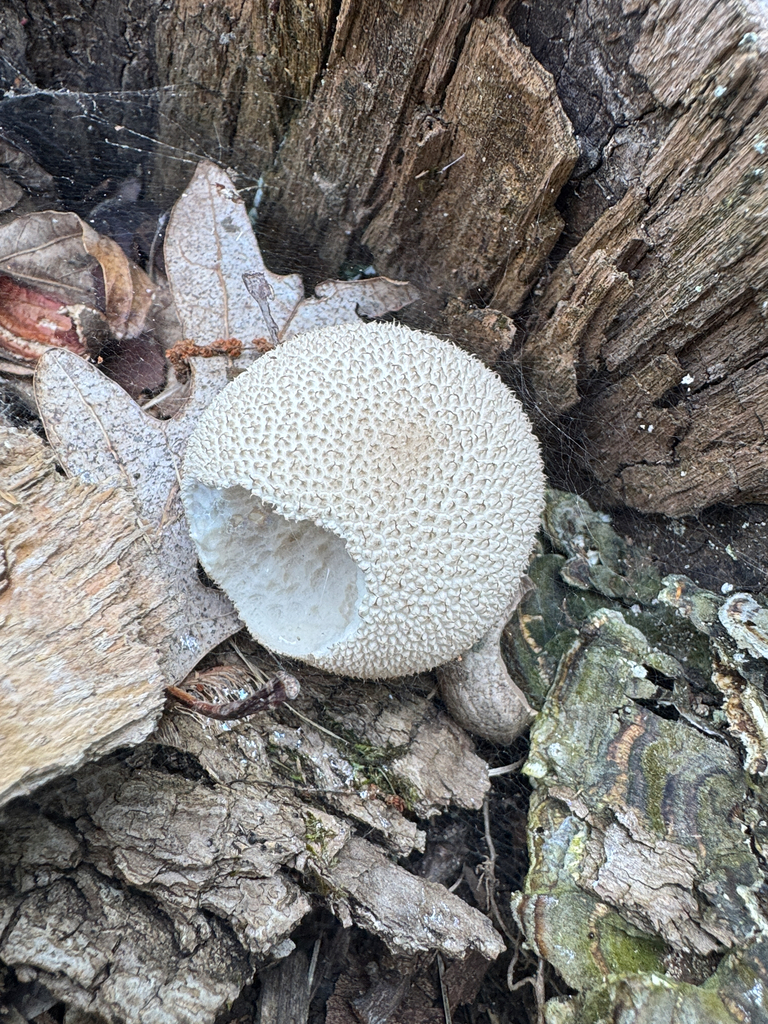
© no rights reserved · iNaturalist · CC0 1.0
Scientific Classification & Quick Facts
Classification
Known For
Detailed measurements for this species are still being verified.
Lycoperdon perlatum, the common puffball, is a fungus that defies the typical mushroom silhouette. Rather than a stem and cap, it produces a round, whitish fruiting body covered in small spines or warts—a feature that gives the species its Latin name, perlatum, meaning “beaded” or “pearl-studded.” When mature, this ball-like structure transforms into a spore-dispensing mechanism, rupturing at the apex to release clouds of microscopic spores with a satisfying puff. Found across at least 34 countries worldwide, Lycoperdon perlatum holds a conservation status of Least Concern, reflecting its widespread and resilient presence in terrestrial ecosystems.
This commonplace fungus holds particular interest for mycologists and naturalists alike. Its abundance and ease of identification make it an ideal subject for understanding fungal reproduction and ecology. Beyond its scientific appeal, the common puffball bridges human culture and natural history, appearing in folklore, serving as an edible delicacy in some regions, and demonstrating how fungi, often overlooked in the natural world, execute sophisticated survival strategies with elegance and precision.
Identification and Appearance
Lycoperdon perlatum is a small, distinctive fungus with a characteristic pear or nearly spherical shape. The fruit body measures 1.5 to 6 centimetres wide and 3 to 9 centimetres tall, making it a compact mushroom easily spotted on the forest floor. It features a stem-like base that anchors the main body to the ground, giving the whole structure a distinctive silhouette resembling a tiny puffball on a stalk.
The surface of the common puffball is initially white or cream-coloured, covered with small wart-like or spiny projections that give it a pebbly texture. As the fungus matures, it gradually browns with age, eventually becoming tan or ochre. The whitish colouration of young specimens is particularly important for foragers, as this indicates the flesh inside is still edible and palatable; older, browned specimens become tougher and less desirable.
The interior structure transitions dramatically with age. Young specimens contain a homogeneous white flesh throughout, but mature fruit bodies develop a distinctive brown, powdery mass of spores in the upper chamber—the gleba—while the lower stem region remains cottony and fibrous. At maturity, the puffball develops a small pore or opens irregularly to release spores when squeezed by rain or animals, which is how the common name originated.
Distribution and Habitat
Lycoperdon perlatum occurs across at least 34 countries, with the strongest concentration of records in North America and Europe. The United States dominates the dataset with 97 observations, followed by Sweden (45), Spain (23), Denmark (20), and Germany (18). Additional records extend through Portugal, the Netherlands, Austria, Great Britain, and Australia, indicating a widespread distribution across multiple continents and climate zones.
The species appears at an elevation of 884 metres, representing the known altitude where specimens have been documented. This relatively modest elevation suggests the fungus thrives in lowland and foothill environments rather than high-alpine zones.
Seasonal Presence
Fruiting activity peaks sharply in January, with 138 recorded observations in that month. A secondary but notably smaller pulse occurs in May (51 observations), while February and March show modest activity (32 and 33 records respectively). The fungus is virtually absent from July through December, indicating a clear seasonal pattern concentrated in winter and early spring months in the Northern Hemisphere, where most records originate.
Ecology and Lifecycle
Lifecycle
Lycoperdon perlatum begins as vegetative mycelium in soil and organic matter, where it breaks down dead plant material. When moisture and temperature conditions align, typically in late summer through autumn, the mycelium aggregates to form fruiting bodies—the distinctive round puffballs that appear above ground. These fruiting bodies develop a characteristic whitish exterior covered in small, pearl-like warts (hence “perlatum”), with a papery peridium (outer wall) and an internal mass of spore-bearing tissue.
Maturation takes several weeks. As the puffball ages, the interior tissue darkens from white to brown, and the spores develop their characteristic brown color. When fully mature, the fruiting body dries and develops an apical opening—a small hole at the top through which spores are released. Wind, rain, and physical disturbance cause the puffball to contract and expel clouds of spores into the air. A single fruiting body can release millions of spores over several weeks. Once dispersed, spores germinate in suitable soil conditions and establish new mycelial networks.
Ecological Role
Lycoperdon perlatum is a saprobic fungus, meaning it feeds on dead organic matter as a decomposer. It breaks down cellulose and other plant polymers in soil and forest litter, contributing to nutrient cycling and soil formation. Its mycelium extends through substrates, fragmenting dead wood and leaf matter into smaller particles that other decomposers can process further, accelerating the return of nutrients to the soil.
The species has demonstrated an important secondary role as a bioindicator organism. Puffballs bioaccumulate heavy metals from the surrounding soil, meaning their tissue concentrations reflect soil contamination levels. This property makes them useful for environmental monitoring and assessment of metal pollution in ecosystems.
Uses
Young, fully white puffballs of Lycoperdon perlatum have been consumed as food in various cultures, particularly when harvested before the spore mass begins to darken. The edible stage is brief—typically lasting only a few days—and the fruiting body must be sectioned to verify it is entirely white inside with no gills or other structures. Once properly identified in their immature state, they are cooked by slicing and frying or adding to soups.
The species has no established medicinal applications in modern pharmacology. However, mature spores have been studied for their dispersal mechanisms and may have minor traditional uses in some cultures. Given the narrow window for safe consumption and the risk of misidentification with toxic puffball species or other fungi with similar appearance, foraging for Lycoperdon perlatum carries real hazards.
Conservation and Threats
Lycoperdon perlatum, the Common Puffball, is listed as Least Concern on the IUCN Red List. This designation reflects the species’ wide distribution across temperate and boreal regions of the Northern Hemisphere and its ability to thrive in diverse habitats. The population trend is currently increasing, indicating that the species faces no immediate threat of decline.
The broad conservation status of Least Concern means that L. perlatum does not require urgent protective measures at a global level. Its resilience stems from its generalist ecology—it colonizes disturbed ground, grasslands, woodlands, and gardens where conditions favour rapid fruiting and spore dispersal. No specific legal protections are formally required in most jurisdictions.
Threats and Population Drivers
Because no formally documented threats to L. perlatum have been systematically recorded, the species appears largely unaffected by anthropogenic pressures. Its increasing population trend suggests that it may even benefit from habitat fragmentation and disturbance in some regions. Localized declines might occur in areas subject to intensive pesticide application or severe habitat loss, but these impacts are not widespread enough to trigger conservation concern at the species level.
Conservation Efforts
Given the species’ favourable conservation status, formal conservation programmes are not currently directed at L. perlatum. However, the maintenance of varied habitats—grasslands, parkland, and open woodland—benefits this species alongside many other fungi and invertebrates. Citizen science initiatives, particularly through platforms like iNaturalist, continue to document the species’ distribution and help track any future population changes.
Cultural Significance
Lycoperdon perlatum has earned recognition in philately, appearing on postage stamps from multiple nations. Guinea, Paraguay, Romania, Sierra Leone, and Sweden have all featured the common puffball on their stamps, reflecting its appeal as a distinctive and recognizable fungus worthy of cultural representation.
This widespread stamp presence suggests the species holds aesthetic or educational value across diverse cultures and continents. The selection of the common puffball for postal imagery underscores its accessibility and popularity as a subject for public awareness, making it one of the few fungi to achieve such international postal recognition.
Fun Facts
- The common puffball earned the sinister nickname “devil’s snuff-box” because of the way it explosively releases its spores when disturbed—a characteristic that earned it a fearful reputation in folklore.
- Young puffballs are completely edible and prized by foragers, but only before the interior turns from solid white flesh to the powdery spore mass that fills a mature fruit body.
- The distinctive spiny or warty bumps covering the puffball’s surface—often called “jewels”—rub off easily to reveal an elegant netlike pattern underneath, like peeling away the fungus’s outer skin.
- When fully mature, the puffball develops a small opening at its top and uses a remarkably simple release mechanism: a single raindrop or even the lightest touch triggers a puff of millions of spores into the air.
- Over its lifetime, a single common puffball changes color dramatically, shifting from creamy off-white when young to deep brown at maturity—a visual signal of when it has stopped being edible.
- The fruit body’s distinctive shape tapers downward to a stalk-like base and typically ranges from 1.5 to 6 centimetres in width and 3 to 10 centimetres in height, making it a compact but efficient spore dispersal machine.
- Unlike mushrooms with gills or pores, puffballs contain their entire spore mass in a single sealed chamber, which means every spore is released all at once rather than gradually—a “all or nothing” reproductive strategy.
Conservation Status
LC (Least Concern) · NT · VU · EN · CR · EW · EX
Photo Gallery
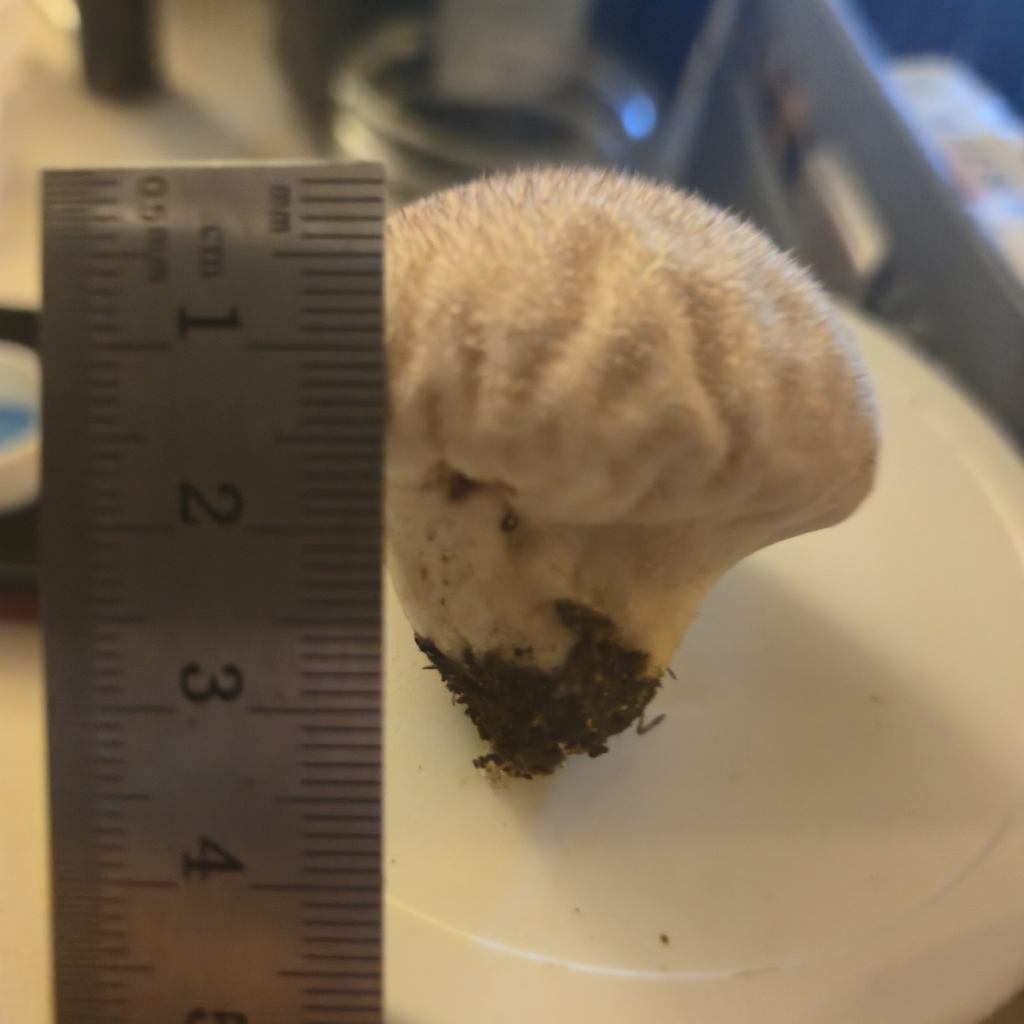
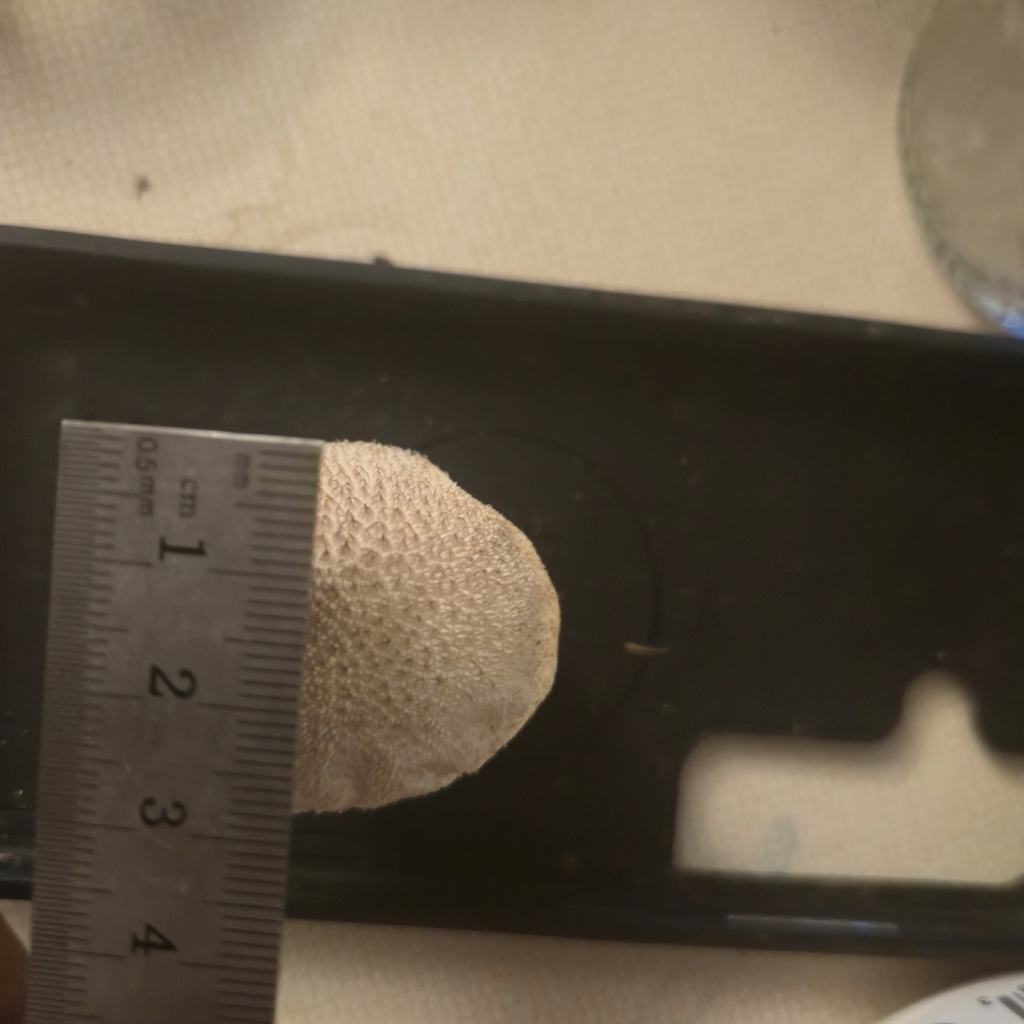
no rights reserved · CC0 1.0
Related Species
Was this profile helpful?