
Agaricomycetes · Agaricales
Oyster Mushroom
Pleurotus ostreatus
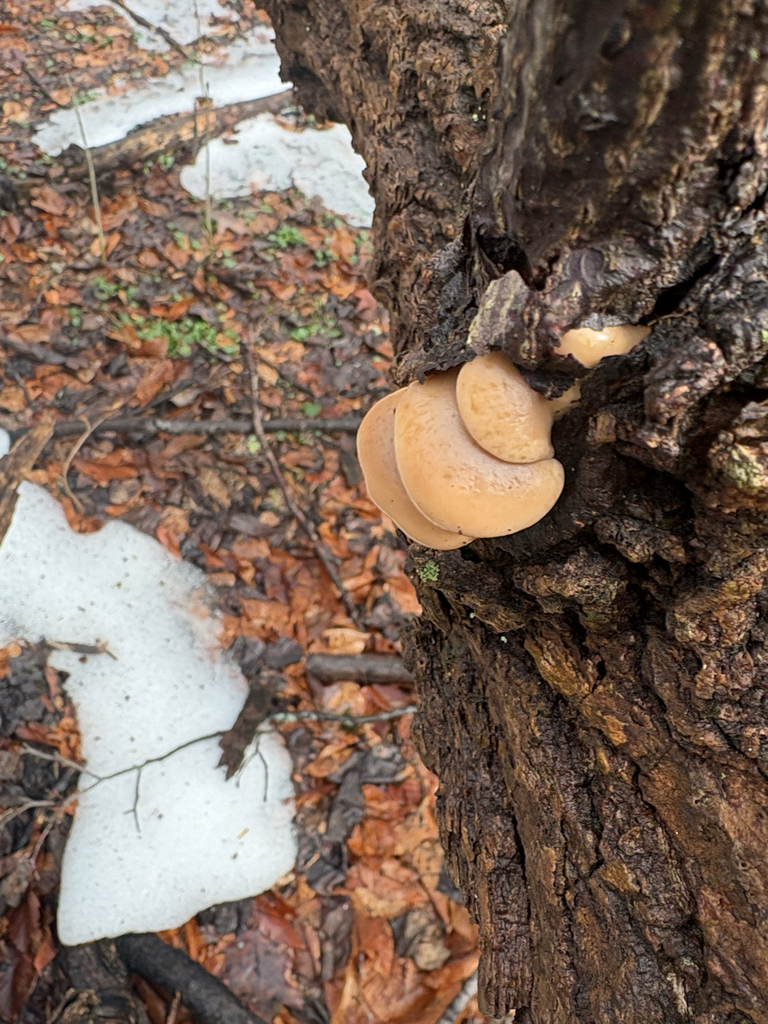
© no rights reserved · iNaturalist · CC0 1.0
Scientific Classification & Quick Facts
Classification
Known For
Detailed measurements for this species are still being verified.
The oyster mushroom is a cosmopolitan fungus that fruits on decaying wood across at least 24 countries, from temperate forests to disturbed urban margins. Its fan-shaped caps and delicate gills make it instantly recognisable, yet what truly sets Pleurotus ostreatus apart is its dual life as both a culinary staple and a formidable decomposer. This basidiomycete has become one of the world’s most widely cultivated edible fungi, sustaining commercial operations from Asia to Europe to the Americas.
The species thrives in cool, moist conditions and colonises hardwoods with remarkable efficiency, making it both ecologically important for nutrient cycling and economically valuable for waste remediation and food production. Its conservation status remains unknown, reflecting the limited threat assessment data for fungi generally, but its abundance and adaptability suggest a resilient and expanding population. Understanding oyster mushrooms illuminates the hidden ecology of forest floors and the potential of fungi to feed growing human populations sustainably.
Identification and Appearance
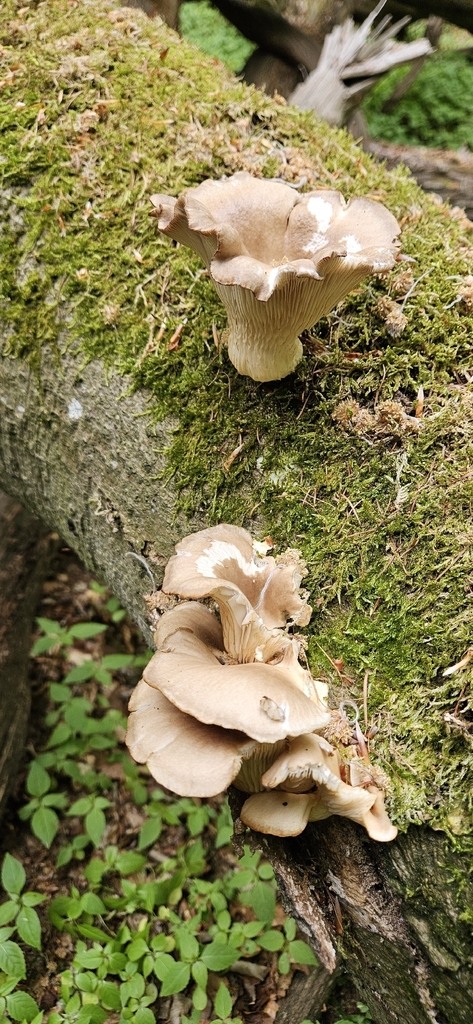
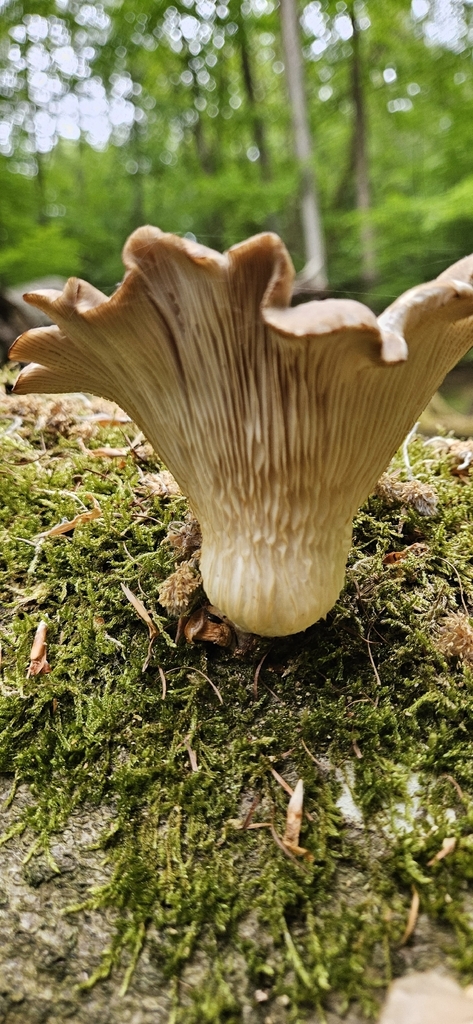
The oyster mushroom is instantly recognizable by its distinctive fan or oyster-shaped cap, which ranges from 2 to 30 centimetres wide. In wild specimens, the cap displays a subtle palette of white, gray, or brown tones. Young fruiting bodies have an inrolled margin that gradually becomes smooth, often developing lobed or wavy edges as the mushroom matures. The flesh beneath the cap is white and firm, though its thickness varies depending on how the stipe (stem) is positioned relative to the cap.
The stipe, when present, is relatively short and sturdy—reaching up to 4 centimetres in length—and notably off-center, attaching laterally to the wood substrate rather than directly beneath the cap. This eccentric positioning is a key identifying feature that distinguishes oyster mushrooms from many other shelf fungi. The white, firm flesh throughout the fruiting body reflects the mushroom’s robust structure and explains its popularity as a culinary specimen. The gills run down the stipe and are typically white or pale, becoming slightly wavy or forked as they descend.
Oyster mushrooms often fruit in clusters or shelving arrangements on dead or decaying hardwood, with multiple caps emerging from a shared base. This gregarious growth habit further aids identification in the field. Cultivated varieties may exhibit slightly different cap colors—ranging from pale cream to deep brown depending on strain and growing conditions—but the fundamental oyster-like morphology remains consistent across all varieties.
Distribution and Habitat
Pleurotus ostreatus is recorded across 24 countries worldwide, with the strongest presence in central and northern Europe. Germany leads with 68 records, followed closely by the United Kingdom (60) and the United States (58). Sweden, the Netherlands, and Switzerland also show significant observation counts, reflecting the species’ prevalence in temperate regions. Smaller populations have been documented in Japan, Austria, Russia, and Norway, indicating a broader but sparser distribution across Asia and Scandinavia.
Elevation records range from 511 to 779 metres, with an average of 582.5 metres. This moderate elevation range suggests the species thrives in foothill and lower montane environments rather than extreme altitudes. The mushroom shows a highly concentrated seasonal pattern, with virtually all observations clustered in January and absence throughout the rest of the year in the available dataset. This winter peak aligns with the natural fruiting behavior of P. ostreatus in temperate climates, where cold temperatures trigger mushroom production on dead wood and agricultural substrates.
The oyster mushroom colonises dead hardwood logs, fallen branches, and woody debris across deciduous and mixed forests. Its adaptability to cultivated substrates—including straw, sawdust, and agricultural waste—has made it widespread in human-managed environments throughout Europe and North America. The species tolerates a broad range of conditions but reaches peak productivity in cool, moist habitats typical of late autumn through early spring.
Ecology and Lifecycle
Lifecycle
Pleurotus ostreatus begins its life cycle as microscopic spores dispersed through the air or water. When these spores land on a suitable substrate—typically dead or dying hardwood—they germinate and develop into vegetative mycelium. This network of fungal threads colonises the wood, breaking down complex polymers and extracting nutrients. The mycelium can persist in dormant wood for extended periods, waiting for favourable moisture and temperature conditions.
Fruiting occurs when environmental triggers align: adequate moisture, moderate temperatures (typically 10–20 °C), and sufficient oxygen. The mycelium then forms fruiting bodies—the visible mushrooms—which bear gills on their undersides. These gills produce millions of microscopic spores that disperse on air currents or attach to passing insects and animals. A single fruiting event can produce multiple flushes of mushrooms over weeks, each releasing fresh spores to colonise new wood sources.
Ecological Role
Pleurotus ostreatus functions as a saprophytic decomposer, playing a crucial role in forest nutrient cycling. Unlike parasitic fungi that actively kill living trees, oyster mushrooms colonise wood that is already dying from disease, damage, or age. The mycelium secretes powerful enzymes that break down cellulose, hemicellulose, and lignin—the primary structural polymers in wood. This decomposition releases trapped nutrients such as nitrogen, phosphorus, and minerals, making them bioavailable to plants and soil microorganisms.
An unusual trait sets oyster mushrooms apart: all major lineages are carnivorous. The mycelium can produce toxins that kill nematodes (roundworms) and other microscopic animals in the soil, which the fungus then absorbs as a nitrogen source. Additionally, oyster mushrooms bioaccumulate lithium from their substrate, a phenomenon with potential applications in nutritional science. By decomposing dead wood and cycling nutrients, P. ostreatus enriches forest ecosystems and supports the establishment of new plant growth.
Uses
Oyster mushrooms are widely cultivated and consumed across the globe. They have a mild, slightly sweet flavour and a tender texture that works well in sautés, soups, and stir-fries. Commercial cultivation uses sawdust, straw, or coffee grounds as substrate, making oyster mushrooms one of the most accessible edible fungi to grow at home or on farms. Their rapid fruiting and high yield make them economically important in many regions.
Beyond the kitchen, oyster mushrooms have attracted interest in traditional medicine and bioremediation. Some studies suggest they may possess immunomodulatory compounds, though evidence remains preliminary. More practically, oyster mushroom mycelium is being explored for degrading environmental pollutants and breaking down plastics, leveraging the same enzymatic machinery that decomposes wood. Their ability to thrive on agricultural waste and convert it into nutritious food makes them valuable for sustainable food production and circular economy initiatives.
Conservation and Threats
Pleurotus ostreatus, the oyster mushroom, does not appear on the IUCN Red List and is not formally assessed for conservation status. This reflects its status as a widespread, globally distributed fungus with no significant risk of extinction in the wild. The species is abundant across its natural range and has become increasingly cultivated commercially, contributing to a growing global population.
Population trends show consistent growth, driven primarily by expanding commercial cultivation rather than increases in wild populations. The species thrives in agricultural and forestry settings and benefits from human land use patterns. Its capacity to colonize diverse woody substrates and decompose dead wood across multiple climate zones ensures its ecological presence remains stable.
Threats
No major direct threats to wild populations of Pleurotus ostreatus have been documented. The species faces no significant predation pressure, disease outbreak, or habitat loss sufficient to affect its survival. Its role as a wood-decomposing fungus means it may actually benefit from deadwood accumulation in managed and natural forests.
Conservation Efforts
Formal conservation programmes are unnecessary for this species, as it requires no legal protection or active management for survival. However, the oyster mushroom benefits indirectly from forestry practices that maintain deadwood habitats and from agricultural systems that preserve woody debris. Its cultivation is regulated in some regions only to ensure food safety standards and prevent contamination with toxic lookalikes in commercial production.
Cultural Significance
Pleurotus ostreatus has earned recognition as one of the most versatile fungi in human use. Beyond its role as a culinary ingredient, the oyster mushroom serves both medicinal and environmental purposes. Like many fungi historically employed in traditional medicine systems, it represents a bridge between food and healing—a dual identity that has made it valuable across cultures for thousands of years.
In culinary contexts, oyster mushrooms are widely cultivated and consumed. Their accessibility and ease of growth on various substrates have made them a staple in kitchens worldwide. Medicinally, the species continues a long tradition of fungal use documented in historical texts, where plants and fungi were employed to treat and prevent disease. This combination of practical edibility and therapeutic application has sustained interest in the species across generations.
Perhaps most notably, P. ostreatus has emerged as a tool for environmental remediation. The mushroom demonstrates remarkable capacity to degrade toxins: it can convert up to 95 percent of diesel oil pollution into non-toxic compounds, and it can grow on and help decompose oxo-biodegradable plastic bags. This ability to transform environmental hazards positions the oyster mushroom at the intersection of traditional utility and modern ecological solutions, adding a contemporary dimension to its cultural significance as a species that actively restores damaged ecosystems.
Fun Facts
- Oyster mushrooms are wood-decay specialists that break down dead hardwoods and softwoods, returning nutrients to forest soil. They can grow on a wider range of woody substrates than most edible mushrooms, making them remarkably adaptable decomposers.
- These mushrooms produce enzymes strong enough to break down lignin, one of the toughest polymers in nature. This same enzymatic power has led researchers to investigate their potential for breaking down pollutants and industrial waste—a process called mycoremediation.
- Oyster mushrooms are carnivorous fungi that actively hunt nematodes (tiny roundworms) living in soil. They produce sticky hyphal knobs that trap prey, then digest them to supplement their nitrogen intake.
- The common name “oyster” comes from the shape of the fruiting body, which resembles an oyster shell when viewed from above. Despite the name, they have no connection to seafood and are purely terrestrial fungi.
- Pleurotus ostreatus thrives in temperate and subtropical forests worldwide and has become one of the most commercially cultivated mushrooms globally. Home growers can cultivate them on coffee grounds, straw, and sawdust, making them accessible for small-scale production.
- These mushrooms fruit in cool weather, typically appearing in autumn and winter in temperate regions. A single log or substrate block can produce multiple flushes (rounds of fruiting) over several months.
- Oyster mushrooms contain bioactive compounds including polysaccharides and ergothioneine, an amino acid with antioxidant properties found naturally in few other foods. These compounds have made them subjects of nutritional and medicinal research for decades.
Photo Gallery
no rights reserved · CC0 1.0
Related Species
Was this profile helpful?