Agaricomycetes · Agaricales
Shaggy Ink Cap
Coprinus comatus
Least ConcernAlso known as: Lawyer's Wig, Shaggy Ink-Cap, Shaggy Inkcap, Shaggy Mane
© no rights reserved · iNaturalist · CC0 1.0
Scientific Classification & Quick Facts
Classification
Known For
Detailed measurements for this species are still being verified.
The Shaggy Ink Cap, Coprinus comatus, is a distinctive fungus recognizable by its tall, cylindrical white cap covered in shaggy brown scales that resemble matted hair. This striking appearance makes it one of the most visually distinctive mushrooms in temperate regions worldwide. Found across at least 24 countries, the species thrives in disturbed soils, gardens, lawns, and mulched areas where it fruits prolifically in spring and autumn, often appearing overnight in clusters.
Listed as Least Concern by the IUCN, Coprinus comatus is widespread and stable across its range. The species belongs to the family Agaricaceae and represents a remarkable adaptation to urban and agricultural environments, where humans inadvertently create ideal fruiting conditions through soil disturbance and organic matter accumulation. Its combination of ecological success, striking morphology, and extraordinary reproductive strategy makes the Shaggy Ink Cap a compelling subject for understanding fungal diversity and adaptation in human-modified landscapes.
Identification and Appearance
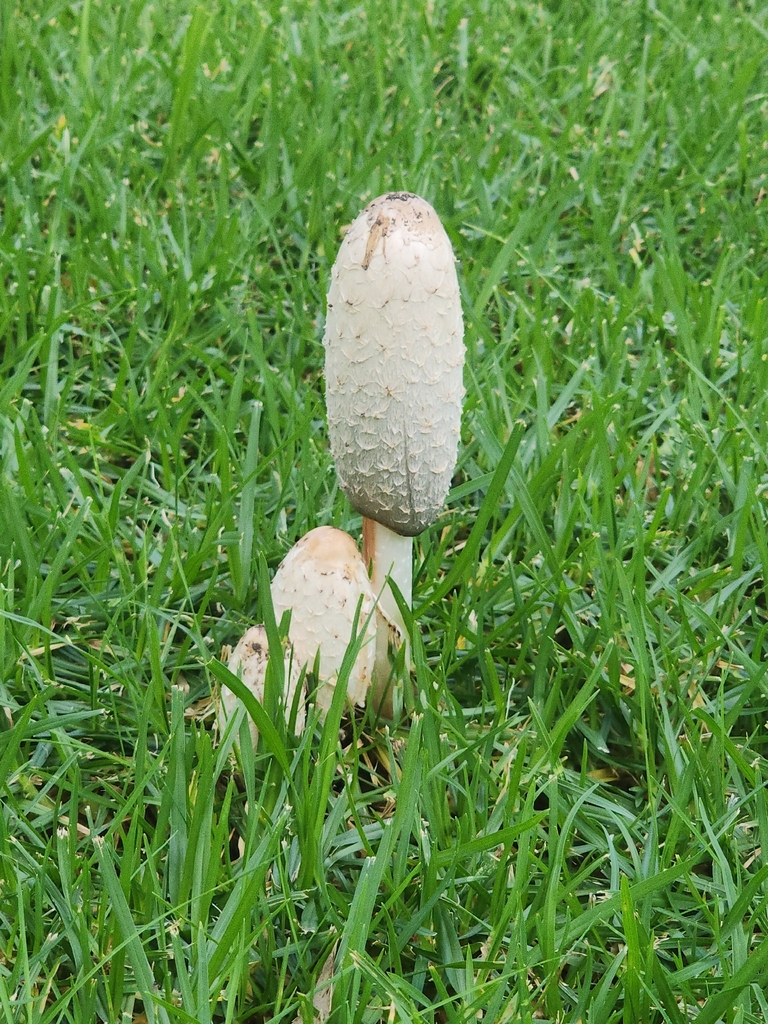
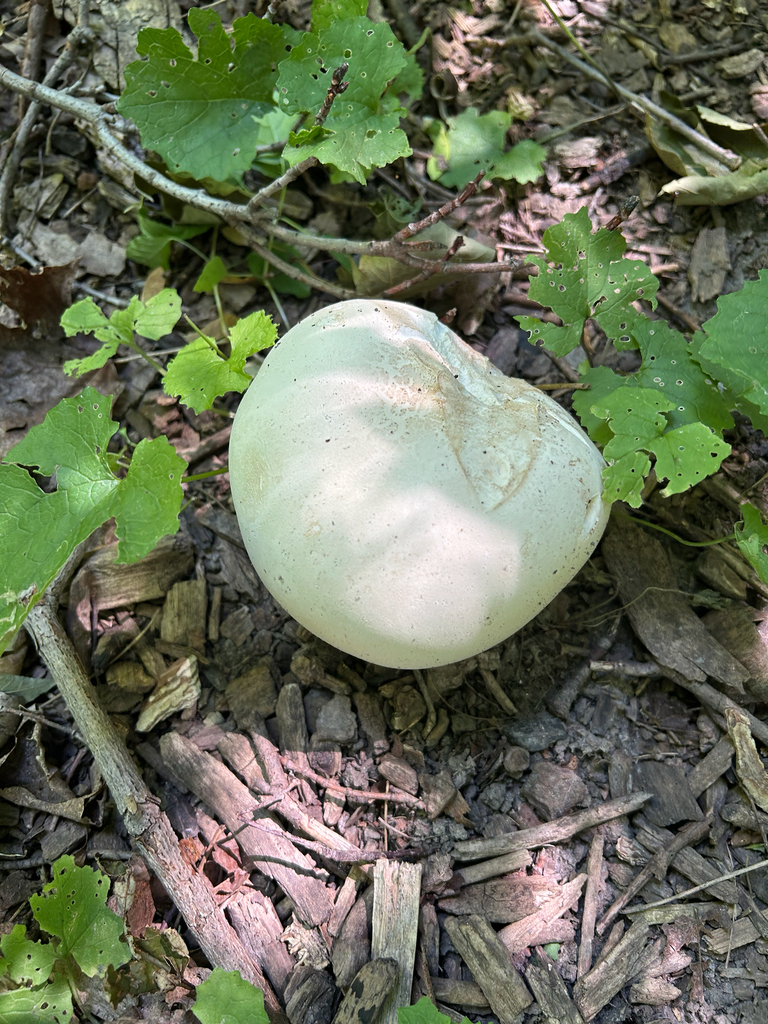
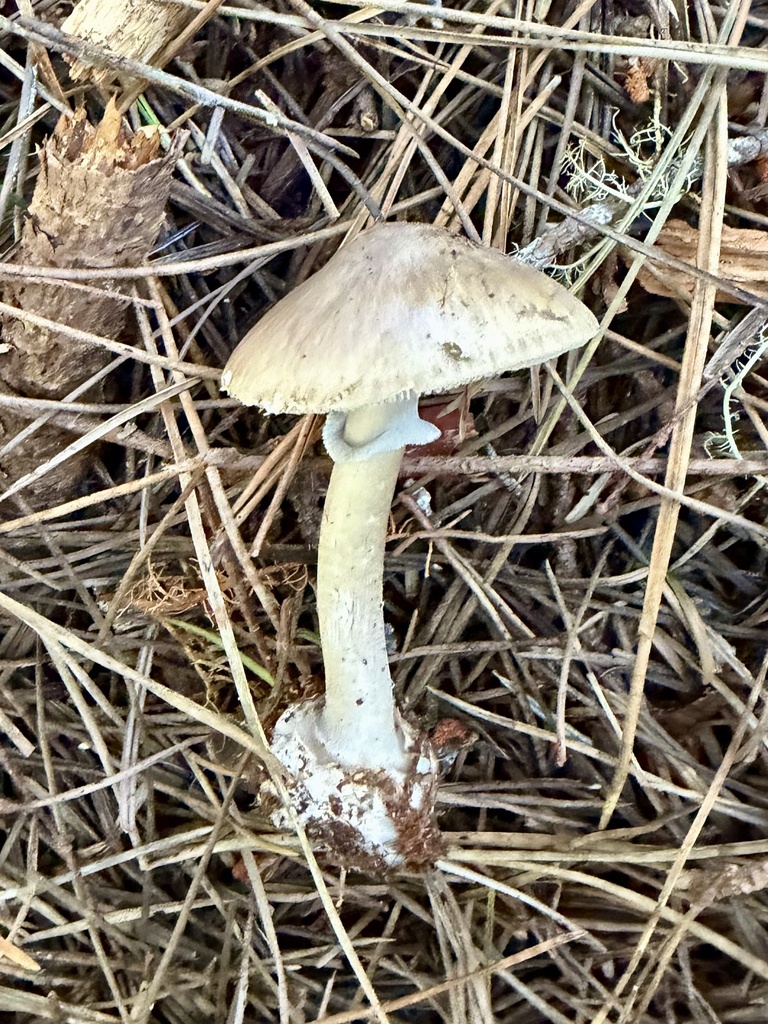
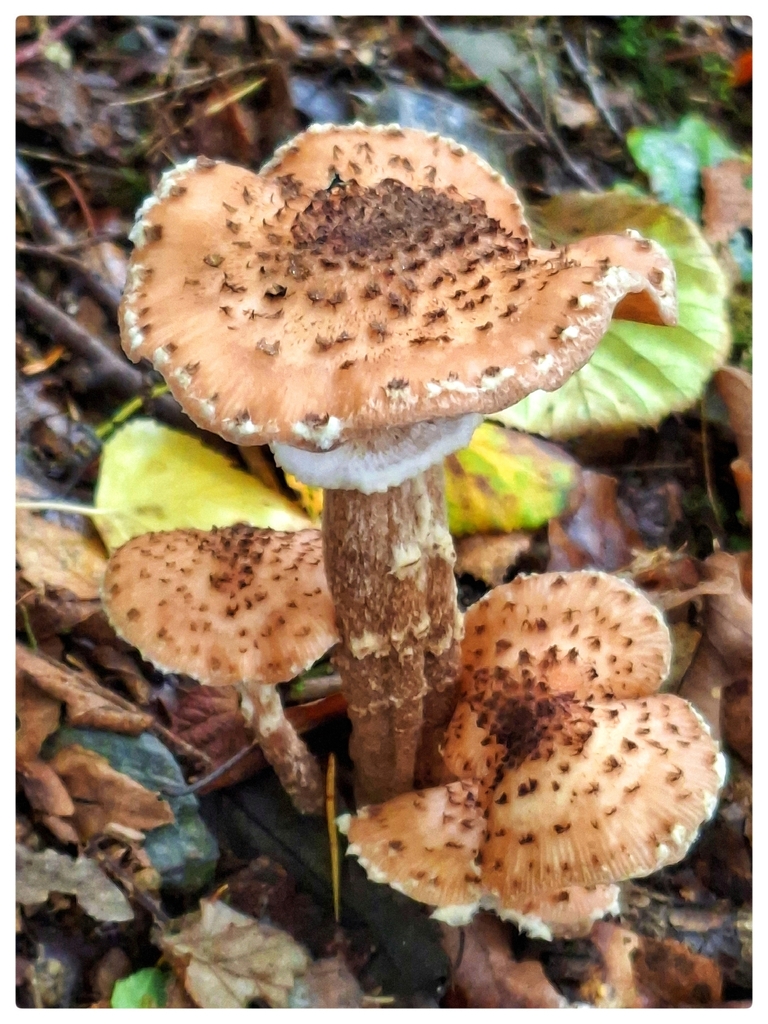
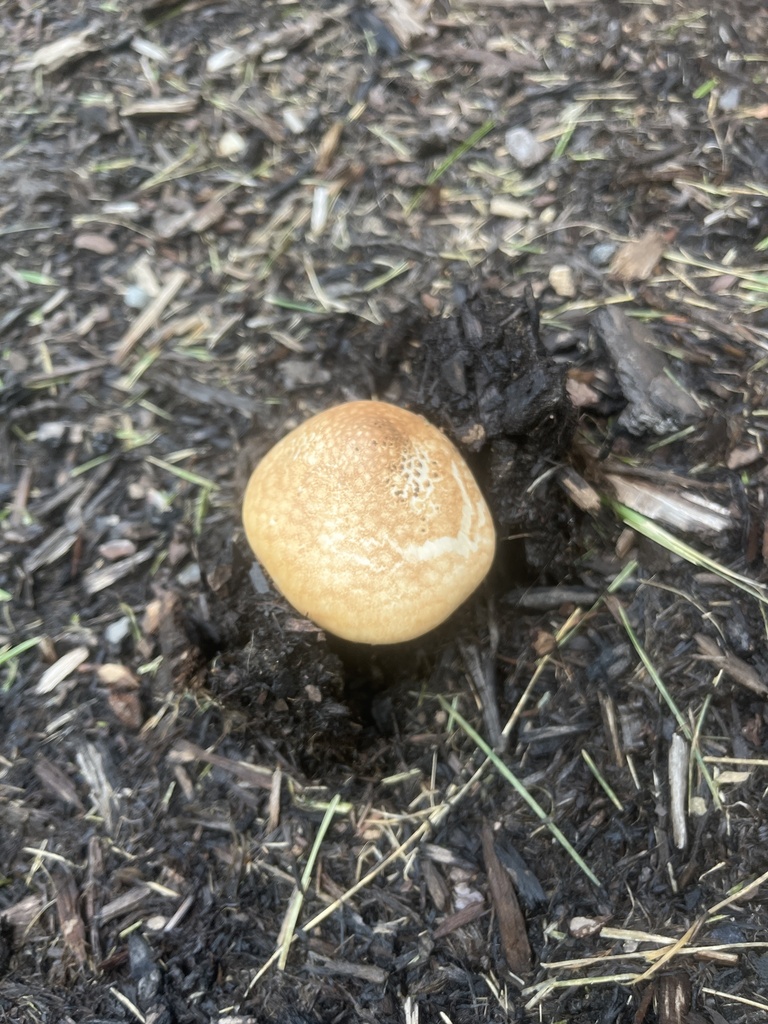
Coprinus comatus, the Shaggy Ink Cap, is instantly recognizable by its distinctive cylindrical to bell-shaped cap and white coloration peppered with shaggy, pale brown scales. The cap measures 4–8 centimetres across and reaches 6–20 centimetres in height, with the cap initially enveloping much of the stem like a protective sheath. This striking appearance makes it one of the easiest ink caps to identify in the field.
Cap and Gill Structure
The cap is predominantly white with characteristic shaggy, fibrous scales that cover its surface. These scales become increasingly pale brown towards the apex, creating a two-toned effect that is especially pronounced in younger specimens. The cap maintains its cylindrical shape for much of its fruiting life before eventually expanding slightly and the edges turning upward.
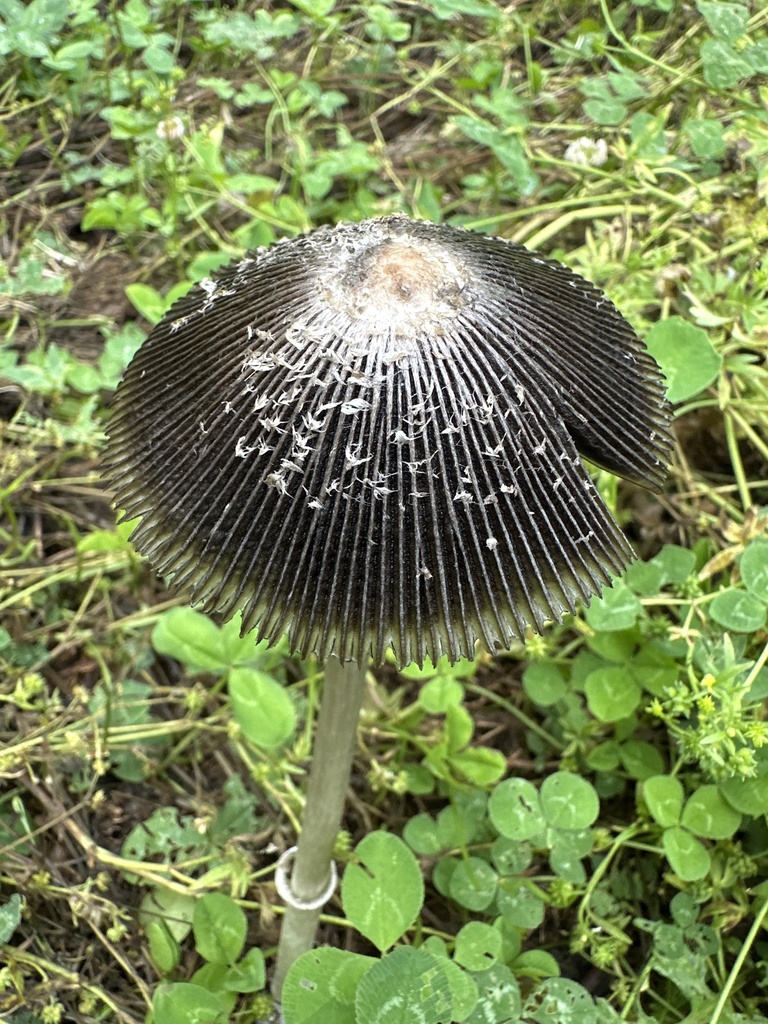
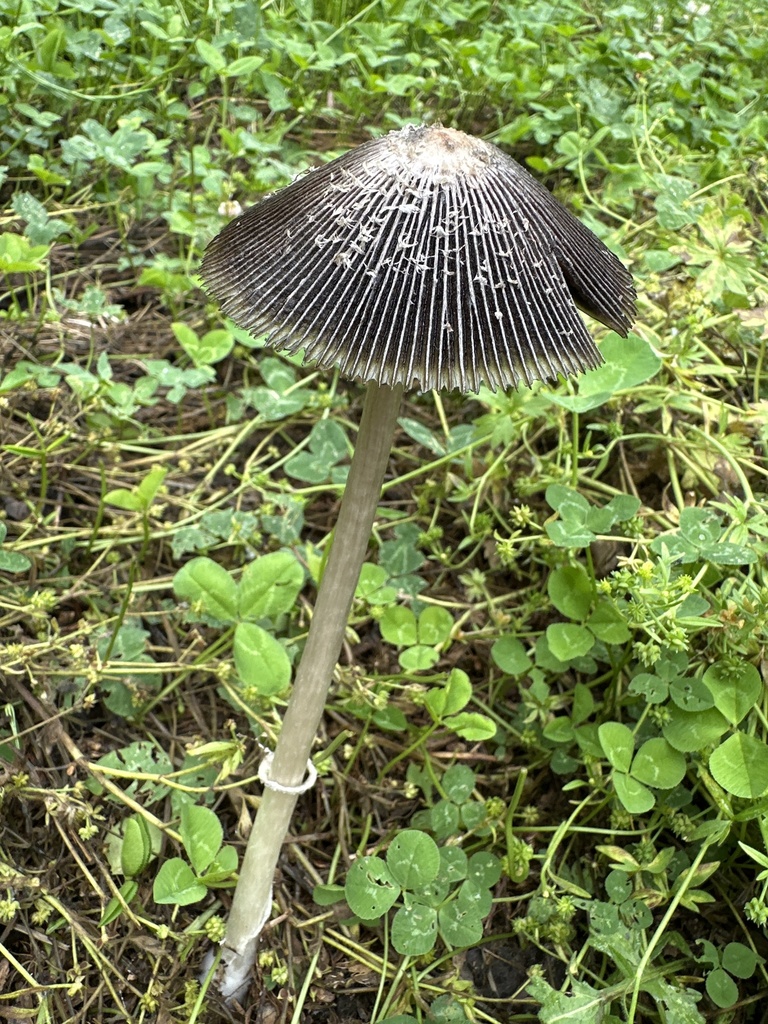
The gills are the most distinctive feature during fruiting. They begin pure white and densely packed, arranged in a free pattern (not touching the stem). Within hours of the mushroom’s appearance, the gills rapidly transition to pink, then darken to deep red-black as they deliquesce. This process liquefies the gill tissue into a dark, spore-laden fluid—the “ink” that gives the species its common name. The stem is white, smooth, and typically hollow, often with a thin ring or remnants of a universal veil at the base.
Distribution and Habitat
Coprinus comatus, the Shaggy Ink Cap, has been recorded across 24 countries, with the largest concentrations in the Northern and Southern Hemispheres. GBIF records show the United States dominates observations with 107 records, followed by New Zealand (53 records), Argentina (35 records), and Australia (24 records). Smaller but notable populations occur in Italy, Chile, Ecuador, Spain, the Netherlands, and Portugal, suggesting the species has established itself across multiple continents and climatic zones.
The species displays a pronounced seasonal pattern, with virtually all recorded fruiting concentrated in the early months of the year. March represents the peak month with 141 observations, while February and January show 77 and 82 records respectively. After March, fruiting records drop to zero through the remainder of the year, indicating a highly defined fruiting window tied to late winter and early spring conditions. This temporal pattern is consistent across the geographic range and likely reflects the species’ preference for cool, moist conditions that occur during these months in both hemispheres.
Elevation data is not currently available from GBIF records, so the species’ altitudinal range remains undocumented. The breadth of countries represented—spanning temperate regions in both the Northern and Southern Hemispheres—suggests the fungus is not strictly confined to a narrow elevation band, but rather adapts to diverse environmental conditions across its range. Its presence in diverse geographic locations from Argentina to Spain to New Zealand indicates tolerance for varied climates, provided the necessary moisture and cool temperatures occur during the fruiting season.
Ecology and Lifecycle
Lifecycle
Coprinus comatus begins life as vegetative mycelium colonising decaying wood, plant debris, and organic-rich soil. This thread-like network spreads through the substrate, breaking down complex organic matter. When environmental conditions favour fruiting—typically after rain in spring or autumn—the mycelium organises into fruiting bodies that emerge rapidly over a few days.
The fruiting body matures quickly, developing a distinctive shaggy, bell-shaped cap. As the mushroom ages, the gills transform into an ink-like black liquid (a process called deliquescence) that contains mature spores. This self-digesting mechanism releases spores suspended in the dark fluid, which drips onto surfaces below and spreads primarily through water splash and direct contact. After spore discharge, the fruiting body collapses and dissolves.
Ecological Role
Coprinus comatus functions as a saprotroph, decomposing dead plant material and returning nutrients to soil ecosystems. Beyond this standard role, the species has evolved a specialised predatory relationship with nematodes. It is a nematophagous fungus capable of killing and digesting parasitic and free-living nematodes, including Panagrellus redivivus and Meloidogyne arenaria.
The fungus employs a dual-attack strategy: it produces spiny, ball-shaped structures that mechanically damage nematode cuticles, and simultaneously secretes potent toxins that immobilise its prey. This predatory ability positions Coprinus comatus as a potential biological control agent for nematode pests in agricultural and horticultural systems, though it remains largely unexploited for this purpose at commercial scale.
Uses
Coprinus comatus is edible and prized in some cuisines, particularly in Asian cooking where young fruiting bodies are harvested and prepared fresh. The flesh is tender and the flavour mild. However, the fruiting body’s extremely delicate nature and rapid deterioration mean it has limited commercial availability and is primarily foraged rather than cultivated at scale. Any culinary use requires proper species identification and careful handling, as the mushroom deteriorates quickly after harvest.
The species’ nematode-killing properties have attracted scientific interest for potential applications in pest management and soil health. Research demonstrates its efficacy against plant-parasitic nematodes, suggesting future applications in sustainable agriculture. No significant medicinal or pharmaceutical uses have been established in conventional practice, though the biochemistry of its nematocidal toxins remains an area of academic investigation.
Conservation and Threats
Coprinus comatus, the Shaggy Ink Cap, holds a conservation status of Least Concern according to the IUCN Red List. This classification reflects a wide geographic distribution and stable presence across suitable habitats in temperate regions of North America, Europe, and Asia. The species shows no signs of widespread decline and remains common in many parts of its range.
Threats and Population Status
No major documented threats currently endanger this fungal species. Unlike many woodland mushrooms sensitive to habitat destruction, the Shaggy Ink Cap thrives in disturbed and semi-urban environments, including parks, gardens, meadows, and the edges of cultivated land. This ecological flexibility has allowed it to maintain stable populations even as natural habitats have been modified by human activity. The species’ ability to fruit reliably in response to seasonal moisture and temperature changes further insulates it from localised population pressures.
Current population trends remain unknown due to the absence of systematic monitoring programmes dedicated to this species. However, opportunistic sightings and iNaturalist observations from across multiple continents suggest that Coprinus comatus continues to fruit regularly and is readily encountered by foragers and naturalists. The lack of documented population decline indicates that the species faces no imminent conservation concern.
Conservation Efforts
No formal conservation programmes or legal protections specifically target the Shaggy Ink Cap, as its Least Concern status does not warrant targeted intervention. However, the species benefits indirectly from general habitat protection measures that preserve grasslands, meadows, and woodland margins. Its presence in urban and semi-urban spaces also means it does not depend solely on pristine or formally protected environments for survival.
Cultural Significance
Coprinus comatus has earned recognition in modern culture as a symbol of natural significance in Australia. The species was featured on an Australian postage stamp issued by Australia Post in 1981, marking its status as sufficiently common and culturally notable in the country to warrant commemoration through national postal imagery.
Beyond symbolic recognition, the shaggy ink cap has attracted substantial scientific interest for its bioactive compounds and potential health applications. Laboratory research has identified polysaccharides, lectins, and antioxidants within extracts of C. comatus, compounds that may contribute to its use as a nutraceutical. Studies comparing antidiabetic properties of various mushroom species have demonstrated that triterpenoids present in shaggy ink caps show effective alpha-glucosidase inhibitory actions, suggesting therapeutic potential in managing blood sugar levels. The antioxidant capacity of the species aligns closely with its phenolic content, positioning it as a natural source of valuable antioxidant compounds—a distinction that has motivated submerged cultivation efforts to maximize extraction of these bioactive substances.
Microbiological investigations have also revealed antimicrobial properties with potential clinical applications. Compounds isolated from C. comatus interfere with bacterial biofilm formation and quorum-sensing in pathogens such as Pseudomonas aeruginosa and Staphylococcus aureus, while simultaneously inhibiting key enzymes required for bacterial cell wall synthesis. These dual mechanisms of action suggest future therapeutic possibilities for combating resistant microbial infections.
Fun Facts
- The shaggy ink cap goes by at least three common names—shaggy mane, lawyer’s wig, and shaggy ink cap—each reflecting a different aspect of its appearance or behavior.
- Young fruiting bodies emerge from the ground as pure white cylinders before the distinctive bell-shaped cap with its characteristic shaggy scales develops.
- The mushroom’s gills perform a dramatic color transformation, shifting from white to pink to deep black as the fruiting body matures, a visual record of the spore ripening process.
- Once spores are released or the mushroom is picked, the entire fruiting body undergoes a remarkable process called deliquescence—it turns black and literally dissolves itself into an inky liquid within hours, a behavior that is highly unusual among fungi.
- This self-destructive strategy is actually an effective dispersal mechanism: the inky residue can be carried away by water, insects, or soil disturbance, spreading spores far more widely than if the mushroom simply dried out.
- Shaggy ink caps fruit prolifically in disturbed soils, wood chip piles, and lawn edges, making them one of the most commonly encountered ink cap species in temperate regions.
- The mushroom is edible when young and cooked promptly, but must be used within hours of collection before the deliquescence process begins, making it a prize for foragers who know its fleeting window of culinary opportunity.
Ecology
Habitats
Diet
Behavior
Edibility
Conservation Status
LC (Least Concern) · NT · VU · EN · CR · EW · EX
Photo Gallery
no rights reserved · CC0 1.0
Related Species
Was this profile helpful?