
Agaricomycetes · Agaricales
Fairy Ring Mushroom
Marasmius oreades
Also known as: Fairy Ring Champignon, fairy ring marasmius, scotch bonnet
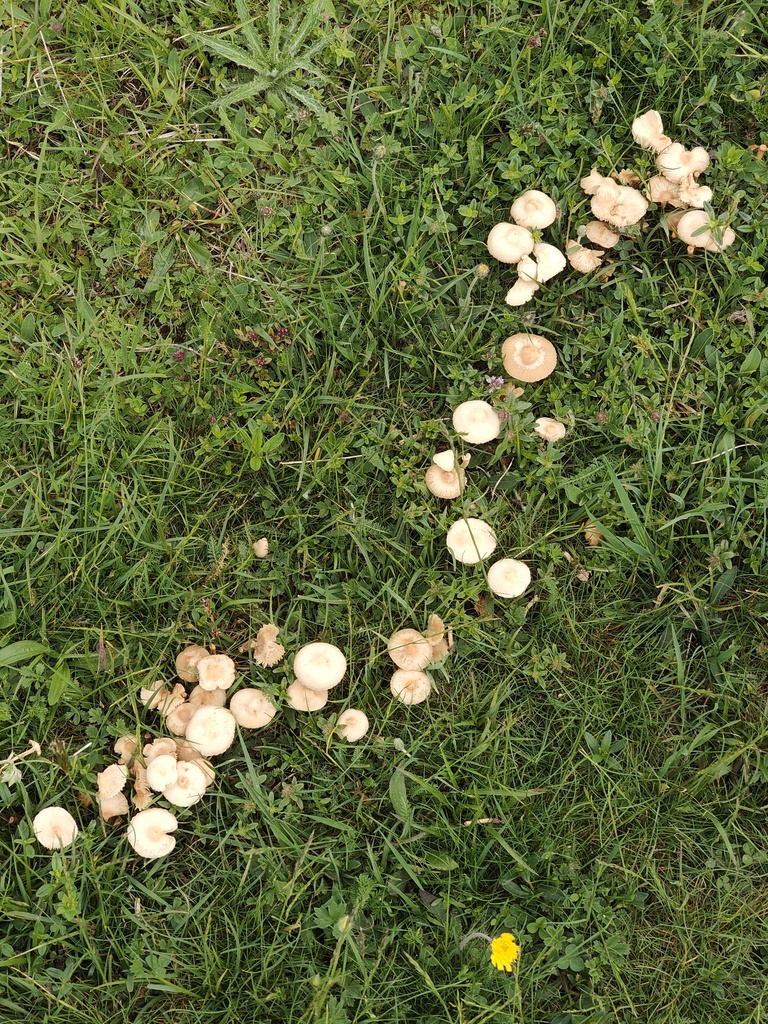
© xulescu_g · iNaturalist · CC BY-SA 4.0
Scientific Classification & Quick Facts
Classification
Known For
Detailed measurements for this species are still being verified.
Marasmius oreades, commonly known as the Fairy Ring Mushroom, is a small but widely distributed fungus that appears across grasslands, lawns, and meadows in at least 31 countries worldwide. Despite its delicate appearance and diminutive size, this species has earned a prominent place in both culinary traditions and ecological studies. The mushroom’s conservation status remains unknown, reflecting the general paucity of formal assessments for fungi—a group that often escapes the intensive monitoring applied to larger organisms.
What makes this species particularly noteworthy is its combination of culinary value and ecological significance. The fruiting bodies are prized in European and Asian cuisines for their delicate flavor and distinctive texture, yet the fungus also plays an ecological role in nutrient cycling across grassland ecosystems. Its ability to thrive in disturbed and managed habitats has made it one of the most frequently encountered mushrooms in human-modified landscapes, bridging the gap between wild fungi and human food systems in a way few species achieve.
Identification and Appearance
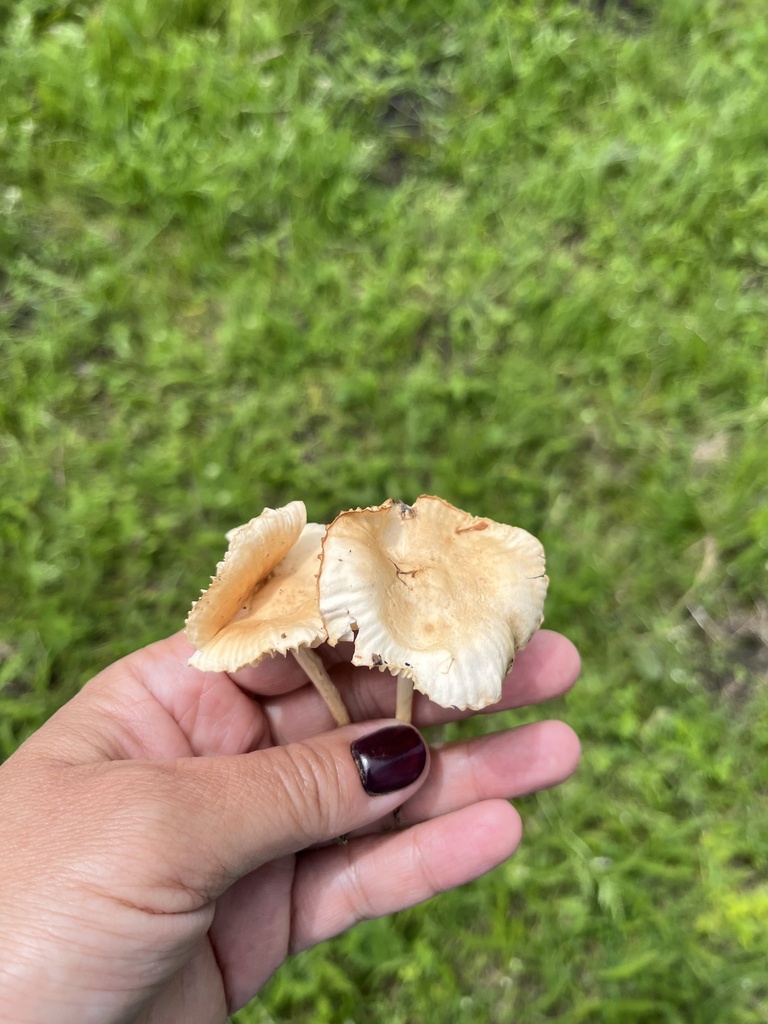
Marasmius oreades is a small, delicate mushroom with a distinctive bell or convex shape. The cap measures 1–5 centimetres across and begins bell-shaped with an inrolled margin before becoming broadly convex as it matures. A subtle central bump often persists throughout the mushroom’s development. The surface is dry and smooth, displaying a pale tan, buff, or occasionally white coloration, though reddish-tan variants occur. A key identification feature is the mushroom’s tendency to change color markedly as it dries, and the cap margin is sometimes faintly lined.
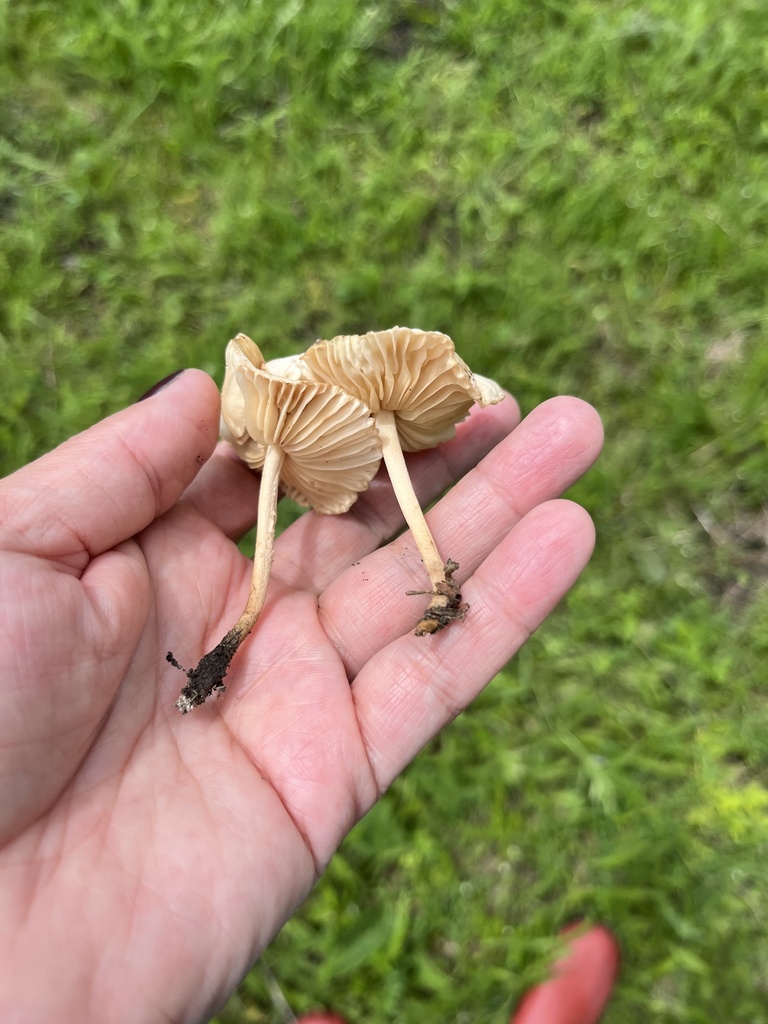
The stem is bare and pallid, clearly distinguishing it from the cap. This mushroom lacks a ring or cup-like structures at the base, making it relatively simple to identify once you recognize its characteristic form. The gills are an important feature for confirmation, though the overall architecture—small size, smooth pale cap, and slender bare stem—creates an unmistakable silhouette in the field. Fairy Ring Mushrooms are among the smallest fungi commonly encountered in grasslands, and their uniform coloration and delicate structure give them an almost ethereal appearance.
Distribution and Habitat
Marasmius oreades has a widespread global distribution, with documented records across 31 countries. New Zealand leads in recorded observations (91 records), followed by Spain (53), the United States (37), and Australia (26). The species also occurs throughout Europe, with notable presence in Hungary, Italy, Portugal, France, Germany, and the United Kingdom. This pattern reflects both the mushroom’s broad ecological tolerance and the varying intensity of mycological recording across regions.
The species exhibits a strongly seasonal fruiting pattern concentrated in spring. April represents the peak month for fruiting, with 144 records, followed by May (63 records) and lower activity in February and March (17 and 32 records respectively). Fruiting appears entirely absent from June through December in available records, indicating a preference for cool, moist conditions typical of spring months in temperate regions.
The mushroom inhabits grasslands and meadows across its range, thriving in open herbaceous areas rather than woodland environments. Elevation data are not currently documented, suggesting the species occurs across variable altitudes without apparent restriction. Its presence across both Southern Hemisphere (New Zealand, Australia) and Northern Hemisphere temperate zones indicates successful adaptation to different climatic regions, provided suitable grassy habitat is available.
Ecology and Lifecycle
Lifecycle
Marasmius oreades completes its lifecycle through a persistent mycelial network that remains active in soil year-round. The vegetative mycelium colonizes grass roots and organic matter, forming fine white threads that spread radially outward through the turf. When moisture and temperature conditions align—typically in spring and autumn—the mycelium initiates fruiting, producing small mushrooms with thin, tan caps and hollow stems. These fruiting bodies emerge in expanding circular or arc-shaped rings as the mycelium extends its territory.
Reproduction occurs through spore dispersal. Once the caps mature, gills lining the underside release countless microscopic spores into the air. These spores settle on new sites where suitable moisture and organic matter allow germination and the establishment of fresh mycelial colonies. The mycelium itself can persist for decades, with some fairy rings estimated to be centuries old, continuing to produce fruiting bodies seasonally long after the initial colonization.
Ecological Role
Marasmius oreades functions as a saprotroph, breaking down dead grass, leaf litter, and organic material in lawns, meadows, and grasslands. This decomposition enriches soil by releasing nutrients locked in dead plant matter, contributing to nutrient cycling in temperate turf ecosystems. The expanding mycelial network also physically alters soil structure as it grows through the grass layer.
The mushroom’s distinctive ring pattern arises because the mycelium extends radially while the interior older growth exhausts local nutrients. This creates zones of varying grass vigor: the ring itself often shows vigorous green grass from freshly mineralized nutrients, while the interior may appear yellowed or sparse from depletion. The species thrives in well-drained grasslands, pastures, and lawns across Europe, North America, and other temperate regions.
Uses
Marasmius oreades has been harvested as food for centuries, particularly in Europe. The fruiting bodies are small but flavorful, with a nutty, slightly peppery taste. They are dried, preserved, or used fresh in soups, stews, and sauces. The thin flesh dries readily, concentrating flavor, making dried specimens valuable in regional cuisines. Commercial harvesting occurs in parts of France, Spain, and other European countries where the mushroom is sold in markets and used in traditional cooking.
The species contains no known toxins and poses no safety concerns when consumed. Its mild flavor and firm texture make it suitable for a variety of culinary applications, and it has sustained traditional food cultures for generations. Beyond the kitchen, Marasmius oreades remains primarily significant as a grassland indicator and a visible reminder of fungal ecology in everyday landscapes.
Conservation and Threats
Marasmius oreades, the Fairy Ring Mushroom, has not been formally assessed by the IUCN Red List. This absence of a formal conservation status reflects the species’ widespread distribution and lack of documented population decline across its range. The fungus is common in temperate grasslands and meadows throughout Europe, Asia, and North America, where it appears to maintain stable populations.
Threats and Conservation Efforts
The primary threat to M. oreades populations stems from intensive grassland management practices. Fungicide applications used in agricultural settings can suppress mushroom fruiting, particularly in intensively managed turf and pastures. Eutrophication—nutrient enrichment from fertiliser run-off—alters soil chemistry and favours competitive plant species that shade out the fine grass and herbaceous layer where fairy rings fruit. Conversion of semi-natural grasslands to arable cultivation or urban development removes habitat entirely, though the species’ ability to persist in parks, gardens, and road verges provides some refuge.
Recreational pressure in some regions, particularly in protected areas, can damage fruiting bodies through trampling or unsustainable harvesting for food. However, these localised impacts rarely threaten regional populations. The species shows no indication of range contraction or significant decline across its global extent, and it remains abundant enough to support traditional foraging in many European countries.
No formal legal protections exist for M. oreades in most jurisdictions, as it is neither rare nor threatened at a broad scale. Some regions with semi-natural grassland conservation programmes incidentally benefit the species through habitat management that reduces intensive fertiliser use and fungicide application. The maintenance of unimproved grasslands with low nutrient status and minimal chemical treatment remains the most effective conservation approach.
Cultural Significance
Marasmius oreades holds deep roots in European folklore and mythology. In many cultures, the circular rings formed by these mushrooms were believed to be portals to the fae world or places where time moved differently. People were warned never to step into these rings, fearing they would be trapped or cursed by magical forces. The mushroom’s scientific name itself reflects this mystical heritage: the specific epithet oreades derives from the Oreads of Greek mythology—forest and mountain nymphs said to possess magical powers and promote fertility in nature.
The mushroom’s most distinctive trait gave it another cultural identity: its remarkable ability to revive after drying out earned it the nickname “resurrection mushroom.” Elias Magnus Fries, the mycologist who formally separated Marasmius from related fungi, identified this capacity to recover when rehydrated as a key characteristic, which he termed “marescence.” This survival mechanism became intertwined with themes of cyclical life and rebirth across various cultural traditions, cementing the fungus as a symbol of renewal and resilience.
In modern times, Marasmius oreades has acquired new symbolic meaning. It now represents ecological succession and sustainability, valued for its ability to digest organic material in nutrient-poor conditions and endure prolonged dry periods. These biological adaptations have transformed the fairy ring mushroom into an emblem of environmental resilience and low-impact survival—a stark contrast to its earlier role as a harbinger of supernatural peril.
Fun Facts
- Fairy ring mushrooms can live for decades in the same spot, with some rings documented to persist for over 700 years. The mycelium (fungal threads) spreads outward from a central point at a steady rate, creating the characteristic circular or semicircular pattern that inspired their enchanting common name.
- The mushroom’s fruiting bodies are remarkably durable and can be dried and rehydrated without losing their culinary or medicinal properties. This resilience made them prized in traditional European cuisine, where they were dried for winter use long before modern food preservation.
- Fairy ring mushrooms produce a natural antibiotic compound in their tissues, which helps them compete with other microorganisms in the soil. This property has attracted research interest for potential pharmaceutical applications.
- Despite their small size—typically only 2–4 centimetres in diameter—these mushrooms have an enormous underground network; a single fairy ring’s mycelium can weigh as much as a large tree and span several metres across the soil.
- The rings themselves are created by the mushroom’s feeding behaviour: as the mycelium consumes nutrients, it depletes the soil, causing grass to grow more slowly or sparsely in the ring, while vigorous growth appears just beyond it where nutrients are still abundant.
- Fairy ring mushrooms are saprotrophs, meaning they break down dead organic matter rather than parasitise living plants. This makes them crucial decomposers in grasslands and meadows, recycling nutrients back into the soil ecosystem.
- The species fruits prolifically after rain, and spore clouds released during humid nights can travel several kilometres on air currents, allowing new rings to establish in distant meadows and lawns.
Ecology
Edibility
Photo Gallery
xulescu_g · CC BY-SA 4.0
Related Species
Was this profile helpful?