
Agaricomycetes · Agaricales
Giant Puffball
Calvatia gigantea
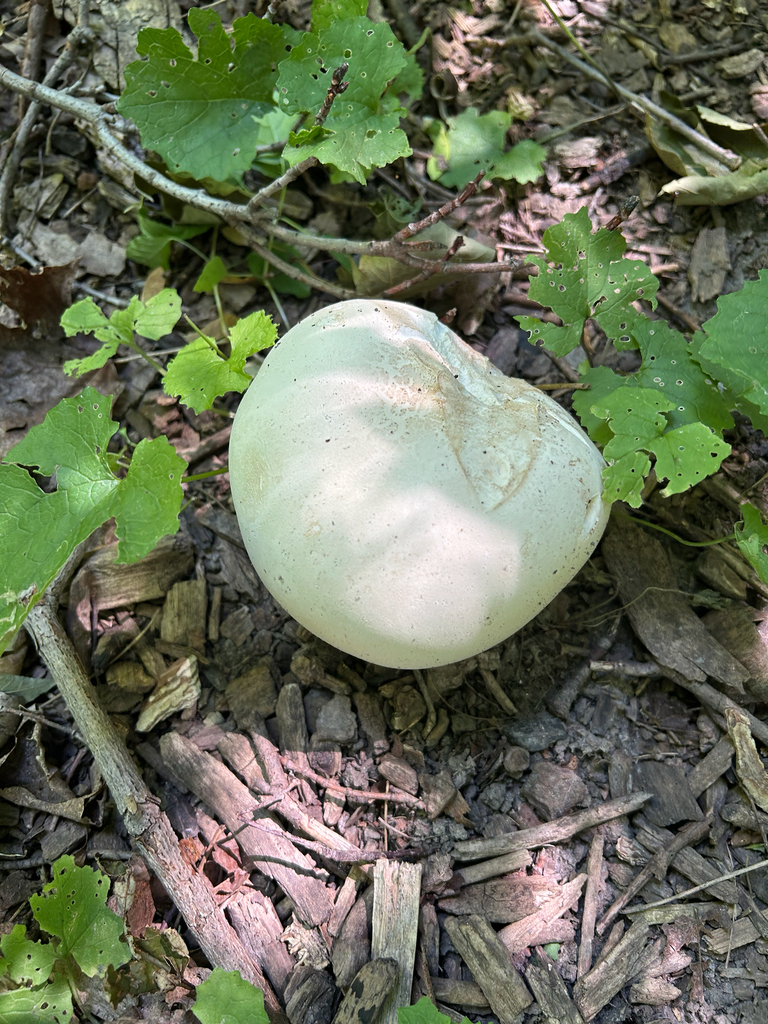
© nuthatchnicole · iNaturalist · CC BY 4.0
Scientific Classification & Quick Facts
Classification
Known For
Detailed measurements for this species are still being verified.
The giant puffball is among the largest fungi on Earth, capable of reaching the size of a human head or larger. Unlike the delicate, gilled mushrooms most people picture when they think of fungi, Calvatia gigantea produces a vast, nearly spherical fruiting body filled entirely with spores—sometimes numbering in the trillions. When mature, a single giant puffball can release an enormous cloud of spores with a single disturbance, a reproductive strategy so effective that just one fruit body may contain enough spores to colonize an entire landscape.
Found across 23 countries worldwide, the giant puffball thrives in grasslands, meadows, and disturbed soil where it fruits prolifically in late summer and autumn. Its conservation status remains unknown, yet its ability to persist across diverse climates and continents suggests a species well adapted to survival. What makes this fungus especially compelling is how it challenges our assumptions about what mushrooms are and how they reproduce—a living testament to the sheer diversity hidden beneath our feet.
Identification and Appearance
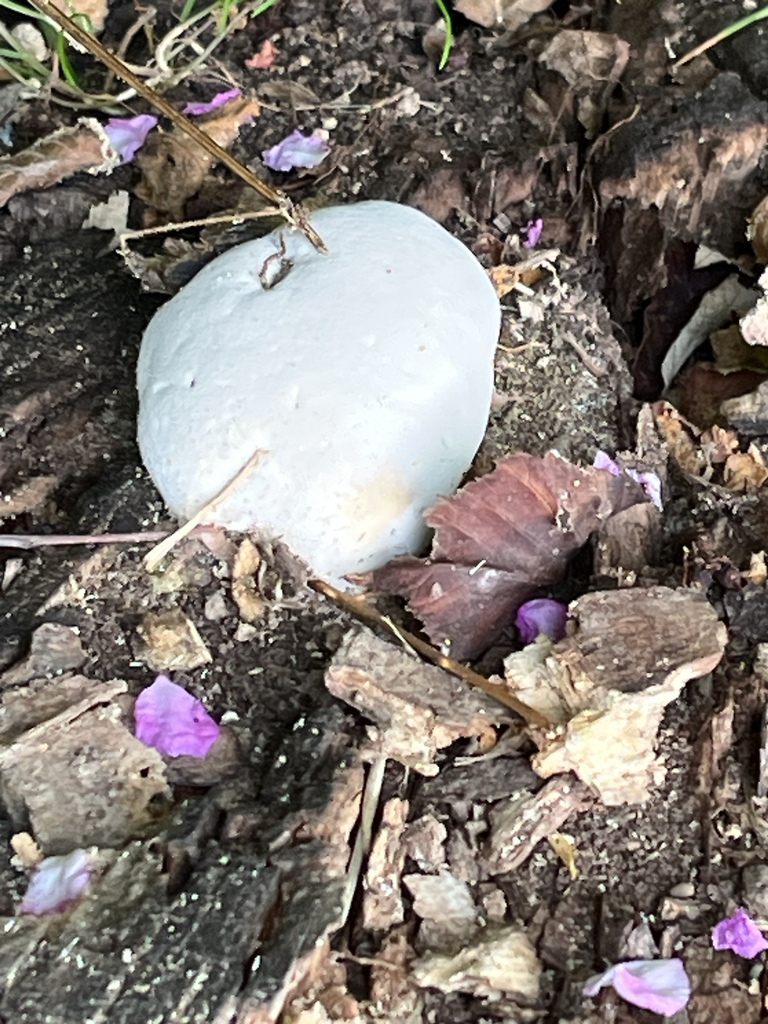
Calvatia gigantea, the Giant Puffball, is a fungus of remarkable size. Fruiting bodies typically grow 10–50 cm in diameter, though specimens can reach 80 cm across. A single specimen recorded in Thunder Bay, Ontario, Canada, weighed over 23 kg, demonstrating the species’ capacity for extreme development. Young fruiting bodies are white or cream-coloured throughout, with a smooth or slightly wrinkled surface. As the fungus matures, the outer layer transitions to brown or tan, and the interior fills with millions of microscopic spores that eventually turn olive-brown or yellowish.
Structure and Maturation
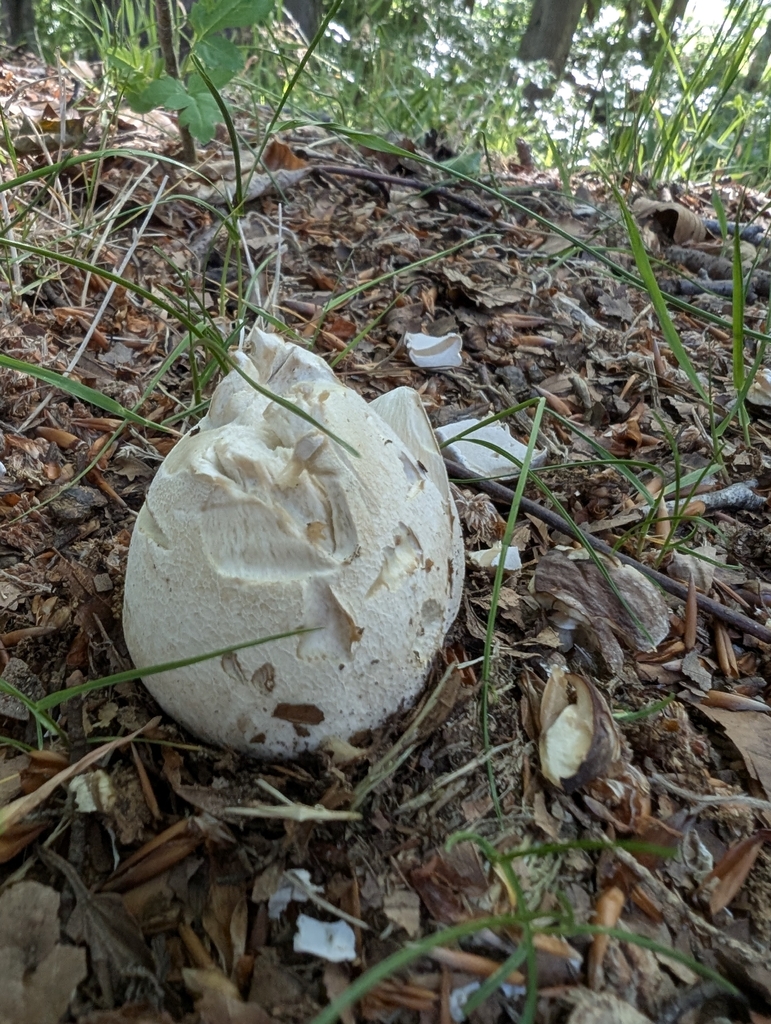
Young fruiting bodies are firm, almost football-like in their density, with a papery outer skin called the exoperidium. This outer layer eventually ruptures or peels away, revealing the spore-containing interior. At full maturity, the fungus becomes increasingly fragile, with the spore mass (gleba) reduced to a fine, dusty powder. The fruiting body sits directly on the soil or in grass with no visible stem or stalk, distinguishing it from many other puffball species that have a distinct pedestal or base.
No sexual dimorphism exists in this fungus—all fruiting bodies are morphologically identical. Individual variation in size, surface texture, and the timing of maturation depends entirely on local growing conditions, moisture availability, and soil nutrient composition rather than any genetic sex difference.
Distribution and Habitat
Calvatia gigantea, the Giant Puffball, has a scattered but widespread distribution across the Northern Hemisphere and into the Southern Hemisphere, with recorded observations from 23 countries. GBIF records show the strongest concentration in Europe, particularly in the Netherlands (86 records), Sweden (44), and Germany (34). Significant populations also occur in New Zealand (28 records), the United States (25), and Denmark (15), with smaller but established populations in Canada, Russia, Poland, and Hungary.
The species appears across a narrow elevation range, with observations clustered around 575.5 metres, suggesting it occupies mid-altitude grasslands and meadows in temperate zones rather than high alpine or lowland coastal habitats. Its presence in both Western European agricultural landscapes and North American prairies indicates an affinity for open grassland environments, though specific habitat type data are limited in current records.
Seasonal timing shows a pronounced spring emergence pattern. GBIF records reveal April as the peak fruiting month (101 observations), with significant activity also in March (66 records) and May (47 records). Winter and summer months show minimal to zero fruiting activity, reflecting the fungus’s dependency on spring moisture and moderate temperatures. This narrow fruiting window—concentrated from March through May—means the Giant Puffball is a reliable sign of spring across temperate grasslands where it occurs.
Ecology and Lifecycle
Lifecycle
Calvatia gigantea begins as mycelial threads spreading through soil and decaying organic matter, typically in grasslands, meadows, and woodland edges. This vegetative stage can persist for years, quietly decomposing plant material and building nutrient reserves. When conditions favour fruiting—adequate moisture, warm temperatures, and mature substrate—the mycelium concentrates energy into forming a fruiting body that emerges at the soil surface.
The giant puffball develops rapidly as a solid, white sphere that can reach 20 centimetres or more in diameter within days. During its early expansion, the interior remains firm and pale—this is the edible stage prized by foragers. As the fungus matures, internal structures differentiate: the outer wall (peridium) thickens and often becomes tan or cream-coloured, while the interior transforms into millions of spores suspended in a dry, powdery matrix called the gleba. When fully mature, the top of the fruiting body cracks open or develops pores, allowing spores to escape into the air when the puffball is touched or struck by wind and rain.
Ecological Role
Giant puffball functions as a saprotrophic decomposer, breaking down dead plant material and enriching soil with recycled nutrients. Its mycelial network colonizes grassland soils and leaf litter, participating in the slow mineralization of organic compounds. This process supports the fertility of meadows and open woodland habitats, benefiting the broader plant community.
The fruiting bodies also contribute to ecosystem food chains. Insects, small mammals, and other fungi may feed on the young fruiting bodies or spores. In temperate grasslands, populations of giant puffballs can be locally abundant in years with favourable conditions, creating visible and sometimes economically significant fungal crops.
Uses
Giant puffball is considered edible and is harvested for culinary use when young and the interior is still pure white and firm. At this stage, it has a mild, slightly nutty flavour and can be sliced, breaded, and fried or added to soups and stews. European and North American foragers have long valued it as a choice wild mushroom, and it remains commercially harvested in some regions.
Young specimens are also used in traditional and folk medicine preparations, though scientific validation of medicinal claims remains limited. The mature, spore-filled fruiting bodies have been used historically in folk remedies and experimental applications, though evidence for efficacy is anecdotal. Mature puffballs are generally not consumed due to their dense spore content and unpalatable texture.
Conservation and Threats
Calvatia gigantea, the giant puffball, has not been formally evaluated by the IUCN Red List, meaning it lacks an official conservation status designation. This absence of assessment is common for fungi, many of which have received less systematic evaluation than vertebrates and flowering plants. The species appears to maintain stable populations across its range, with reports indicating an increasing population trend in recent years.
Threats
The giant puffball faces no documented major threats at present. Unlike many fungi species threatened by habitat loss or atmospheric pollution, this puffball occupies meadows, grasslands, and open woodland areas that remain relatively widespread across temperate regions. Its ability to fruit in disturbed soils and cultivated landscapes means it can persist even in human-modified environments.
Conservation Efforts
No formal conservation programmes or legal protections target the giant puffball specifically. Its favorable population status and lack of significant threats mean that active intervention is unnecessary. The species benefits indirectly from grassland and meadow conservation efforts undertaken for other species, particularly in Europe and North America where such habitats are increasingly recognized as important for biodiversity.
Fun Facts
The giant puffball is one of nature’s most dramatic fungi, capable of producing a fruiting body the size of a basketball. Despite its massive appearance, it remains relatively unknown to most people outside of mycological circles—yet those who discover one in their meadow or field rarely forget the encounter.
- Giant puffballs are edible only when young and uniformly white throughout—once they begin to yellow or brown, the interior develops toxic compounds and the texture becomes inedible paste.
- A mature giant puffball releases its spores through a single pore at the top, called the ostiole, which can discharge up to 7 trillion spores in a single gust of wind over the course of several weeks.
- These fungi fruit during late summer and autumn in temperate zones worldwide, but they appear unpredictably from year to year in the same location—you cannot rely on finding one in your favorite field twice in a row.
- The giant puffball has no root or stem; the entire visible fruiting body is essentially a bag of spores attached to the soil by a thin cord called the rhizomorph.
- In the 19th and early 20th centuries, amateur naturalists would collect giant puffballs to dry and keep as curiosities, mistakenly believing their spore clouds had medicinal properties.
- A single giant puffball can produce enough spores to theoretically spread the species across an entire continent if conditions were ideal—yet most spores perish within hours of release.
Photo Gallery
nuthatchnicole · CC BY 4.0
Related Species
Was this profile helpful?