
Aves · Sphenisciformes
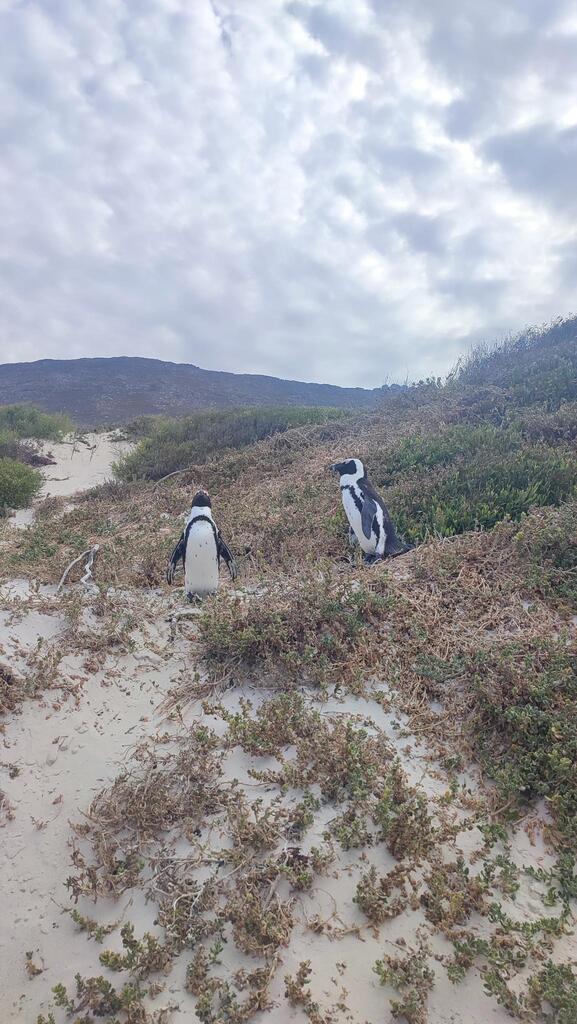
African Penguin
Spheniscus demersus
Critically EndangeredAlso known as: AFPE, African Penguin / Jackass Penguin, Black-footed Penguin, Jackass Penguin, South African penguin
© k · iNaturalist · CC BY 4.0
Scientific Classification & Quick Facts
Classification
At a Glance
The African penguin is the only penguin species found on the African continent, a flightless seabird perfectly adapted to the cold Atlantic waters off southern Africa. With its distinctive black and white plumage and characteristic pink patch around the eye, it cuts a striking figure on rocky islands and coastal colonies. Yet beneath this elegant appearance lies a species in profound crisis: the African penguin is classified as Critically Endangered, clinging to survival across just two countries, South Africa and Namibia.
Once abundant across the southern African coast, the African penguin now depends on a fragmented network of breeding colonies, primarily concentrated around South Africa’s southwestern tip. Historical overhunting for eggs and guano, combined with oil spills, fishing pressure, climate-driven food shortages, and habitat degradation, has pushed the species to the brink of extinction. Understanding the African penguin’s biology, behavior, and ecological role is essential not only for grasping why this iconic bird matters, but for discovering what might yet save it from disappearing entirely.
Identification and Appearance
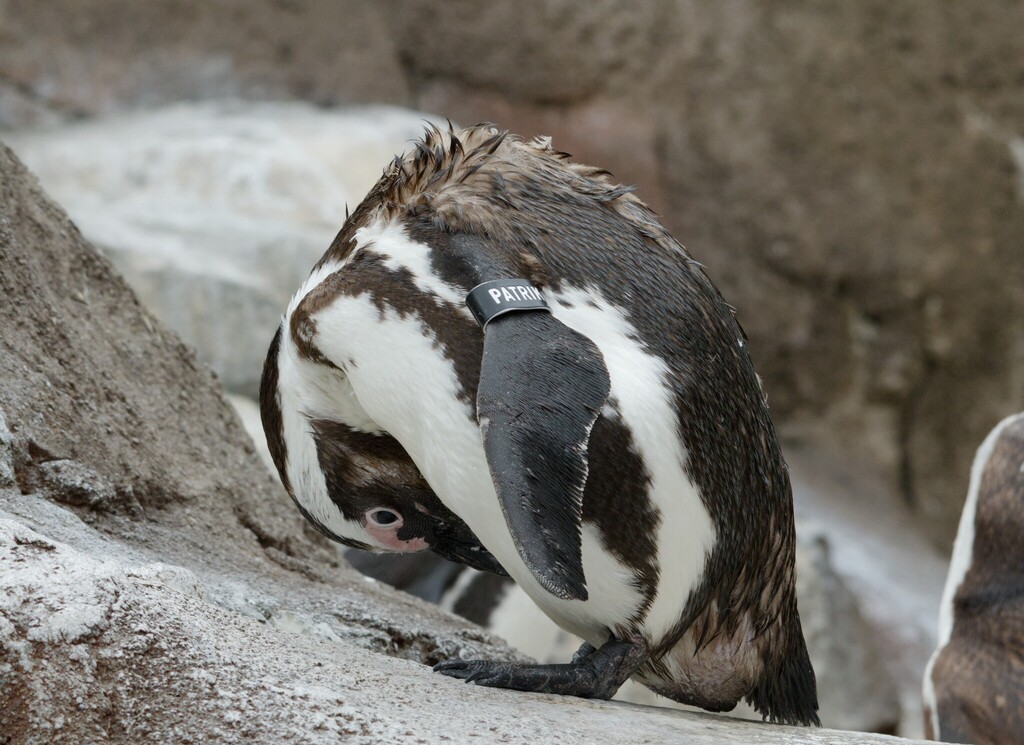
Spheniscus demersus, the African penguin, is a medium-sized penguin standing 60–70 centimetres tall and weighing between 2.2–3.5 kilograms. This stocky, upright bird is immediately recognizable by its striking black-and-white plumage: the head, back, flippers, and tail are glossy black, while the underparts from chin to belly are pure white. A distinctive black facial mask extends from the eye region, interrupted only by a characteristic white patch on each cheek. The beak is moderately long, measuring 4.8–6.5 centimetres, and is black with occasional reddish tones at the base.
African penguins possess a streamlined body built for aquatic efficiency. Their flippers are relatively short and powerful, set low on the body to aid in underwater propulsion. The legs are positioned far back on the body—a typical penguin adaptation that makes them awkward on land but supremely effective swimmers. During breeding season, bare skin around the eye and cheek becomes tinged with pink or red, adding visual emphasis to the facial mask. No significant sexual dimorphism exists; males and females are similar in size and appearance, though males are marginally larger on average.
Distribution and Habitat
Spheniscus demersus, the African Penguin, has an extremely restricted range confined to southern Africa. The species occurs in only two countries: South Africa and Namibia. South Africa hosts the overwhelming majority of records (296 observations), while Namibia accounts for a small fraction (4 observations), indicating that the species’ stronghold lies within South African waters and coastal regions.
The African Penguin is a marine species with no elevation data recorded in standard surveys, as it inhabits oceanic and coastal environments rather than inland terrain. The birds depend on rocky islands, coastal cliffs, and nearshore waters for breeding, foraging, and shelter. Their distribution is tightly linked to the cold Atlantic currents of the Benguela Current system, which delivers nutrient-rich waters and abundant fish stocks essential for survival.
Seasonal presence
Observations show a distinct seasonal pattern, with peak activity occurring in March (85 records). January and February also record substantial sightings (66 and 49 records respectively), suggesting heightened visibility during the austral summer and early autumn months. Sightings decline sharply from April onward, dropping to zero by July, indicating either reduced observer effort during winter months or genuine shifts in penguin presence patterns related to breeding and feeding cycles.
Biology and Behavior
Behavior
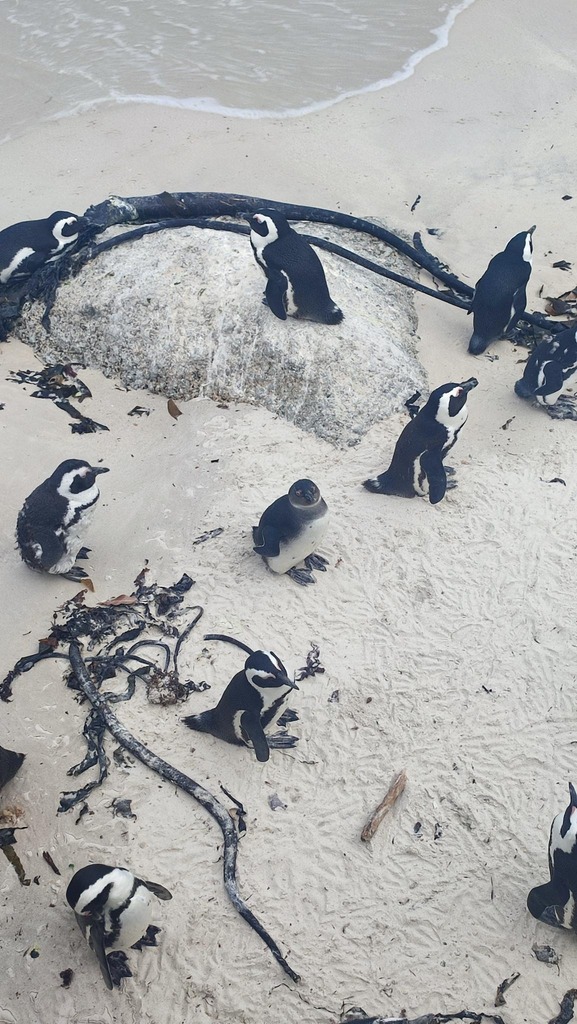
African Penguins are highly social birds that live in large breeding colonies, sometimes numbering thousands of individuals on islands and coastal outcrops off southern Africa. They are vocal creatures, producing loud braying calls and other vocalizations to communicate with mates and defend nesting territory. During the day, they spend considerable time in the water hunting, but return to land in late afternoon to rest and socialise with colony members.
These penguins are excellent swimmers, using their flipper-like wings to propel themselves underwater with remarkable agility. On land, they are less graceful but capable of moving quickly across rocky terrain and diving into the sea from considerable heights. They exhibit strong site fidelity, returning to the same breeding colonies and often the same nesting sites across multiple years.
Diet
African Penguins are carnivorous marine hunters that feed primarily on small fish and squid. Their preferred prey includes sardines, anchovies, and other schooling fish species that inhabit the cold waters of the Benguela Current. They dive to depths of 20 to 80 metres, remaining submerged for 1 to 2 minutes while pursuing prey underwater.
Feeding success depends heavily on oceanographic conditions and fish availability. During years of poor upwelling or fish scarcity, penguins struggle to find adequate food, which directly impacts breeding success and chick survival. Adults typically spend 4 to 8 hours per day foraging at sea, with diving bouts interspersed with brief surface intervals.
Reproduction
African Penguins breed year-round, though breeding intensity peaks between February and August in southern Africa. Pairs are typically monogamous within a breeding season and often reunite with the same partner across multiple years. Courtship involves vocalizations, posturing, and displays that reinforce pair bonds before egg-laying.
Females lay two eggs in burrows, rock crevices, or shallow scrapes on breeding islands. Both parents share incubation duties over approximately 38 to 40 days. Chicks fledge at around 60 to 65 days old, after which both parents continue provisioning them with food for several weeks. Lifespan in the wild averages 27.3 years, allowing individuals to breed successfully across many seasons.
Conservation and Threats
The African Penguin is classified as Critically Endangered on the IUCN Red List, representing the highest conservation concern short of extinction in the wild. This designation reflects a catastrophic decline in the species’ population over recent decades, driven by multiple interconnected threats to breeding colonies and marine habitat. Despite its precarious status, the population trend is currently increasing, indicating that targeted conservation efforts are beginning to reverse the decline.
Threats
Oil pollution poses the most severe and immediate threat to African Penguins. The species occupies coastal waters and breeding islands along major shipping lanes, exposing colonies to recurring oil spills and chronic pollution. In 1972, the collision of the Oswego-Guardian and Texanita oiled approximately 500 penguins. By 1975, oil pollution from tanker shipwrecks and bilge pumping had killed tens of thousands of individuals—a crisis compounded when the Suez Canal blockade rerouted 650 oil tankers monthly past the Cape of Good Hope near critical penguin breeding sites. More recently, small-scale spills at the Port of Ngqura (less than 400 litres each) have occurred since bunkering activities began in 2016, underscoring the persistent vulnerability of colonies to maritime incidents.
Secondary threats emerge during rescue and rehabilitation efforts. When penguins are brought inland following oil spills, they face exposure to parasites and disease vectors—particularly mosquitoes carrying avian malaria. Data show that avian malaria has caused approximately 27% of deaths annually among rehabilitated African Penguins, illustrating how well-intentioned interventions can introduce unexpected mortality risks. Overfishing and declining fish stocks in core foraging areas, combined with climate-driven changes to marine productivity, further constrain the species’ ability to sustain breeding colonies.
Conservation Efforts
African Penguins receive legal protection across their range in South Africa and Namibia, with key breeding colonies designated as marine protected areas. Multiple rehabilitation centres operate along the South African coast, specifically trained to treat oiled and injured individuals while minimizing disease exposure. International shipping regulations now mandate stricter pollution controls in African waters, though enforcement remains inconsistent. Research programmes monitor population trends and breeding success, providing early warning of emerging threats and informing adaptive management strategies.
Fun Facts
- The African penguin is the only penguin species found in the Old World, making it unique among all penguin populations globally. Every other penguin species lives in the Southern Hemisphere, primarily in Antarctic and sub-Antarctic regions.
- Adult African penguins weigh just 2.2–3.5 kg (4.9–7.7 lb) and stand 60–70 cm (24–28 in) tall, making them among the smallest penguin species. Despite their modest size, they are formidable hunters capable of diving to considerable depths in pursuit of fish.
- These penguins possess striking pink patches of bare skin above their eyes that brighten during breeding season, functioning as a visual signal to potential mates. The intensity of this coloration can vary between individuals and may indicate health or breeding condition.
- Their plumage follows a sharp color boundary: glossy black upper parts contrast dramatically with pure white underparts marked by a distinctive black band across the chest and black spots scattered across the belly. This high-contrast pattern aids in camouflage during underwater hunting, breaking up their silhouette to prey species.
- African penguins are primarily nocturnal foragers, hunting under cover of darkness to avoid visual predators and seabirds. They return to land during daylight hours to rest, molt, and breed in large, noisy colonies.
- Unlike many penguin species that breed in massive colonies of hundreds of thousands, African penguins typically nest in smaller, more dispersed groups in burrows, crevices, and under vegetation on islands and mainland coasts. This breeding behavior makes them more vulnerable to human disturbance and predation by introduced species.
Conservation Status
LC · NT · VU · EN · CR (Critically Endangered) · EW · EX
Photo Gallery
k · CC BY 4.0
Related Species
Was this profile helpful?