
Aves · Accipitriformes
Golden Eagle
Aquila chrysaetos
Least ConcernAlso known as: American War Bird, Bird of Jupiter, Calumet Bird, GOEA
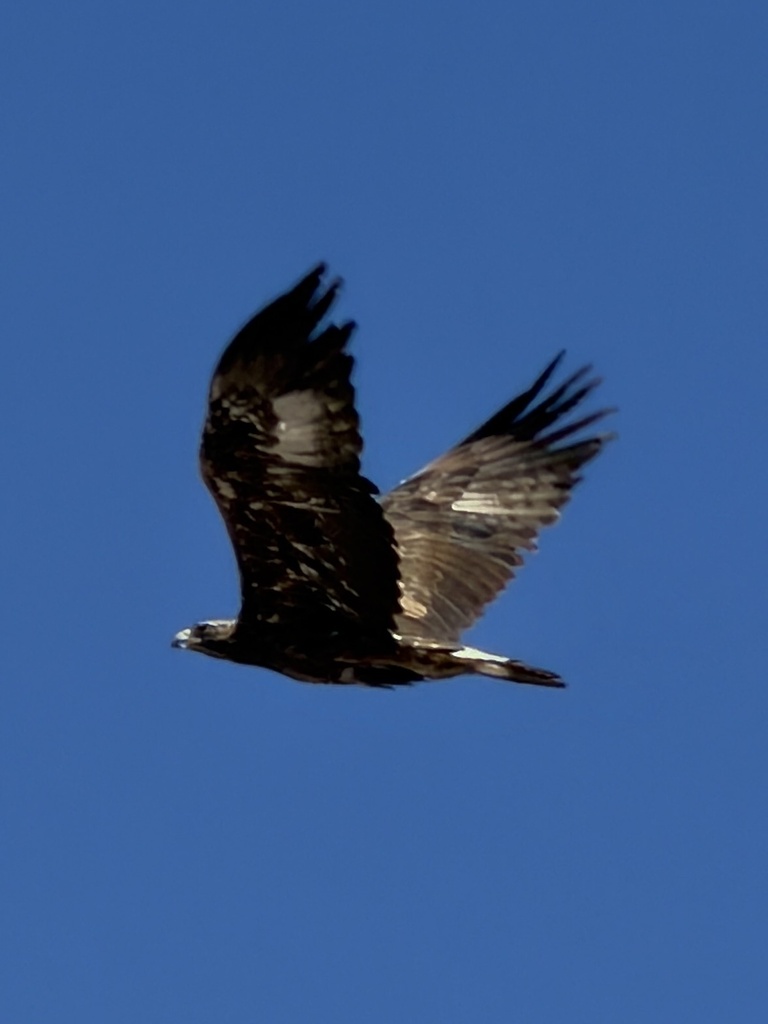
© Matt Berger · iNaturalist · CC BY 4.0
Scientific Classification & Quick Facts
Classification
At a Glance
The golden eagle is one of the most formidable avian predators on Earth, commanding the skies across the Northern Hemisphere and beyond. With powerful talons, keen eyesight, and explosive hunting speed, this massive raptor has captivated human cultures for millennia—from ancient heraldry to indigenous traditions. Classified as Aquila chrysaetos, the species is distributed across approximately 12 countries, spanning diverse terrain from sea-level deserts to high mountain ranges, and maintains a conservation status of Least Concern globally.
Despite their apex status and widespread presence, golden eagles face ongoing pressures from habitat loss, collision with wind turbines, and persecution in agricultural regions. Their longevity—individuals regularly living 30 years or more in the wild—means populations respond slowly to conservation efforts but also suggests that protected populations can recover. Understanding this species is essential for both wildlife management and appreciating the ecological role of large predators in modern landscapes.
Identification and Appearance
Aquila chrysaetos, the Golden Eagle, is one of the largest and most powerful raptors in the Northern Hemisphere. Adults measure 66 to 102 centimetres in length, with a wingspan reaching 1.8 to 2.34 metres. This imposing size makes the species immediately recognizable in open terrain, where it hunts from great heights.
Plumage and Coloration
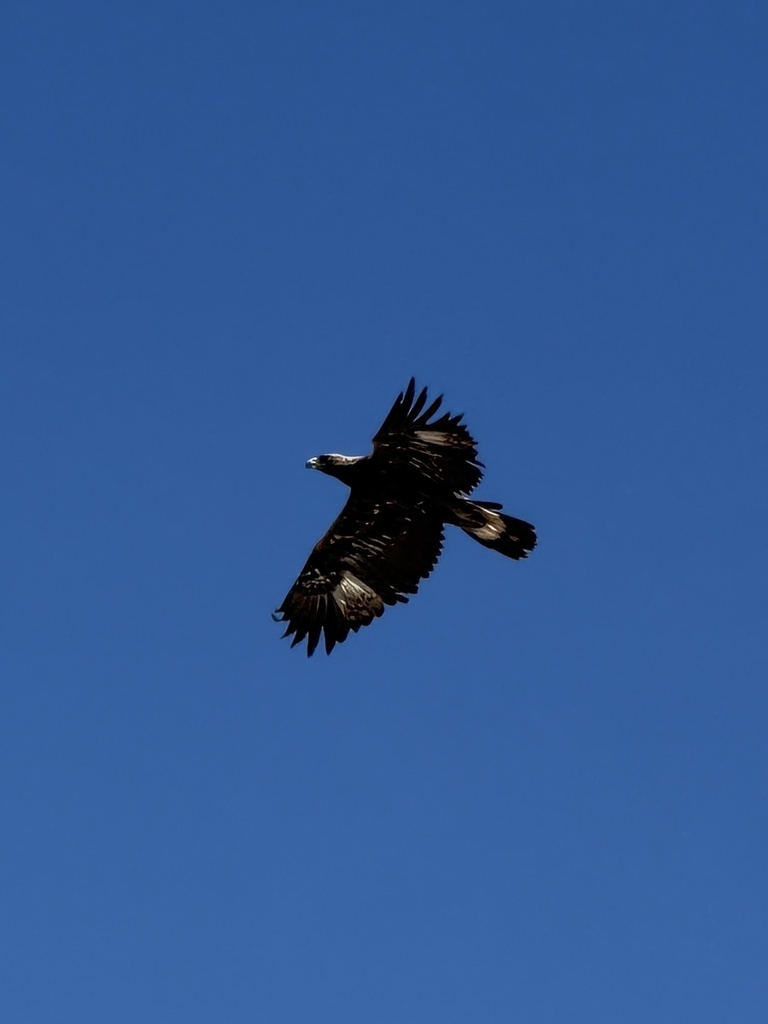
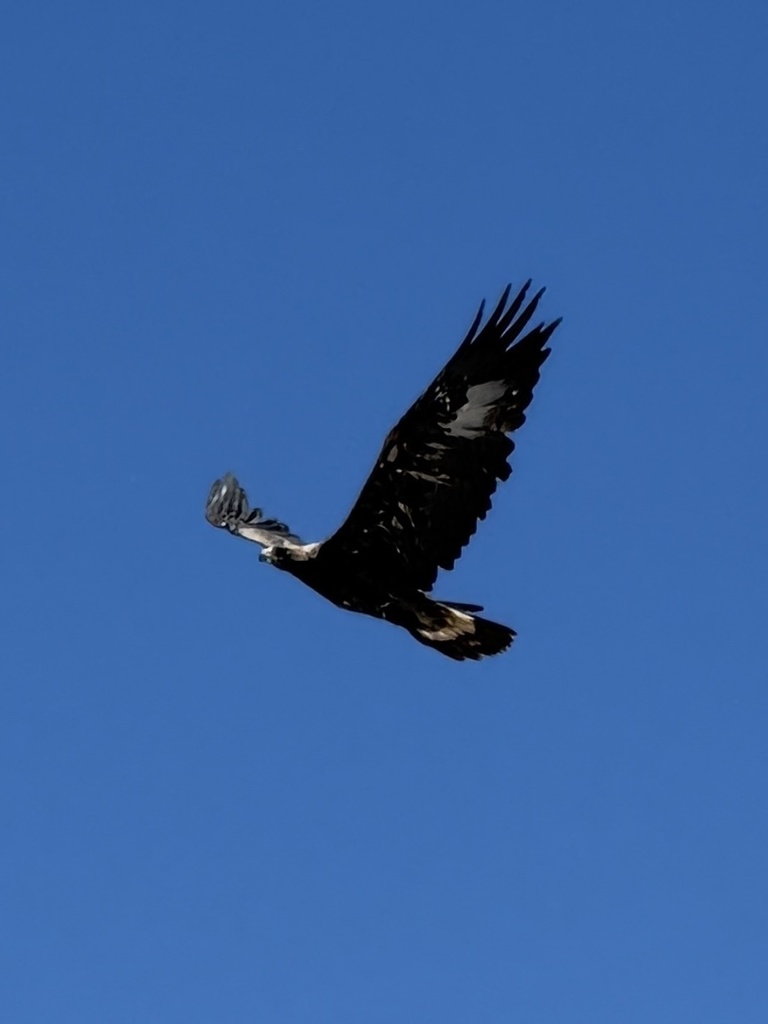
The species derives its common name from the warm golden-brown plumage on the head and nape, which becomes particularly bright in strong sunlight. The rest of the body is dark brown to blackish-brown, creating a striking two-toned appearance. Younger birds are darker overall, with white patches on the wing coverts and tail base that fade as they mature into full adult plumage over several years. This gradual color change means that field identification often depends on the bird’s age.
Structure and Notable Features
The Golden Eagle possesses characteristically broad, long wings held in a slight dihedral (V-shape) during soaring flight. The tail is relatively long and rounded. The feet and talons are massive and yellow, capable of exerting crushing force on prey. The head appears small in proportion to the body, a feature typical of large aquiline eagles. Both males and females share the same plumage pattern, though females are notably larger than males—a common pattern in raptors where the female may weigh up to 20 percent more than her mate.
Distribution and Habitat
Aquila chrysaetos, the Golden Eagle, is found across the Northern Hemisphere and parts of North Africa, with its global range spanning at least 12 countries. The species shows a striking concentration in Scandinavia, particularly Sweden, which accounts for the vast majority of recorded observations (189 records). Norway follows with 55 records, making these two countries the primary stronghold of documented Golden Eagle presence. Beyond Scandinavia, sightings extend into North America, with 25 records from the United States and 5 from Canada, as well as scattered observations across central Asia, southern Europe, and the Middle East.
Within its range, the species exhibits a highly seasonal pattern of observation. January records dominate with 300 observations, while all other months show no recorded sightings in the available dataset. This pronounced peak in January likely reflects either concentrated migration timing, increased observer effort during winter months, or genuine aggregation of birds in accessible locations during the northern winter season.
The specific elevation preferences and detailed habitat requirements are not quantified in current occurrence data, though Golden Eagles are known to favour open and semi-open terrain across their range. The species is capable of thriving in diverse landscapes, from boreal forests and mountainous regions to steppe and grassland environments, provided sufficient prey availability and suitable nesting sites exist. Its ability to exploit varied terrain has enabled it to maintain populations across such a geographically dispersed and climatically diverse range.
Biology and Behavior
Behavior
Golden Eagles are solitary hunters and intensely territorial birds of prey. They spend much of their day soaring at great heights, scanning vast territories for movement below. These eagles perch prominently on high vantage points—cliff ledges, tall trees, or rocky outcrops—from which they can survey hunting grounds and watch for intruders. When not actively hunting, they rest and preen, maintaining their powerful plumage in peak condition.
Their daily activity follows the availability of prey and weather conditions. Clear mornings typically see the most hunting activity, as rising air currents make soaring easier. Golden Eagles are relatively silent birds outside the breeding season, though they produce sharp calls during territorial encounters and nest defense. Pairs occupying the same territory for years establish routines and may hunt cooperatively during challenging seasons, though they generally forage independently.
Diet
Golden Eagles are carnivores that hunt a wide range of prey. Hares and rabbits form the bulk of their diet across most of their range, supplemented by ground squirrels, prairie dogs, marmots, and other medium-sized mammals. In some areas, game birds like grouse, ptarmigan, and pheasants are important food sources. Smaller prey including voles, mice, and young corvids are taken opportunistically, particularly when larger prey becomes scarce.
Hunting technique varies with terrain and prey type. In open country, eagles use high-altitude perching and soaring to locate movement, then dive at prey with talons extended. Over rougher terrain or in forested regions, they may hunt from low-level flight or pursue prey through vegetation. A single Golden Eagle requires roughly 200–250 grams of meat per day, but hunting success varies seasonably, leading to feast-or-famine feeding patterns.
Reproduction
Golden Eagles breed in spring and early summer, typically returning to the same nesting territory year after year. Pairs form long-term bonds and may remain together for many years. Courtship involves elaborate aerial displays—cartwheeling dives, talon-grappling, and undulating flight patterns—performed over several weeks before egg-laying.
Nesting occurs on cliff ledges, tall trees, or rocky outcrops. A typical clutch contains one to three eggs, most commonly two. Incubation lasts about 43–45 days, with the female doing most of the sitting while the male brings food. Eaglets remain in the nest for 65–70 days before fledging. Parental care extends beyond fledging; young eagles remain dependent on their parents for several months, learning hunting skills through guided foraging trips. Maturity and breeding readiness are not reached until 4–5 years of age. Lifespan in the wild can exceed 48 years, allowing individuals to raise many successive generations.
Conservation and Threats
The Golden Eagle is classified as Least Concern on the IUCN Red List, indicating that the species faces no immediate threat of extinction at a global scale. This stable status reflects successful recovery efforts across much of its range following historical persecution and habitat loss in the 20th century.
Threats
Golden Eagles encounter multiple threats in different regions. Persecution—including illegal shooting and poisoning—remains a serious concern in areas where the species is perceived as a threat to livestock. Habitat loss through afforestation, development, and land use change degrades nesting and hunting grounds across their range. Power line collisions and electrocution affect populations in some regions, particularly where transmission infrastructure crosses flight corridors. Wind turbines pose an emerging threat where energy infrastructure expands into eagle habitat. Additionally, reduced prey availability due to pesticide use and ecosystem change impacts breeding success and survival rates.
Conservation Efforts and Legal Protections
Golden Eagles benefit from legal protections across much of their range. In North America, Europe, and parts of Asia, the species is protected by national wildlife laws that prohibit hunting and trade. International agreements including the Bern Convention and Bonn Convention extend protection across borders. Conservation programmes focus on reducing persecution through education and compensation schemes for livestock losses, reinstating prey populations through habitat restoration, and retrofitting power lines with collision-avoidance devices. Research and monitoring initiatives track population health and identify emerging threats in vulnerable regions.
Cultural Significance
The golden eagle has captivated human imagination since the earliest recorded civilizations. Across cultures spanning continents and millennia, this bird has been treated not as an ordinary animal but as a being of profound spiritual and symbolic power. Most early-recorded societies regarded the golden eagle with reverence, elevating it to a status rarely granted to other wildlife.
In pre-Hispanic Mesoamerica, the golden eagle held central importance to Aztec cosmology and identity. The god Huitzilopochtli—tribal deity and sun god—promised his people that they would know where to establish their city when they witnessed the sun itself manifested as an eagle perched upon a cactus bearing fruit red and shaped like a human heart. This vision guided the founding of Tenochtitlan, and the image became so foundational that it persists today on the Mexican flag. The scene carries astronomical, geomantic, and mythological significance, embedding the golden eagle into the very origin story of one of the Americas’ greatest civilizations.
Fun Facts
Golden eagles rank among nature’s most formidable predators, combining raw power with extraordinary aerial skill. Here are some striking facts about this remarkable raptor.
- Northern Hemisphere champion. The golden eagle is the most widely distributed species of eagle in the Northern Hemisphere, ranging across North America, Europe, Asia, and North Africa. Its adaptability to diverse climates and terrain makes it one of the few large raptors found in both arctic tundra and subtropical regions.
- A telltale disguise in youth. Immature golden eagles are easily mistaken for different species entirely: they sport white patches on the tail and often white markings on the wings, creating a striking contrast that disappears as they mature into uniformly dark brown adults. This transformation occurs gradually over their first four to five years of life.
- Weapons of precision. Golden eagles hunt using a lethal combination of agility, speed, powerful feet, and talons up to 5 centimetres long—as sharp and formidable as a grizzly bear’s claws. A single talon strike can pierce bone and deliver fatal wounds to prey much larger than the eagle itself.
- Rodent specialists with a taste for hares. Their main prey includes hares, rabbits, marmots, and ground squirrels, which together make up the bulk of their diet across most of their range. In some regions, they will also take ptarmigan, grouse, and other birds, though ground mammals remain their overwhelming preference.
- Stoop speed rivals jets. When diving to capture prey, golden eagles can reach speeds exceeding 240 kilometres per hour—faster than many small aircraft. This explosive dive, or “stoop,” gives prey almost no chance to escape once spotted.
- Pair bonds that last decades. Golden eagles mate for life and return to the same nest year after year, adding new material to it until some nests reach three metres in diameter and weigh over a tonne. The same pair may occupy one territory for 30 years or more.
- Ancient symbols across cultures. Golden eagles feature prominently in the mythology, heraldry, and national symbolism of cultures worldwide—from ancient Rome to modern nations including Germany, Mexico, and Kazakhstan. Their commanding presence and prowess have made them enduring symbols of power and freedom across human history.
Ecology
Diet
Behavior
Conservation Status
LC (Least Concern) · NT · VU · EN · CR · EW · EX
Photo Gallery
Matt Berger · CC BY 4.0
Related Species

Was this profile helpful?