
Aves · Accipitriformes
Osprey
Pandion haliaetus
Least ConcernAlso known as: Fish Hawk
© Jan Vršovský · iNaturalist · CC BY-SA 4.0
Scientific Classification & Quick Facts
Classification
At a Glance
The osprey plunges from the sky at speeds exceeding 60 kilometres per hour, talons extended, to snatch fish from the water’s surface with surgical precision. This magnificent raptor has evolved as one of nature’s most specialised fish hunters, equipped with a suite of remarkable adaptations—reversible outer toes, rough footpads, and eyes tuned to detect movement beneath the water—that make it lethally efficient at its singular task. Found across 33 countries on every continent except Antarctica, the osprey has secured its place as a truly global predator.
Listed as Least Concern by conservation authorities, the osprey represents a conservation success story in many regions, though its recovery from historical persecution and pesticide poisoning varies geographically. Its ability to thrive near humans—nesting on power poles, artificial platforms, and coastal structures—has allowed it to recover in areas where it once faced extirpation. What makes the osprey especially compelling is not just its hunting prowess or global distribution, but its remarkable capacity to move us: few raptors inspire the kind of public devotion and protection efforts that the osprey commands.
Identification and Appearance
The osprey is a large, powerfully built raptor weighing 0.9–2.1 kilograms and measuring 50–66 centimetres in length. Its wingspan extends 127–180 centimetres, making it a commanding presence over water. The plumage is predominantly dark brown above and white below, with a distinctive dark eye-stripe running across each cheek. The head is predominantly white, creating striking contrast with the darker back and wings. Females are noticeably larger than males, particularly in body mass and wing length.
Several anatomical features set the osprey apart from other diurnal birds of prey. Its outer toes are reversible—a trait shared only with owls among raptors—allowing the bird to grip slippery prey with two toes forward and two behind. The talons are rounded rather than grooved, and the leg scales are reticulated rather than smooth. Most distinctively, the osprey’s toes are of equal length, a departure from the typical raptor condition. These adaptations combine to make the osprey an extraordinarily efficient fish hunter, capable of securing catches that would slip through the grasp of other raptors.
Plumage and Field Marks
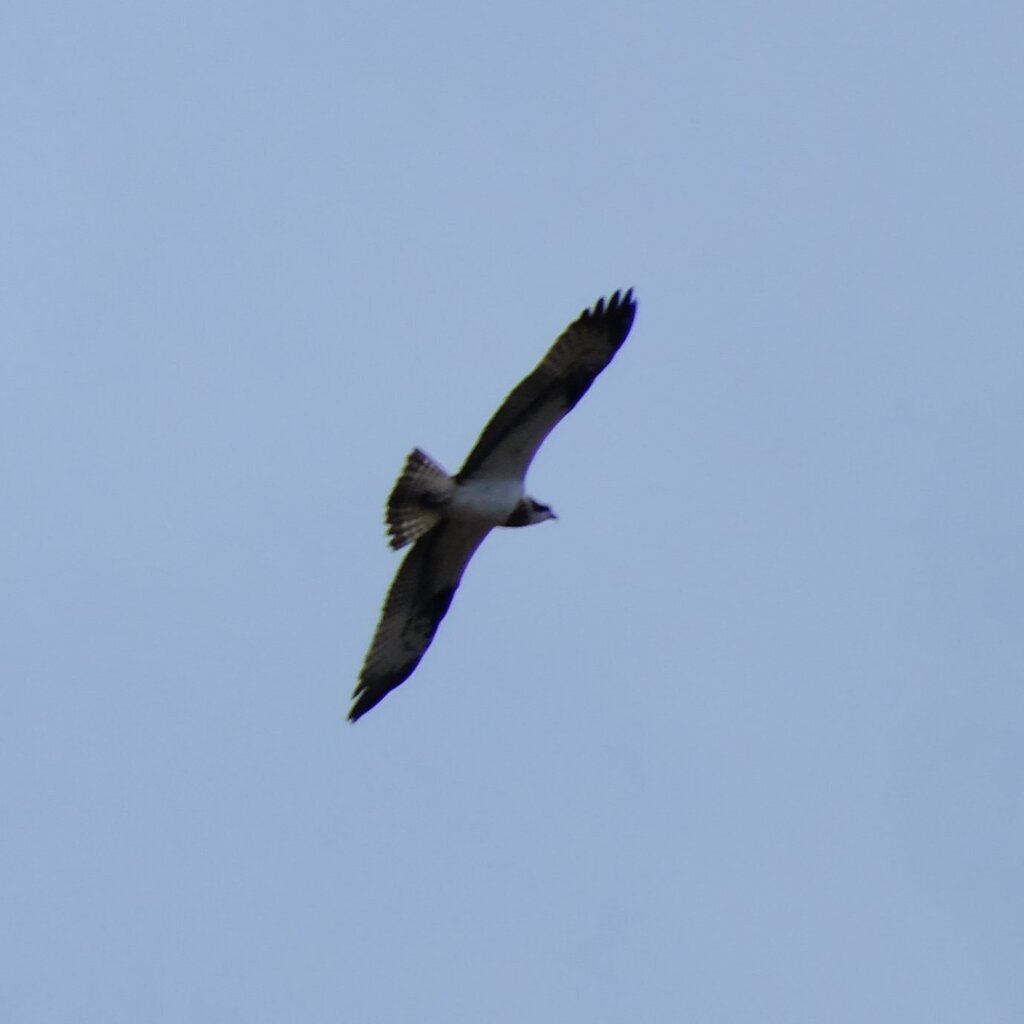
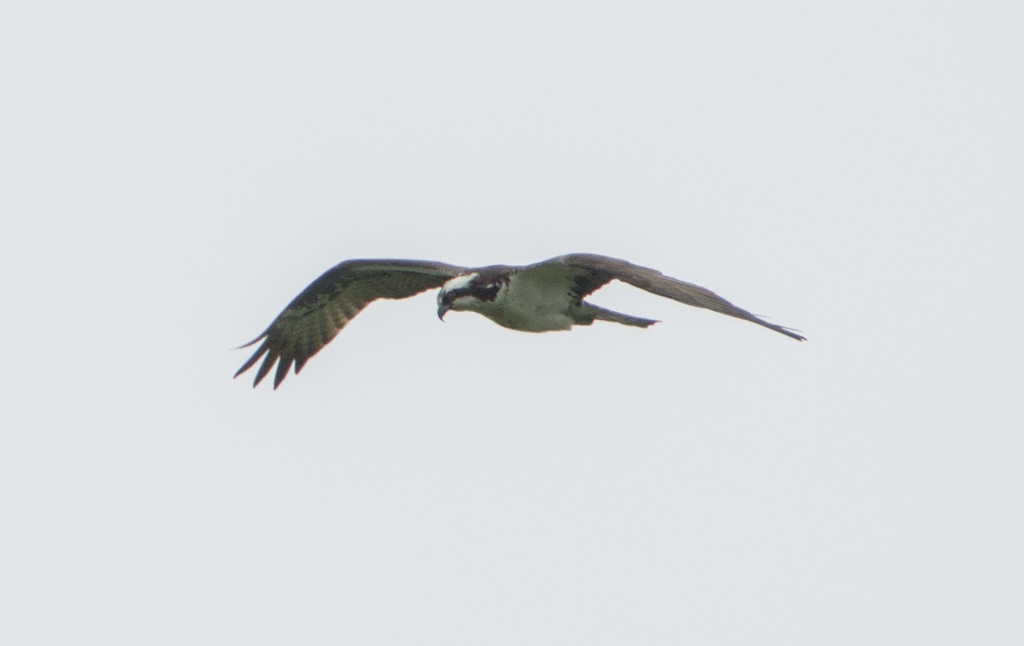
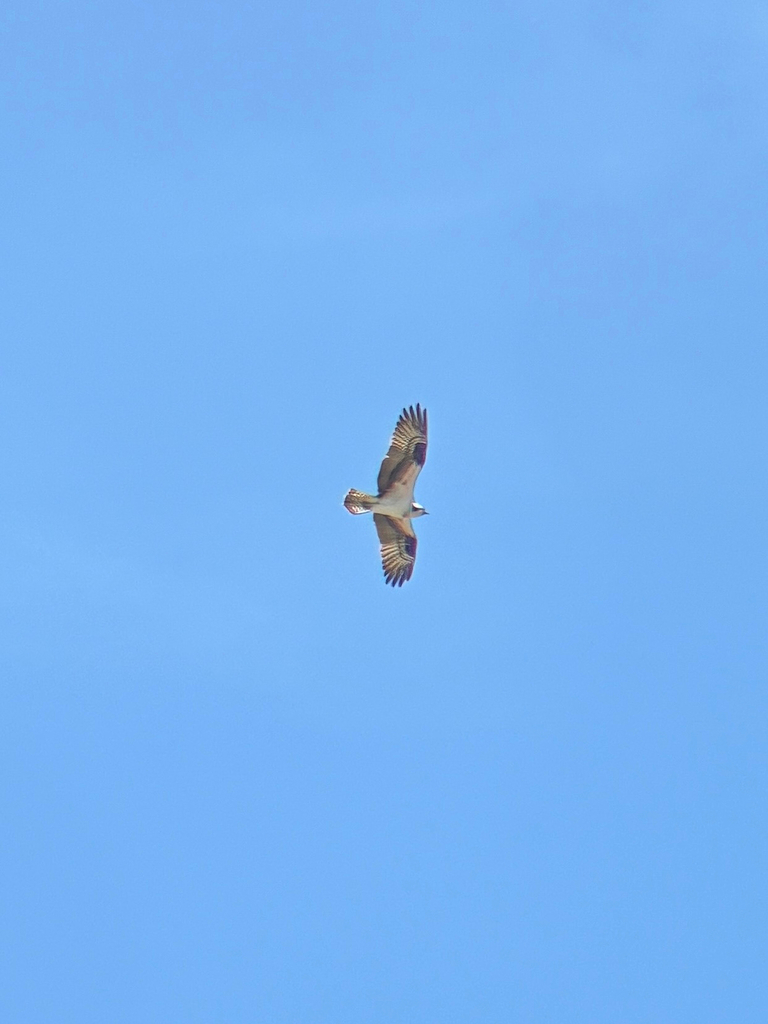
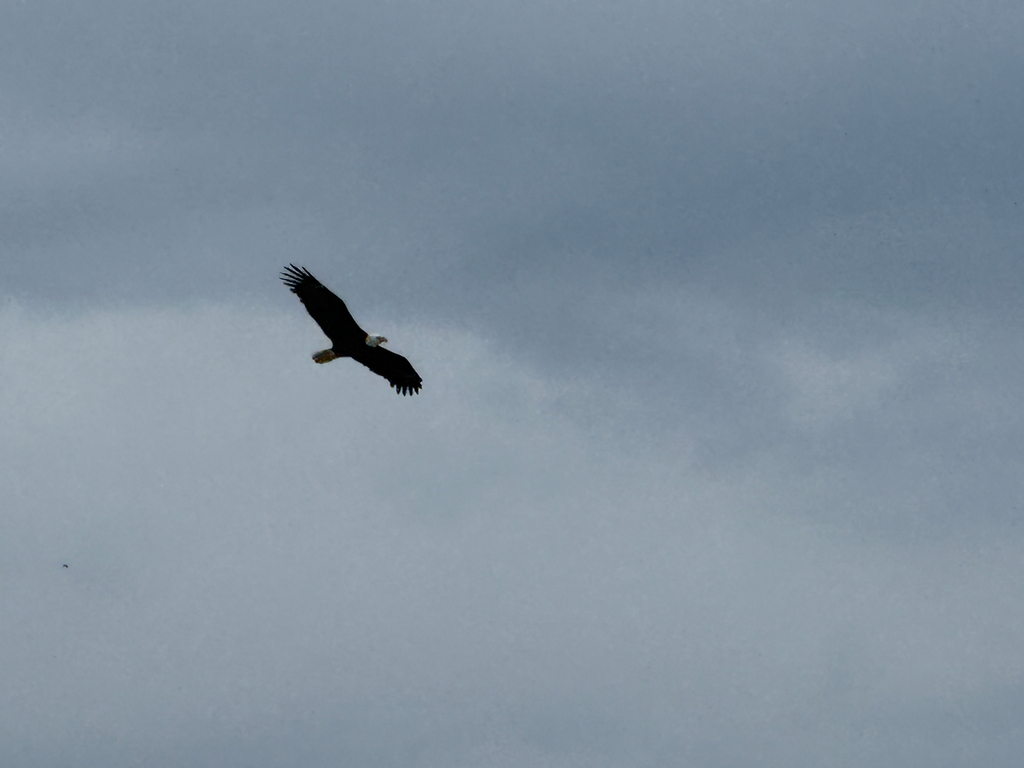
In flight, the osprey presents a characteristic silhouette: long, angled wings and a relatively short tail create a gull-like profile. The undersides of the wings are predominantly white with dark patches at the wrist (carpal joint), producing a distinctive pattern visible from considerable distances. The dark eye-stripe and white crown are reliable field marks visible even at distance. Juvenile birds resemble adults but show buff-tinged underparts and a paler crown, maturing fully within their first year.
Distribution and Habitat
Pandion haliaetus has a global distribution spanning 33 countries across multiple continents. The species is most abundant in the United States, where GBIF records show 159 documented occurrences—substantially higher than any other region. Southern Africa supports significant populations, with South Africa recording 62 occurrences and additional sightings in Zimbabwe, Namibia, and Kenya, indicating strong representation across the eastern and southern portions of the continent.
Beyond these primary strongholds, the osprey maintains a scattered but established presence throughout its range. Mexico, Taiwan, and Australia each report single-digit occurrence counts, reflecting either localized breeding populations or transient individuals. The species’ presence across such geographically dispersed regions—from North America through Africa and into Asia-Pacific—underscores its capacity to exploit diverse coastal and freshwater environments wherever suitable fish-bearing waters exist.
Seasonal patterns play a marked role in osprey distribution. January emerges as the dominant observation month, accounting for 300 records compared to zero sightings across all other months in the available dataset. This pronounced concentration suggests that many populations undertake significant migrations, with January captures likely representing either breeding aggregations, wintering concentrations, or peak movement periods depending on hemisphere and latitude. The absence of records in subsequent months may reflect genuine absence, reduced observer effort, or the species’ tendency toward wider dispersal outside January.
Biology and Behaviour
Behavior
Ospreys are solitary hunters and highly specialized aquatic predators. They spend much of their day scanning water surfaces from the air, often hovering at heights of 10 to 40 meters before launching into dramatic plunge dives. Once airborne, an osprey adjusts the angle of its dive in real-time to compensate for light refraction, ensuring it strikes its target with precision. After catching prey, the bird typically returns to a nearby perch to feed, though it will carry fish over longer distances when necessary.
Daily activity centers entirely on hunting and feeding. Ospreys possess exceptional vision adapted specifically for detecting movement beneath water surfaces—a critical adaptation for their aquatic lifestyle. The species rarely scavenges and relies almost exclusively on live prey captured through active diving.
Diet
Fish comprise 99% of the osprey’s diet, making it strictly piscivorous. The bird typically takes live fish weighing 150 to 300 grams and measuring 25 to 35 centimeters in length. However, osprey diets are flexible within a wide range: specimens as small as 50 grams and as large as 2 kilograms are regularly captured. In Russia, individuals have taken northern pike weighing up to 2.8 kilograms—dramatic evidence of the species’ capacity to overpower substantial prey.
Hunting technique is refined and efficient. An osprey first detects prey while hovering above water, pauses momentarily, then executes a feet-first plunge that often completely submerges the bird’s body. Specialized foot morphology—rough pads and reversible outer toes—provides exceptional grip on wet, struggling fish. The species’ reliance on live capture means it does not depend on scavenging, a behavioral distinction that underscores its role as an active apex predator of freshwater and coastal ecosystems.
Reproduction
Ospreys form monogamous pairs that often reunite at the same nest year after year. Breeding pairs construct large stick nests in elevated locations near water—typically in tall trees, on cliff faces, or increasingly on artificial platforms. Males present fish offerings to females as courtship displays, strengthening pair bonds before egg-laying begins.
Clutch size typically ranges from two to four eggs, which are incubated for approximately 35 to 40 days. Both parents share incubation and chick-rearing duties. Chicks fledge at 7 to 8 weeks of age, though they remain dependent on parental food deliveries for several additional weeks. Lifespan reaches at least 32 years in wild populations, allowing successful pairs many decades of breeding opportunity and enabling population recovery in regions where protection efforts have been effective.
Conservation and Threats
Pandion haliaetus holds a Least Concern status on the IUCN Red List, reflecting its wide geographic range and relatively stable global population. However, the species faces a declining population trend in many regions, indicating that local threats remain significant even as the species avoids global extinction risk.
Threats
Historical persecution and pesticide use decimated osprey populations across North America and Europe in the 20th century. DDT and other organochlorine pesticides accumulated in fish—the osprey’s primary prey—causing eggshell thinning and widespread breeding failure. Although many of these chemicals have been banned, their legacy persists in some ecosystems. Habitat loss continues to threaten breeding and wintering populations, particularly in coastal and freshwater areas where development, pollution, and water management alter nesting and foraging habitats. Collision with power lines and vehicles, lead ammunition in carrion, and disturbance at nest sites by humans also take tolls on local populations.
Conservation Efforts
Recovery efforts have proven remarkably effective where implemented. Farmers discovered that building artificial nesting platforms was mutually beneficial: the structures reduced habitat loss impacts while ospreys deterred red-tailed hawks that preyed on poultry. This collaboration became a model for habitat restoration across agricultural regions. Legal protection under wildlife laws in many countries, including the Migratory Bird Treaty Act in North America, prohibits persecution and nest disturbance. Captive breeding programmes, water quality improvements, and the removal of DDT from agricultural use have all contributed to population rebounds in parts of North America and Europe.
Cultural Significance
The Osprey holds a prominent place in human culture, particularly in regions where it thrives. In Florida, the species embodies the wild character of the landscape and its natural heritage. Residents and visitors alike admire the bird for its graceful flight and relentless hunting prowess—qualities that have made it a subject of local art, literature, and folklore. The Osprey’s mastery of aquatic hunting resonates deeply with those connected to Florida’s coastal environments.
European coastal traditions reveal another dimension of the Osprey’s cultural significance. In folk beliefs along European shores, the bird was known as a “sea hawk” and served a practical role in human livelihoods. Fishers recognized the Osprey as an indicator species: when the bird appeared and dove for prey, it signaled that schooling fish were rising toward the surface, allowing fishermen to locate productive fishing grounds. This observation-based knowledge embedded the Osprey within the working cultures of maritime communities.
Today, the Osprey continues to symbolize the health of natural ecosystems. As an apex predator sensitive to environmental degradation, the species functions as an early warning system for broader ecological decline. Conservation organizations recognize raptors like the Osprey as indicators of planetary wellbeing, reinforcing the bird’s role in contemporary human awareness of nature’s fragility and the urgent need for protection.
Fun Facts
- The osprey is the only bird of prey on Earth that has evolved to hunt exclusively for fish, making it a specialist diver with no land-based prey in its diet.
- Ospreys are found on every continent except Antarctica, giving them a truly cosmopolitan range—a rarity among large raptors.
- With a wingspan reaching 180 centimetres (71 inches) and a body length exceeding 60 centimetres (24 inches), ospreys are formidable hunters that can pluck fish weighing up to 2 kilograms from the water.
- Historically, ospreys earned colorful regional names—sea hawk, river hawk, and fish hawk—each reflecting local traditions and their hunting habitat.
- Ospreys possess specially adapted feet with reversible outer toes and rough, spiny pads on their soles, allowing them to grip slippery, thrashing fish after a dive.
- Unlike most raptors, ospreys are exclusively diurnal hunters, conducting their fishing dives only in daylight when they can accurately spot and target prey beneath the water’s surface.
- Ospreys are impressive architects, building massive stick nests that can measure up to 2 metres across and may be reused and expanded for decades, eventually weighing as much as a small car.
Conservation Status
LC (Least Concern) · NT · VU · EN · CR · EW · EX
Photo Gallery
Jan Vršovský · CC BY-SA 4.0
Related Species
Was this profile helpful?