
Squamata
Common European Adder
Vipera berus
Least ConcernAlso known as: Adder, Common Viper, Nikolsky's Viper [nikolskii], Northern Viper, Viper
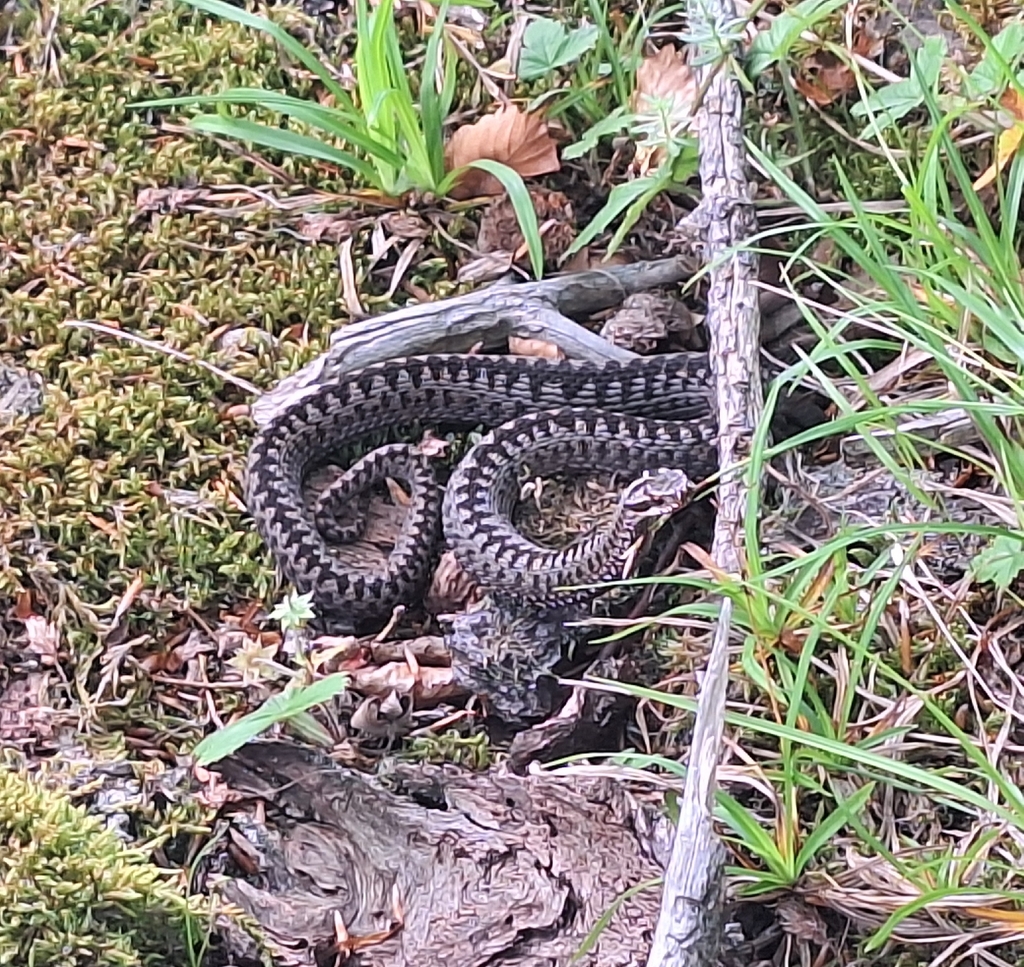
© no rights reserved · iNaturalist · CC0 1.0
The Common European Adder is the only venomous snake native to the British Isles and one of the most northerly snake species in the world, ranging far into Scandinavia and reaching the Arctic Circle. Despite its fearsome reputation and potent venom, this stocky viper is remarkably docile, preferring to retreat rather than strike at humans. Present across at least ten countries spanning Western Europe to Asia, Vipera berus represents a masterpiece of adaptation to temperate and boreal climates.
Listed as Least Concern by the IUCN, the species remains widespread and stable across much of its range, though localized populations face pressure from habitat loss and illegal collection. Its capacity to colonize diverse environments—from woodland floors to moorland and even sand dunes—reflects an ecological flexibility rare among venomous snakes. Understanding this species reveals how venom, camouflage, and behavioral inhibition combine to create one of Europe’s most misunderstood and ecologically vital reptiles.
Identification and Appearance
Vipera berus is a relatively thick-bodied viper with a compact, muscular frame. Adults typically reach 55 to 60 centimetres in total length, including the tail. Regional variation is pronounced: Scandinavian populations produce the largest specimens, with some individuals exceeding 90 centimetres and two documented cases reaching 104 centimetres. In contrast, populations from France and Great Britain rarely exceed 80 to 87 centimetres. Body mass ranges from 50 to 180 grams, with larger individuals found in colder northern regions where they benefit from extended seasonal foraging.
Coloration and patterning vary considerably across individuals and populations. Most adults display a ground colour of grey, brown, or reddish-brown, marked with a distinctive dark zigzag or chevron pattern running the length of the back. Some individuals appear uniformly dark or even black (melanistic forms), while others are paler or yellowish. The belly is typically grey or dark with lighter mottling. A dark stripe runs through each eye, and the head is relatively broad with a slightly flattened appearance typical of vipers. The pupils are vertically elliptical, characteristic of pit vipers and venomous snakes adapted to low-light hunting.
Sexual dimorphism is subtle but present. Males tend to be slightly smaller and more slender than females, with proportionally longer tails. Females are generally stouter and heavier, particularly when gravid (carrying developing young). Both sexes possess keeled scales that give the body a somewhat rough texture. Juveniles resemble adults but are generally paler and more brightly patterned, with the zigzag markings appearing sharper and more contrasting.
Distribution and Habitat
Vipera berus is distributed across northern and central Europe, with records concentrated in temperate regions. The Netherlands hosts the largest documented population, with 187 records, followed by Denmark (45 records) and Great Britain (28 records). Additional populations occur in Germany, Norway, France, Sweden, Turkey, Poland, and the Czech Republic, spanning a total of 10 countries across the continent.
The species occupies diverse lowland and mid-elevation habitats, though specific elevation ranges remain poorly documented in existing records. It favours heathland, moorland, grassland, woodland edges, and wetland margins—environments that provide shelter and suitable basking sites. The species is particularly common in areas with dense vegetation cover and proximity to water sources.
Seasonal activity patterns show a pronounced peak in February, with 214 observations recorded in that month alone. This concentration likely reflects emergence from hibernation as temperatures begin to rise in late winter and early spring. March records (83 observations) indicate continued high activity as the breeding season approaches. The absence of records from April through December in the available data suggests either reduced observation effort during warmer months or a shift in observer focus rather than actual species absence.
Biology and Behavior
Behavior
The common European adder is a solitary reptile that spends much of its time in concealment, relying on camouflage and patience to survive. Active during the warmer months, these snakes are most frequently observed in spring and autumn when temperatures are moderate. During winter, they enter a torpid state, retreating into underground refuges such as mammal burrows, root systems, or rocky crevices where they remain inactive until spring warmth returns. In the height of summer, adders often retreat to shaded microhabitats to avoid excessive heat.
Adders are ambush predators that wait motionless for prey to pass within striking range. They possess excellent heat-sensing pits along their upper jaw, allowing them to detect warm-blooded prey even in dim light. When threatened, an adder will typically flatten its body and hiss as a warning before striking. Encounters with humans are rare, as these snakes actively avoid confrontation and will retreat if given the opportunity.
Diet
Common European adders are carnivorous and feed on small vertebrates suited to their size. Lizards and small mammals—particularly rodents such as voles and mice—form the bulk of their diet. Younger adders also consume insects, amphibians, and other small reptiles. They are ambush hunters that depend on the element of surprise, striking from a concealed position and injecting venom to immobilize prey before swallowing it whole.
Reproduction
The common European adder is ovoviviparous, meaning females retain eggs internally and give birth to live young. Breeding occurs in spring, typically April to May, following emergence from winter dormancy. Males engage in ritualized combat, called “adder dances,” where two males intertwine and push against each other to establish dominance and mating rights.
After a gestation period of approximately three to four months, females give birth to between 3 and 20 live young, usually in late summer or early autumn. Newborns are fully independent immediately upon birth and receive no parental care. The lifespan of the species extends to approximately 19 years in wild populations, allowing individuals to reproduce over multiple seasons during their lifetime.
Conservation and Threats
Vipera berus, the Common European Adder, holds a Least Concern status on the IUCN Red List, indicating that the species does not currently face immediate risk of extinction across its range. However, this designation masks a more complex regional picture: populations are declining in many parts of Europe, particularly in northern and western areas where habitat loss and fragmentation are acute. The species remains widespread across its vast geographic range, which likely accounts for its stable global classification despite localized declines.
Threats
Habitat loss and fragmentation represent the primary threat to European Adder populations. Conversion of heathlands, moorlands, and wetlands to agricultural land, urban development, and commercial forestry destroys the open, sunny microhabitats that V. berus requires for thermoregulation and hunting. Road mortality adds significant pressure, particularly in fragmented landscapes where adders must cross barriers to access food and mates. Intensive agriculture eliminates prey species and reduces structural complexity in the landscape, making remaining patches isolated and vulnerable to local extinction.
Secondary threats include persecution and overcollection. Although protected by law in many European countries, adders are still killed by people who fear them, despite their shy nature and reluctance to bite. Illegal collection for the pet trade also removes individuals from wild populations. Climate change presents an emerging concern, as shifting temperature regimes and altered precipitation patterns may affect breeding success and seasonal activity patterns in northern populations.
Conservation Efforts
Legal protection exists across much of Europe; the species is protected under the Bern Convention and is listed in national wildlife protection laws across Scandinavia, the United Kingdom, and continental Europe. Several habitat restoration programmes aim to restore heathlands and open moorlands in the United Kingdom and northern Europe, directly benefiting adder populations through the creation of suitable breeding and foraging sites. Some regions have implemented road crossing mitigation, including temporary fencing during breeding season and amphibian/reptile tunnels beneath roads in critical areas.
Cultural Significance
The common European adder has occupied a prominent place in European folklore and folk medicine for centuries, shaped largely by misconceptions about its biology and behavior. Medieval and early modern beliefs held that adders were deaf—a notion reinforced by biblical references such as Psalm 58—yet paradoxically, adder oil was widely used as a remedy for deafness and earaches. Equally unfounded was the conviction that females swallowed their young when threatened and later regurgitated them unharmed, or that adders possessed supernatural resilience, refusing to die until sunset. These beliefs reveal how little was understood about the species despite its presence across much of Europe.
Folk remedies for adder bites reflected the imaginative desperation of pre-modern medicine. Treatments included killing the suspected snake and rubbing either its corpse or rendered fat onto the wound, holding a live pigeon or chicken against the bite, or jumping over water. Adders were also woven into environmental folklore: they were thought to be attracted to hazel trees and repelled by ash trees, a belief that may have influenced how people managed their surroundings and viewed certain plants as protective. These cultural practices and superstitions persisted well into recorded history, demonstrating how a venomous snake, while genuinely dangerous, became inseparable from a rich tapestry of myth and practical (if ineffective) folk knowledge.
Fun Facts
- Extreme geographic range: The common European adder is one of the most widespread venomous snakes on Earth, found throughout much of Europe and extending as far east as East Asia. This remarkable distribution makes it the only venomous snake found north of the Arctic Circle.
- Three subspecies with distinct ranges: The species is divided into three recognized subspecies, each adapted to different regions across its vast territory. These subspecies show subtle variations in coloration and size depending on their local environment.
- Live birth in a venomous snake: Unlike many venomous species that lay eggs, the common European adder is ovoviviparous—females carry developing embryos internally and give birth to fully formed live young. A single female may produce 3 to 20 offspring per breeding season.
- Seasonal color changes: Males and females display dramatically different coloration, with males typically dark gray or black and females brown or reddish. Both sexes feature a distinctive zigzag pattern along their backs, which darkens and becomes more prominent after shedding.
- Highly potent venom despite small size: Despite growing to only 60 centimetres on average, the common European adder delivers venom through relatively large fangs that can inject a significant dose. The venom is cytotoxic and hemotoxic, causing tissue damage and disrupting blood clotting.
- Cryptic ambush hunter: This adder relies on camouflage and patience rather than active pursuit, remaining motionless for hours while waiting for prey to pass nearby. It feeds primarily on small mammals, lizards, and occasionally birds.
- Defensive play-dead behavior: When threatened, the common European adder may flatten its body, hiss loudly, and strike with its mouth open—but it will also perform a dramatic “death feint,” rolling onto its back with tongue hanging out to discourage predators.
Conservation Status
LC (Least Concern) · NT · VU · EN · CR · EW · EX
Photo Gallery
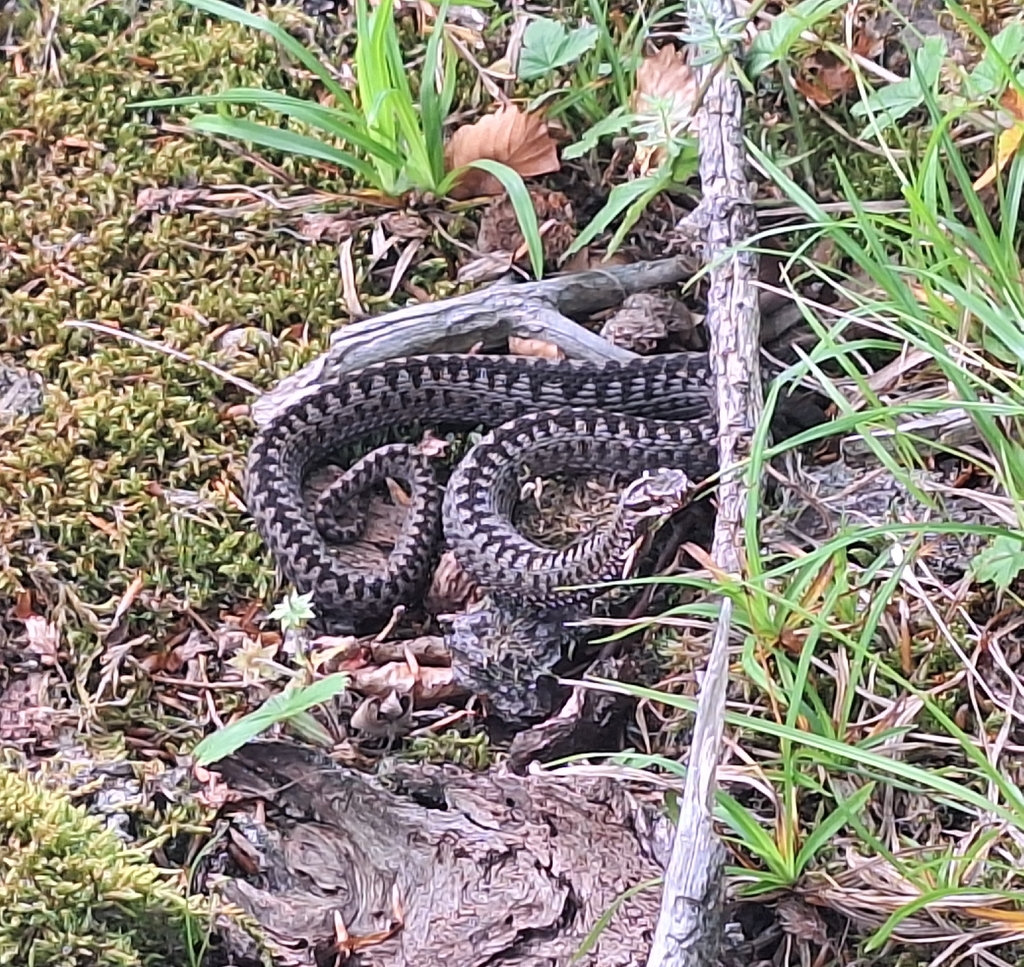
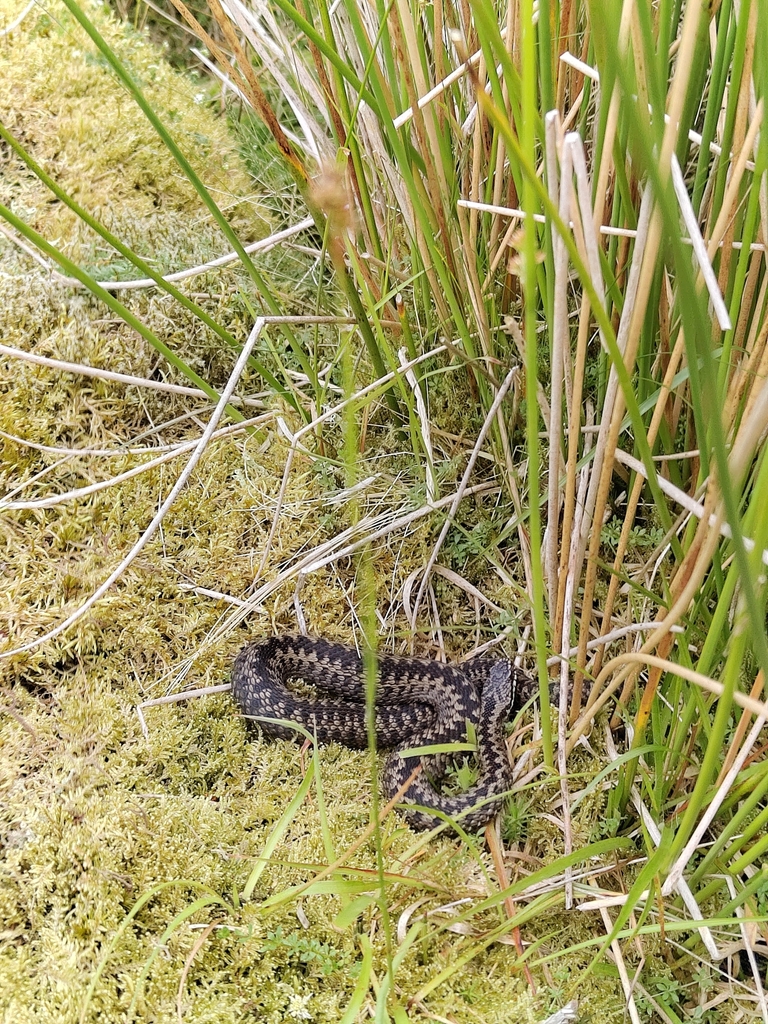
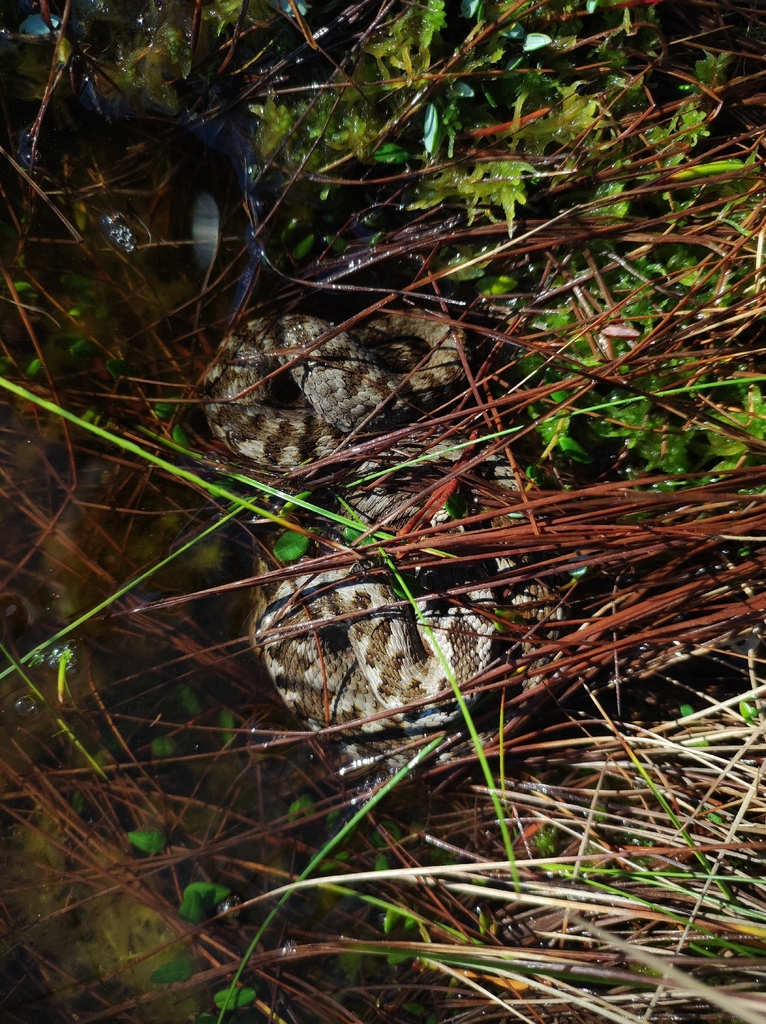
no rights reserved · CC0 1.0
Related Species
Was this profile helpful?