
Pezizomycetes · Pezizales
Orange Peel Fungus
Aleuria aurantia
Also known as: Orange-Peel Fungus, Orange-peel Fungus
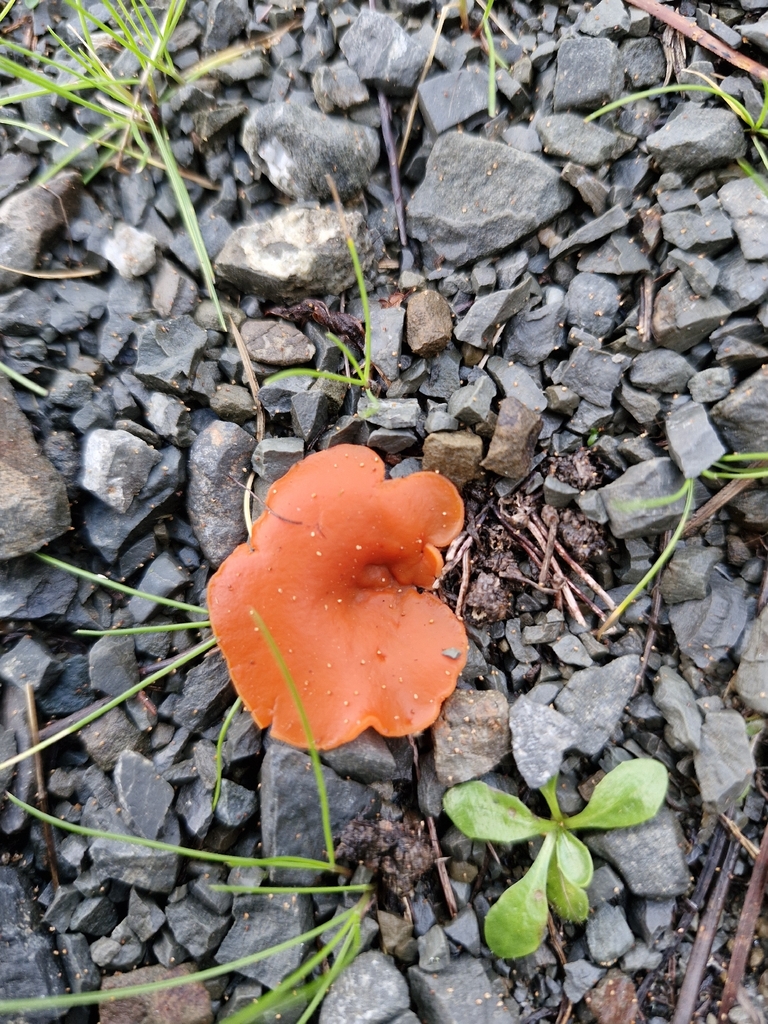
© MysteryFuzzy · iNaturalist · CC BY 4.0
Scientific Classification & Quick Facts
Classification
Known For
Detailed measurements for this species are still being verified.
Few fungi catch the eye quite like Aleuria aurantia, the Orange Peel Fungus. Its brilliant orange-red fruiting bodies emerge from soil and decaying wood, looking so perfectly like scattered fragments of citrus peel that it is impossible to mistake them for anything else. This distinctive appearance has made it a favorite subject for nature photographers and a memorable discovery for amateur naturalists across the world.
Despite its striking appearance, relatively little is known about the conservation needs of this species. Its presence has been documented across at least 23 countries worldwide, yet its conservation status remains unknown to formal assessment frameworks. What makes Aleuria aurantia especially noteworthy is not just its visual appeal or global distribution, but the questions it raises about how we monitor and protect fungi that are abundant yet poorly studied.
Identification and Appearance
Aleuria aurantia is immediately recognizable by its brilliant orange fruiting bodies, which resemble discarded fragments of orange peel. The caps range from 1 to 10 centimetres across and form a distinctive cup or saucer shape, often with irregular, wavy margins. The external surface is fuzzy or slightly hairy, giving the fungus a delicate, velvety appearance under magnification.
The flesh of these fruiting bodies is notably fragile and brittle, making them easy to damage during collection. Individual specimens frequently become misshapen or deformed due to crowding when multiple fruiting bodies develop in close proximity to one another. This clustering is typical of the species and means that perfect, symmetrical cups are less common than irregularly formed, compressed examples. The interior surface of the cup is smooth and slightly paler than the vibrant orange exterior.
No sexual dimorphism occurs in this fungus; male and female reproductive structures are contained within a single hermaphroditic fruiting body. The bright orange coloration remains consistent across all specimens, though the intensity may vary slightly depending on moisture levels and age of the fruiting body.
Distribution and Habitat
Aleuria aurantia has a widespread presence across the Northern Hemisphere and Southern Hemisphere, with documented records from 23 countries. The species is most abundant in the United States, where over 165 observations have been recorded, making it the dominant region for this fungus. New Zealand follows with 31 records, while the United Kingdom, Chile, and the Netherlands each show significant populations with 19, 19, and 16 observations respectively. Additional presence has been confirmed in Portugal, Australia, Spain, Canada, and Argentina, indicating a cosmopolitan distribution pattern.
The Orange Peel Fungus exhibits a pronounced seasonal peak in January, when 145 records were documented. A secondary flush of activity appears in May, with 56 observations recorded during that month. February shows moderate occurrence with 44 records, while activity drops sharply from July onwards, with no observations recorded from July through December. This pattern suggests the species fruits primarily in winter and early spring months in the Northern Hemisphere, with variable timing in Southern Hemisphere locations.
Specific elevation data and detailed habitat preferences have not been quantified in current records. However, the wide geographic range and consistent seasonal activity across multiple continents and climate zones indicate that A. aurantia tolerates diverse environmental conditions and likely fruiting occurs in disturbed or cultivated soils where its saprotrophic ecology allows it to establish readily.
Ecology and Lifecycle
Lifecycle
Aleuria aurantia begins as a network of fine filaments called mycelium, which colonize rich organic matter in soil and leaf litter. This vegetative stage can persist for extended periods, breaking down dead plant material and accumulating nutrients. When soil moisture and temperature conditions align—typically in spring and autumn—the fungus produces its distinctive fruiting bodies.
The fruiting bodies develop as small, cup-shaped or saucer-like structures with a bright orange interior. These apothecia mature over several days, and their inner surface becomes lined with microscopic spore-producing structures called asci. Each ascus contains eight spores that are released when humidity is high, spreading via air currents and water splash to colonize new substrates. After spore dispersal, the fruiting body deteriorates, and the mycelium either enters dormancy or persists in the soil awaiting the next favorable season.
Ecological Role
Aleuria aurantia functions as a saprotroph, decomposing dead organic matter in soil ecosystems. Through this process, it recycles nutrients locked in decaying plant tissue, making them available to other plants and microorganisms. The fungus thrives in disturbed soils—around pathways, in gardens, and on compacted ground—where it helps break down accumulated organic debris and promotes soil structure recovery.
Its presence indicates moist, nutrient-rich conditions and active decomposition. By fragmenting and mineralizing organic compounds, the fungus plays a foundational role in nutrient cycling within terrestrial ecosystems, supporting the broader food web that depends on soil fertility.
Uses
Aleuria aurantia has no established culinary or medicinal value. The fruiting bodies are not toxic, but they offer no nutritional benefit and are not consumed by humans. Their primary interest remains scientific and educational—the species is frequently photographed and studied by mycologists and naturalists due to its striking orange color and abundance in temperate regions.
The fungus is sometimes cultivated in controlled settings for research purposes or as a demonstration organism in mycology courses, where it exemplifies ascomycete reproduction and saprotrophic ecology.
Conservation and Threats
Aleuria aurantia, the Orange Peel Fungus, has not been formally assessed by the IUCN Red List. This absence of a conservation status designation reflects the species’ widespread distribution and apparent lack of immediate threat across its range. Without an official classification, the fungus remains outside formal conservation monitoring frameworks, though its ecological role and population dynamics merit attention from mycologists and habitat managers.
Population trends for this species show an encouraging pattern: Aleuria aurantia populations are currently increasing. This positive trend suggests that existing environmental conditions across its range continue to support healthy fruiting and reproduction. The species’ adaptability to disturbed and cultivated ground—including gardens, compost heaps, and mulched areas—has likely contributed to its expanding presence in human-modified landscapes.
Threats and Conservation Efforts
No documented specific threats currently impact Aleuria aurantia populations. The species shows considerable resilience across diverse habitats and does not depend on rare or highly fragmented ecosystems. Unlike many fungi restricted to old-growth forests or specialized substrates, this generalist fruit-body producer tolerates a wide range of soil conditions and organic matter sources. Its capacity to colonize human-disturbed areas may actually buffer it against habitat loss in natural environments.
No formal conservation programmes or legal protections specifically target Aleuria aurantia, reflecting its secure status and lack of conservation concern. The species benefits indirectly from broader habitat protection efforts and the maintenance of healthy soil ecosystems in gardens and wild spaces. Amateur mycologists and naturalists play an informal but valuable role through citizen science observations, which contribute to understanding its distribution and population health.
Fun Facts
- The bright orange ascocarps of Aleuria aurantia are so convincingly shaped like discarded orange peel that the fungus earned its common name from this visual resemblance. Hikers and foragers often do a double-take when spotting them scattered across damp ground.
- Aleuria aurantia belongs to the order Pezizales, a group of ascomycete fungi that produce their spores in specialized sac-like structures called asci. This ancient lineage of fungi has been releasing spores into the air for millions of years using the same fundamental mechanism.
- The species is widespread across temperate regions worldwide, thriving in disturbed soil, mulch, and leaf litter where moisture is abundant. Its cosmopolitan distribution makes it one of the most commonly encountered cup fungi in northern gardens and woodlands.
- Cup-shaped ascocarps are not random—they function as spore-launching catapults. When conditions are right, the fungus builds pressure inside the asci that explosively discharges spores upward and outward, allowing wind currents to carry them over greater distances.
- The brilliant orange color of Aleuria aurantia lacks any obvious pigment related to photosynthesis, since fungi do not photosynthesize. The hue likely attracts insects and other small animals that may inadvertently help disperse spores as they crawl across the fruiting bodies.
- Individual ascocarps of Aleuria aurantia are typically 0.5 to 2 centimeters wide, making them small enough to overlook but large enough to observe in fine detail with a hand lens. This size allows the fungus to produce numerous fruiting bodies from a single underground mycelium.
- Unlike mushrooms that can appear and vanish within days, Aleuria aurantia ascocarps persist on the ground for several weeks if conditions remain moist. This longevity increases the window during which they can discharge spores and spread their genetic material.
Photo Gallery
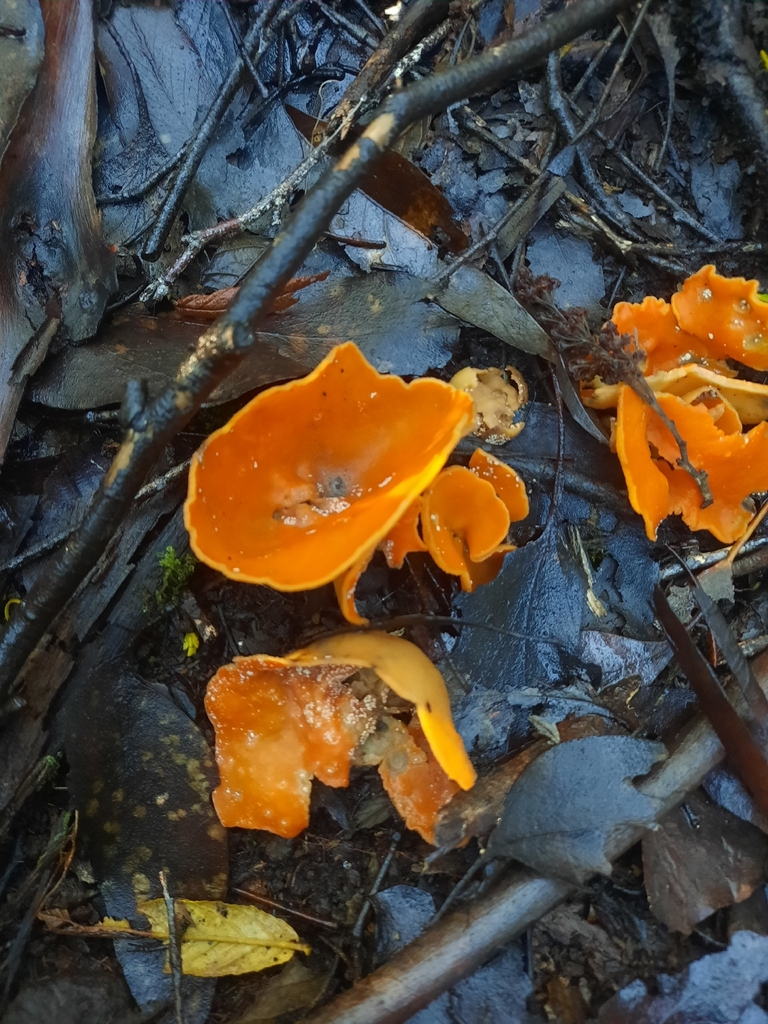
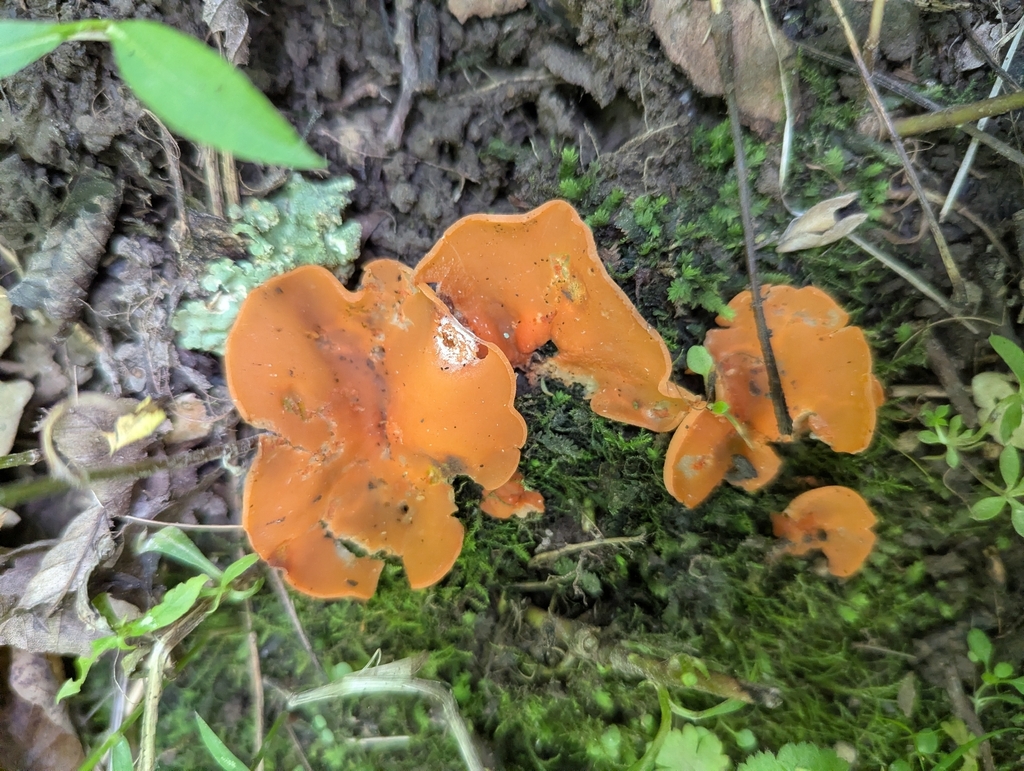
MysteryFuzzy · CC BY 4.0
Related Species
Was this profile helpful?