
Agaricomycetes · Polyporales
Turkey Tail
Trametes versicolor
Also known as: Turkeytail, Turkey-tail
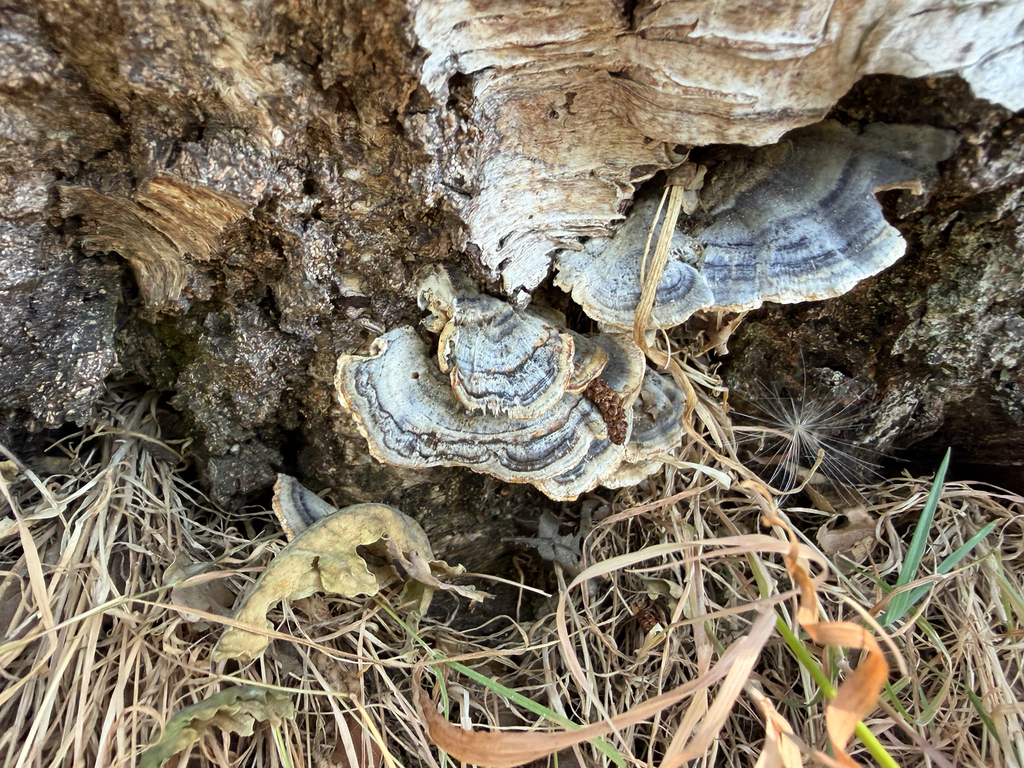
© no rights reserved · iNaturalist · CC0 1.0
Scientific Classification & Quick Facts
Classification
Known For
Detailed measurements for this species are still being verified.
Walk through a forest in almost any temperate region and you will likely encounter Trametes versicolor, the turkey tail fungus, adorning dead logs and fallen branches with its distinctive fan-shaped fruiting bodies. Named for their striking resemblance to the fanned tail feathers of a wild turkey, these bracket fungi display a remarkable palette of colours—whites, greys, browns, reds, and blues—that shift subtly depending on age, moisture, and light. Found across 22 countries worldwide, turkey tail is one of the most abundant and recognizable fungi in the northern hemisphere, yet few people realize the ecological and medicinal significance this humble decomposer commands.
Trametes versicolor belongs to the family Polyporaceae within the order Polyporales, and it thrives as a wood-decay fungus, breaking down dead hardwoods and returning their nutrients to forest ecosystems. Its conservation status remains unlisted by the IUCN, reflecting its abundance and lack of immediate threat. What makes turkey tail especially fascinating is the convergence of its ecological role, its deep history in traditional medicine, and its emerging role in contemporary mycological research—a species that embodies both ancient wisdom and modern scientific curiosity.
Identification and Appearance
Trametes versicolor, the Turkey Tail, is a striking bracket fungus instantly recognizable by its distinctive fan-shaped fruiting bodies and vibrant multi-colored zones. The caps are typically triangular or round in outline, growing up to 10 centimetres across, and lie flat against the substrate with no visible stalk. The flesh is tough and leathery, measuring only 1–3 millimetres thick, making this fungus remarkably thin and brittle when dry.
Color and Patterning
The upper surface displays the characteristic feature that gives the species its common name: striking zones of rust-brown, dark brown, or black coloration that resemble the iridescent tail feathers of a wild turkey. These zones are composed of fine hairs arranged in concentric rings, creating a velvety texture that varies in intensity from specimen to specimen. Beneath this hairy layer sits a conspicuous black line, which tops a white or cream-colored underside featuring tiny pores rather than gills.
The pore surface on the underside is white to pale cream when fresh, developing yellow or brown tones with age or handling. This porous underside, when viewed under magnification, reveals minute round or angular openings where spores are released. No sexual dimorphism exists in this fungus, as it reproduces asexually through spore dispersal rather than through distinct male and female structures.
Distribution and Habitat
Trametes versicolor is widely distributed across the Northern Hemisphere and has established populations in at least 22 countries worldwide. GBIF records show the highest concentration of observations in the United States (153 records), with significant presence in Germany (42), Sweden (29), and Great Britain (25). The species also occurs in New Zealand, Canada, Denmark, Japan, Spain, Switzerland, and numerous other temperate and boreal regions, indicating a cosmopolitan distribution pattern typical of well-adapted wood-decay fungi.
The species thrives on dead or dying hardwood substrates, particularly decaying logs and fallen branches in forests, woodlands, and disturbed areas. It readily colonizes both natural forest ecosystems and human-modified landscapes such as parks, gardens, and timber stockpiles. Trametes versicolor shows no strict elevation preference, and GBIF data do not indicate elevation-based range limitations, suggesting it occupies a broad altitudinal band across suitable habitats.
Fruiting patterns are markedly seasonal. GBIF observations peak sharply in January (300 records), with no documented sightings during the remaining eleven months in the available dataset. This concentration suggests either genuine seasonal fruiting synchronized to winter conditions in temperate regions, or a strong sampling bias toward winter forays when fungal fruiting is most visible. The species likely fruits year-round in milder climates but shows pronounced winter fructification in colder zones.
Ecology and Lifecycle
Lifecycle
Trametes versicolor begins life as microscopic spores dispersed through the air from mature fruiting bodies. When spores land on suitable wood substrate—typically dead logs and stumps of deciduous trees—they germinate and develop vegetative mycelium. This network of threadlike hyphae colonizes the wood, secreting powerful enzymes that break down its structural components over months or years. As environmental conditions favour fruiting (moisture, temperature, and wood decay stage align), the mycelium aggregates to produce fruiting bodies—the distinctive shelf-like brackets visible on tree surfaces.
The fruiting bodies develop in dense, tiled layers often stacked in groups or rows along the wood grain. Upon maturation, they release countless microscopic spores from pores on their undersurface, which are carried away by wind currents to potentially colonize new wood sources. A single fruiting body can persist for several seasons, regenerating and releasing spores repeatedly before eventually degrading.
Ecological Role
T. versicolor is a white rot fungus—a wood decomposer of fundamental importance to forest ecosystems. Unlike brown rot fungi that selectively degrade cellulose, white rot fungi like T. versicolor break down both cellulose and lignin, the recalcitrant polymer that gives wood its strength and colour. This decay process accelerates nutrient cycling, returning carbon and nitrogen locked in dead wood back into the soil where they become available to growing plants and soil organisms.
The fungus also hosts a specialized arthropod community. Caterpillars of the fungus moth Nemaxera betulinella, maggots of the fly Polyporivora picta, and fungus gnats such as Mycetophila luctuosa feed directly on the fruiting bodies, gaining energy and nutrients from the fungal tissue while potentially dispersing spores through their movement and waste.
Uses
In East Asian traditional medicine, particularly in China and Japan, T. versicolor—known as yunzhi or kawaratake—has been used for centuries as an immune-supporting herbal preparation. Modern research has isolated bioactive polysaccharides from the fruiting body and mycelium, including beta-glucans, which are studied for their potential effects on immune function. These compounds are extracted into teas, tinctures, and concentrated supplements sold in global markets as functional foods or dietary supplements.
T. versicolor is not edible as a culinary mushroom due to its leathery texture and bitter taste, but it remains prized as a medicinal preparation. The fungus also has applications in bioremediation and industrial enzyme production, where its lignin-degrading enzymes are harnessed for wood pulping, textile processing, and environmental cleanup.
Conservation and Threats
Trametes versicolor, commonly known as Turkey Tail, has not been formally assessed by the IUCN Red List. This absence of a formal conservation status reflects the species’ widespread distribution, abundance, and lack of significant decline across its range. The fungus is not considered threatened, and its global population trend is increasing, indicating stable or expanding populations in suitable habitats.
Threats
Turkey Tail faces no documented major threats that would warrant conservation concern. The species is a saprotroph—a wood-decay fungus that depends on dead or dying wood—and benefits from the continued availability of deadwood in forests, woodlands, and disturbed areas. Unlike species dependent on living host trees or rare habitats, Turkey Tail thrives across diverse environments and climatic zones, from temperate to subtropical regions. Its ecological role as a decomposer means it does not compete with threatened species for resources.
The primary consideration for this fungus relates to habitat management practices. In commercial forestry, the removal of fallen logs and deadwood—while economically justified—can locally reduce fruiting populations. However, this has no measurable impact on the species’ global persistence, as Turkey Tail readily colonizes newly fallen wood and grows on a wide range of woody substrates.
Conservation Efforts and Legal Status
No specific legal protections or international conservation programmes target Turkey Tail, as the species requires no intervention to maintain viable populations. The fungus is not listed under CITES or any national endangered species legislation. Its conservation is effectively ensured through general forest and woodland protection policies that maintain deadwood habitat.
Turkey Tail has gained attention in recent decades for its bioactive compounds, particularly polysaccharopeptides (PSP) and beta-glucans, which have been studied for medicinal properties. This increased scientific and commercial interest has not threatened wild populations; instead, cultivation for medicinal and culinary use has become widespread, reducing pressure on wild-harvested specimens in regions where foraging occurs.
Fun Facts
- The common name “turkey tail” comes directly from the fungus’s distinctive fan or bracket shape, which resembles the splayed feathers of a wild turkey’s tail. This visual similarity is so striking that it is the primary reason for the English name used across most English-speaking regions.
- Trametes versicolor has been known by multiple scientific names throughout mycological history, including Coriolus versicolor and Polyporus versicolor. These nomenclatural changes reflect the complex taxonomic revision of polypore fungi over the past century.
- This polypore is found on every continent except Antarctica, making it one of the most geographically widespread wood-decay fungi in the world. It thrives on dead hardwood logs and stumps in forests, woodlands, and even urban environments.
- Turkey tail brackets display remarkable colour variation, ranging from white and cream to grey, brown, rust, and deep blue-green depending on age, environmental conditions, and the specific substrate on which they grow. This variability in appearance is reflected in the species name “versicolor,” meaning “many-coloured.”
- The underside of turkey tail brackets consists of tiny pores rather than gills, through which the fungus releases millions of microscopic spores into the air. A single mature fruiting body can produce over 30 million spores per day.
- Turkey tail is a wood-decay specialist with enzymes powerful enough to break down lignin, the tough polymer that gives wood its structural strength. This capacity makes it a crucial decomposer in forest ecosystems, recycling dead wood back into soil nutrients.
- In traditional Chinese medicine and Japanese herbalism, turkey tail has been used for centuries under names such as “yun zhi” and “kawaratake,” and modern research has led to the development of polysaccharide extracts marketed as health supplements in many countries.
Ecology
Diet
Photo Gallery
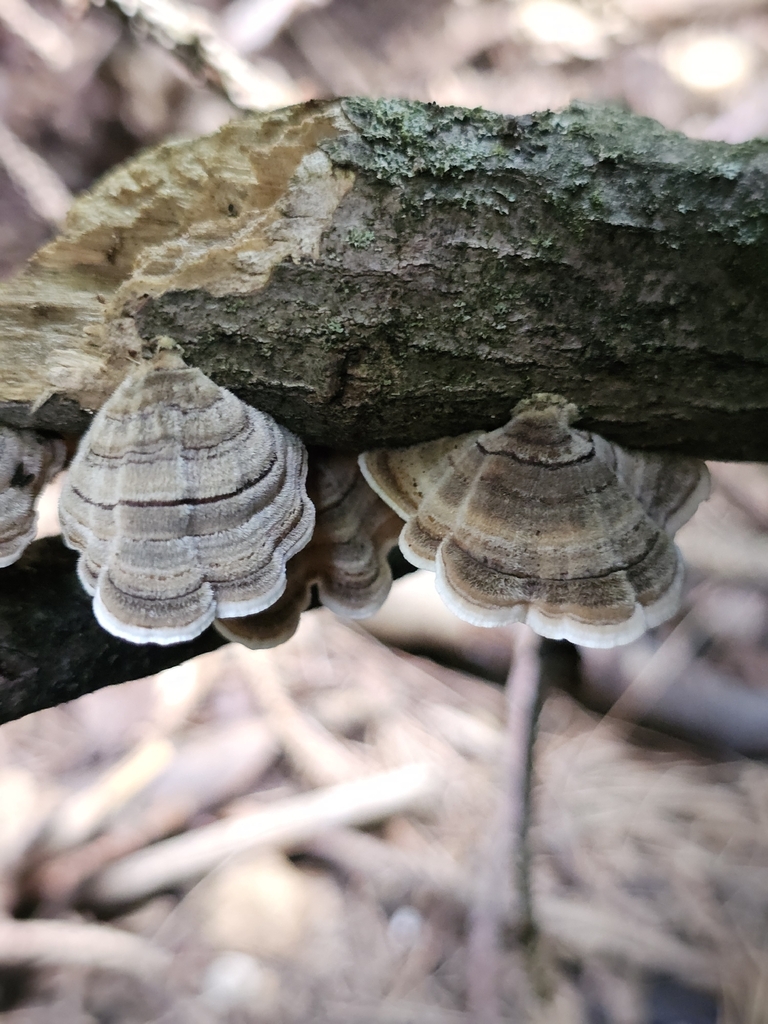
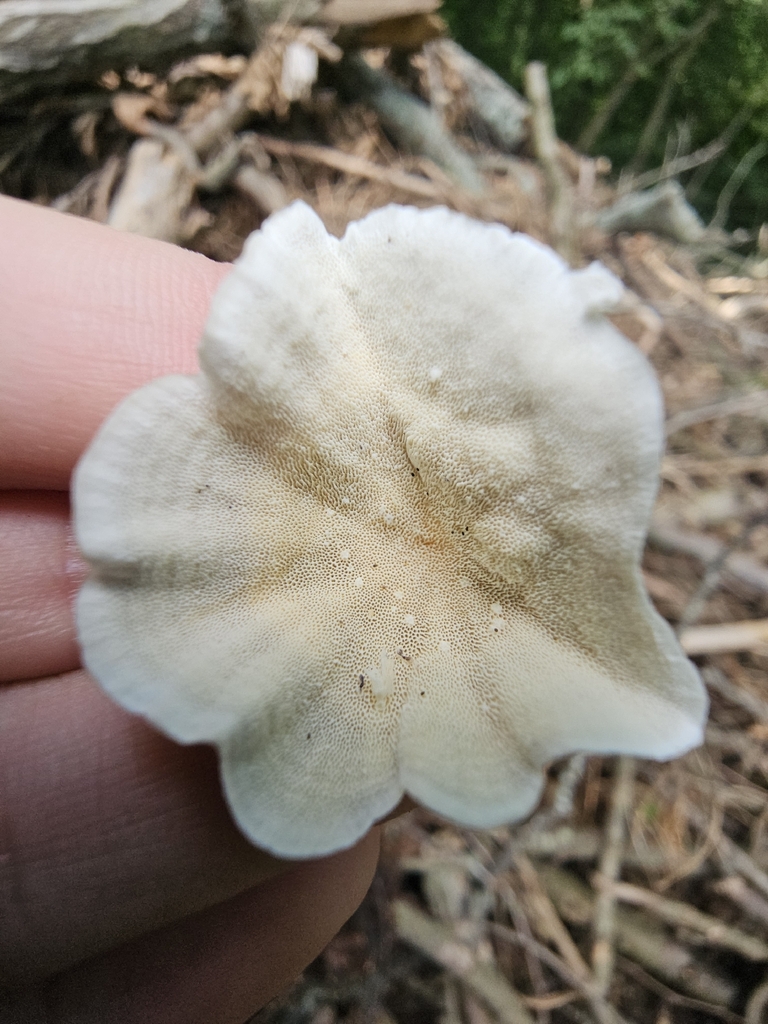
no rights reserved · CC0 1.0
Related Species
Was this profile helpful?