
Magnoliopsida · Ericales
Heather
Calluna vulgaris
Also known as: Common Heather, Heather, Ling
© Petr Harant · iNaturalist · CC BY 4.0
Scientific Classification & Quick Facts
Classification
At a Glance
Calluna vulgaris, commonly known as heather, is a low-growing evergreen shrub that blankets moorlands and heathlands across the temperate regions of Europe and beyond. Found in 22 countries worldwide, this resilient plant thrives where few others can—on acidic, nutrient-poor soils and windswept slopes where it forms the dominant vegetation. Despite its modest stature, heather plays an outsized ecological role, transforming entire landscapes into seas of purple and pink bloom during late summer and autumn.
The species belongs to the Ericaceae family—a group of acid-loving plants that includes blueberries, rhododendrons, and bilberries. Its conservation status remains unknown, reflecting the lack of immediate global threat; nonetheless, heathland habitats themselves face pressure from land-use change, afforestation, and shifts in management practices. What makes heather truly significant is not just its abundance or hardiness, but its capacity to define entire ecosystems and support specialized plant and animal communities found nowhere else.
Identification and Appearance
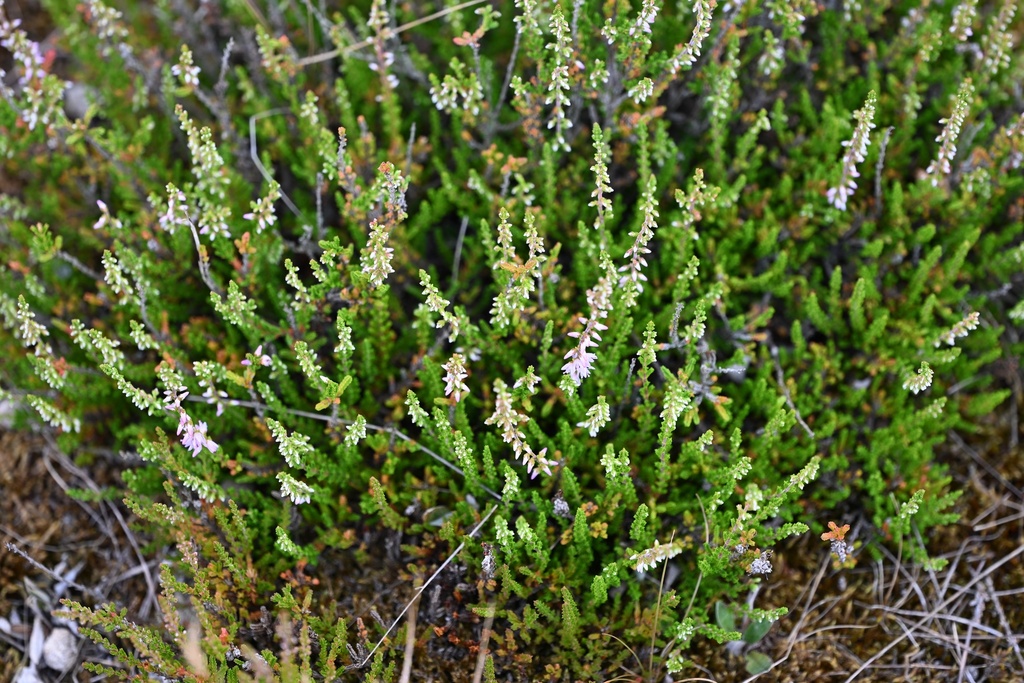
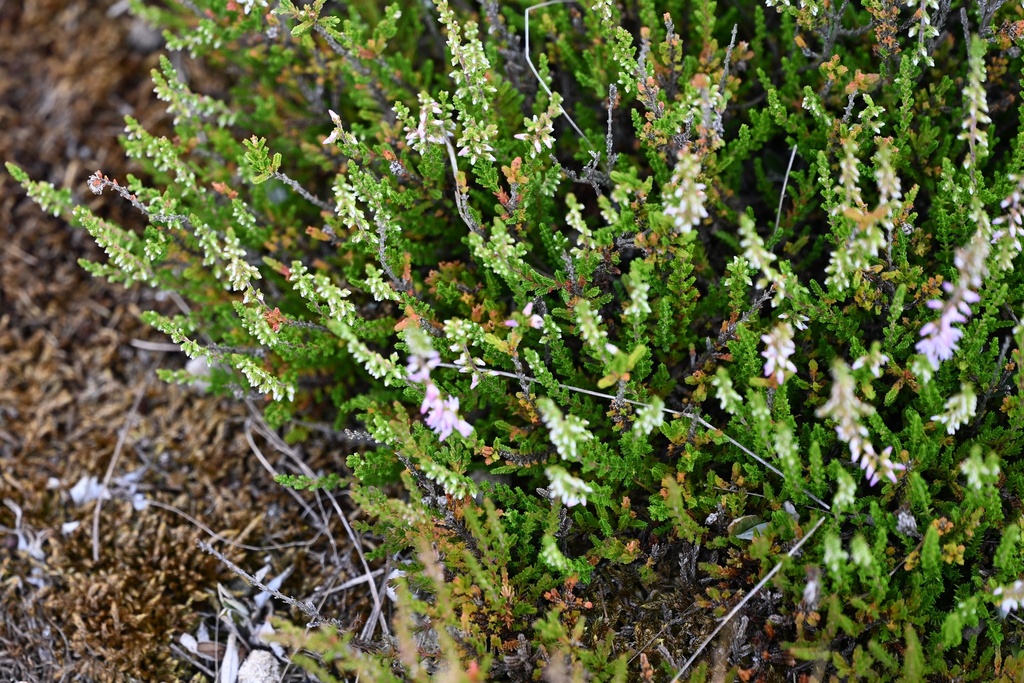
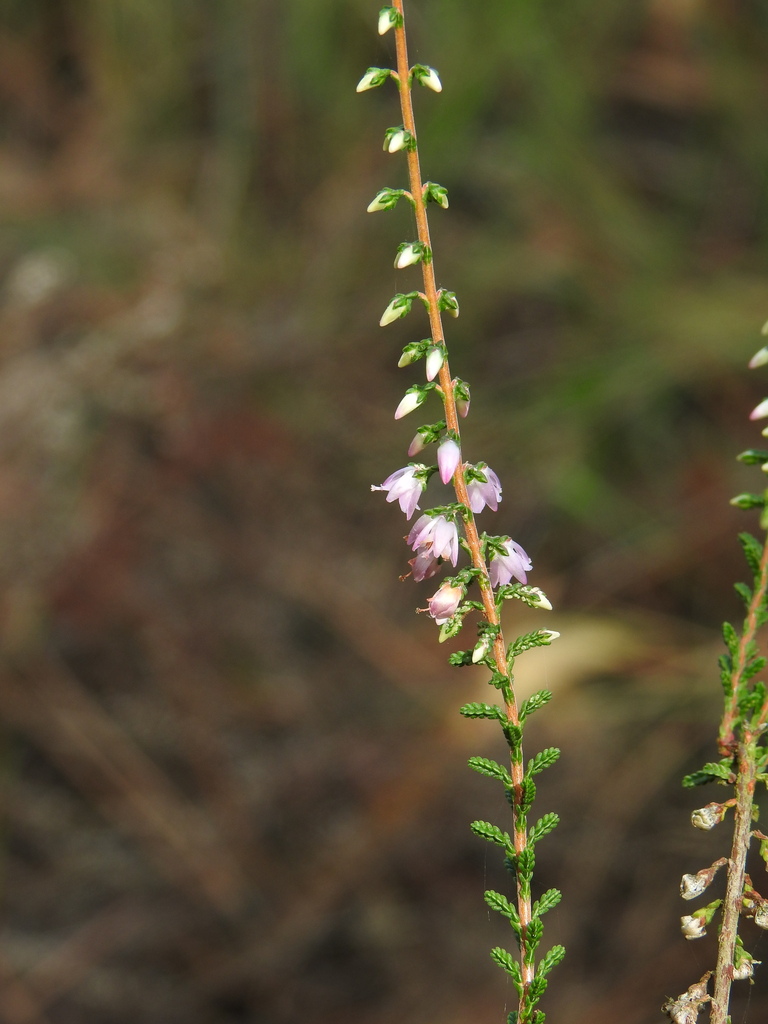
Calluna vulgaris, commonly known as heather, is a compact shrub that typically grows between 20 and 100 centimetres in height, though specimens can occasionally reach 60 centimetres. The plant is instantly recognisable by its minute scale-like leaves, which measure less than 2–3 millimetres in length and are arranged in opposite pairs in a decussate (alternating cross) pattern along the stems. This leaf arrangement distinguishes heather clearly from related species in the genus Erica, which bear noticeably larger leaves arranged in whorls of 3–4 or sometimes 5.
The foliage is dense and fine-textured, creating a characteristic compact form. Heather produces delicate flowers that bloom from July through September, adding seasonal interest to moorlands and heathland habitats. The overall appearance is modest yet distinctive—a tightly branched, low-growing shrub with scale-like foliage that catches the eye primarily through the profusion of its flowering period rather than individual plant features.
Distribution and Habitat
Calluna vulgaris occurs across 22 countries, with its stronghold in northwestern Europe. The Netherlands, United Kingdom, and Germany host the largest populations, followed by Sweden, Norway, and Denmark. The species also establishes populations in Portugal, Austria, and New Zealand, reflecting both its native European range and its introduction to distant regions.
Elevation records for this species cluster around 918.5 metres, indicating a preference for upland habitats. Heather typically colonizes open moorlands, heathlands, and acidic grasslands where competition from taller vegetation remains limited. These dwarf shrub communities thrive on well-drained, nutrient-poor soils in cool temperate climates, making exposed ridges and plateau regions ideal habitat. In managed landscapes, heather moorlands are often maintained through controlled burning and grazing to prevent succession to woodland.
Observations peak sharply in January, suggesting that survey activity or flowering/fruiting phenology concentrates in the winter months in these temperate regions. The marked seasonality in record frequency may reflect heightened visibility during the dormant season or targeted botanical surveys conducted during this period.
Growth and Cultivation
Growth
Calluna vulgaris, commonly known as heather, is a compact evergreen shrub that typically reaches 30–60 centimetres in height, though some cultivars may grow taller. The plant develops a dense, woody framework with fine, needle-like foliage that ranges in colour from deep green to grey-green, often shifting to bronze or reddish tones in winter. Growth is steady and modest, making heather suitable for gardens where a low-growing framework plant is desired without aggressive expansion.
The root system is shallow and fibrous, which allows heather to colonise poor, acidic soils where many other plants struggle. The small, scale-like leaves are tightly arranged along thin stems, creating a textured, wiry appearance that persists year-round.
Flowering
Heather produces abundant, small flowers—typically lilac, pink, purple, or white depending on the cultivar—arranged in dense racemes along the upper stems. Flowering occurs over an extended period during late summer and early autumn, providing valuable nectar and pollen for bees and other pollinators when other food sources diminish. The flowers remain attractive even after fading, often persisting on the plant into winter and adding aesthetic value to the garden.
After pollination, heather develops small, dry seed capsules that mature by late autumn. Seed production is prolific, and seeds disperse readily on the wind, which has enabled the species to spread across moorlands and heathlands throughout its native range.
Cultivation
Heather thrives in acidic to neutral soils (ideally pH 4.5–6.5) and is notoriously intolerant of alkaline conditions—chalky or limestone soils usually cause chlorosis and poor growth. In gardens with neutral or slightly alkaline soil, heather can be grown in raised beds or containers filled with ericaceous compost. Full sun exposure promotes the densest flowering and the most vibrant winter foliage colours, though the plant tolerates partial shade in warmer climates.
Once established, heather is notably drought-tolerant and requires little watering except during the first growing season or prolonged dry spells. Drainage must be excellent; the plant cannot tolerate waterlogged soil and will decline rapidly in wet conditions. Light pruning or deadheading after flowering encourages bushier growth and extends the plant’s lifespan, preventing it from becoming leggy and woody over time. Heather is hardy in most temperate regions and adapts well to coastal, windswept sites, making it a practical choice for exposed gardens.
Conservation and Threats
Calluna vulgaris, commonly known as heather, does not currently hold a conservation status on the IUCN Red List. This absence of a threatened designation reflects the species’ wide distribution across northern Europe and its resilience in the habitats it occupies. The lack of formal red-list status indicates that heather populations are not facing the immediate extinction risk that would warrant official conservation concern at the global level.
The population trend for heather is increasing, which is encouraging news for the species’ long-term outlook. This upward trend suggests that existing management practices and natural regeneration are supporting healthy populations across its range, particularly in the moorlands and heathlands of the British Isles and continental Europe where it dominates many plant communities.
Threats and Conservation Efforts
Although heather itself is not formally listed as threatened, the heathland and moorland habitats it depends on face ongoing pressures. Land conversion for agriculture, urban development, and commercial forestry have historically reduced suitable habitat across Europe. Climate change poses a longer-term concern, as shifting temperature and precipitation patterns may alter the conditions that favour heather establishment and growth. Overgrazing by livestock and deer can prevent heather regeneration in some areas, while undergrazing—or the complete cessation of traditional management—allows competing woody species to shade out heather plants.
Conservation of heather is largely achieved through active habitat management rather than species-specific protection programmes. Traditional practices such as rotational burning and grazing maintain open moorland and heathland ecosystems where heather thrives. These landscapes are managed across protected areas and private estates throughout the British Isles and Europe, with many conservation organisations and landowners recognising the ecological and cultural value of heather-dominated habitats. Legal protections for heathland sites, particularly in the United Kingdom and European Union, help safeguard the plant indirectly by protecting its habitat.
Cultural Significance
Calluna vulgaris holds deep symbolic importance across northern Europe, particularly in Scotland and Scandinavia. In Scottish culture, the plant is iconic—appearing throughout literature and poetry as the embodiment of the Scottish landscape. When 19th-century poems evoke “fragrant hills of purple heather” or when adventure novels like Kidnapped feature characters fleeing through heather moorlands, it is Calluna vulgaris that readers encounter. The plant has become inseparable from Scottish identity, woven into the nation’s cultural narrative.
Heather earned official recognition as one of Norway’s two national flowers, alongside Saxifraga cotyledon, following a vote of popularity conducted on Norwegian radio in 1976. The choice reflected the plant’s widespread presence and cultural resonance throughout the Norwegian landscape. Beyond Norway, Calluna vulgaris also holds provincial significance in Sweden, where it serves as the official flower of Västergötland.
Fun Facts
- Calluna vulgaris is the sole species in its genus—a monotypic genus within the Ericaceae family. This means all heather in the world belongs to a single, genetically unified species with no living relatives in its genus.
- Despite typically reaching only 20–50 centimeters in height, heather can occasionally grow taller than 1 meter under favorable conditions. This exceptional size remains rare and reflects how dramatically soil quality and microclimate shape its growth potential.
- Heather is an evergreen shrub, retaining its foliage year-round rather than dropping leaves seasonally. This adaptation allows it to photosynthesize even during winter months when deciduous plants are dormant.
- The plant thrives exclusively on acidic soils, a chemical requirement so strict that it cannot survive in neutral or alkaline environments. This narrow soil preference naturally confines heather to specific regions and makes it a reliable indicator of soil acidity in the field.
- Heather displays unusual ecological flexibility by growing successfully in both full sun and moderate shade—a rare trait for a plant with such exacting soil chemistry demands. Most plants with narrow soil requirements are equally rigid about light conditions.
- Heather blooms in late summer to autumn when many other plants are preparing for dormancy, making its pink, purple, or white flowers a crucial late-season nectar source for pollinators. A single heather plant can produce vast quantities of flowers, creating the vibrant carpets that define moorland landscapes.
- The plant’s small, scale-like leaves minimize water loss and allow it to persist in the exposed, windswept habitats where it commonly grows. This leaf structure also contributes to its dense, compact appearance year-round.
Ecology
Habitats
Growing Conditions
Edibility
Photo Gallery
Petr Harant · CC BY 4.0
Related Species
Was this profile helpful?