
Mammalia · Artiodactyla
Sika Deer
Cervus nippon
Least ConcernAlso known as: Japanese Deer, Japanese Sika Deer, Japanese Spotted Deer, Shansi Sika, Shika
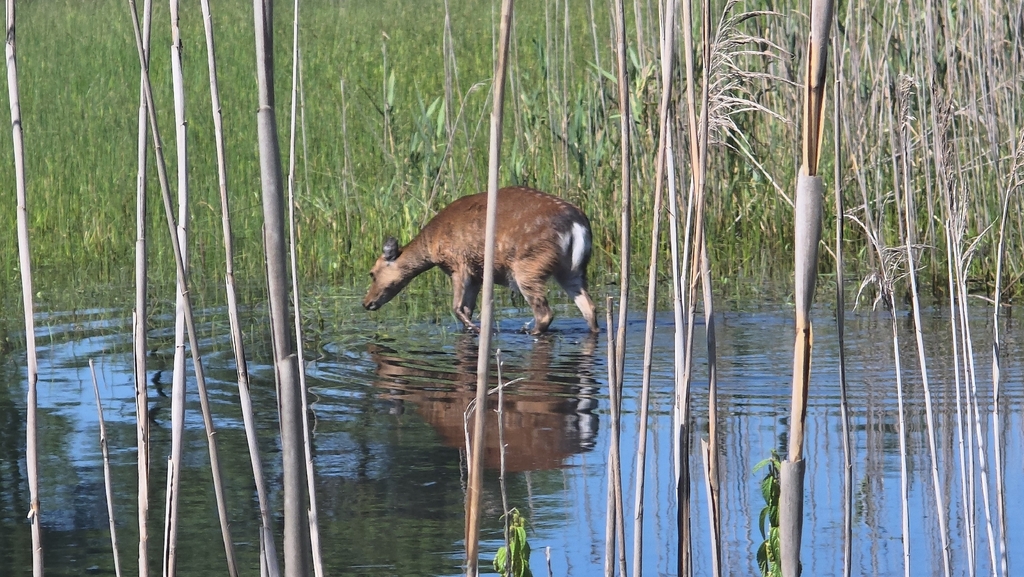
© Brian Magurn · iNaturalist · CC BY 4.0
The Cervus nippon, or sika deer, is a small to medium-sized cervid native to East Asia that has become one of the most widely distributed introduced deer species worldwide. With a compact frame, distinctively spotted coat, and a haunting rutting call that echoes through forests and grasslands, sika deer are instantly recognizable across their native range and the many regions where humans have deliberately or accidentally established populations. Found naturally across 14 countries and now present on every continent except Antarctica, this adaptable species has transformed from a regionally important game animal into a global ecological player with far-reaching consequences for both native ecosystems and human land management.
Listed as Least Concern by the IUCN, sika deer demonstrate remarkable resilience and phenotypic plasticity, thriving in habitats ranging from subtropical lowlands to temperate forests and even open moorlands. Their ability to thrive in disturbed and marginal environments, combined with their high reproductive capacity, makes them equally at home in their native forests of Japan, China, and Russia as they are in the introduced populations of Europe and the Southern Hemisphere. Understanding sika deer requires examining both their ecological role in their ancestral homelands and their profound impact as one of the world’s most successful large herbivore introductions.
Identification and Appearance
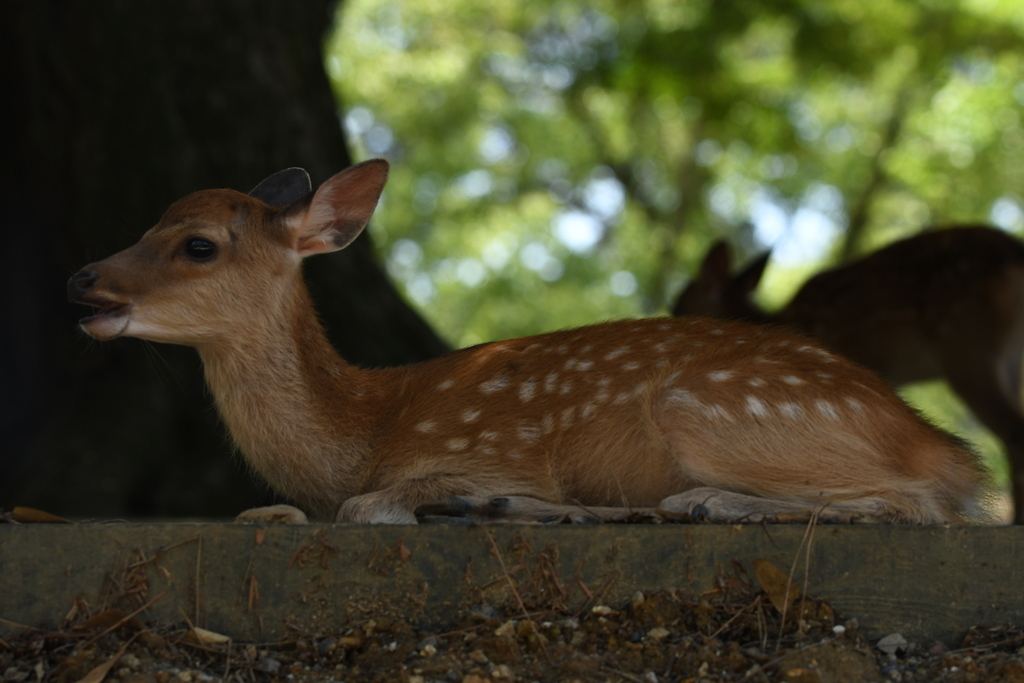
Cervus nippon, the sika deer, is a medium-sized deer with a distinctive feature that sets it apart from most other deer species: it retains its spots throughout life rather than losing them at maturity. Body weight ranges from 4.5 kg to 80 kg, with shoulder height varying between 64 and 109 centimetres, making them relatively compact compared to larger cervids. The most striking aspect of sika deer is their coat coloration, which ranges from mahogany to deep black, though white individuals are also documented in some populations.
Spot Patterns and Regional Variation
Spot patterns differ markedly between subspecies and populations. Mainland subspecies display larger, more conspicuous spots across the body, whereas Taiwanese and Japanese subspecies have spots that are nearly invisible even in young animals. Many introduced populations worldwide derive from Japanese stock and similarly lack prominent spotting. This regional variation in spot visibility makes sika deer from different origins readily distinguishable in the field.
Seasonal Changes
Sika deer undergo significant seasonal coat transformations. During winter, the pelage becomes noticeably darker, shaggier, and thicker, while spots become even less prominent than in summer. In males, a distinctive mane develops along the back of the neck during this period, enhancing their appearance during the rutting season. These adaptations provide both insulation in cold months and visual signals important for male-male competition.
Distribution and Habitat
Cervus nippon, the sika deer, is native to East Asia but has established populations across the Northern Hemisphere through both natural range expansion and human introduction. GBIF records document sightings in 14 countries, with Japan dominating occurrence data at 176 records, reflecting the species’ origin in the Japanese archipelago. Significant populations also appear in Denmark (37 records), the United Kingdom (21 records), and the United States (18 records), indicating successful establishment in temperate regions far from its ancestral range.
Beyond these primary populations, sika deer have dispersed to Russia (11 records), China (10 records), Taiwan (4 records), Ireland (8 records), Germany (8 records), and Belarus (2 records). This wide geographic spread reflects both deliberate farming and park introductions as well as escapes into wild habitats. The species demonstrates considerable ecological plasticity, thriving in diverse temperate environments across multiple continents.
Occurrence data show a strong seasonal pattern, with peak activity concentrated in early winter—February records reach 137 observations, while January shows 127. This pattern aligns with the species’ rutting season in late autumn and winter, when males become more mobile and visible. Observations drop sharply from March onward, likely reflecting reduced sampling effort during other seasons rather than true absence from these regions.
Biology and Behavior
Behavior
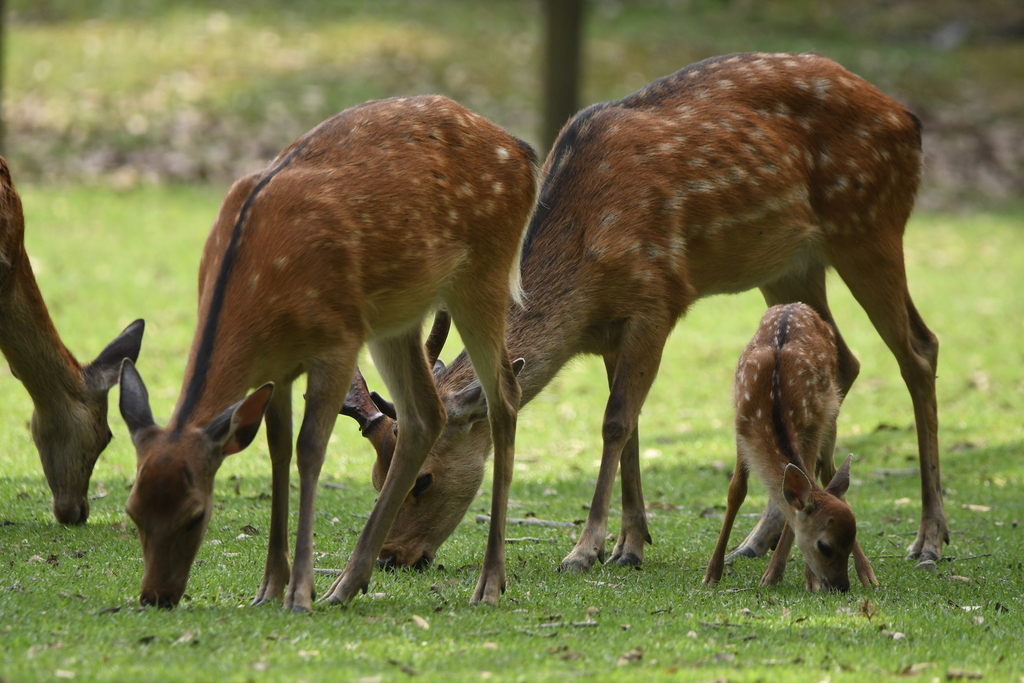
Sika deer are highly social animals that live in small herds, typically ranging from 3 to 10 individuals, though groups can be larger in areas with abundant food. Males and females often segregate seasonally, with does and fawns forming nursery groups while stags range separately or in bachelor herds. These deer are primarily crepuscular, meaning they are most active during dawn and dusk, though they adjust their activity patterns based on human disturbance and food availability. They are relatively vocal for deer, communicating through distinctive whistles, barks, and other calls, particularly during the rutting season.
Throughout the day, sika deer spend significant time foraging and resting in sheltered cover. They are highly alert to predators and will freeze or bound away with a characteristic high-stepping gait when alarmed. During winter, they may move to lower elevations or more protected habitats to escape harsh conditions. Males establish and defend territories during the breeding season, marking vegetation with scent glands and engaging in ritualized combat with rivals using their antlers.
Diet
Sika deer are herbivores with a highly flexible diet that varies by season and habitat availability. In spring and summer, they browse on fresh leaves, shoots, and herbaceous plants, supplementing with grasses and clover. As autumn approaches, they increasingly consume acorns, chestnuts, and fallen fruits, which provide essential nutrients for the upcoming breeding season and winter. In winter, when preferred foods become scarce, they turn to bark, woody browse, evergreen foliage, and dried grasses.
These deer are selective feeders, using their mobility and keen sense of smell to locate the most nutritious available plants. They can adapt to introduced vegetation and cultivated crops, which sometimes brings them into conflict with human agriculture in areas where their populations overlap with farmland.
Reproduction
Sika deer breed in autumn, with the rut typically occurring from September through November in temperate regions. Males become highly aggressive during this period, competing intensely for access to females through displays of strength and dominance. Successful stags gather harems of does and mate with multiple females.
After a gestation period of approximately 230 days, does give birth to a single fawn in late spring or early summer, typically between May and July. Newborn fawns are spotted and remain hidden in dense vegetation for their first weeks while the mother forages nearby, returning periodically to nurse. The fawn is weaned by autumn and becomes increasingly independent, though it may remain with its mother through its first winter. Female sika deer reach sexual maturity at around 18 months, though young females often do not breed until their second or third year. Males mature later, typically not breeding successfully until they are three to four years old and have developed sufficient size and antler quality to compete with established stags. The relatively long lifespan of over 26 years allows individuals to breed across multiple seasons and contribute substantially to population dynamics.
Conservation and Threats
Cervus nippon, the Sika Deer, is classified as Least Concern on the IUCN Red List. This status reflects the species’ current stable population and wide geographic distribution across its native and introduced ranges. However, this classification masks a dramatic conservation history: the species teetered on the edge of extinction in the early 20th century before intensive protection efforts allowed populations to recover.
Historical Threats
Overhunting in the 19th century brought Sika Deer to the brink of extinction. Unregulated hunting for meat, hides, and traditional medicine decimated populations across East Asia, particularly in Japan, China, and the Korean Peninsula. By the early 1900s, the species survived only in remote, protected pockets—notably the imperial hunting grounds of Japan, where strict preservation efforts began.
Current Conservation Status and Efforts
Legal protections and habitat restoration programmes have enabled Sika Deer populations to expand substantially. In Japan, where the species originates, populations are now so abundant in certain regions that overgrazing has become a management concern. China and South Korea have also established protected reserves and breeding programmes to maintain healthy populations. International trade in Sika Deer products is regulated under CITES Appendix I in some regions, limiting commercial exploitation.
Outside their native range, Sika Deer have been introduced to Europe, North America, Australia, and New Zealand, where feral populations are now established. These introduced populations reduce pressure on native Asian populations, though they can compete with local species and cause habitat damage in their new ranges.
Cultural Significance
The provided cultural notes for Sika Deer are currently empty or unavailable. Without documented sources on mythology, folklore, art, cuisine, medicine, or symbolism associated with Cervus nippon, I cannot responsibly attribute cultural significance to this species.
To develop this section accurately, data on the species’ role in Japanese, East Asian, or other cultural traditions—including historical texts, artistic representations, or ethnographic records—would be required. If you have specific cultural references or sources about Sika Deer in human society, please provide them for inclusion.
Fun Facts
Cervus nippon, the sika deer, is one of Asia’s most successful conservation stories and a species rich with surprising ecological and behavioural facts. Known locally as the Japanese deer or northern spotted deer, these small cervids have adapted to diverse environments across their East Asian range and continue to surprise naturalists with their resilience and vocal complexity.
- Sika deer once ranged across a vast swathe of East Asia, from northern Vietnam in the south to the Russian Far East in the north, spanning multiple countries and diverse climates from subtropical forests to temperate woodlands.
- Male sika deer produce a haunting, high-pitched whistle or bugle call during the rut that carries over long distances—a vocalisation far more piercing than that of larger deer species and often compared to the wail of an elk in distress.
- Unlike many deer species, sika retain their spotted coat pattern into adulthood; these white spots on a reddish-brown background persist year-round and serve as a reliable field mark even in dense forest.
- Sika deer are highly adaptable grazers and browsers, feeding on grasses, herbs, leaves, and bark depending on seasonal availability—in winter, they will strip bark from saplings and consume shoots that larger cervids cannot access.
- The species exhibits remarkable population density tolerance; in protected areas with sufficient food and water, sika populations can reach densities of 40 or more individuals per square kilometre, far exceeding those of sympatric ungulates.
- Sika deer are among the few deer species that readily colonise and thrive in introduced ranges; populations now flourish in Europe, Australia, and New Zealand where they escaped from parks and farms, becoming invasive in some regions.
- The fawning season is tightly synchronised across populations, with most calves born within a 2–3 week window in late spring—this reproductive timing evolved to coincide with peak forage availability and reduces predation risk through sheer numbers of young born simultaneously.
Conservation Status
LC (Least Concern) · NT · VU · EN · CR · EW · EX
Photo Gallery
Brian Magurn · CC BY 4.0
Related Species


Was this profile helpful?