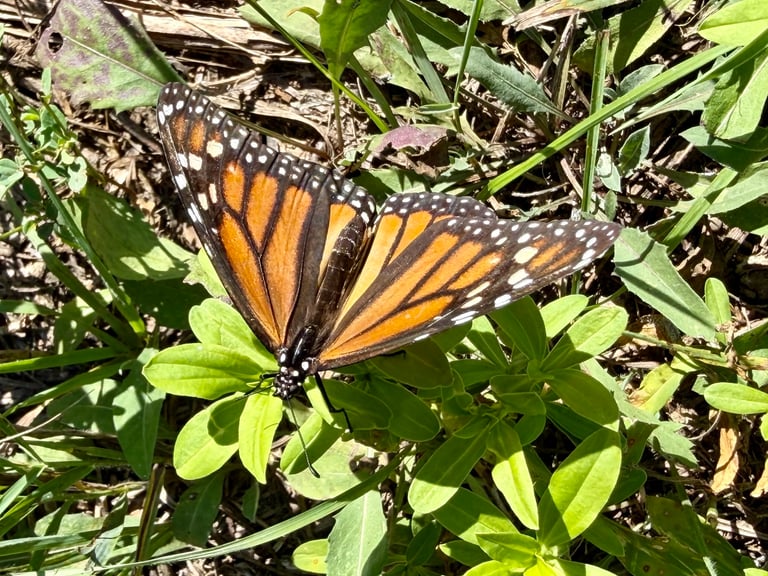
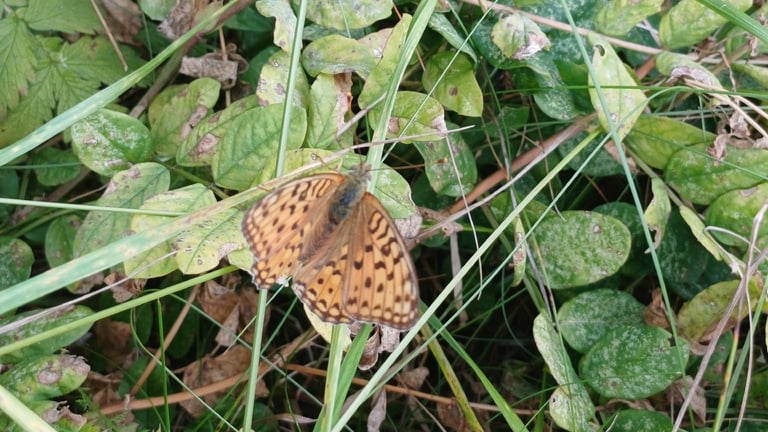
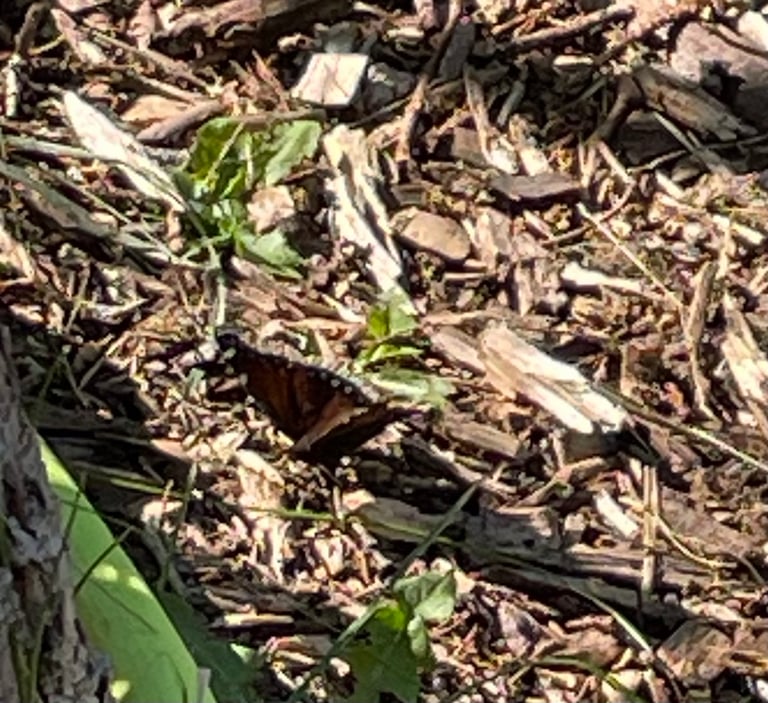
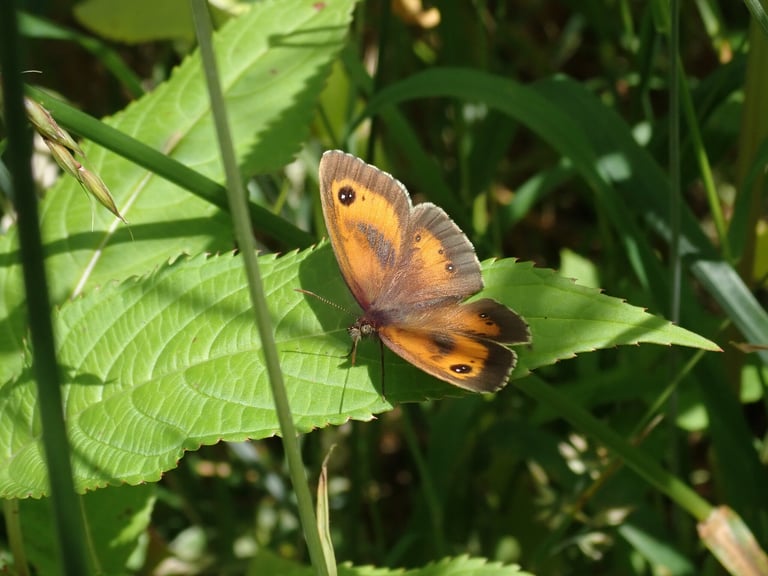
A freshly emerged ringlet is almost black with a velvety sheen and a crisp white fringe along its wings, only settling into its familiar solid brown coloring as it ages.
Aphantopus hyperantus, commonly called the ringlet, is a butterfly in the family Nymphalidae and one of many species called "ringlet" within the tribe Satyrini. The species is assessed as Least Concern and is found widely across the Palearctic realm. Its subtle coloring and distinctive eyespots make it an easy butterfly to overlook, yet a rewarding one to identify once its patterns are known.
Identification and Appearance
The ringlet is best recognized by the small, yellowish-rimmed eyespots scattered across its otherwise solid brown wings, visible on both the upper and lower surfaces. It is a medium-sized butterfly, with a wingspan of 35 to 42 millimeters.
The number and size of these eyespots varies considerably between individuals. They may be reduced or even absent entirely on the upper wing surface, giving some individuals a nearly plain brown appearance. In central Europe and southern England, a rare form known as arete occurs, likely reflecting this same variability in eyespot expression.
Newly emerged adults look distinctly different from older ones: they appear almost black with a velvety texture and a white fringe along the wing edges, a coloration that fades toward the typical brown as the butterfly ages. Eggs are pale yellow when first laid and darken to pale brown over time.
The caterpillar is about 25 millimeters long, gray or light reddish brown, covered in fine dark reddish-brown dots. A dark longitudinal line runs down its back, widening at each segment boundary and becoming more intensely colored toward the rear. The head is darker still, marked with several faint longitudinal stripes.
Distribution and Habitat
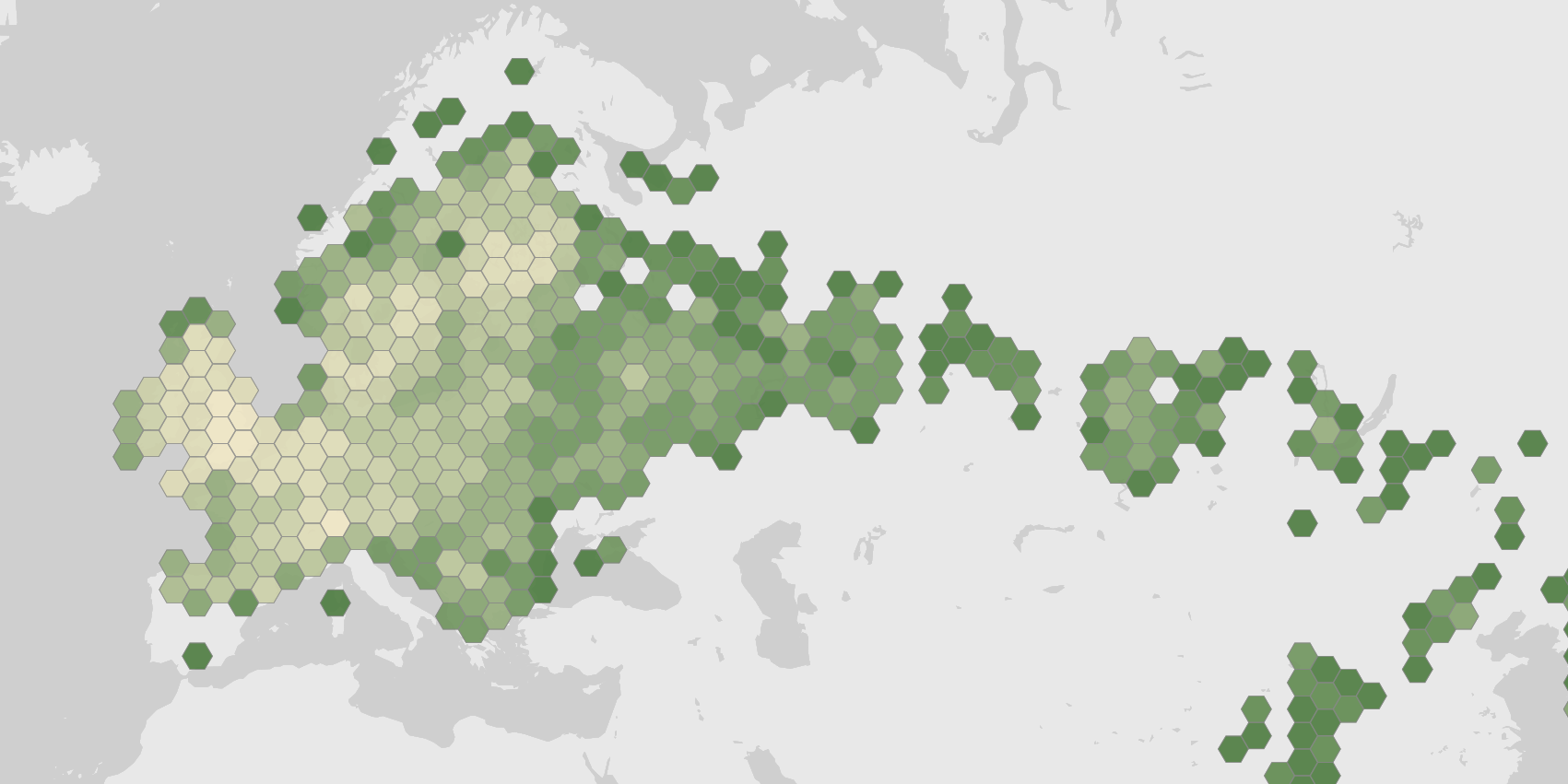
The ringlet is widely distributed across the Palearctic realm, common in most of Europe but absent from northern Scandinavia, peninsular Italy, Portugal, and southern and central Spain, though it persists in the Cantabrian Mountains and the eastern Pyrenees. In Greece it occurs only in the north, in Macedonia and Thessaly. Beyond Europe, its range extends across much of temperate Asia, including Russia, Siberia, Mongolia, China, and Korea.
It favors grassy, moist or dry forest clearings with bushes, showing a strong attachment to woodland edges rather than fully open ground. Blackberry bushes are a particular draw, and the species can be very common wherever nectar sources such as creeping thistle, swamp thistle, oregano, forest scabious, or hogweed grow, as these are favorite food plants of the adults.
Males search for newly emerged females with a slow, uninterrupted flight, fluttering around and between grass stems within these sheltered habitats.
Diet and Nutrition
As caterpillars, ringlets feed on a wide range of grasses and grass-like plants rather than a single preferred species. Recorded food plants include tufted hair-grass, timothy grass, common bent, false oat-grass, wood small-reed, and several sedges such as Carex hirta and Carex panicea, along with fescues and creeping soft-grass.
This broad tolerance for different grasses and sedges likely helps the caterpillars establish in the varied grassy clearings and woodland edges the species inhabits. Adults, by contrast, feed on nectar from flowering plants such as creeping thistle, swamp thistle, oregano, forest scabious, and hogweed found along these same woodland margins.
Cultural Significance
The species name hyperantus traces back to Greek mythology: Hyperantus was one of the fifty sons of Aegyptus, killed by one of the fifty daughters of Danaus. This mythological naming links the butterfly to the classical tradition, common among Lepidoptera named during the era of Linnaean taxonomy, when many satyrine butterflies received names drawn from Greek myth.
Fun Facts
- Newly emerged ringlets look almost black with a velvety texture, only developing their familiar brown coloring and eyespots as they age.
- The species' scientific name, hyperantus, comes from a son of Aegyptus in Greek mythology who was killed by one of the daughters of Danaus.
- A rare form called arete, in which the eyespots are reduced or missing, occurs in central Europe and southern England.
Photos
Photographs from via iNaturalist, licensed under CC0 1.0., by Oleg Kosterin via iNaturalist, licensed under CC BY 4.0., by James Heal via iNaturalist, licensed under CC BY 4.0., by Wolfgang Ahlmer via iNaturalist, licensed under CC BY 4.0., by finalapplause via iNaturalist, licensed under CC BY 4.0., by Demian Hiß via iNaturalist, licensed under CC BY 4.0., by Leonard Worthington via iNaturalist, licensed under CC BY 4.0., and by Katharine Khamhaengwong via iNaturalist, licensed under CC BY 4.0., credited on each photo.
Ecology and classification
Classification
- Phylum
- Arthropoda
- Class
- Insecta
- Order
- Lepidoptera
- Family
- Nymphalidae
- Genus
- Aphantopus
- Species
- Aphantopus hyperantus
Sources
- GBIF Species names and classification
- iNaturalist Photos
- Wikidata Common names and conservation status
- Wikipedia Summary extract
- GloBI What it eats, what eats it, parasites and pollinators
- trophiCH
- DoPI
- Schwarz et al. 2021
- EuPPollNet