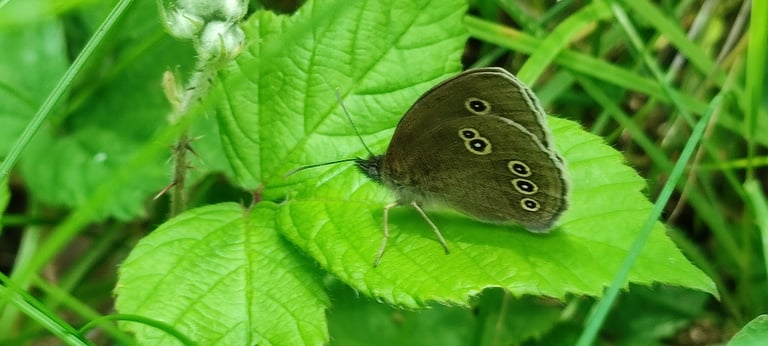
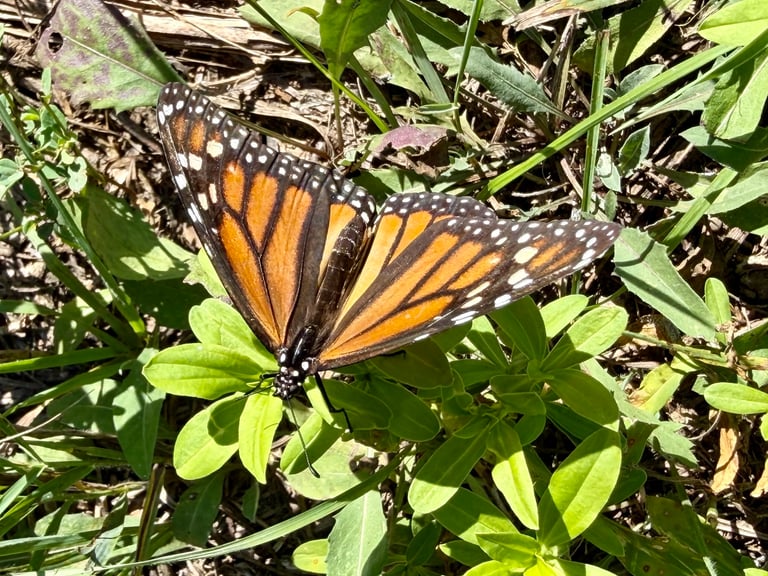
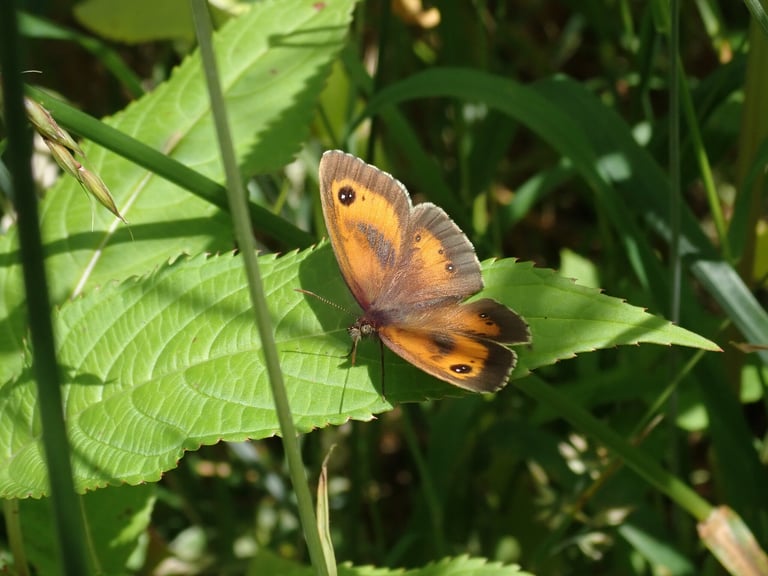
The high brown fritillary is Great Britain's most threatened butterfly, and it is also one of the largest and most brightly colored fritillaries in its family, Nymphalidae.
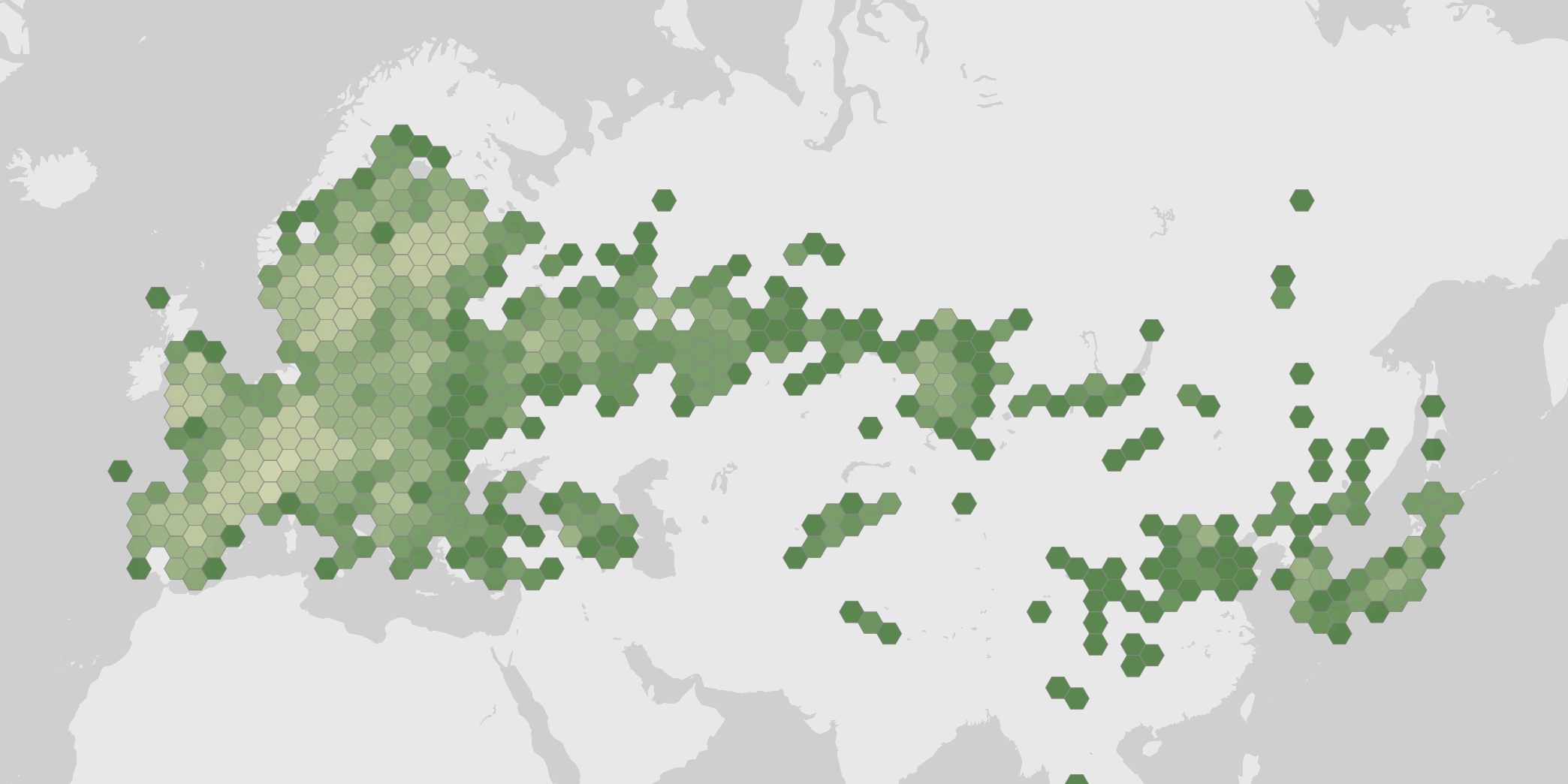
This butterfly is native to Europe and ranges across the Palearctic to Japan. Like other fritillaries, it depends on warm climates and on flowering plants rich in violets, which its caterpillars need to survive.
It is listed as a vulnerable species under the Wildlife and Countryside Act 1981, and it remains one of the highest priority projects of Butterfly Conservation. Its story shows how changes in land management can reduce a butterfly across a whole country.
Identification and Appearance
The most useful field mark is the orange upper wing with black markings. The underside is a duller orange, patterned with white and brown, and the marginal silver spots are long and broad.
The wingspan averages around 65 mm, which makes this a large butterfly. In flight it is very hard to tell apart from the dark green fritillary, which shares many of the same markings. Males and females look much alike.
The male can be recognized by thickened, hairy streaks on the branches of the median vein of the forewing. The female has a straighter outer margin on the forewing and a slightly wavy hindwing margin. The silver spots beneath are much larger than those of the niobe fritillary, a closely related species.
The caterpillar is brown with a single white stripe running along its body. Its body is covered in brown spikes, which help it blend in as it moves among dead fern fronds.
Distribution and Habitat
The high brown fritillary occurs across Europe and into temperate parts of Asia and Africa, with many subspecies. Northern Europe has seen a severe decline, but the butterfly remains relatively common in other parts of Europe.
In Great Britain, the butterfly has been reduced to around 50 sites since the 1970s. Populations now remain in four areas: the Morecambe Bay limestone hills, the Glamorgan Brackenlands, Dartmoor and Exmoor.
The butterfly uses two main habitats: bracken and limestone outcrops. Bracken habitats occur across its whole range, while limestone outcrops are found only in Great Britain. Both usually lie at lower altitudes in open ground, often facing south, and the plants there are limited to common ivies, tormentil, wood anemone and violets. Breeding areas are dominated by bracken, with dead bracken leaves covering the ground and grassy patches mixed in.
In spring, ground covered in dead bracken has less dense grass, so it warms up much more than the surrounding land. Warmer ground lets the caterpillars develop faster, which makes bracken-rich habitat a favorable place to breed. Woodland populations have suffered most from habitat loss, because the butterfly relied on coppicing, a land management practice that has nearly vanished from the British countryside.
Diet and Feeding Habits
Adult high brown fritillaries feed from a narrow range of flowers. Both females and males take nectar mainly from bramble blossom and common knapweed. They also visit several thistle species, betony and ragwort. In towns and gardens, the butterfly often visits Buddleja, which is a popular choice with fritillaries.
The caterpillars have a different diet. They do not eat their egg shells, as many caterpillars do. Instead, they feed mainly on young violet seedlings, focusing on the newest growth and staying among their food plants. They eat heavily before they change into pupae.
Because the adults use only a few flower types, the availability of bramble, knapweed and violets shapes where the butterfly can thrive.
Conservation and Threats
The high brown fritillary is extremely threatened. It is extinct across more than 90% of its former range, and conservationists give it a high priority. The species was once widespread in the United Kingdom, but its decline has been severe. Its legal protection in the UK comes from the Wildlife and Countryside Act 1981. The decline is linked to changes in land management, which increased during the 20th century.
The main plan to reverse the decline focuses on managing bracken habitat. Bracken sites are being assessed to decide which steps come next. Tentative plans include winter clearance of bracken litter and summer path cutting between patches of habitat. Within bracken habitat, the butterfly is lost when bracken grows too thick or when grazing animals trample the plants it depends on.
In the Blean Woods near Canterbury, the Wilder Blean project, run by the Wildwood Trust and Kent Wildlife Trust, is bringing European bison back to the UK for the first time in 6,000 years. The animals create open, sunlit patches that help cow wheat grow, and the butterfly depends on that plant. A herd of three females and one male was planned for release in 2022 within a 2,500-acre conservation area.
Photos
Photographs from via iNaturalist, licensed under CC0 1.0., by Sofia Voynovskaya via iNaturalist, licensed under CC BY 4.0., by Wolfgang Ahlmer via iNaturalist, licensed under CC BY 4.0., by Suhas Saya via iNaturalist, licensed under CC BY 4.0., by Oleg Kosterin via iNaturalist, licensed under CC BY 4.0., by Attila Oláh via iNaturalist, licensed under CC BY 4.0., by dachsise via iNaturalist, licensed under CC BY 4.0., by Edoardo Nardelli via iNaturalist, licensed under CC BY 4.0., and by Stanislav Murashkin via iNaturalist, licensed under CC BY 4.0., credited on each photo.
Ecology and classification
Classification
- Phylum
- Arthropoda
- Class
- Insecta
- Order
- Lepidoptera
- Family
- Nymphalidae
- Genus
- Fabriciana
- Species
- Fabriciana adippe
Sources
- GBIF Species names and classification
- iNaturalist Photos
- Wikidata Common names and conservation status
- Wikipedia Summary extract
- GloBI What it eats, what eats it, parasites and pollinators
- DoPI
- EuPPollNet