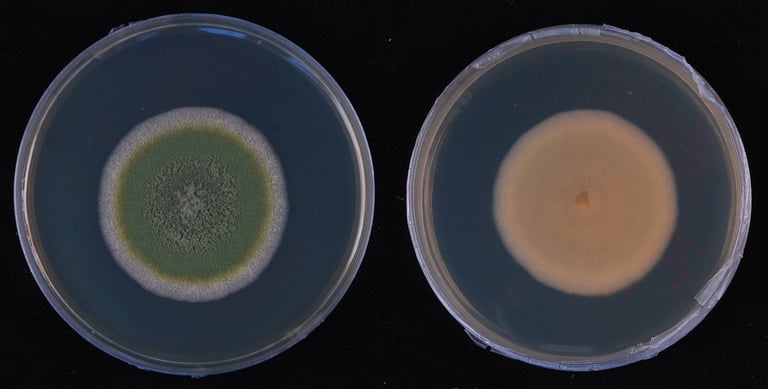
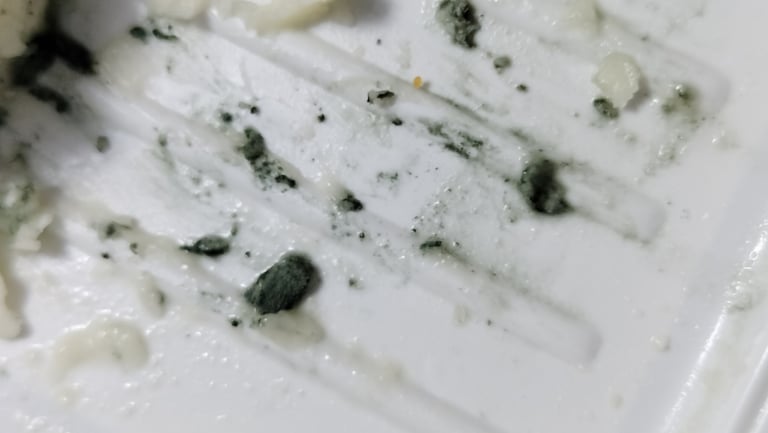
Aspergillus niger can grow and thrive in conditions so acidic that most other organisms cannot survive there, a trait that has turned this ordinary-looking mold into one of the most industrially valuable microbes on Earth.
Classified within the Nigri section of the genus Aspergillus (class Eurotiomycetes, order Eurotiales, family Aspergillaceae), it belongs to a group of common molds found almost everywhere: in soil and water, on vegetation, in fecal matter, on decomposing organic material, and drifting in the air. No conservation status applies to a species this widespread.
What makes A. niger worth attention is not its appearance but its biochemistry. Extensive metabolic diversity, high production yields, strong secretion capability, and the ability to carry out post-translational modifications combine to make it a robust natural factory for acids, proteins, and other secondary metabolites.
Fruiting Body and Identification
Aspergillus niger is identified less by a single visible structure and more by its behavior as a fast-growing mold: species in this genus can sporulate within just a few days of germination. It belongs to the Nigri section of Aspergillus, a grouping defined by shared traits among related molds rather than by a single conspicuous fruiting body.
The defining biological features described for this species are functional rather than purely visual: extensive metabolic diversity, high yields of secreted products, and the capacity for post-translational modification of the proteins it produces. These traits, more than any single physical marker, are what allow A. niger to generate its wide range of acids, proteins, and bioactive compounds.
A further distinguishing trait is physiological: A. niger can withstand extremely acidic conditions that most other molds cannot tolerate, a resilience that underlies its industrial reputation as a citric acid producer.
Distribution and Habitat
Aspergillus niger is described as ubiquitous, occurring in nearly every environment rather than being confined to a narrow range. It is commonly found in soil, in plant debris, and in indoor environments, and it has also been recorded on rotting fruit and vegetables.
Monthly presence observations show a clear seasonal pattern, with the highest counts in January (713) and April (667), moderate levels through the summer and early autumn months, and the lowest count in December (128). These figures come from GBIF occurrence records, which reflect where the species has been observed rather than its actual abundance or the full extent of its range, so the pattern should be read as a record of detection frequency rather than population size.
Taken together, the habitat data and observation pattern point to a species that persists across many settings year-round, with observation activity varying more than the fungus's actual presence likely does.

Ecology and Relationships
Aspergillus niger acts as a decomposer and, more damagingly, as a plant pathogen, and its ecological impact is felt most strongly through disease. It causes black mold infections in legumes, fruits, and vegetables such as peanuts, grapes, and onions, and it is a common cause of post-harvest decay that leads to significant economic losses in the food industry. On onions and ornamental plants specifically, it produces sooty mold. Infection in plants can reduce seed germination, hinder seedling emergence, and stunt both root and shoot elongation, often killing the plant before it reaches maturity.
The species' tolerance for a wide temperature range, from 15 to 53 °C (59 to 127 °F), along with its tolerance for shifting pH and humidity, allows it to establish infections across many different crops and storage conditions.
A. niger also interacts with humans as an opportunistic pathogen. Because its spores are so common in the environment, people readily inhale them, and in those with compromised immune systems or pre-existing lung conditions such as asthma or cystic fibrosis, this can lead to aspergillosis, including allergic bronchopulmonary aspergillosis and chronic pulmonary aspergillosis. Horticultural workers who inhale peat dust, which can be rich in A. niger spores, face particular risk, as do people who disturb ancient remains such as Egyptian mummies where the fungus has been found. The species can also cause otomycosis, a fungal ear infection linked to damage of the ear canal's skin barrier, especially in tropical climates. Compared to other Aspergillus species like A. flavus, A. fumigatus, and A. terreus, A. niger rarely causes pneumonia.
Uses and Cultural History
Industrially, Aspergillus niger is grown deliberately for the huge range of substances it can produce. It is a strict aerobe that grows across a broad temperature range of 6 to 47 °C, with an optimum around 35 to 37 °C, and it tolerates pH from 1.5 to 9.8 along with very low or very high humidity, making it easy to culture on media such as potato dextrose agar, Czapek-Dox agar, and lignocellulose agar. Producers use two main methods: solid-state fermentation, which grows the fungus on agricultural byproducts like wheat bran, sugar pulp, rice husks, or corn flour, and submerged fermentation in liquid media within controlled vessels. Solid-state fermentation is more common because it gives better yields at lower cost.
The fungus's best-known product is citric acid (E330), of which A. niger fermentation supplies more than 1 million metric tons annually for uses ranging from controlling microbial growth to flavoring food and beverages, adjusting acidity, and pharmaceutical applications. It is also used to produce gluconic acid (E574). Both citric acid and gluconic acid produced this way have been deemed acceptable for daily intake by the World Health Organization, and A. niger fermentation is recognized as safe (GRAS) by the U.S. Food and Drug Administration.
Beyond acids, A. niger is cultured to produce a range of enzymes with specific industrial roles: glucoamylase for making high-fructose corn syrup, pectinases for clarifying cider and wine, alpha-galactosidase (used in products like Beano to reduce flatulence), and glucose oxidase for glucose biosensors. It is also cultured for fructosyltransferase, which produces fructooligosaccharides used in low-calorie, prebiotic functional foods, and it is being explored as a possible source of natural food-grade pigments.
Fun Facts
- Spores of A. niger have been detected at altitudes of up to 58 km, showing how far this mold can disperse through the atmosphere.
- It tolerates pH levels from 1.5 to 9.8, an unusually wide acid-to-alkaline range for a single fungal species.
- As a xerophilic organism, it can grow with very little available water while also tolerating relative humidity of 90 to 100 percent.
- Spores of A. niger have been recovered from ancient Egyptian mummies and can become airborne again when the remains are disturbed.
- Despite being extremely common, it rarely causes pneumonia, unlike relatives such as Aspergillus flavus, Aspergillus fumigatus, and Aspergillus terreus.
- In industrial cultivation it grows across a temperature range of 6 to 47 °C, though its preferred range is a much narrower 35 to 37 °C.
Ecology
Habitat
- Urban
- Disturbed Ground