Few molds have shaped human cuisine as much as Penicillium roqueforti, the fungus responsible for the blue veining and sharp bite of Roquefort, Stilton, Gorgonzola, and dozens of other blue cheeses worldwide. Outside the cheese vat, it lives a much quieter life as a common saprotrophic fungus, turning up in soil, decaying organic matter, and on plants across the globe.
Taxonomically it belongs to the family Aspergillaceae, order Eurotiales, within the class Eurotiomycetes. Its dual identity, an ordinary decomposer in nature and an indispensable partner in dairy craft, makes it one of the more consequential fungi in human food history.
Fruiting Body and Identification
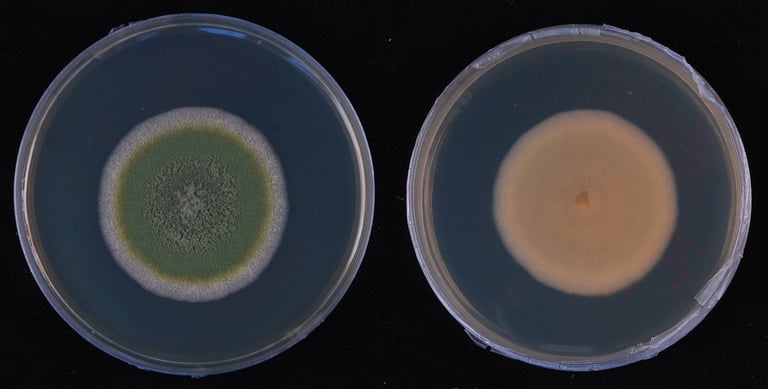
Because Penicillium roqueforti does not form a mushroom-like fruiting body, identification relies on colony growth on laboratory media and on microscopic features rather than field characters. On Czapek yeast autolysate or yeast-extract sucrose agar, colonies typically reach about 40 mm across, olive brown to dull green on the surface with a velvety (velutinous) texture, and dark green to black on the reverse of the plate. On malt extract agar, colonies grow larger, around 50 mm, dull green with beige to greyish-green undersides and spider-web-like (arachnoid) margins.
Under the microscope, the species is distinguished by asexual spores produced in phialides arranged in a distinctive brush-shaped configuration, a hallmark of the genus Penicillium. This asexual reproduction is complemented, as noted above, by a demonstrated capacity for sexual development under experimental conditions.
Physiologically, the fungus tolerates cold temperatures, low oxygen levels, and both alkaline and mildly acidic preservatives. This resilience is exactly what allows it to thrive in dairy environments such as ripening cheese, but the same toughness makes it a spoilage organism in refrigerated foods, cured meats, bread, and silage.
Genetically, certain lineages, known as the clonal non-Roquefort group and the Termignon group, carry mobile genetic elements called Starships (named CheesyTer and Wallaby) that speed growth on cheese and improve competition against other microbes. These elements, along with five other cheese-related genomic regions of unknown function, have been horizontally transferred to other Penicillium species that humans have also domesticated for cheese-making.
Distribution and Habitat
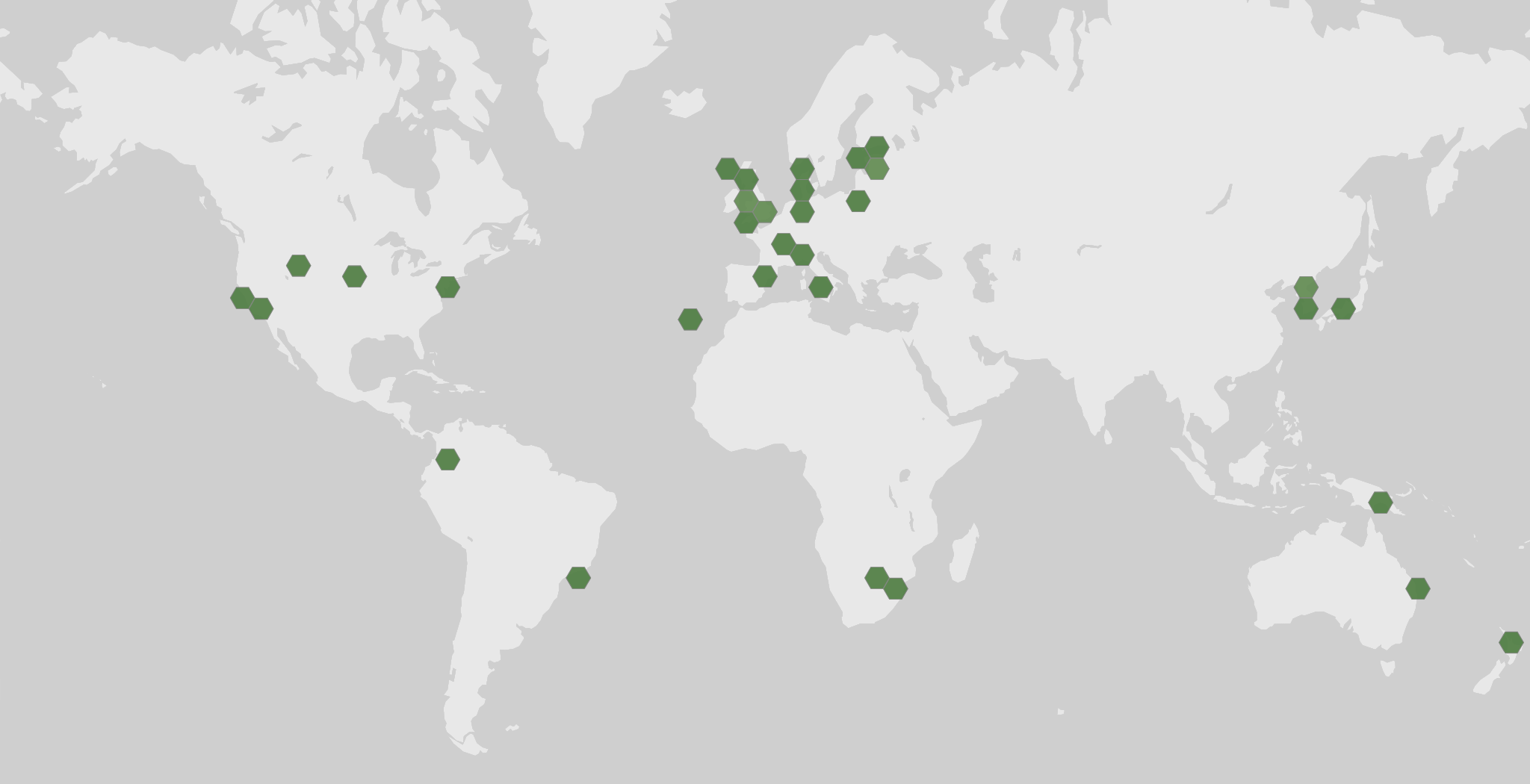
Penicillium roqueforti is widespread in nature, recovered from soil, decaying organic matter, and plant material rather than being confined to a single region or habitat type. Its presence in cheese caves and dairies reflects a broader ecological tolerance rather than an origin restricted to those settings.
Monthly observation records show a pronounced peak in January (57 recorded observations) and a smaller secondary rise in October (29), with counts staying low and fairly even through the spring and summer months (roughly 5 to 17 per month). These figures come from presence-based occurrence data, not measures of abundance or population size, and they should be read only as an indication of when the species has been more frequently recorded rather than proof of a true seasonal population surge.
Uses and Cultural History
The dominant human use of Penicillium roqueforti is as the ripening culture for blue-veined cheeses around the world. Beyond its namesake Roquefort, it is used in Bleu de Bresse, Bleu du Vercors-Sassenage, Brebiblu, Cabrales, Cambozola, Cashel Blue, Danish blue, Swedish Ädelost, Polish Rokpol, blue varieties of Turkish civil cheese, Fourme d'Ambert, Fourme de Montbrison, Lanark Blue, Shropshire Blue, Stilton, and some Bleu d'Auvergne and Gorgonzola varieties. Other blue cheeses, such as Bleu de Gex and Rochebaron, instead rely on the related Penicillium glaucum.
Roquefort itself carries centuries of cultural weight, with legends surrounding its discovery in the village of Roquefort-sur-Soulzon in southern France, where the cheese is still aged in the natural Combalou caves. Made from sheep's milk and reliant specifically on P. roqueforti, it is distinguished from other blue cheeses through this combination of milk source, mold species, and cave-aging tradition.
Beyond cheese, the fungus has industrial applications: when aerated in cream, it yields concentrated blue cheese flavoring (an enzyme-modified cheese product), and a similar flavor effect can be achieved using other fats such as coconut oil. Strains are also used to produce compounds serving as antibiotics, flavors, and fragrances, as well as proteases and specialty chemicals including methyl ketones such as 2-heptanone.
Fun Facts
- The species was first described by American mycologist Charles Thom in 1906.
- Not all blue cheeses use this mold; Gorgonzola and a few others, like Bleu de Gex, are instead made with the related Penicillium glaucum.
- Beyond cheese-making, strains of P. roqueforti are used to produce antibiotics, flavorings, fragrances, and specialty chemicals such as the methyl ketone 2-heptanone.
- The same traits that make it valuable in cheese caves, cold and preservative tolerance, also let it spoil refrigerated foods, cured meats, bread, and silage.
- Certain strains carry mobile genetic elements called Starships (CheesyTer and Wallaby) that boost growth speed on cheese and have jumped horizontally into other domesticated Penicillium species.