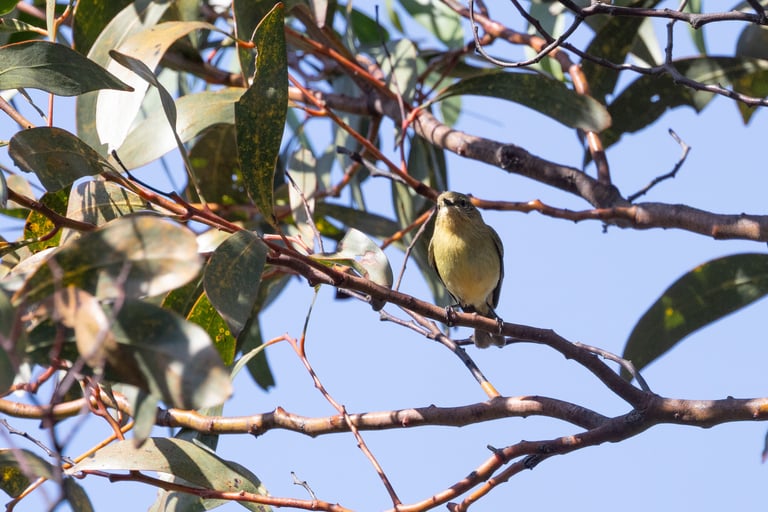
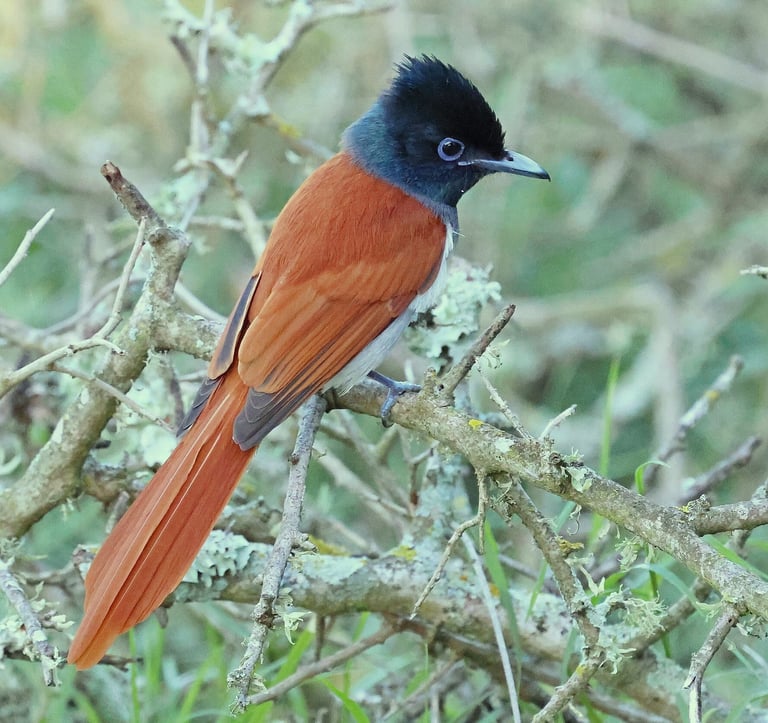
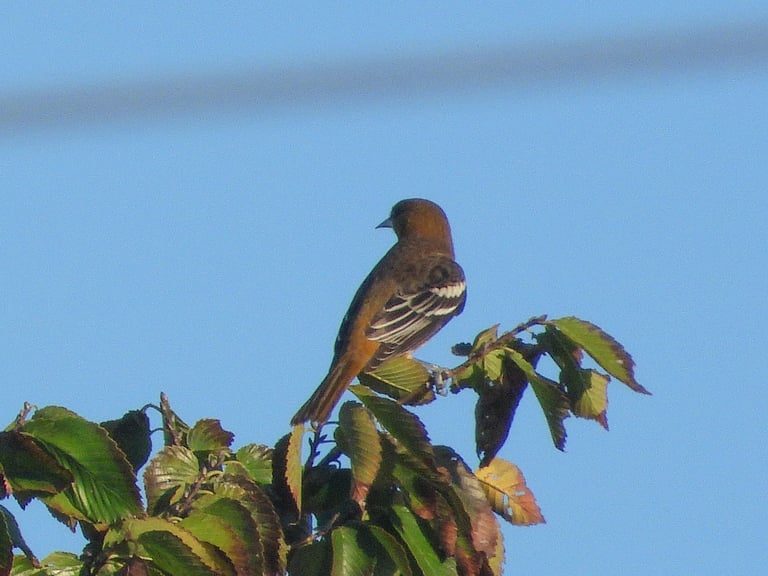
With a bright yellow body set against a jet-black head and a flesh-colored beak, the black-headed oriole is one of the more visually striking songbirds of sub-Saharan Africa, yet it is far more often heard than seen.
A member of the family Oriolidae, this bird ranges across a huge swath of Africa and carries an IUCN status of Least Concern. Its combination of bold color and secretive habits makes it a rewarding species to learn to identify by ear as much as by sight.
Identification and Appearance
The bright yellow body paired with a contrasting black head is the most reliable field mark for this species, immediately separating it from most other canopy birds sharing its range.
It is a small bird, weighing only about 0.066 kilograms. The beak is flesh-colored rather than dark, adding another point of contrast against the black head and yellow plumage.
The voice, described as a liquid-sounding warble, often includes imitations and whistles, which can help confirm identification when the bird is concealed in foliage.
Distribution and Habitat
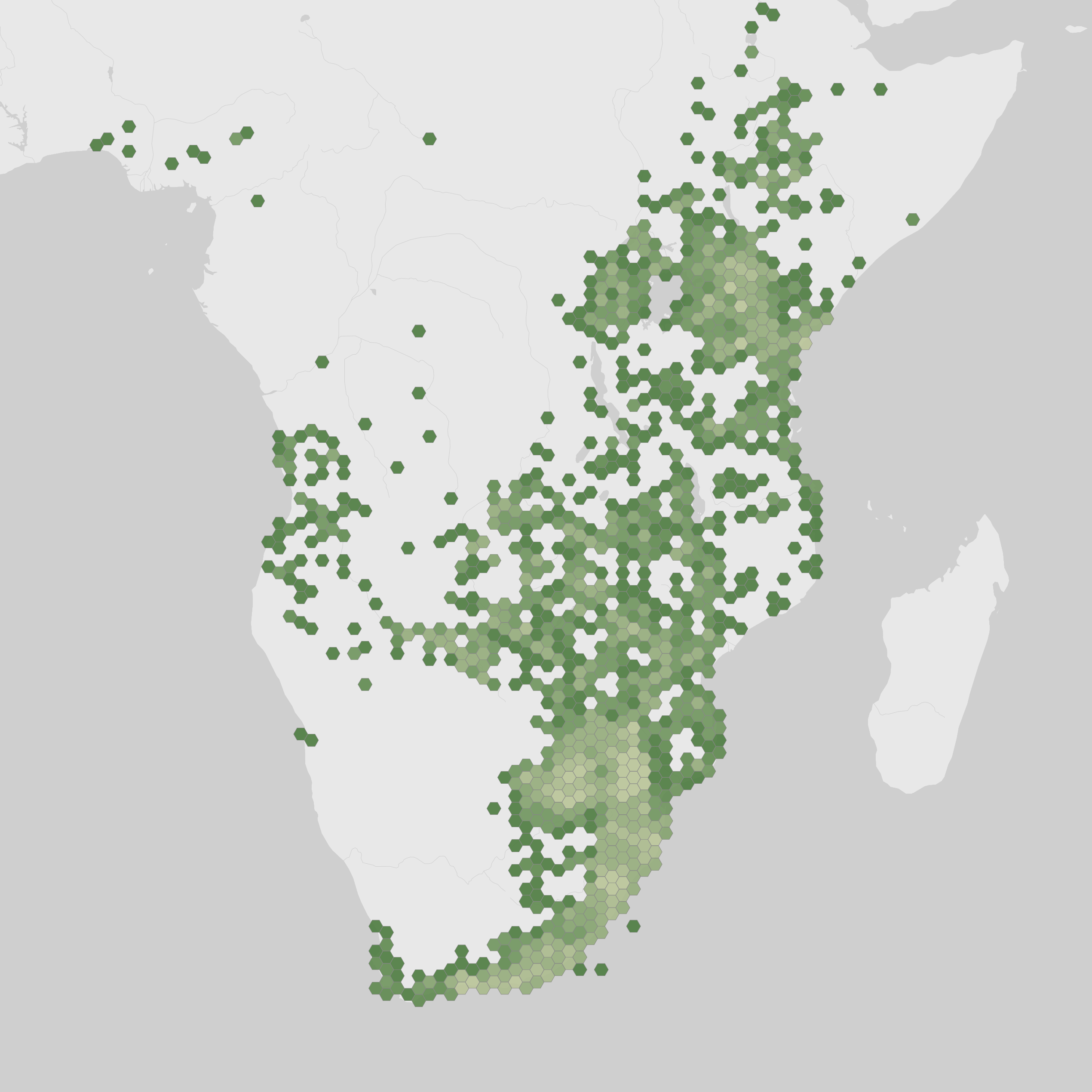
The black-headed oriole breeds across much of sub-Saharan Africa, from South Sudan and Ethiopia in the north to South Africa in the south, covering a range of roughly 6,080,000 square kilometers.
It favors dry tropical forests, particularly acacia and broad-leaved woodlands, along with dense shrubland. These semi-open habitats let the bird stay within the canopy while still moving between feeding areas.
Despite its bright plumage, it is more often heard than seen in these wooded and shrubby landscapes, blending into the foliage even as it calls.
Behavior and Lifestyle
This oriole is sedentary, staying within its home range year-round rather than migrating with the seasons.
It forages in the canopy, an insessorial lifestyle built around perching and moving through tree cover while feeding on small fruit and large insects.
When raising young, the diet shifts notably toward caterpillars, which make up the bulk of what chicks are fed.
Fun Facts
- Some authors treat this bird as a subspecies within a broader Oriolus larvatus/Oriolus percevali complex rather than as a fully distinct species.
- Its diet shifts with life stage: adults take fruit and large insects, but chicks are raised mostly on caterpillars.
Photos
Photographs from via iNaturalist, licensed under CC0 1.0., by Henry de Lange via iNaturalist, licensed under CC BY 4.0., by Lukas Zangl via iNaturalist, licensed under CC BY 4.0., by Eryss via iNaturalist, licensed under CC BY 4.0., by Christiaan Viljoen via iNaturalist, licensed under CC BY 4.0., and by Shaun Swanepoel via iNaturalist, licensed under CC BY 4.0., credited on each photo.
Ecology and classification
Classification
- Phylum
- Chordata
- Class
- Aves
- Order
- Passeriformes
- Family
- Oriolidae
- Genus
- Oriolus
- Species
- Oriolus larvatus
Sources
- GBIF Species names and classification
- iNaturalist Photos
- Wikidata Common names and conservation status
- Wikipedia Summary extract
- AVONET Bird mass, habitat, migration, diet and range size