Boletopsis grisea is a gray, fleshy fungus that looks like a polypore but grows directly from the ground rather than on wood, forming a partnership with Scots pine that ties its survival closely to that tree's fate.
A member of the family Bankeraceae within the order Thelephorales, it occurs across Europe and in parts of North America. Listed as Near Threatened, it stands out as a fungus whose fortunes rise and fall with the health of pine woodlands, making it a quiet indicator of forest condition.
Fruiting Body and Identification
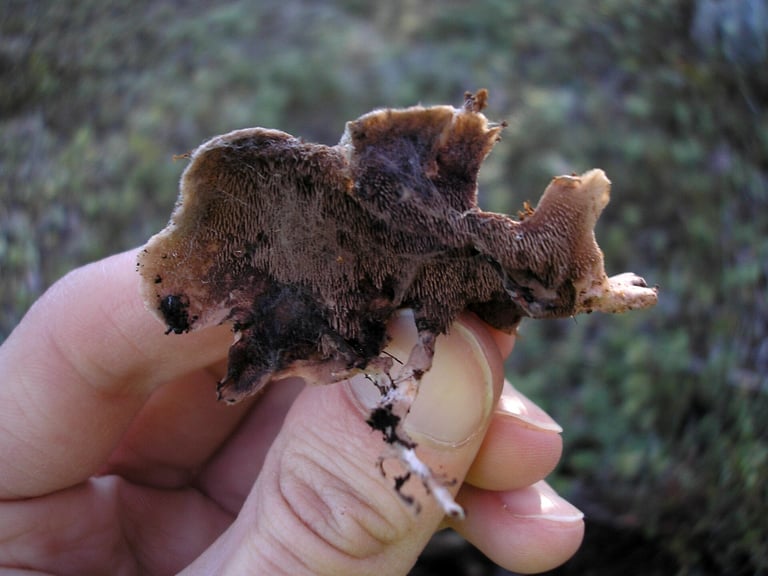
The most reliable identifying features of Boletopsis grisea are its gray, fleshy cap and its ground-dwelling habit, distinguishing it from true polypores that grow on wood. The cap is convex, irregular in shape, and dry to the touch, reaching up to 15 centimeters across. It sits atop a stout stipe, 3 to 10 centimeters tall, colored the same gray as the cap.
Beneath the cap are white pores rather than gills. The flesh is whitish but discolors to gray or greenish tones as it ages or is handled, and it gives off a fragrant smell. The spore print is tan.
Distribution and Habitat
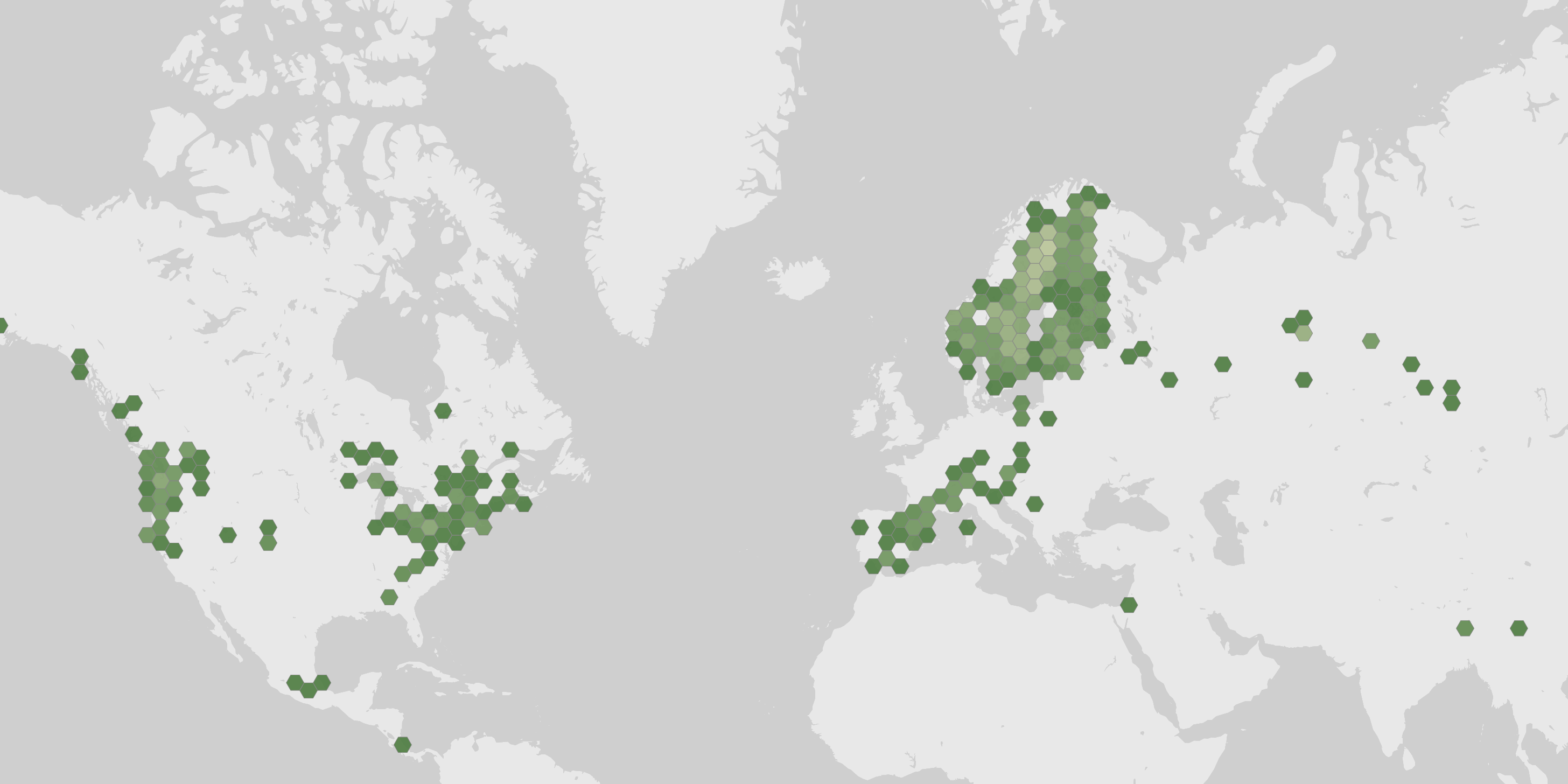
Boletopsis grisea occurs across Europe and in both Canada and the United States, where it fruits from August through October in the east and September through November in the west. Throughout its range, it is consistently found in association with Scots pine (Pinus sylvestris).
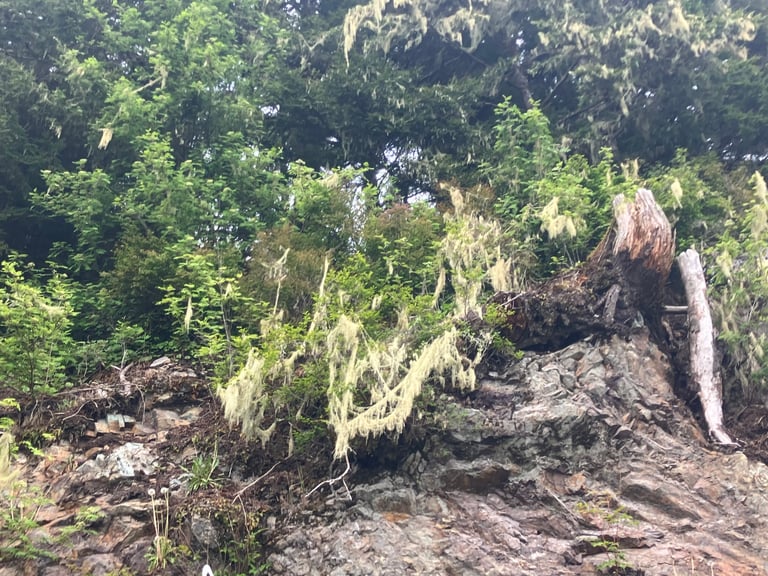
It grows in forests dominated by pine, on nutrient-poor, acidic soils, often alongside lichens and heath plants that share the understory. This narrow habitat requirement means the fungus is bound to a specific type of pine woodland rather than occurring broadly across forest types.
Observation records suggest the fungus is reported most often in late summer and autumn, consistent with its known fruiting season, though these records reflect presence rather than actual abundance or population size.
Uses and Cultural History
Boletopsis grisea does not hold significant prominence in folkloric or traditional medicinal systems, likely due to its rarity and highly specific ecological niche. Unlike many well-known mushrooms with long histories of culinary, spiritual, or medicinal use, this species has not developed a comparable cultural record.
Conservation and Threats
Boletopsis grisea is classified as Near Threatened and considered a threatened species in Europe, where it has been recorded from 15 countries and appears on five Regional Red Lists. It has been short-listed for inclusion in the Berne Convention on the Conservation of European Wildlife and Natural Habitats by the European Council for Conservation of Fungi.
The main threats to the species are deforestation, air pollution, and the use of fertilizers and lime applied to increase timber production, all of which degrade the poor, acidic pine-forest soils it depends on.
Fun Facts
- Boletopsis grisea looks like a polypore mushroom but actually grows from the soil rather than on wood.
- Its fragrant smell sets it apart from many similar-looking gray, fleshy fungi found in pine forests.
Photos
Photographs from via iNaturalist, licensed under CC0 1.0., by Bryan Rennick via iNaturalist, licensed under CC BY 4.0., by Erick Vélez Sánchez via iNaturalist, licensed under CC BY 4.0., by Fyodor Pudovikov via iNaturalist, licensed under CC BY 4.0., and by Brian V. via iNaturalist, licensed under CC BY 4.0., credited on each photo.
Ecology and classification
Habitat
Classification
- Phylum
- Basidiomycota
- Class
- Agaricomycetes
- Order
- Thelephorales
- Family
- Bankeraceae
- Genus
- Boletopsis
- Species
- Boletopsis grisea
Sources
- GBIF Species names and classification
- iNaturalist Photos
- Wikidata Common names and conservation status
- Wikipedia Summary extract
- Encyclopedia of Life Habitat, diet and behavior traits