The golden chanterelle is the type species of an entire genus, meaning every other Cantharellus species is defined by comparison to it. Also known as the girolle, it belongs to the kingdom Fungi, class Agaricomycetes, order Cantharellales, and family Hydnaceae.
It grows across broad stretches of forested landscape and has long been recognized as one of the more distinctive mushrooms to encounter in the wild. Its combination of color, shape, and smell makes it a familiar sight to foragers and a frequent subject of mycological study.
Fruiting Body and Identification
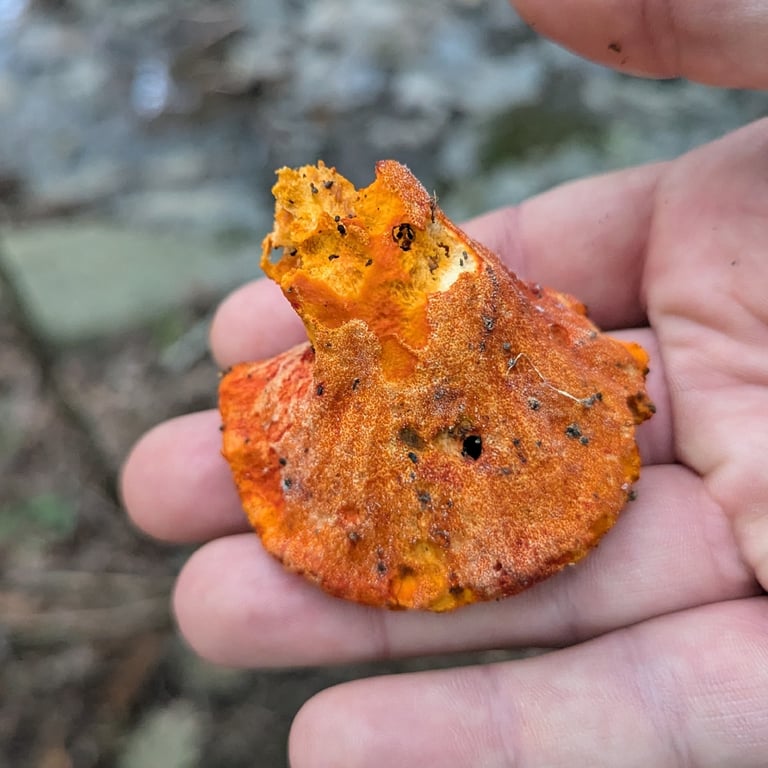
The most reliable identifying feature of Cantharellus cibarius is its funnel-like shape paired with a color ranging from yellow to dark yellow, set against ridges rather than true gills running down the stem. The fruiting body measures 3 to 15 centimeters wide and stands 5 to 10 centimeters tall, with a cap that is often wavy or irregular at the margin.
A useful field test is damage response: bruised or injured flesh develops red spots, a reaction not shared by all similar-looking mushrooms. The mushroom also carries a faint aroma and flavor reminiscent of apricots, a trait often used to help confirm identification. Its spore print is yellowish.
Distribution and Habitat
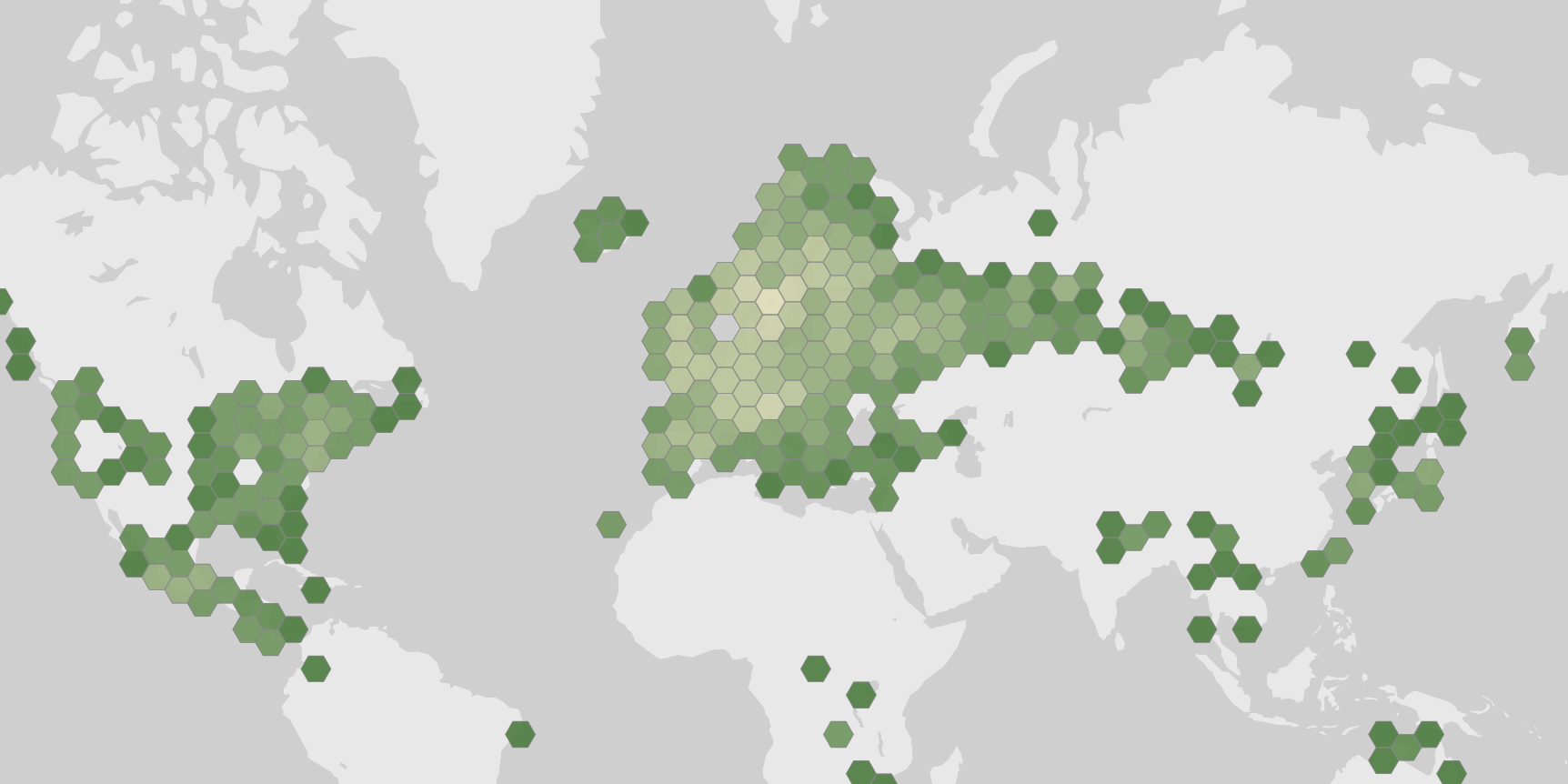
Cantharellus cibarius occurs across Europe, ranging from Scandinavia in the north down to the Mediterranean Basin. It grows mainly in deciduous and coniferous forests, and at least one record notes it collected exclusively in oak woodland, suggesting a strong association with certain tree types in some areas.
Fruiting typically spans from June to December. Monthly observation data show counts climbing sharply from June (749) to a peak in August and September, with values around 18,900 and 19,000 before tapering through October and into winter. This pattern points to a concentrated period of visible fruiting in late summer, though the figures reflect presence observations only and should not be read as a measure of abundance, population size, or the species' complete range.
Uses and Cultural History
Chanterelles are widely harvested for the table, typically gathered from late summer to late fall across their European range. They feature in many culinary dishes, prized for the qualities noted in their identification, including their apricot-like aroma.
Because watery specimens spoil more easily, they are commonly preserved by drying or freezing rather than left fresh for long. Oven drying is specifically discouraged, since it can leave the mushroom with a bitter taste, making air-drying or freezing the preferred methods for storage.
Fun Facts
- The name Cantharellus comes from the Latin cantharellus, a diminutive of cantharus (from the Greek kantharos, a drinking cup), a reference to the funnel- or chalice-shaped cap.
- The species epithet cibarius derives from the Latin cibus, meaning food, reflecting its long history as a recognized edible mushroom.
- It was formally named by Swedish mycologist Elias Magnus Fries in his 1821 work Systema Mycologicum, based on European collections.
- In countries with strong wild-foraging traditions, such as Poland, Latvia, and Finland, families pass down mushroom-identification skills and chanterelle recipes across generations.
- The species forms a strong mycorrhizal relationship with both hardwood and coniferous trees, linking its life cycle closely to the forests where it fruits.
Ecology
Habitat
- Forest
- Woodland