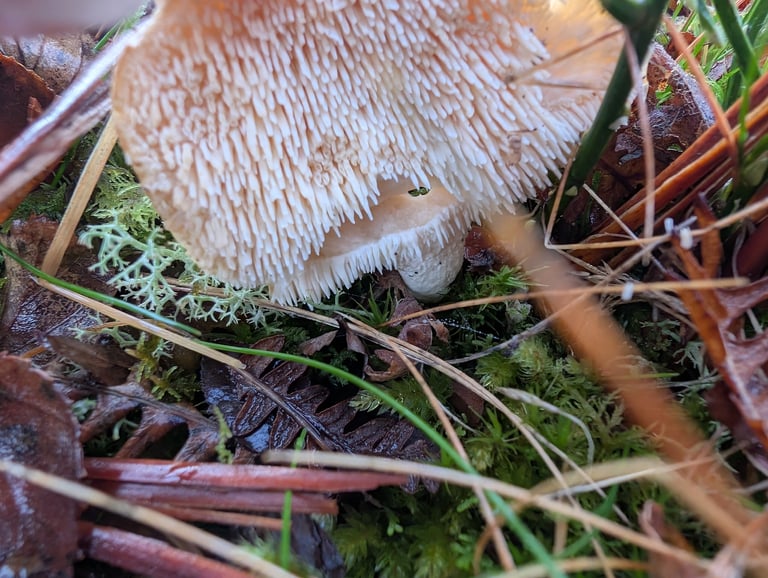
Beneath its cap, Hydnum rufescens hides a hymenophore made of small spines rather than gills or pores, a feature shared only by the small group of fungi known as the tooth fungi. This unusual spore-bearing surface, resembling a cluster of tiny teeth, is what immediately separates it from the vast majority of gilled or pored mushrooms found in the same woods.
Commonly called the terracotta hedgehog, this basidiomycete belongs to the family Hydnaceae within the order Cantharellales, class Agaricomycetes, phylum Basidiomycota. It is one of the better-known members of the genus Hydnum, valued as an edible species in the regions where it fruits.
What makes it worth a closer look is precisely this combination: a mushroom simple enough in structure to recognize by its toothed underside alone, yet distinctive enough to have earned a place in regional food traditions.
Fruiting Body and Identification
The single most reliable identifying feature of Hydnum rufescens is its hymenophore: instead of gills or pores, the underside of the cap is covered in a dense mat of small, downward-pointing spines. This toothed surface is the defining trait of the genus Hydnum and the reason these fungi are grouped together as tooth fungi within the family Hydnaceae.
Beyond this diagnostic feature, detailed measurements of the cap, stem, flesh texture, odor, and spore print for this species are not available here. Readers should not rely on a general description alone to identify or evaluate any tooth fungus found in the field.
Distribution and Habitat
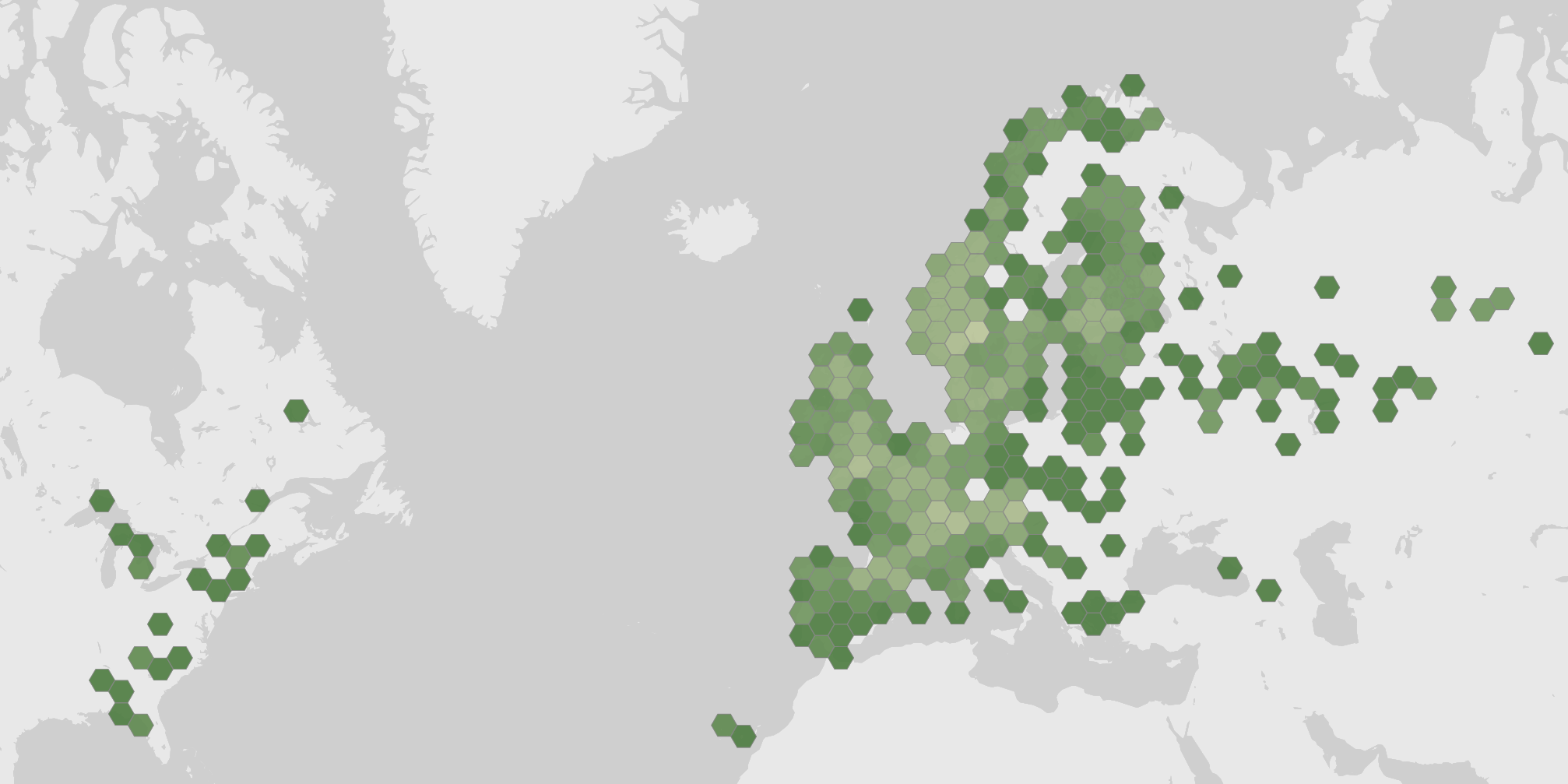
Observation records for Hydnum rufescens show a strongly seasonal pattern, with counts rising sharply from July onward, peaking in September at 4,149 recorded observations, and remaining high through August (2,264) and October (2,603) before tapering off in November (932) and December (258). Numbers stay low from December through June, with counts in the single or double digits in February, March, April, and May.
This pattern suggests the species is most detectable in late summer and autumn, consistent with a typical fruiting window for hedgehog mushrooms, though these figures are presence observations from GBIF and not a measure of abundance, population size, or the full extent of its native range.
The species is associated with forested settings, as reflected in its role in forest-based gastronomy tourism in regions with preserved culinary traditions, but no further habitat detail beyond this seasonal occurrence pattern is available.
Uses and Cultural History
Hydnum rufescens is used mainly for food, and its cultural role today centers on gastronomy rather than symbolism or medicine. It occasionally appears at seasonal festivals and local fairs, particularly in regions that have preserved strong culinary heritage tied to foraged foods.
Its significance is described as more modest than that of symbolically potent species such as Reishi or Psilocybe mushrooms, but it still has roots in food history: mushrooms like Hydnum were part of the foraging traditions of ancient European peasant cultures, where wild fungi supplemented the diet.
Today, this history feeds into forest-based gastronomy tourism, where the terracotta hedgehog's appearance in seasonal cooking and local markets connects visitors to older foraging customs.
Fun Facts
- The genus Hydnum has no known toxic varieties, unusual for a mushroom group of this size.
- The two best-known species in the genus are Hydnum repandum and Hydnum rufescens.
- Members of Hydnum are widely regarded as important for forest ecosystem processes.
- The terracotta hedgehog gets its common name from its warm, terracotta-orange coloration and its spine-covered underside, which recalls the quills of a hedgehog.
- It occasionally takes a place of honor at seasonal festivals and local fairs in regions with strong wild-food traditions.
Photos
Photographs from via iNaturalist, licensed under CC0 1.0., by Sam Bucciarelli via iNaturalist, licensed under CC BY 4.0., by Cam Fox via iNaturalist, licensed under CC BY 4.0., by Johan Adler via iNaturalist, licensed under CC BY 4.0., by Eugene Popov via iNaturalist, licensed under CC BY 4.0., by Ben Rushbrooke via iNaturalist, licensed under CC BY 4.0., by Iida Österman via iNaturalist, licensed under CC BY 4.0., by lizfrost47 via iNaturalist, licensed under CC BY 4.0., by Мирослав Соболев via iNaturalist, licensed under CC BY 4.0., by Ondřej Křivan via iNaturalist, licensed under CC BY 4.0., by Tatiana Strus via iNaturalist, licensed under CC BY 4.0., and by Lucian Clanet via iNaturalist, licensed under CC BY 4.0., credited on each photo.
Ecology and classification
Habitat
Classification
- Phylum
- Basidiomycota
- Class
- Agaricomycetes
- Order
- Cantharellales
- Family
- Hydnaceae
- Genus
- Hydnum
- Species
- Hydnum rufescens
Sources
- GBIF Species names and classification
- iNaturalist Photos
- Wikidata Common names and conservation status
- Wikipedia Summary extract