Its distinctive red color comes from canthaxanthin, a carotenoid pigment that tints the fruiting bodies of Cantharellus cinnabarinus, the red chanterelle.
The red chanterelle belongs to the genus Cantharellus, the group of chanterelles, in the family Hydnaceae and the order Cantharellales. The IUCN lists it as Least Concern.
Fruiting Body and Identification
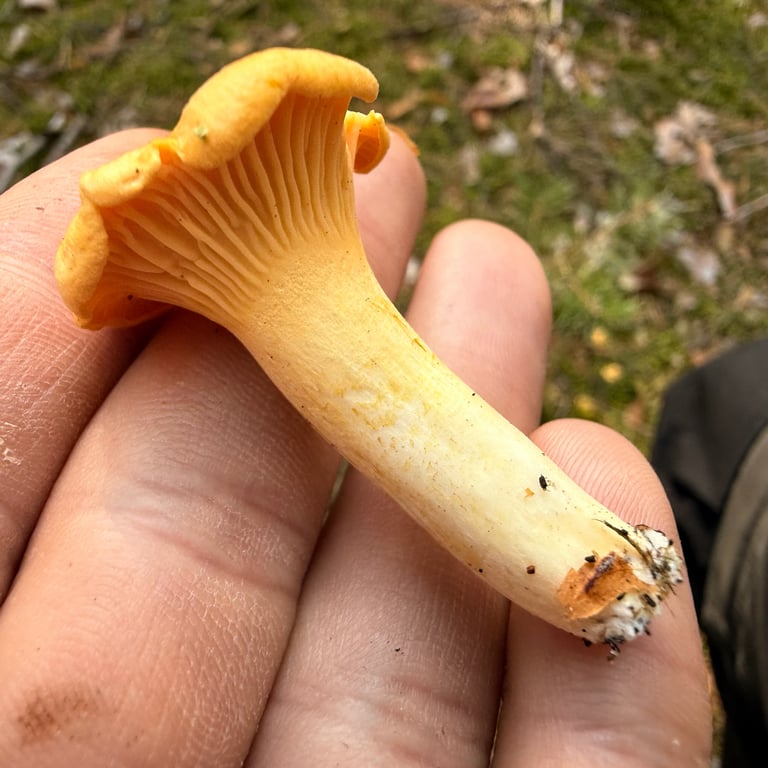
The most reliable feature is color. Fruiting bodies range from flamingo-pink to bright orange and red. Beneath the cap are false gills, forked ridges rather than true gills, and this forking separates it from Hygrocybe.
The fruiting bodies can grow up to 7 centimeters across. It resembles some other Cantharellus species but tends to be smaller and more slender.
Distribution and Habitat
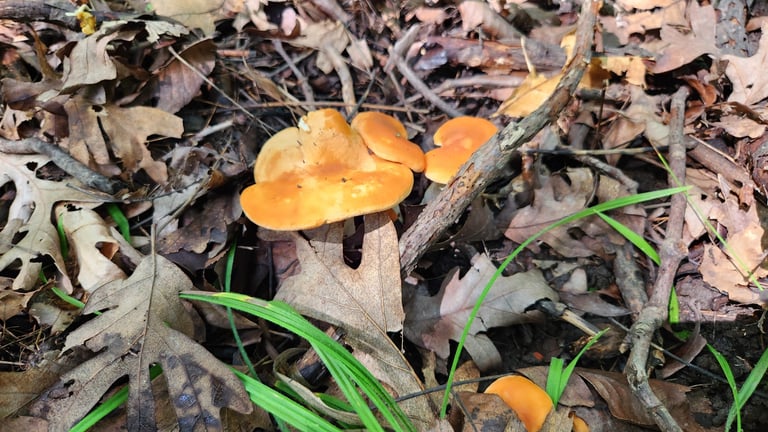
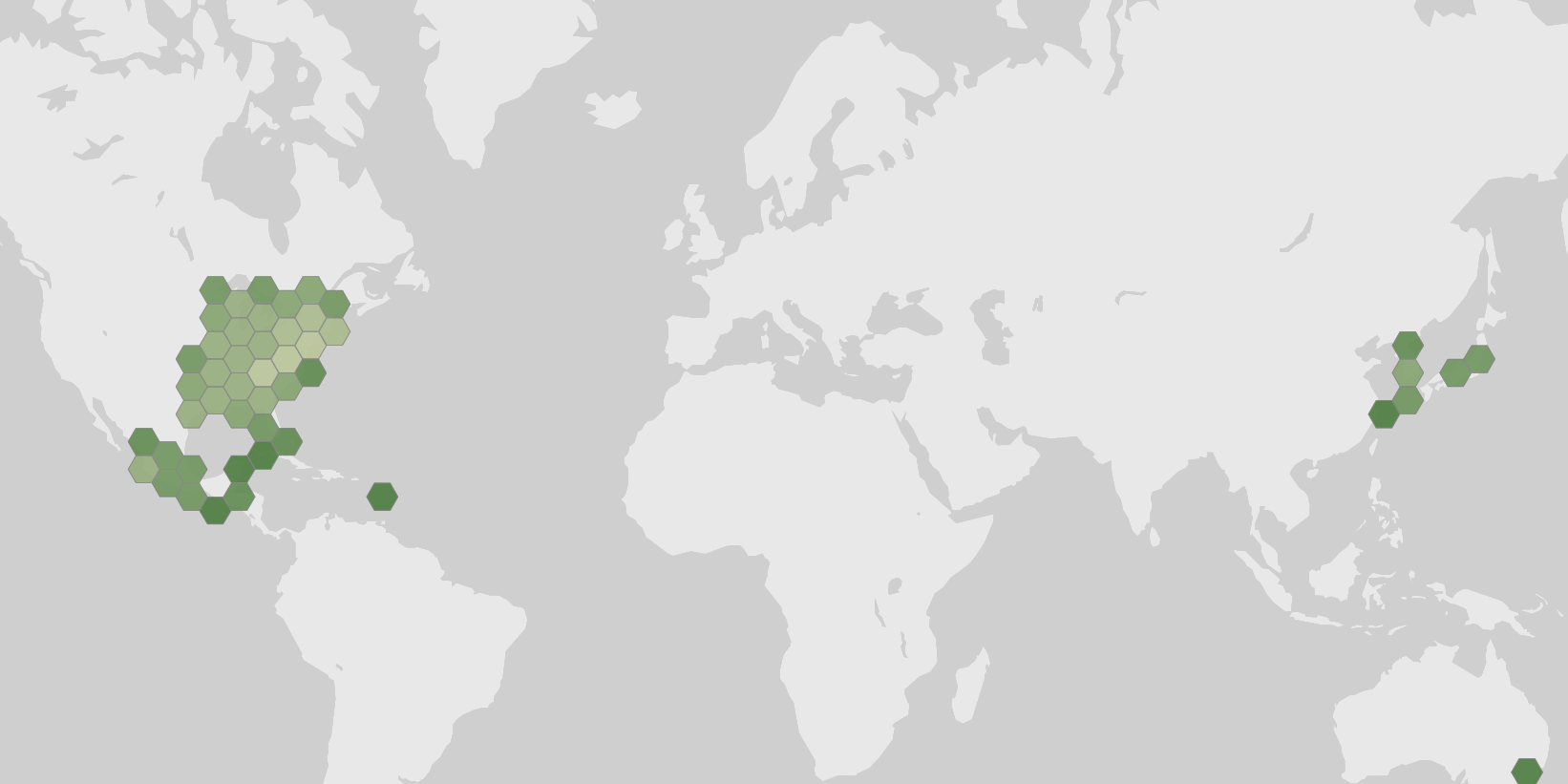
The red chanterelle is widely distributed in eastern North America, where it fruits in association with hardwood trees.
It can be found from June to October, mostly on the ground in broadleaf and mixed broadleaf-conifer forests. It usually grows scattered or in small groups.
It forms mycorrhizal associations with forest trees and shows a preference for acidic soils. Observations peak in July and August.
Uses and Cultural History
People consider the red chanterelle edible and good, and it is valued by mushroom gatherers in the forests where it grows.
Photos
Photographs from via iNaturalist, licensed under CC0 1.0., by Steven Joyner via iNaturalist, licensed under CC BY 4.0., by Rachel Stepek via iNaturalist, licensed under CC BY 4.0., by Maria Aghazarian via iNaturalist, licensed under CC BY 4.0., by Jack Forrester via iNaturalist, licensed under CC BY 4.0., by Ana Ka'ahanui via iNaturalist, licensed under CC BY 4.0., and by Sawyer Baran via iNaturalist, licensed under CC BY 4.0., credited on each photo.
Ecology and classification
Habitat
Classification
- Phylum
- Basidiomycota
- Class
- Agaricomycetes
- Order
- Cantharellales
- Family
- Hydnaceae
- Genus
- Cantharellus
- Species
- Cantharellus cinnabarinus
Sources
- GBIF Species names and classification
- iNaturalist Photos
- Wikidata Common names and conservation status
- Wikipedia Summary extract