The cheetah can accelerate to 93–104 km/h (58–65 mph), making it the fastest land animal on Earth. That speed is not a fluke: powerful hindlimb muscles, long limbs and an exceptionally flexible spine have evolved specifically to produce short, explosive bursts of pursuit that few prey animals can outrun.
The cheetah (Acinonyx jubatus) is a large cat and the only living member of the genus Acinonyx, part of the family Felidae within the order Carnivora. It ranges across open savannas, arid mountains and desert fringes, mostly in sub-Saharan Africa with a small, isolated population surviving in Iran. The IUCN lists it as Vulnerable.
Beyond its speed, the cheetah is a study in extremes among cats: a slim, canid-like frame, a coat marked with roughly 2,000 individually distinct spots, and a physiology so specialized that it stands apart from every other member of the cat family.
Identification and Appearance
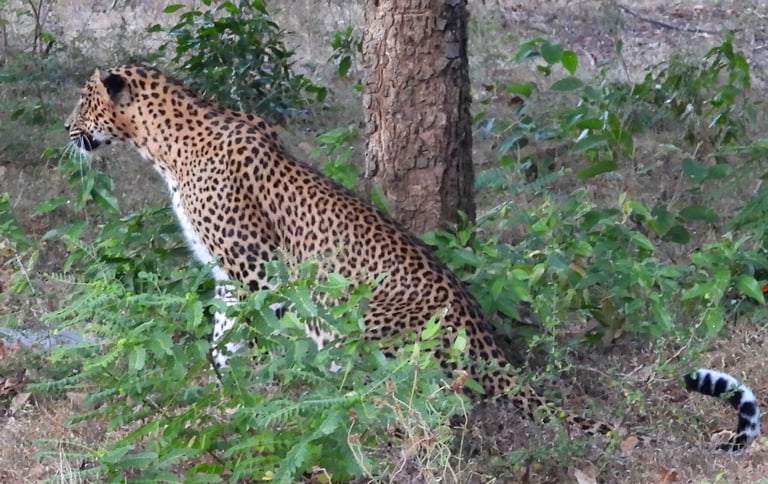
The clearest field mark is the combination of solid black spots and black tear-like streaks running from the inner corners of the eyes down to the mouth—no other cat shows this pairing. The leopard has rosettes rather than solid spots and lacks tear streaks, while the serval's spots fuse into stripes along the back.
Cheetahs stand 67–94 cm (2.2–3.1 ft) at the shoulder with a head-and-body length of 1.1–1.5 m (3 ft 7 in–4 ft 11 in), plus a long tail measuring 60–80 cm (24–31 in) tipped with a bushy white tuft. Adults typically weigh between 21 and 65 kg. The body is slim and deep-chested with a small, rounded head, short snout, small rounded ears, and a short, rough mane along the neck and shoulders that is more pronounced in males. Females are smaller than males on average.
The coat is tawny to creamy white or pale buff, darker across the mid-back, with white, unmarked underparts. Around 2,000 evenly spaced, oval or round black spots—each 3–5 cm across—cover the body in a pattern unique to each individual, alongside fainter, irregular black marks. The final third of the tail carries four to six dark rings instead of spots. Newborn cubs look very different: they are covered in a dark, unclear pattern of spots, pale above and nearly black underneath, with a loose blue-grey mane, or
Distribution and Habitat
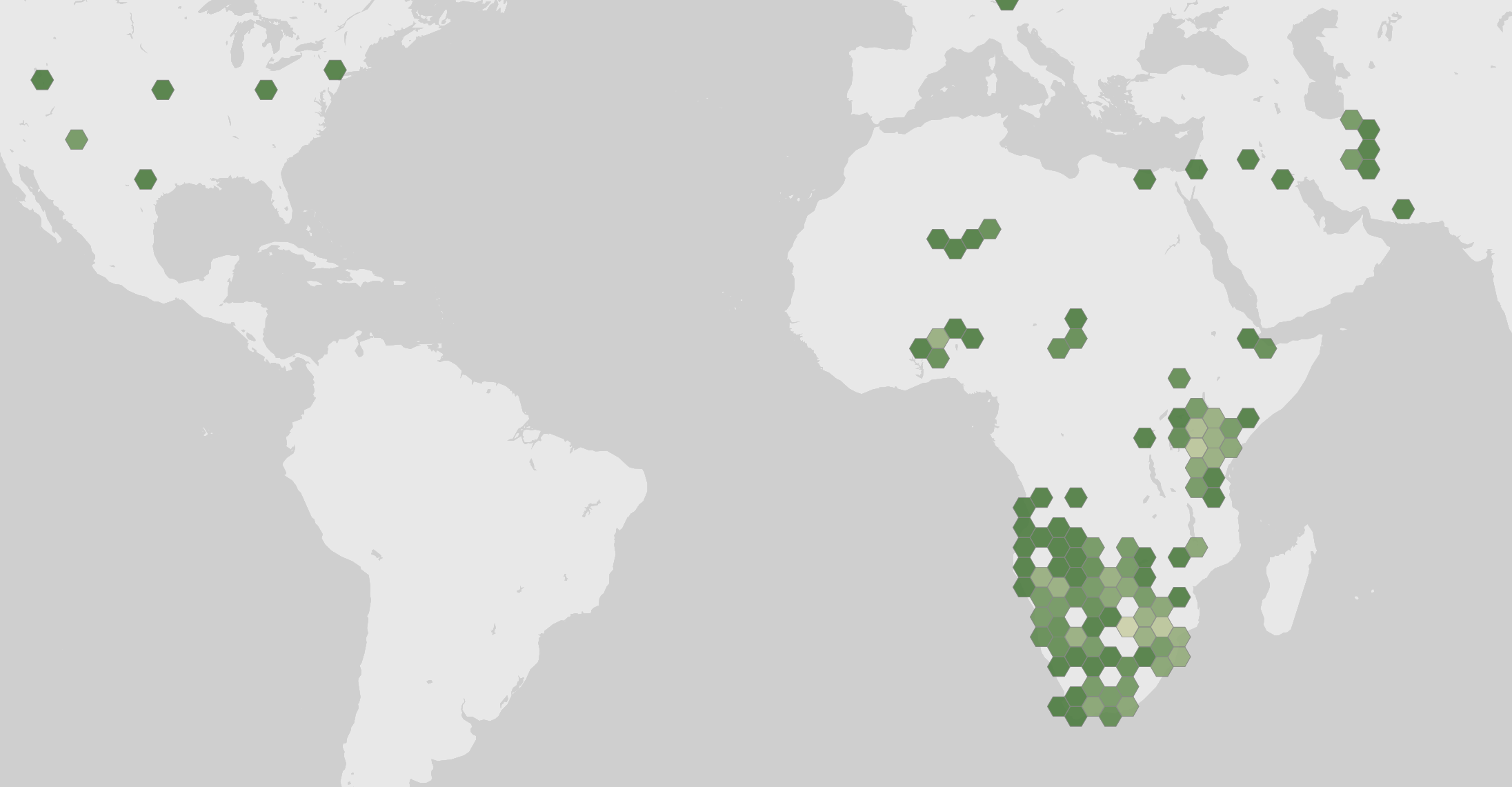
The cheetah favors open, grassy plains and dry bush country, occurring across savannas such as the Serengeti and the Kalahari in eastern and southern Africa, and in arid mountain ranges and valleys further north and west, including isolated pockets of the Sahara where higher rainfall supports the antelope herds it depends on. In Iran, the last stronghold of the Asiatic cheetah, it lives in hilly desert terrain up to 2,000-3,000 meters, where annual rainfall is often below 100 millimeters and vegetation is limited to shrubs under a meter tall.
The species tolerates a wide range of habitats compared with other big cats, and appears to choose areas less by vegetation type than by prey abundance, visibility, and low risk of encountering lions or hyenas. It rarely enters tropical forest and has been recorded as high as 4,000 meters. Open ground with scattered cover suits it best, since it needs room to stalk and then run down prey over long distances while also watching for larger predators.
Cheetahs occur at strikingly low densities, typically 0.3 to 3.0 adults per 100 square kilometers, only 10-30% of the densities reported for lions or leopards. Once found across nearly all of Africa and much of Western and Central Asia, the cheetah has vanished from about 91% of its historical African range and from almost all of its former Asian range; the last wild cheetahs in India were killed in 1947, and only a small population survives in Iran today.
Monthly observation records show counts rising somewhat in June through August, with lower numbers from November through March. This pattern reflects recorded sightings rather than actual population size or a complete range map, but it hints at seasonal differences in detectability or field activity.
Behavior and Lifestyle
Cheetahs are mainly diurnal, most active from dawn until noon and again briefly at dusk, a schedule that helps them avoid lions and hyenas active at night in areas like the Okavango Delta. Where cheetahs face little competition from other big predators, such as farmland in Namibia and Botswana or the scorching Sahara, they shift activity toward the cooler night hours, and moonlit nights also see increased movement.
Social structure differs sharply between the sexes. Females live largely solitary lives, raising cubs alone in undefended home ranges that overlap with those of other females without any real interaction; if two females spot each other, they simply watch from a distance until one walks away. Males, by contrast, often form lifelong coalitions, usually of brothers from the same litter, though unrelated males are sometimes accepted, making up around 30% of coalition members in the Serengeti. These groups defend territories to maximize access to females and are notably healthier and longer-lived than solitary males, since larger coalitions tend to win contests over territory.
Non-territorial "floater" males, often adolescents or aging individuals, roam widely, rarely stay in one place more than a few days, move mostly after dark, and avoid resting in visible spots to escape confrontation with resident males. Larger carnivores remain a constant threat: in the Serengeti, cheetahs lose about 4% of their kills to spotted hyenas, and mothers have been seen driving leopards away from their cubs, while large males will chase off leopards over considerable distances.
Communication
Cheetahs rely on a wide vocal repertoire since they spend most of their time apart from one another. A high, bird-like chirp signals excitement around a kill, greets other cheetahs, or calls hidden cubs; a related, louder "yelp" can carry up to 2 kilometers and is used by mothers and cubs to find each other. A shrill churr serves similar social functions, while a loud purr signals contentment during grooming or greeting. Distress and conflict bring out bleats, growls, hisses, and moans, often paired with the cheetah slapping the ground with a forepaw.
Scent marking substitutes for face-to-face contact in this largely solitary species. Males spray urine on tree trunks, stumps, or rocks and repeatedly revisit these landmarks, while females mark more discreetly except when in estrus, when their scent can draw males from far away. Camera-trap studies in Namibia found cheetahs defecate at marking sites far more often than leopards do.
Touch and visual signals round out the picture: cheetahs greet one another by sniffing the mouth, anus, and genitals, and groom by licking faces and rubbing cheeks. The tear-like facial streaks sharpen expressions at close range, and mothers may use the alternating light and dark rings on their tails as a visual cue for cubs to follow.
Hunting and Diet
Cheetahs hunt by outrunning their prey rather than by ambush or prolonged stalking. Instead of creeping within pouncing range like other cats, a cheetah launches its chase from 70 to 100 meters away, reaching speeds reported between 80 and 112 kilometers per hour; success rates drop sharply if the charge starts beyond 200 meters, and a chase rarely continues past 500 meters before the cat overheats. Most hunts end in failure despite this speed.
When a chase succeeds, the cheetah knocks its prey to the ground with its forepaws and kills by clamping its jaws around the throat to strangle it, a technique shared with several other cats.
Gazelles, especially Thomson's gazelle, make up a large share of the diet, alongside impalas and other small to medium-sized antelope, as well as the young of larger ungulates. When larger prey is scarce, cheetahs turn to hares and birds to get by.
Reproduction and Raising Young
Cheetahs are promiscuous breeders with no lasting pair bond; males mate with as many females as they can access and provide no care for the young. Females are polyestrous and induced ovulators, cycling on average every 12 days, and typically have their first litter around two to three years of age. Mating itself is brief and undramatic: the male grips the female's nape and copulates several times over two to three days before the pair separates, often accompanied by chirping, purring, or yelping.
After a gestation of 90 to 95 days, a female gives birth to a litter that averages around three cubs, though litters of six to eight occur and up to eight have been recorded in captivity. Births occur roughly 20 to 25 minutes apart in dense cover. Cubs are born with closed eyes, opening them within four to 11 days, and start walking around two weeks of age. A thick bluish-grey mane along the neck and back, called a mantle, may camouflage cubs from predators, possibly by making them resemble the more feared honey badger; it disappears by around three months.
For the first two months, the mother hides her cubs in dense vegetation or rocky cover, moving them every five to six days and staying within about a kilometer to nurse and protect them, though predators still account for the majority of cub deaths, 58.3% in the Serengeti and 88.9% in the Kgalagadi Transfrontier Park. Weaning happens between three and six months, after which the mother brings live prey for cubs to practice catching. Young stay with their mother until 15 to 17 months old, when they become independent; overall juvenile survival is only about 34-36% in southern African populations studied.
Population and Ecological Role
Cheetah numbers were once estimated at around 15,000 individuals across Sub-Saharan Africa in 1975, though populations have since become smaller and more fragmented as natural habitat has been converted for other uses. The species' precise role within its ecosystem has not been well studied, and its ecological impact as a mid-sized predator competing with lions, leopards, and hyenas for prey and space remains poorly documented.
Conservation and Threats
The cheetah is classified as Vulnerable on the IUCN Red List, listed under CITES Appendix I, and designated Endangered under the U.S. Endangered Species Act since June 1970. Genetic studies reveal unusually low variation within the species, likely the result of a severe historical population bottleneck, leaving cheetahs especially vulnerable to disease and environmental disruption.
Habitat loss and fragmentation rank among the most serious threats, driven largely by the spread of agriculture and industry and worsened by woody plant encroachment in southern Africa. Because cheetahs need large ranges and occur at naturally low densities, they are hit hard when habitat shrinks. With about 76% of their range on unprotected land, conflict with farmers and pastoralists defending livestock is a major cause of death, particularly in Namibia, alongside prey shortages, illegal wildlife trade in places like Ethiopia, and roadkill documented in Iran's Kalmand, Touran, and Bafq areas.
Conservation efforts date back to the 1970s, when growing awareness of falling numbers replaced widespread predator culling. South Africa's De Wildt Cheetah and Wildlife Centre, founded in 1971, cared for cheetahs trapped by farmers, while the Cheetah Conservation Fund, established in Namibia in 1990, has since combined field research, education, and the world's only cheetah genetics laboratory. Iran's Conservation of Asiatic Cheetah Project, launched in 2001 with international partners, targets the last surviving Asiatic population, and Iran has marked 31 August as National Cheetah Day since 2006. The cheetah was reintroduced to Malawi in 2017.
Conservation status
- LC
- NT
- VU
- EN
- CR
Vulnerable
Cultural Significance
Cheetahs have been tamed by human nobility since antiquity, a relationship stretching back roughly 4,300 years through ancient Egypt, Sumeria, and Assyria before spreading to European and Indian royalty, who took cheetahs hooded like falcons and released them when game came into view. Ancient Egyptians associated the animal with the goddess Mafdet during the First Dynasty and believed cheetahs carried the spirits of deceased pharaohs; during the New Kingdom, cheetahs were common status pets adorned with ornate collars and leashes.
Hunting with cheetahs later became prominent across the Middle East and Mughal India, where Akbar the Great reportedly kept as many as 1,000 imperial cheetahs for coursing blackbuck; heavy hunting pressure eventually forced India to import cheetahs from Africa by 1927. In Persia, the animal is known as Yuz, a name still tied to the critically depleted Asiatic subspecies, Acinonyx jubatus venaticus, that survives today only in Iran.
Despite this long history of taming, the cheetah was never selectively bred into a domestic animal; individuals were captured and trained anew each generation rather than bred in captivity for tameness.
Fun Facts
- The genus name Acinonyx comes from the Greek words for "thorn" and "claw," a nod to the cheetah's unusual, only partially retractable claws.
- The earliest known depictions of cheetahs come from the Chauvet Cave in France, dating back roughly 32,000 to 26,000 BC.
- Although tamed by humans for millennia, the cheetah has never been truly domesticated; people captured and trained wild individuals generation after generation rather than breeding them in captivity.
- Some scholars have suggested the "leopard" mentioned in the biblical book of Habakkuk may actually refer to a cheetah.
- Taxonomists once recognized several cheetah subspecies, but a review by the IUCN Cat Specialist Group's Cat Classification Task Force merged two of them, A. j. raineyi and A. j. jubatus, into a single subspecies.
- In Iran, roadkill has been documented as a specific threat to the critically endangered Asiatic cheetah in areas like Kalmand, Touran National Park, and Bafq.
Ecology
Diet
- Carnivore
Behavior
- Predator
- Solitary
- Territorial
- Diurnal
Habitat
- Mountain
- Grassland
- Savanna
- Desert
Photos
SourcesGBIFiNaturalistWikidataWikipediaEncyclopedia of LifeAnimal Diversity WebAnAge