Lions once ranged across most of Africa, large parts of the Middle East and southern Europe, and deep into India. Today their wild range covers a small fraction of that area, split between scattered populations in Sub-Saharan Africa and a single forest reserve in western India.
The lion, Panthera leo, is a large member of the cat family Felidae, second in size only to the tiger among living cats. It is currently classified as Vulnerable on the IUCN Red List, with African populations declining across much of the continent and the Asiatic subspecies confined to India.
What sets the lion apart from every other wild cat is its social life: prides of related females, roaming male coalitions, and a mane that broadcasts a male's fitness from a distance make it one of the most studied and recognizable predators on Earth.
Identification and Appearance
The single most useful field mark is the male's mane, a thick growth of hair running from the head down the neck to the shoulders and chest. It starts growing in adolescence as testosterone rises and reaches full size around four years old; females almost never grow one, and the feature is entirely absent in cubs.
Lions are heavy, muscular cats; recorded body weight in one studied population reached up to 98 kg. The body is broad-chested with a short, rounded head, a reduced neck, and round ears, giving the animal a compact, powerful silhouette built for short bursts of speed rather than sustained chase. Fur color ranges from light buff to silvery grey, yellowish red, or dark brown, with paler underparts. Cubs are born with dark spots that fade with age, though faint spotting can persist on the legs and belly into adulthood. The tail ends in a dark, hairy tuft absent at birth, developing around five and a half months and fully visible by seven months.
Beyond the mane, males have visibly broader skulls than females: male skulls measure 321–401 mm long against 292–333 mm in females, with proportionally wider zygomatic arches. Mane color and thickness vary by individual and region; Asiatic lions typically carry sparser manes than their African counterparts, and some populations, such as those in Benin's Pendjari National Park, are largely maneless.
Because lion and tiger skulls overlap heavily in size and proportion, the two species are hard to separate by skull alone; the lion's frontal region is usually flatter and its nasal openings broader, but the lower jaw structure is considered the most reliable skeletal feature for telling them apart.
Distribution and Habitat
African lions persist in scattered, often isolated populations across Sub-Saharan Africa, increasingly restricted to protected reserves as unprotected range shrinks, especially in West Africa. The Asiatic lion survives in only one wild population, in and around Gir National Park on India's Kathiawar Peninsula in Gujarat.
Lions favor grassy plains, savannas, scrub bordering rivers, and open woodland with bush cover for hunting and denning, and they rarely enter closed forest. They tolerate a wide elevation range, having been recorded up to 4,240 m in Ethiopia's Bale Mountains, to 3,600 m on Mount Elgon, and near the snowline on Mount Kenya. The Gir population instead occupies dry savanna forest and very dry deciduous scrub forest, a markedly different setting from the African savanna archetype.
The species' range was once far larger. In Africa it originally spanned most of the continent outside the Sahara and the central rainforest belt, disappearing from North Africa by the 1960s except in southern Sudan. During the mid-Holocene, roughly 8,000 to 6,000 years ago, lions expanded into southeastern and eastern Europe; they survived in Hungary until about 3,200 years ago, in Ukraine until about 2,000 years ago, and were reported common in Greece by Herodotus around 480 BC before disappearing by AD 100. In Asia, lions held on in the Caucasus until the 10th century, the Levant until the Middle Ages, and parts of Iran until a last sighting in 1942.
GBIF occurrence records show observation counts rising through the year to a peak in July and August, before tapering off toward year-end. These figures reflect where and when lions have been recorded, not their actual abundance or a complete picture of range, so the pattern should be read cautiously as a sign of observation effort rather than seasonal movement.

Behavior and Lifestyle
Lion prides are fission-fusion societies: members come and go rather than staying together constantly, ranging from as few as 2 to as many as 40 individuals, with an average of about 13 lions in Kruger and Serengeti National Parks, typically 1.7 adult males, 4.5 adult females, 3.8 subadults, and 2.8 juveniles. Asiatic lions differ, with males often solitary or in loose associations of up to three, while females form larger associated groups of up to 12.
Male coalitions, usually made up of brothers, fight to take over prides by force. Coalitions of two hold a pride for barely two and a half years, just long enough to raise one litter, while coalitions of three or four can hold power for over three years; groups larger than four are rare because they are hard to keep together. Young males are pushed out of their natal pride around 2.5 years old once they become competition, then spend two to three years as nomads before attempting a takeover; in the Serengeti, nomadic coalitions gain residency between 3.5 and 7.3 years of age, and in Kruger National Park dispersing males move more than 25 km from their birth pride.
Home ranges span 20 to 400 km2 depending on prey density, and areas with the richest prey biomass can support up to 12 lions per 100 km2. Both sexes defend pride territory, but the male's stockier build makes him better suited to fending off rival males and protecting cubs from infanticide during takeovers.
Lions spend around 20 hours a day resting. Activity peaks after dusk with socializing, grooming, and greeting rituals such as head-rubbing with looped tails, and intermittent bursts continue through the night until hunting typically occurs toward dawn. On average, a lion spends about two hours a day walking and fifty minutes eating.
Communication
Visual signals carry much of a lion's social information. The male's mane advertises his sex and fitness at a distance, darker-maned males tend to hold prides longer and sire more offspring, and the
Hunting and Diet
Lions hunt cooperatively, but it is usually a single animal that makes the kill after the group has closed in on its target. Because showy, conspicuous males struggle to approach prey undetected, females carry out most of the hunting, even though males remain more aggressive at the carcass despite doing less of the killing. Group hunting pays off: research in the Serengeti found that lions hunting alone succeed only 17% of the time, while coordinated group hunts succeed 30% of the time.
African lions target the most abundant large ungulates in their range, including Thomson's gazelles, zebras, impalas, and wildebeests. Individual prides develop their own preferences, with some specializing in far larger animals such as cape buffalo and giraffe. In Tanzania's Serengeti National Park, just seven species, zebra, wildebeest, Thomson's gazelle, buffalo, warthog, hartebeest, and topi, make up 90% of the local diet.
When large prey cannot be brought down, lions turn to birds, rodents, fish, ostrich eggs, amphibians, and reptiles. They also scavenge actively, watching hyenas and vultures for cues that lead them to carrion.
Reproduction and Raising Young
Lions are polygynous, breeding year-round with a peak during the rainy season. The first male to reach a female in estrus gains mating priority, and pairs copulate roughly 2.2 times per hour across a four-day estrus period, yet only one cycle in five actually produces a litter.
After a gestation of about 110 days (3.5 months), a lioness gives birth to one to six cubs, typically three, in a secluded den such as a thicket, reed-bed, or cave, away from the rest of the pride. Newborns weigh 1 to 2 kilograms, are born blind, open their eyes around 7 to 11 days, begin crawling within a day or two, walk by three weeks, and can run by one month. To avoid attracting predators through a buildup of scent, the mother relocates the den several times a month, carrying cubs one by one by the scruff of the neck.
Cubs stay hidden until 6 to 8 weeks old before rejoining the pride, where synchronized births among related females allow communal nursing and creches that improve survival odds. Weaning occurs between 6 and 10 months, but cubs remain dependent on the pride until at least 16 months of age. Males take no direct role in feeding cubs but protect them from rival males; a pride male typically holds his position for only about two years before a new coalition takes over.
Females reach sexual maturity around 4 years old and males around 5, though males are typically excluded from their natal pride at 2 to 3 years of age. Generation length in lions is estimated at about seven years.
Population and Ecological Role
As the apex predator across most of their range, lions sit at the top of the food chain, though it remains unclear how much they actually regulate prey numbers; some findings suggest food availability shapes prey populations more than lion predation does.
Human hunting has shaped lion numbers for millennia. The earliest recorded lion hunt dates to around 1380 BC, when Pharaoh Amenhotep III claimed 102 kills in a decade, and the Assyrian ruler Ashurbanipal commemorated his own lion hunts in palace reliefs around 640 BC. Hunting continued as royal spectacle through the Mughal Empire and Roman gladiatorial contests. During the 19th-century Scramble for Africa, lions were treated as pests and their skins sold for a set price in pounds sterling, a practice that pushed populations down further. Trophy hunting remains contentious today, as shown by the international reaction to the killing of Cecil the lion in 2015.
Conflict with people also includes documented man-eating, though lions do not typically seek out humans as prey. The Tsavo maneaters killed 28 recorded railway workers in Kenya over nine months in 1898, and a study of rural Tanzania found at least 563 people attacked between 1990 and 2005 near the Selous Game Reserve and the Mozambican border, with attacks tied to nights following the full moon when less light was available.
Conservation and Threats
The lion is listed as Vulnerable on the IUCN Red List, reflecting populations that have fallen sharply without yet reaching the higher-risk categories. Within the species, the Asiatic lion is classified as Endangered and listed on CITES Appendix I, while African lions are listed on CITES Appendix II. Two subspecies, the Barbary lion and the Cape lion, are already extinct, and the West African population is Critically Endangered, numbering only about 400 animals with fewer than 250 mature individuals surviving mainly in the W-Arly-Pendjari protected area complex shared by Benin, Burkina Faso, and Niger.
Disease and human interference are the leading threats. Lion numbers fell by an estimated 30 to 50% in the latter half of the 20th century; from roughly 200,000 or fewer by 1975 down to an estimated 16,500 to 47,000 individuals in 2002-2004. Some populations have vanished entirely, such as in the Republic of Congo's Odzala-Kokoua National Park, considered a lion stronghold in the 1990s but with no lions recorded by 2014. Isolated groups face genetic risks too: South Africa's Hluhluwe-Umfolozi Park holds around 120 lions descended from just three founders introduced in the 1960s, a bottleneck severe enough that researchers attempted artificial insemination in 2001 to boost genetic diversity.
Conservation responses include the 2005 Lion Conservation Strategies for West and Central Africa and for East and Southern Africa, which aim to protect habitat, maintain prey bases, and reduce human-lion conflict. Improved livestock enclosures have measurably cut depredation in herding communities. India's Gir National Park shows what sustained protection can achieve: the Asiatic lion population there grew from about 180 in 1974 to 523 by 2015 and roughly 650 by the 2017 census, though it remains confined to a single, geographically isolated area vulnerable to inbreeding.
Cultural Significance
Few animals carry as much symbolic weight as the lion, long associated with power, royalty, and protection across cultures worldwide. Guardian lion statues still flank building entrances and lions serve as mascots and emblems today, a role rooted in ancient traditions where lions figured as deities and symbols in numerous religions. The English word "lion" traces through Anglo-Norman "liun" back to Latin "leōnem," while the genus name Panthera derives from the Latin "panthēra" and Greek "pánthēr."
In European mythology and heraldry, the lion has long stood for strength and courage, a symbolism echoed in the god Dionysus, whose priests reportedly wore panther-skins as a totemic emblem of the deity.
Lions remain deeply woven into modern human life as well. They are among Africa's most valuable ecotourism species and star widely in documentaries, while more than 1,000 African lions and 100 Asiatic lions live in zoos worldwide as ambassador animals for education and conservation. Lion taming became a fixture of circus entertainment in the early 19th century through performers like Henri Martin and Isaac Van Amburgh. In Swahili, the lion is called simba, a word that also means "aggressive," "king," and "strong," and in parts of West and East Africa the lion carries associations with healing and the supernatural.
Fun Facts
- The English word "lion" comes from Anglo-Norman "liun," itself from Latin "leōnem," while the genus name Panthera traces to Latin "panthēra" and Greek "pánthēr."
- Guardian lion statues placed at building entrances and lion mascots for sports teams both echo the animal's ancient reputation as a symbol of protection.
- In Hinduism, the lion is worshiped as Narasimha, the "Lion God" and an incarnation of Vishnu, reflecting the Asiatic lion's deep cultural significance in India.
- Lions can live remarkably long in captivity: three sibling lions at the Honolulu Zoo all reached the age of 22 in 2007.
- Male lions are the only cats with a mane, a feature that extends from the head across the shoulders and chest and makes them far more recognizable than the maneless females.
Photos
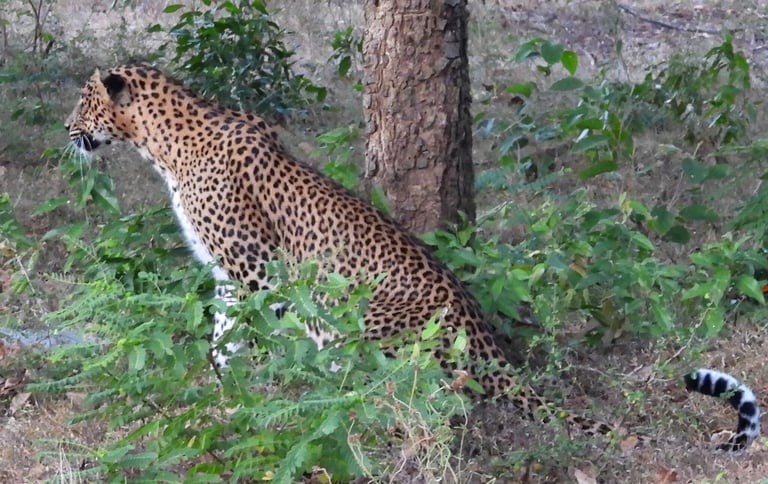
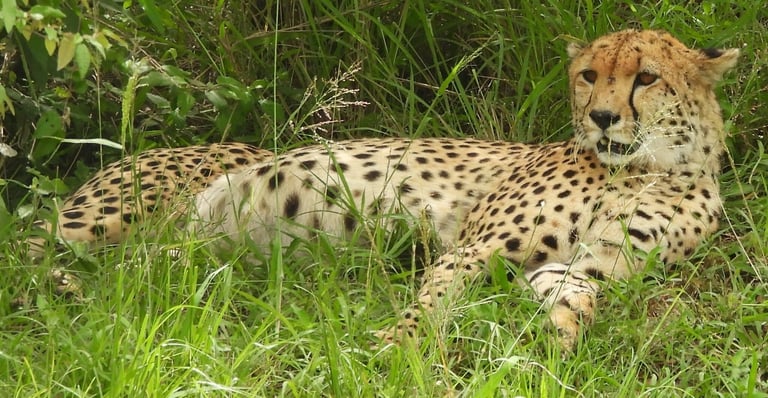
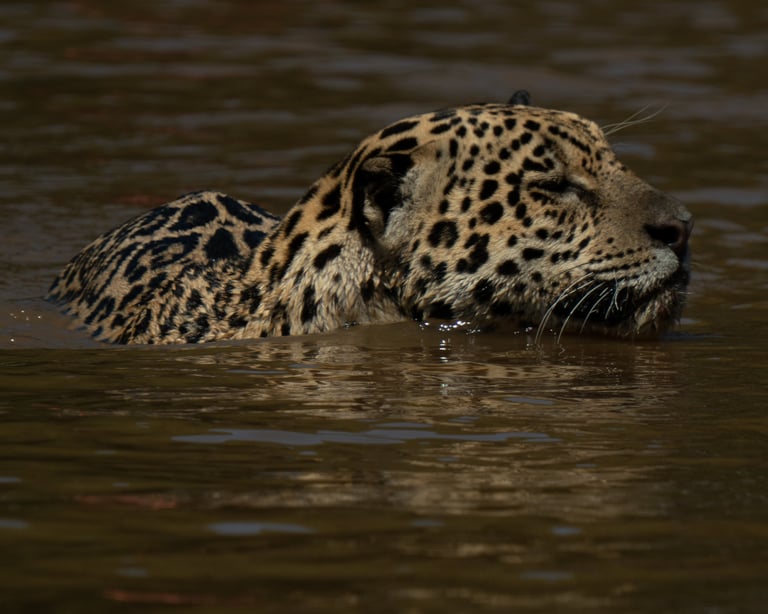
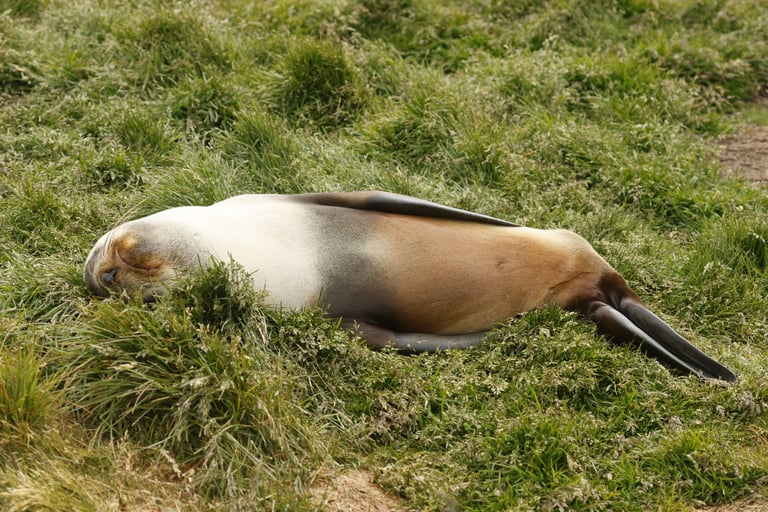
Photographs from by Luciano Massa via iNaturalist, licensed under CC BY 4.0., via iNaturalist, licensed under CC0 1.0., by Kimberly via iNaturalist, licensed under CC BY 4.0., by Cael Marquard via iNaturalist, licensed under CC BY 4.0., by jk6000 via iNaturalist, licensed under CC BY 4.0., and by Patrick Jackson via iNaturalist, licensed under CC BY 4.0., credited on each photo.
Ecology and classification
Classification
- Phylum
- Chordata
- Class
- Mammalia
- Order
- Carnivora
- Family
- Felidae
- Genus
- Panthera
- Species
- Panthera leo
Sources
- GBIF Species names and classification
- iNaturalist Photos
- Wikidata Common names and conservation status
- Wikipedia Summary extract
- Encyclopedia of Life Habitat, diet and behavior traits
- Animal Diversity Web Animal habitat, behavior and diet
- AnAge Longevity