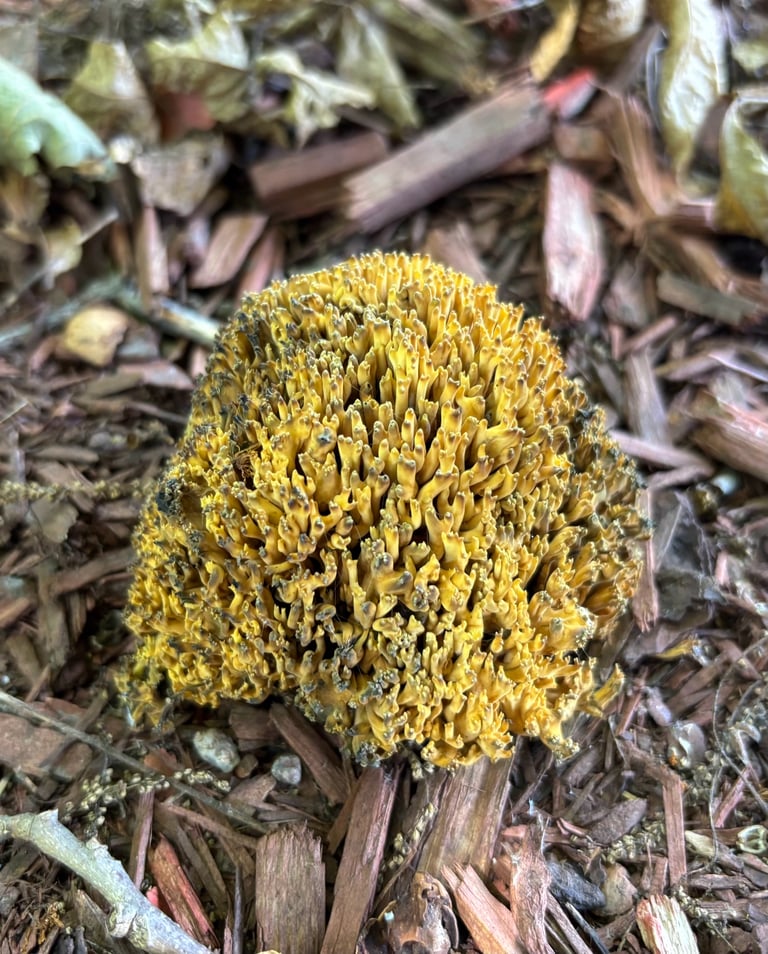
The strap coral, Clavariadelphus ligula, produces club-shaped fruit bodies with spongy flesh that rise from the forest floor in tight clusters rather than as solitary mushrooms.
This fungus belongs to the family Clavariadelphaceae within the order Gomphales, part of the class Agaricomycetes. It grows in coniferous forests across Eurasia and North America, favoring the duff layer where it feeds on decaying organic material.
Its close resemblance to another species, distinguishable mainly by microscopic spore measurements, makes it a subtle puzzle for anyone trying to sort out coral fungi in the field.
Fruiting Body and Identification
The most reliable identifying features of Clavariadelphus ligula are its shape and surface chemistry rather than color alone, since its buff to pale yellow or reddish club can vary. The fruit body is club-shaped to spoon-shaped, growing up to 12 cm tall and 2 cm wide at its thickest point, straight, and marked with stiff hairs only at the base. The surface is dull and hairless elsewhere, smooth when young and becoming somewhat wrinkled with age.
There is no distinct stipe apart from the basal hairs. The flesh is whitish and does not bruise or change color, spongy in the upper portion but firm below, with no notable odor and a slightly bitter taste. Chemical tests help confirm identification: the surface tissue turns green with a ferric sulphate solution and yellow with dilute potassium hydroxide.
The spore print is pale yellowish orange, described as light buff. Under a microscope, the spores are smooth and narrowly ellipsoid, measuring 8–15 by 3–6 μm, with monomitic hyphae, clamp connections present, and no cystidia.
Distribution and Habitat
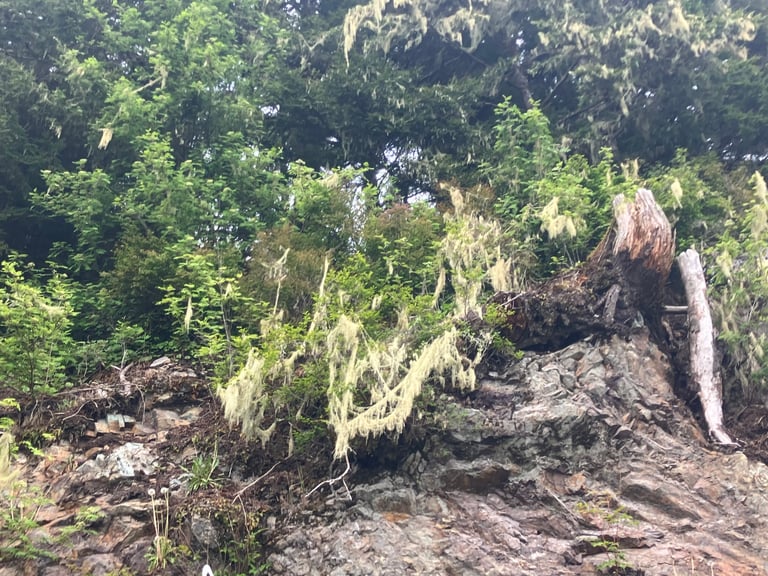
Clavariadelphus ligula is widespread and common in coniferous forests, where its fruit bodies grow gregariously, closely scattered across small patches of forest duff. It fruits in summer and fall.
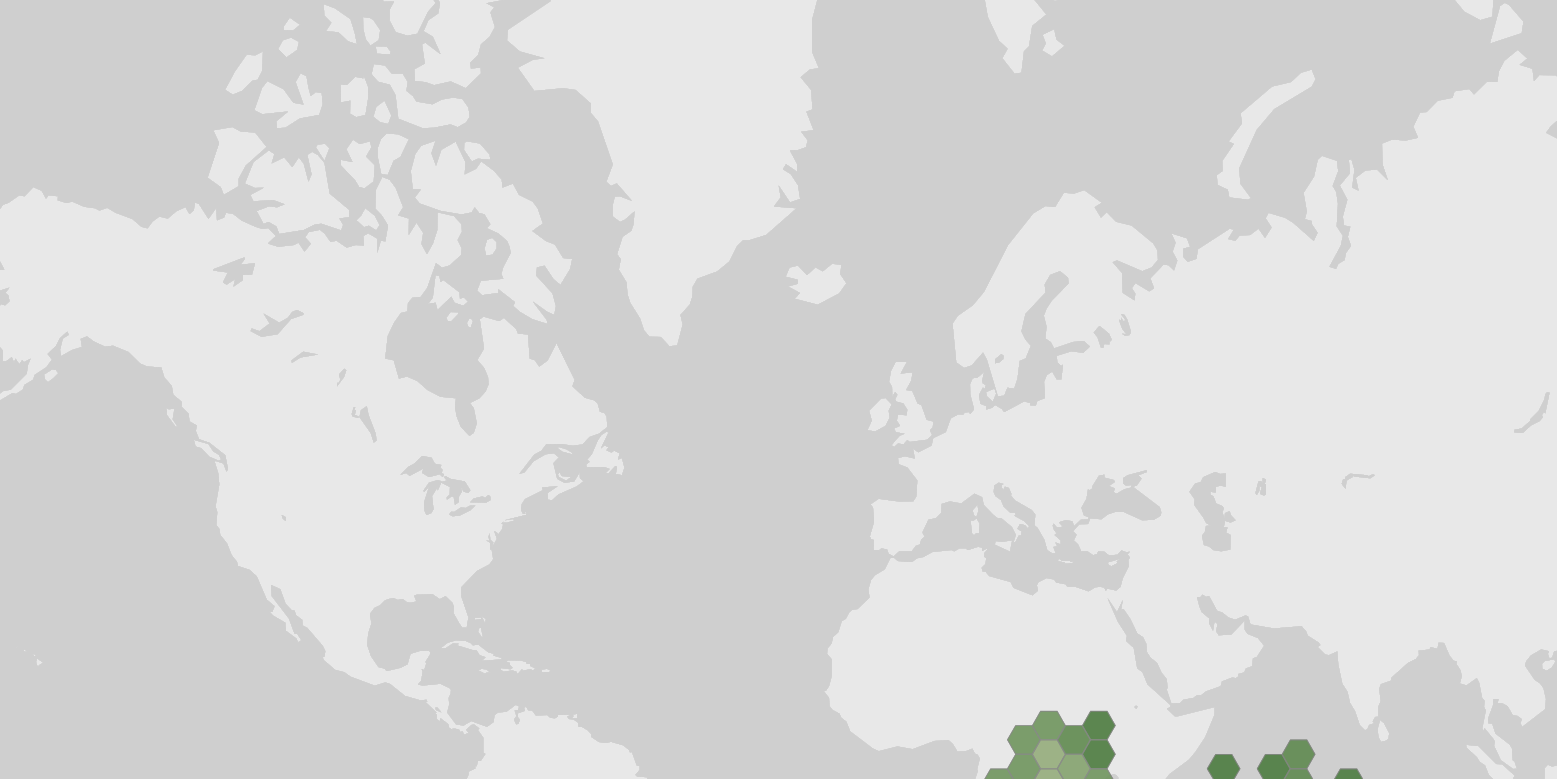
Recorded collections span the Czech Republic, Austria, the Magadan region of the Russian Far East, and the arctic zone of the Urals, as well as conifer-dominated forests in the Kashmir Valley of India. In North America, its range extends north into Canada.
Observation records through the year show the fewest sightings in late winter and early spring, with numbers rising sharply from early summer and peaking in late summer into early autumn before tapering off, consistent with its stated summer and fall fruiting season.
Fun Facts
- Clavariadelphus ligula is nearly impossible to tell apart from Clavariadelphus sachalinensis without a microscope, since the two differ only in spore size and basidia length, and some specimens may blur the line between them entirely.
- Its surface reacts visibly to simple chemical tests, turning green with ferric sulphate and yellow with dilute potassium hydroxide, a trick mycologists use to help confirm its identity.
Photos
Photographs from via iNaturalist, licensed under CC0 1.0., by Adam Kamal via iNaturalist, licensed under CC BY 4.0., by Charlie Pavlisich via iNaturalist, licensed under CC BY 4.0., by Norma Malinowski via iNaturalist, licensed under CC BY 4.0., by Lauren Markewicz via iNaturalist, licensed under CC BY 4.0., by Eric Lamb via iNaturalist, licensed under CC BY 4.0., by Tatiana Strus via iNaturalist, licensed under CC BY 4.0., by Dan MacNeal via iNaturalist, licensed under CC BY 4.0., and by Михаил Языков via iNaturalist, licensed under CC BY 4.0., credited on each photo.
Ecology and classification
Habitat
Classification
- Phylum
- Basidiomycota
- Class
- Agaricomycetes
- Order
- Gomphales
- Family
- Clavariadelphaceae
- Genus
- Clavariadelphus
- Species
- Clavariadelphus ligula
Sources
- GBIF Species names and classification
- iNaturalist Photos
- Wikidata Common names and conservation status
- Wikipedia Summary extract