Colchicum autumnale pushes its flowers straight out of bare soil weeks before any leaves appear, a habit so odd that it earned the plant the folk names "naked boys" and "naked ladies." The blossoms look almost stranded, standing alone on the ground with no foliage in sight.
This herbaceous perennial belongs to the family Colchicaceae, not the true crocus family Iridaceae, despite a strong resemblance to garden crocuses. It is classified as Least Concern, and it grows wild across much of Europe. Beyond its unusual bloom timing, the species carries a double reputation: a source of one of medicine's oldest gout treatments, and one of the most lethally toxic plants found in ordinary grassland.
Identification and Appearance
The clearest field mark is timing: the solitary, crocus-like flower rises from bare ground with no leaves accompanying it, since the foliage does not appear until later. Each flower measures 4 to 7 centimeters across and consists of six tepals surrounding six stamens tipped with orange anthers, along with three white styles at the center.
The leaves, which follow after flowering, grow up to 25 centimeters long and lie closer to the ground, quite unlike the bare-stemmed flower that preceded them.
An unusual detail of its reproductive structure is that at the time of fertilization the ovary sits below ground level, hidden within the base of the plant rather than exposed within the flower as in most species.
Because Colchicum autumnale looks so similar to true crocuses, it is easily confused with them, but true crocuses belong to the separate family Iridaceae. The plant is also not the source of saffron, despite the common name "meadow saffron"; real saffron comes from Crocus sativus, a different plant sometimes also called "autumn crocus."
Distribution and Habitat
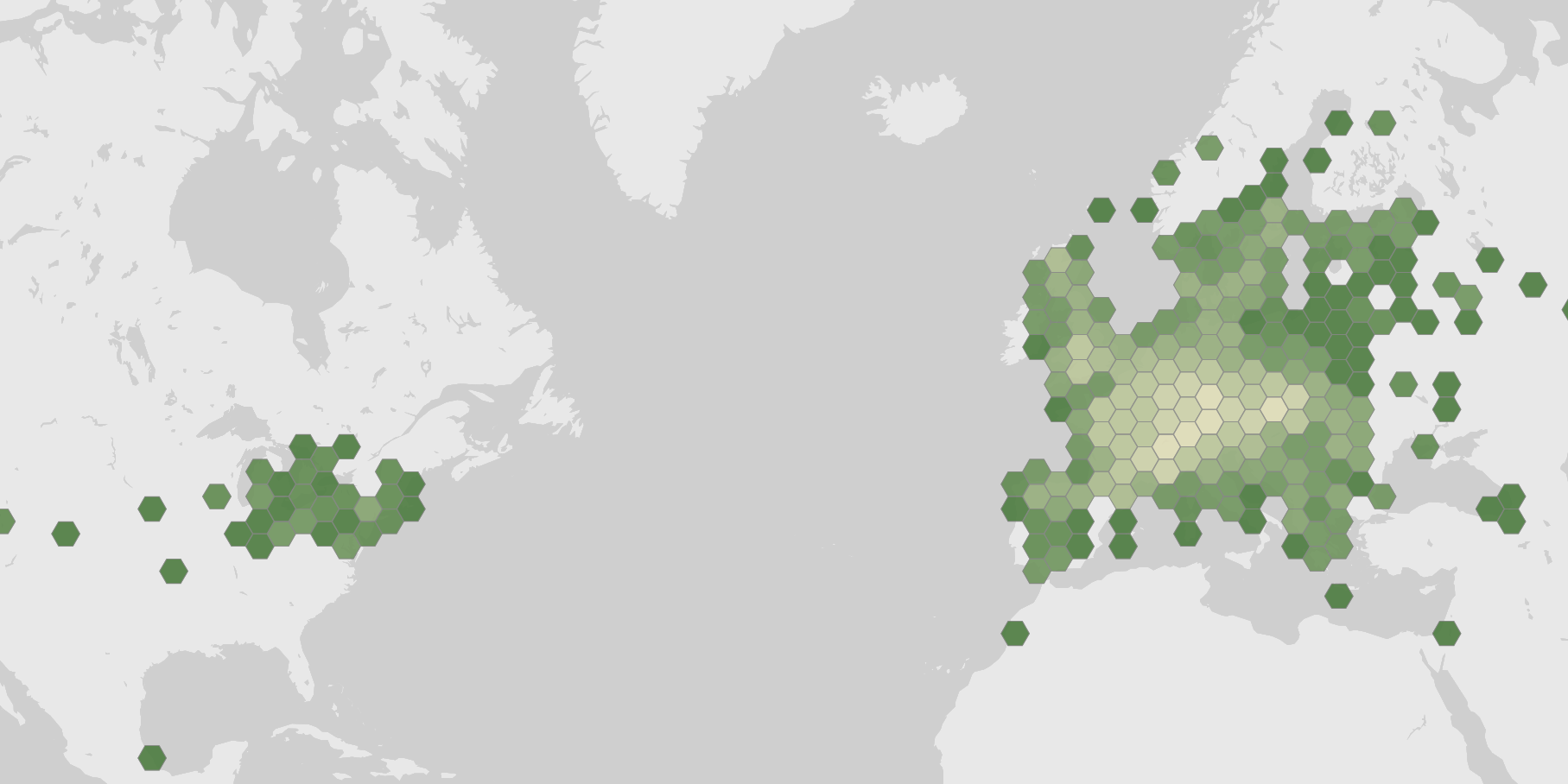
Colchicum autumnale is the only species of its family native to Great Britain and Ireland, where notable populations are maintained under the stewardship of County Wildlife Trusts. On the European mainland it occurs naturally from Portugal in the west to Ukraine in the east, favoring lowland grassy meadows.
The species has also become naturalized outside this native range, with populations reported in Sweden, European Russia, and New Zealand.
Monthly observation data show counts rising sharply through spring, peaking in May and June, before a secondary rise in September. Since these figures come from presence observations rather than population counts, they should be read only as evidence of when the plant is most often noticed, likely tracking its leaf growth in spring and its flowering later in the year, not as a measure of abundance or its full range.
Uses and Human Relationships
The genus name traces back to Colchis, a region in the Caucasus that ancient Greeks placed at the heart of the Argonaut myth as the homeland of the sorceress Medea. Greek tradition linked the region, and this plant, to potent poisons, with Colchicum said to feature among the concoctions Medea used, once described as "the destructive fire of the Colchicon Medea."
The corms of C. autumnale contain colchicine, a drug with a narrow therapeutic index that remains approved in many countries for treating gout and familial Mediterranean fever, and colchicine remains a first-line choice for gout treatment today. Colchicine is also used in plant breeding to produce polyploid strains. The species' introduction to colonial America is often credited to Benjamin Franklin.
Fun Facts
- Colchicum autumnale is grown as an ornamental garden flower, often alongside other cultivated Colchicum species such as C. × agrippinum.
- Its genus name commemorates Colchis, the mythical Caucasus homeland of Medea in Greek legend, tying this meadow plant to one of mythology's most notorious poisoners.
- Despite bearing the common name "meadow saffron," the plant has no botanical relation to true saffron, which comes from an entirely different species, Crocus sativus.
Conservation status
- LC
- NT
- VU
- EN
- CR
Least Concern
Ecology
Habitat
- Grassland
Growth habit
- Herb