The common crane can fly at altitudes of up to 10,000 m during its migratory flights, one of the highest of any bird. This medium-sized crane, also known as the Eurasian crane, belongs to the family Gruidae and is the only crane commonly found in Europe.
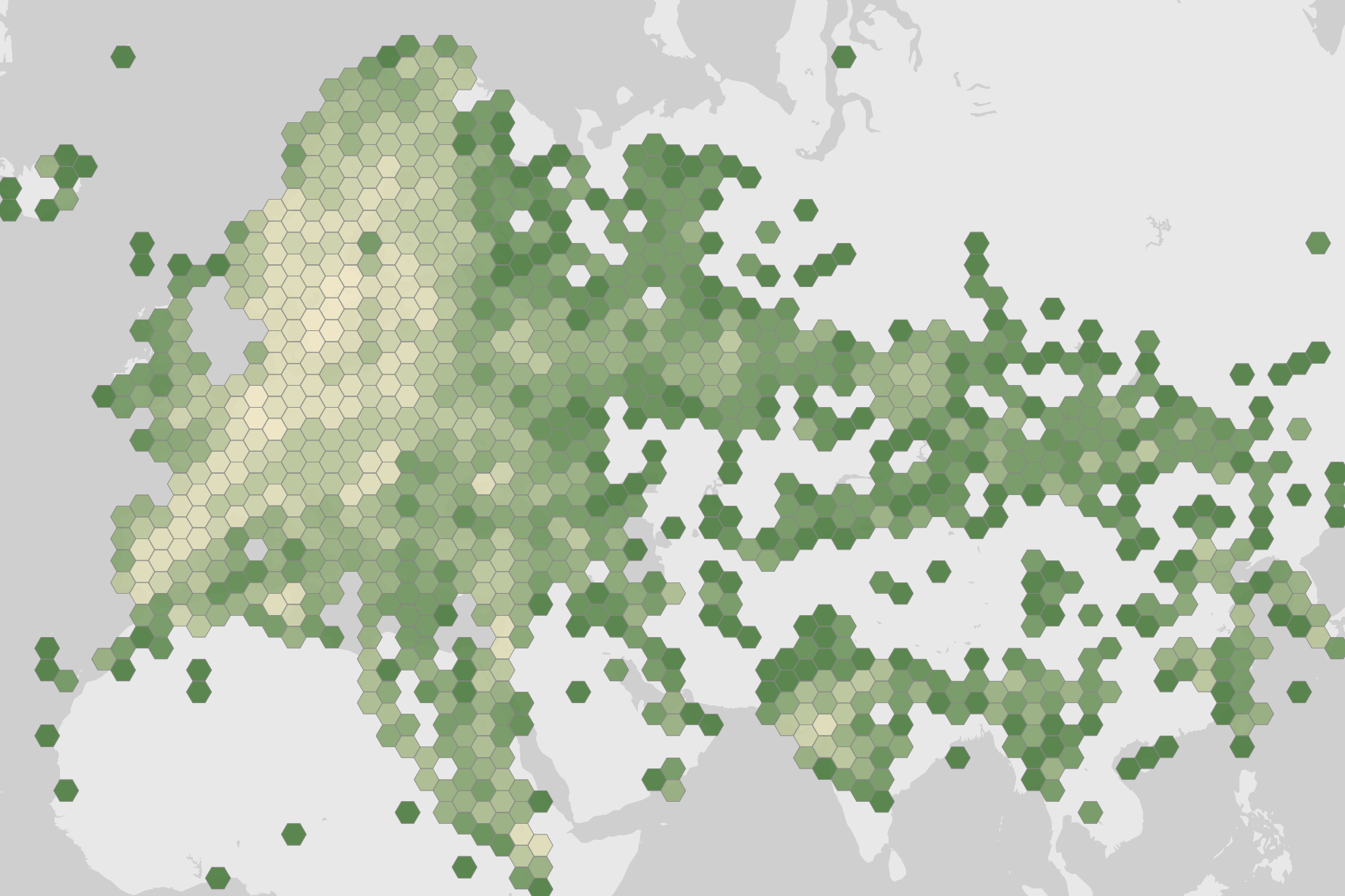
The species breeds across Europe and the Palearctic to Siberia, covering a range of about 15,500,000 km². It is assessed as Least Concern, and its global population was estimated at about 500,000 individuals in 2025.
Despite these large numbers, it disappeared as a breeder from parts of its former range, and a reintroduction project is underway in the United Kingdom.
Identification and Appearance
The most useful field mark is the explosive plume of drooping greater coverts, which sits over slate-grey plumage. The bare red crown and white streak running from behind the eyes to the upper back complete the look.
This is a large, stately bird, 100–130 cm long with a wingspan of 180–240 cm. Adults weigh about 5.5 kg, and males are slightly heavier and larger than females.
The overall colour is darkest on the back and rump and palest on the breast and wings. The primaries, the alula and the tip of the tail are black.
Juveniles have yellowish-brown tips to their body feathers, lack the drooping wing feathers and bright neck pattern of adults, and have a fully feathered crown. The combination of grey plumage and black wing markings separates the common crane from the hooded and black-necked cranes of Asia.
Distribution and Habitat
The common crane breeds across Europe and Asia, with the largest populations in Russia, Finland and Sweden. It is rare in southern and western Europe, and it has returned to several western countries where it had disappeared, including the United Kingdom and, since 2021, the Republic of Ireland.
In Europe, it mainly breeds in boreal, taiga and mixed forests, from sea level up to 2,200 m. In northern areas it nests on treeless moors, bogs and dwarf heather habitat, usually near small lakes or pools. In Sweden, breeders often use small, swampy openings among pine forests.
Breeding density is low, typically 1 to 5 pairs per 100 km². In winter, the birds move to flooded areas, shallow bays and swampy meadows, and later often use open cultivated land. Wintering populations use the Iberian Peninsula, northern Africa, the Indian subcontinent and eastern China.
Migrating flocks fly in a V formation. Autumn migration runs from August to October in the breeding areas and from late October to early December at the wintering sites.
Behavior and Lifestyle
Outside the breeding season, the common crane is fairly social. Flocks of up to 400 birds may fly together during migration, and at staging sites thousands can gather at once. Younger and non-breeding birds are usually the earliest to migrate in autumn.
Foraging is done in small groups of pairs, families or winter flocks. Birds feed more quickly in the middle of the day than at dawn or dusk, and they tend to stay with the flock even when a richer food patch is available.
In winter, dominant birds usually choose foraging areas where more cranes and food are found, while subordinate birds switch zones more often. Some families hold a foraging territory while their young depend on them, and they defend it by day before joining communal roosts at night.
Recordings
flight call · Czech Republic · Petr Holecek · Public domain
Diet and Nutrition
The common crane is an omnivore that eats mostly plant material, including roots, tubers, stems, leaves, fruits and seeds. In winter it feeds largely on waste grain left in harvested fields, which helps farmers by clearing the ground for the next year.
Animal food becomes more important in summer and can be the main food during the breeding season, when adults feed it to the young. Its animal prey includes insects, especially dragonflies and crickets, along with snails, earthworms, spiders and small fish.
Its main animal prey groups include frogs, toads and newts, along with rodents and small songbirds. The birds probe the ground or shallow water with their bills, feeding on land or in shallow water.
Nesting and Breeding
Common cranes usually lay their eggs in May. Pairs form lasting monogamous bonds, and a bird that loses its mate may court a new partner the following year. Courtship includes a stately, march-like walk by the male and a unison call in which the female calls high and the male answers with a longer scream.
The nesting territory ranges from 2 to 500 ha, depending on local habitat. The nest sits in or very near shallow water, often with dense shore vegetation nearby. In Sweden an average nest is about 90 cm across, and Arctic birds build smaller nests. Common cranes are the only crane species, along with the sandhill crane, that paint their bodies with mud or decaying vegetation, which helps them blend into the nesting site.
A clutch usually has two eggs, and three or four is rare. The incubation period is about 30 days, and the female does most of the sitting. If the clutch is lost early, the pair may lay another within a couple of weeks.
Chicks can crawl away from danger within a few hours, swim soon after hatching and run with their parents at 24 hours old. By about 9 weeks they can fly short distances. Adults lose their flight feathers for about 5 to 6 weeks while caring for the young. Wild birds usually reach sexual maturity at 3 to 6 years.
Population and Ecological Role
The global population was estimated at about 500,000 individuals in 2025. Most pairs nest in Russia, Finland and Sweden, and the European population is increasing.
The common crane is an important part of its wetland ecosystems. Its adults have few natural predators, but eagles can threaten birds of all ages, and parents will attack foxes and other mammals at the nest.
Conservation and Threats
The common crane is listed as Least Concern by the IUCN. Its population has grown in many European countries after decades of decline, and it is covered by the Agreement on the Conservation of African-Eurasian Migratory Waterbirds (AEWA).
The main threat is habitat loss and degradation from dam construction, urban growth, farming and wetland drainage. Nest disturbance, changing land use and collisions with power lines remain problems, and persecution over crop damage, pesticide poisoning, egg collection and hunting are also potential threats.
In the United Kingdom, a reintroduction began in 2010 in the Somerset Levels. A total of 93 birds were released between 2010 and 2014, and by 2021 the British population had reached 72 pairs.
Photos
Photographs from via iNaturalist, licensed under CC0 1.0., by Kim via iNaturalist, licensed under CC BY 4.0., by Tom and T Herman via iNaturalist, licensed under CC BY 4.0., by simcartographer via iNaturalist, licensed under CC BY 4.0., by Eric Austin via iNaturalist, licensed under CC BY 4.0., by Syd Cannings via iNaturalist, licensed under CC BY 4.0., by Kathryn Curtis via iNaturalist, licensed under CC BY 4.0., by Dmitry Mozzherin via iNaturalist, licensed under CC BY 4.0., by Mary via iNaturalist, licensed under CC BY 4.0., by Craig K via iNaturalist, licensed under CC BY 4.0., and by Jackson Withey via iNaturalist, licensed under CC BY 4.0., credited on each photo.
Ecology and classification
Classification
- Phylum
- Chordata
- Class
- Aves
- Order
- Gruiformes
- Family
- Gruidae
- Genus
- Grus
- Species
- Grus grus
Sources
- GBIF Species names and classification
- iNaturalist Photos
- Wikidata Common names and conservation status
- Wikipedia Summary extract
- Xeno-canto Audio recordings
- AnAge Longevity
- AVONET Bird mass, habitat, migration, diet and range size
- GloBI What it eats, what eats it, parasites and pollinators
- trophiCH
- Wardeh et al. 2015 (EID2)
- TETRA-EU