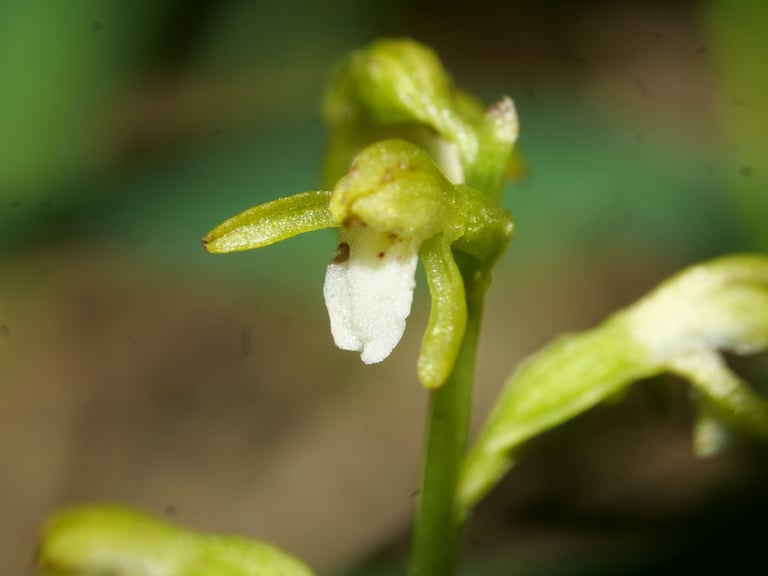
The broad-leaved marsh orchid produces seeds with no endosperm at all, meaning the embryo cannot grow without first being infected by a root fungus.
Dactylorhiza majalis, the broad-leaved marsh orchid, is a terrestrial orchid native to Eurasia. It grows across a wide swath of Europe and north-central Asia, favoring damp ground.
Beyond its dependence on fungal partners, the species stands out for its tolerance of habitat change compared to other marsh orchids, making it a resilient survivor in landscapes where many relatives have vanished.
Identification and Appearance
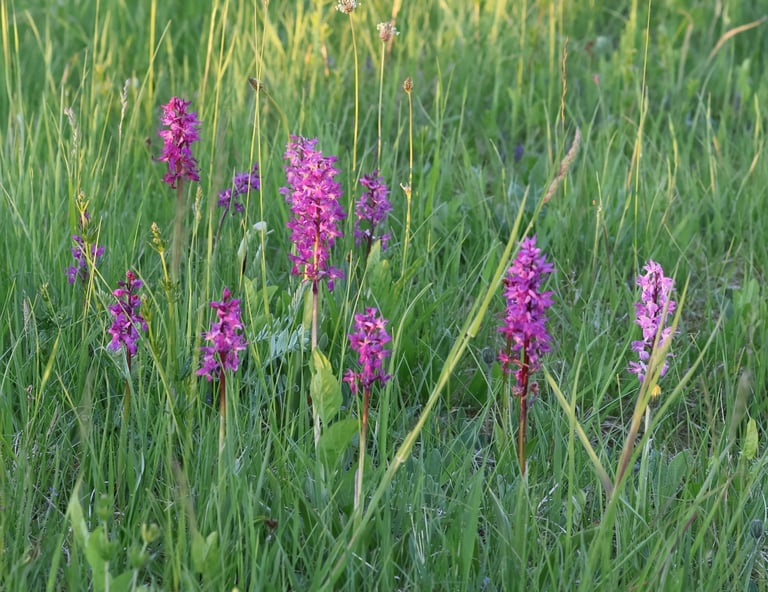
The densely flowered, cylindrical inflorescence of purplish-red blooms is the most useful field mark for this orchid, especially once it has opened fully after starting out conical in bud.
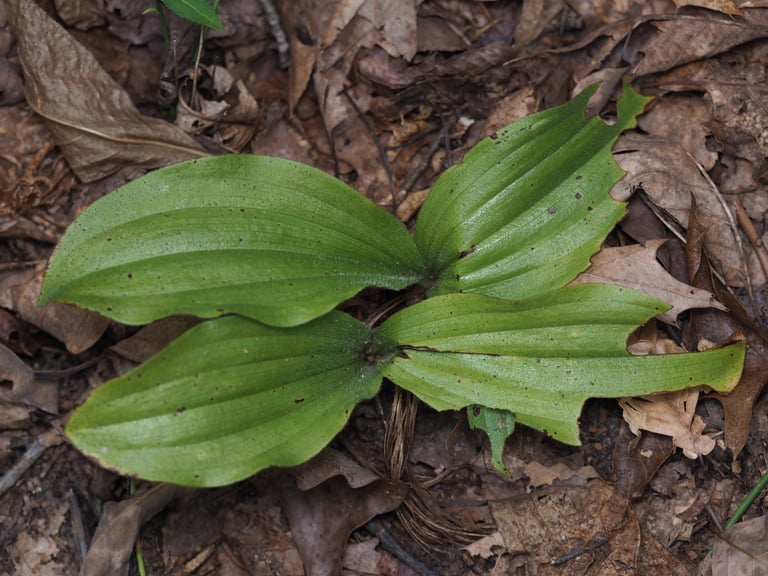
Plants typically stand 15 to 40 cm tall, though some reach 60 cm. Four to ten spotted leaves, colored purple or burgundy, are arranged around a hollow stem; they are ovate to lanceolate, 6 to 18 cm long and 1.5 to 3.5 cm wide, shrinking and narrowing toward the flower spike.
The inflorescence itself runs 5 to 15 cm long and carries seven to fifty flowers, usually purplish red but occasionally light pink or white. The outer lateral tepals stand obliquely or upright, 7 to 12 mm long, while the smaller middle tepal joins two inner tepals to form a helmet shape. The trilobate lip, 5 to 10 mm long and 7 to 14 mm wide, bears variable markings of lines, streaks, or dots in a lighter central patch, and a downward-curving spur slightly shorter than the ovary.
The tuber is palmately divided and irregularly shaped, a trait shared across the genus Dactylorhiza. The species also carries four sets of twenty chromosomes (2n = 4x = 80) and a genome size of 14.24 Gbp.
Distribution and Habitat
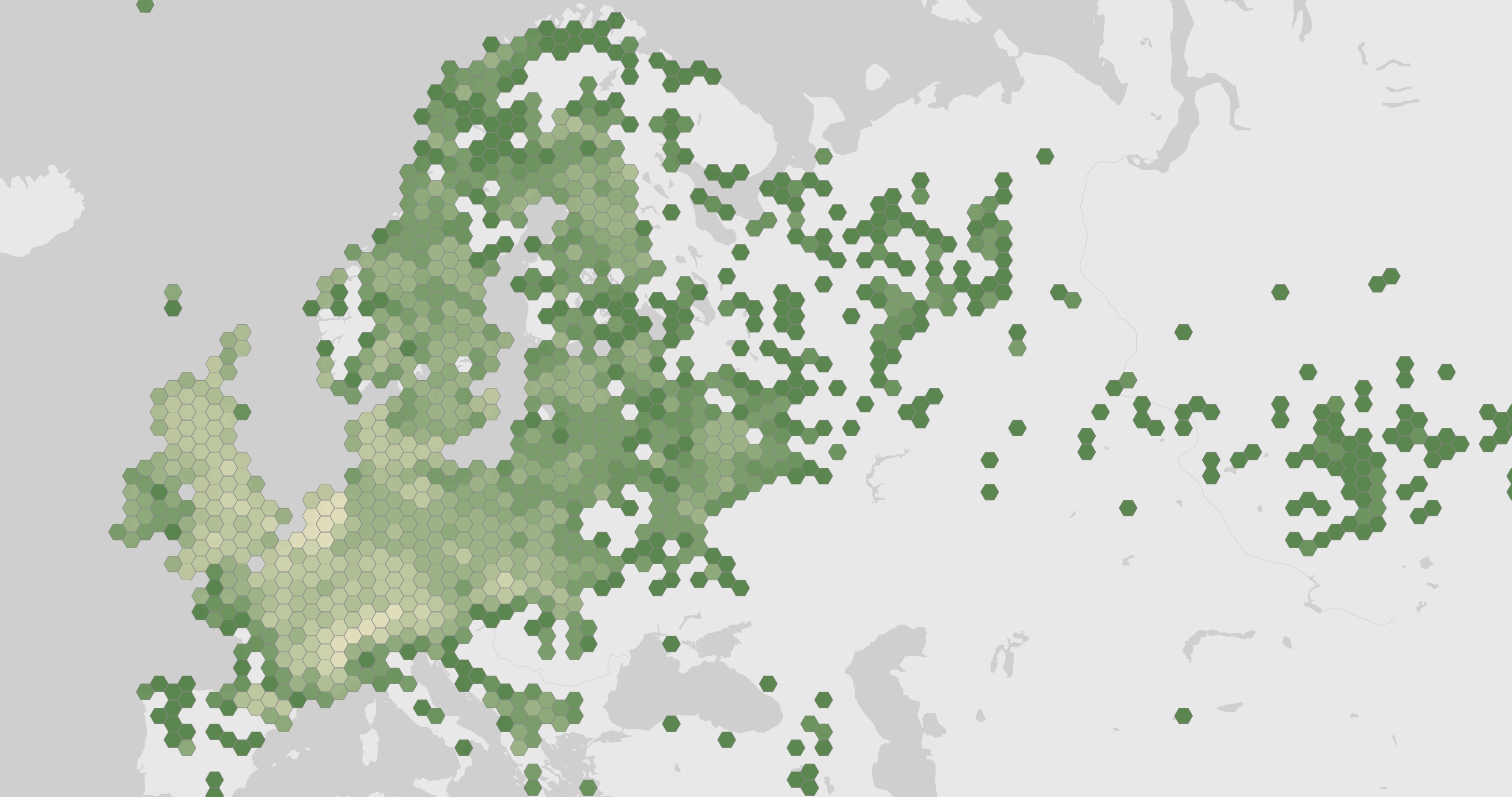
Dactylorhiza majalis ranges widely across Europe and north-central Asia, from Spain and Ireland in the west to Siberia and Kazakhstan in the east, with its native range also reaching Türkiye and the Baltic states.
In Germany the species remains widespread but patchy, having disappeared entirely from many sites in the west and north. Switzerland holds a similarly broad but uneven distribution, with a notable gap south of the Aar between Aarau and Lake Neuchâtel.
The species occupies damp, marshy habitats typical of wetland orchids. It has also been introduced to Newfoundland and Ontario outside its native Eurasian range.
Monthly observation counts peak sharply in late spring and early summer, consistent with the plant's flowering period, when it is most visible and most often recorded.
Growth and Form
Dactylorhiza majalis grows as a tuberous geophyte, storing energy underground in a palmately divided tuber between growing seasons. This form allows the plant to die back and re-emerge each year from its below-ground reserves.
Ecology and Relationships
A broad range of birds have been recorded feeding on Dactylorhiza majalis, including finches such as the common redpoll and greenfinch, along with skylarks, partridges, ducks, geese, and pigeons like the stock dove and wood pigeon. No single group dominates these records, suggesting the plant is eaten opportunistically by many bird species rather than specialized feeders.
The yeast Pichia fermentans has also been recorded in association with the species.
As with other orchids, its life cycle depends on a hidden partnership: its seeds cannot germinate without infection by a mycorrhizal root fungus, tying the plant's earliest development to fungal partners in the soil.
Conservation and Threats
The broad-leaved marsh orchid is protected as an orchid even though it remains commonly found in some regions. Its numbers have nonetheless been dwindling for some time.
The main threats are nitrogen entering its habitat through fertilizer runoff, drying out of wetland sites, and intensive conversion of land to pasture. These pressures mirror threats facing many other marsh plants.
Compared to relatives such as the early marsh orchid, Dactylorhiza incarnata, this species reacts less sensitively to habitat change. It is typically the last native orchid to disappear from a degraded site, a tolerance that keeps it relatively common even as other orchids decline around it.
Fun Facts
- Despite ongoing declines from fertilizer runoff and habitat drying, Dactylorhiza majalis is usually the last native orchid to vanish from a degraded site.
- Its native range stretches from Spain and Ireland all the way to Siberia and Kazakhstan, one of the broader distributions among European marsh orchids.
Photos
Photographs from via iNaturalist, licensed under CC0 1.0., by Katrin Simon via iNaturalist, licensed under CC BY 4.0., by Augustin Soulard via iNaturalist, licensed under CC BY 4.0., by Claude Kolwelter via iNaturalist, licensed under CC BY 4.0., by Tim Aßmus via iNaturalist, licensed under CC BY 4.0., by Yves Bas via iNaturalist, licensed under CC BY 4.0., by Yannick Brenz via iNaturalist, licensed under CC BY 4.0., by Victor Bardashev via iNaturalist, licensed under CC BY 4.0., and by Louis Aureglia via iNaturalist, licensed under CC BY 4.0., credited on each photo.
Ecology and classification
Habitat
Growth habit
- Herb
Classification
- Phylum
- Tracheophyta
- Class
- Liliopsida
- Order
- Asparagales
- Family
- Orchidaceae
- Genus
- Dactylorhiza
- Species
- Dactylorhiza majalis
Sources
- GBIF Species names and classification
- iNaturalist Photos
- Wikidata Common names and conservation status
- Wikipedia Summary extract
- Plants of the World Online Native range, life form and climate (WCVP)
- GloBI What it eats, what eats it, parasites and pollinators
- trophiCH
- Wardeh et al. 2015 (EID2)