Few groundcovers have crossed from wild bushland into suburban lawns as thoroughly as kidney weed. Dichondra repens is a perennial, creeping herb in the morning glory family, Convolvulaceae, with small kidney-shaped to round leaves and tiny greenish-yellow, star-shaped flowers.
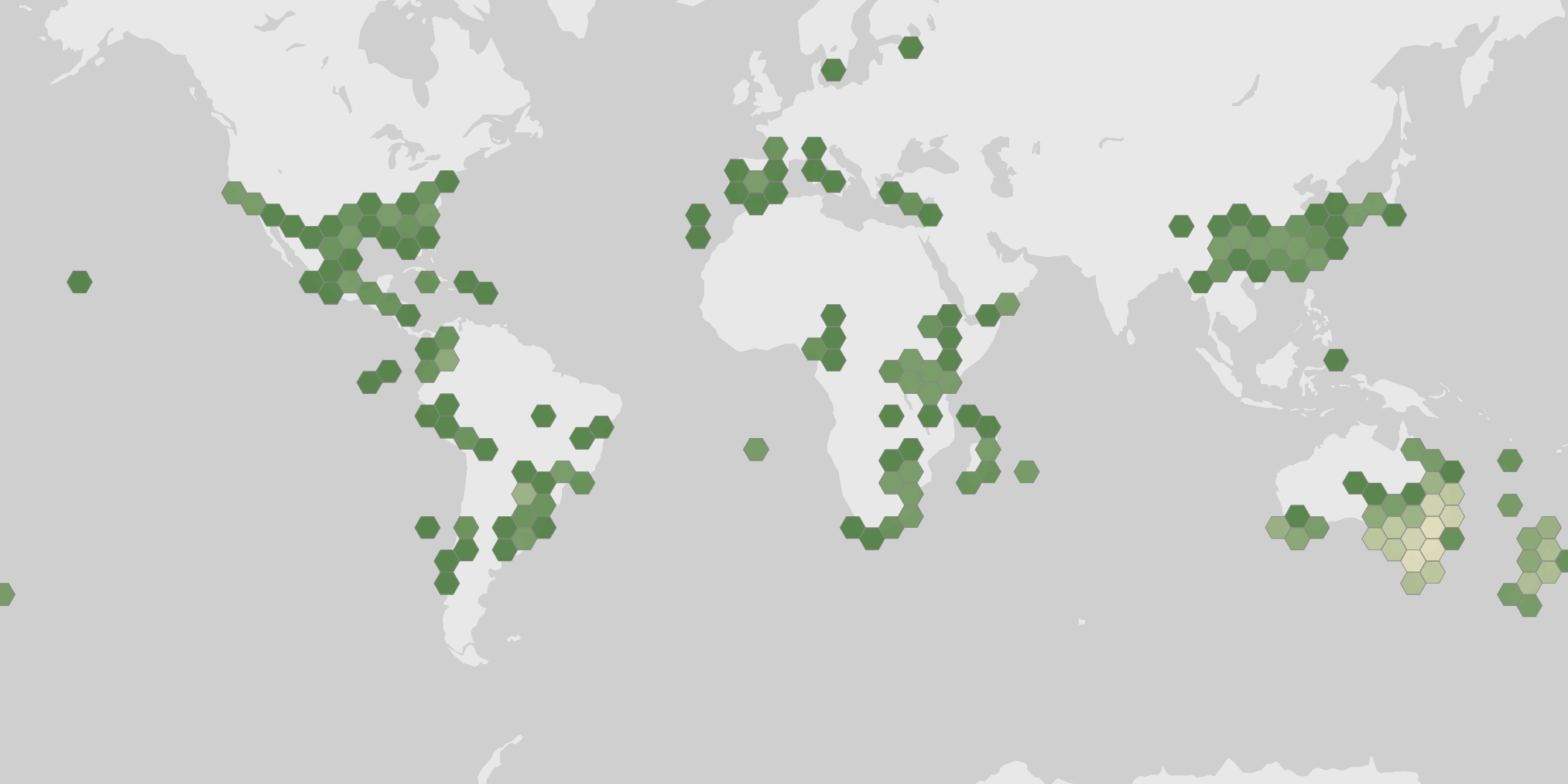
It is native to Australia and New Zealand, and also occurs on the Indian Ocean islands of Mauritius, Réunion, and Rodrigues. Across this range it grows naturally in forest, woodland, and grassland.
What makes it worth a closer look is its double life: a native forest-floor herb in the bush, and a deliberately cultivated lawn substitute in gardens far from its original range.
Identification and Appearance
The clearest way to recognize Dichondra repens is its carpet of small, kidney-shaped to nearly circular leaves, mostly 5 to 25 millimeters long and 5 to 30 millimeters wide, held on slender petioles 10 to 50 millimeters long. The leaf base is heart-shaped and the tip is rounded or slightly notched, with both surfaces covered in soft, greyish hairs.
The plant has a creeping habit, rooting at the nodes as it spreads, which is why it forms dense, low mats rather than standing upright.
Flowers are borne singly on stalks 5 to 60 millimeters long. The sepals are joined at the base with lobes 2.5 to 4 millimeters long, and the pale greenish-yellow petals form a short tube with lobes about the same length as the sepal lobes. Flowering happens throughout the year but peaks in spring and summer, most profusely from September to February with a high point in November. The fruit is a small, hairy, two-lobed capsule.
Distribution and Habitat
Kidney weed is widespread across all Australian states and throughout New Zealand, and it also grows on Mauritius, Réunion, and Rodrigues in the Indian Ocean. Its native range spans a subtropical climate zone stretching from the Mascarene Islands through southern and eastern Australia to New Zealand, including the Chatham and Norfolk Islands.
It favors clay or clay-based soils with medium to high nutrient levels, growing naturally in forest, woodland, and grassland. In New South Wales it is commonly found alongside river peppermint, thin-leaved stringybark, woollybutt, and snow-in-summer.
Beyond its native habitats, kidney weed is also a common weed of lawns, reflecting the same creeping, mat-forming habit that has made it useful as cultivated ground cover.
Growth and Form
Dichondra repens grows as a low, creeping subshrub, spreading along the ground rather than growing upright. Its habit of rooting at the nodes lets it knit together into a continuous mat over time.
Ecology and Relationships
Within its native habitats of forest, woodland, and grassland, kidney weed grows alongside eucalypts and other trees on nutrient-rich clay soils. In New South Wales, for instance, it shares ground with river peppermint, thin-leaved stringybark, woollybutt, and snow-in-summer.
The seeds of Dichondra repens are eaten by the native Pacific black duck, connecting this low-growing herb to the diet of a widespread Australasian waterbird.
Uses and Human Relationships
People cultivate Dichondra repens as an ornamental plant, most often as a lawn substitute or groundcover in gardens, valued for the dense, low mat it forms instead of turf grass.
In mid-century California, dichondra became a well-known alternative to conventional lawns that demanded heavy watering and labor, and it is seeing renewed interest today in xeriscaping and eco-friendly garden design.
Fun Facts
- The species name repens means 'creeping' in Latin, a direct reference to its sprawling, mat-forming growth habit.
- In mid-century California, dichondra lawns were promoted as a modern, low-input alternative to traditional grass lawns.
- The plant is experiencing a resurgence today as gardeners turn toward xeriscaping and water-conscious landscaping.
Photos
Photographs from via iNaturalist, licensed under CC0 1.0., by Karina M. Torres via iNaturalist, licensed under CC BY 4.0., by Texas Bird Family via iNaturalist, licensed under CC BY 4.0., by xanderferret via iNaturalist, licensed under CC BY 4.0., by Rachel via iNaturalist, licensed under CC BY 4.0., by Nathan Aaron via iNaturalist, licensed under CC BY 4.0., and by Ethan via iNaturalist, licensed under CC BY 4.0., credited on each photo.
Ecology and classification
Classification
- Phylum
- Tracheophyta
- Class
- Magnoliopsida
- Order
- Solanales
- Family
- Convolvulaceae
- Genus
- Dichondra
- Species
- Dichondra repens
Sources
- GBIF Species names and classification
- iNaturalist Photos
- Wikidata Common names and conservation status
- Wikipedia Summary extract
- Plants of the World Online Native range, life form and climate (WCVP)