The Carolina horsenettle carries prickles along its stem and leaf veins despite not being a true nettle at all — it belongs to the nightshade family, Solanaceae.
This perennial herb is native to the southeastern United States but has spread throughout much of temperate North America, and it has become invasive in parts of Europe, Asia, Africa, and Australia. Its combination of aggressive spread, toxic chemistry, and a long, tangled history in folk medicine makes it a plant worth a closer look.
Identification and Appearance
The most distinctive feature of Solanum carolinense is its covering of prickles along the stem and on the undersides of the larger leaf veins. The plant grows up to 90 cm (3 ft) tall, with a woody stem in older individuals.
Leaves are alternate, elliptic-oblong to oval, 6 to 11 centimeters (2½ to 4½ inches) long, with irregular lobes or coarse teeth. Both leaf surfaces bear fine hairs, and crushed leaves give off a potato-like smell, a reminder of the plant's nightshade kinship.
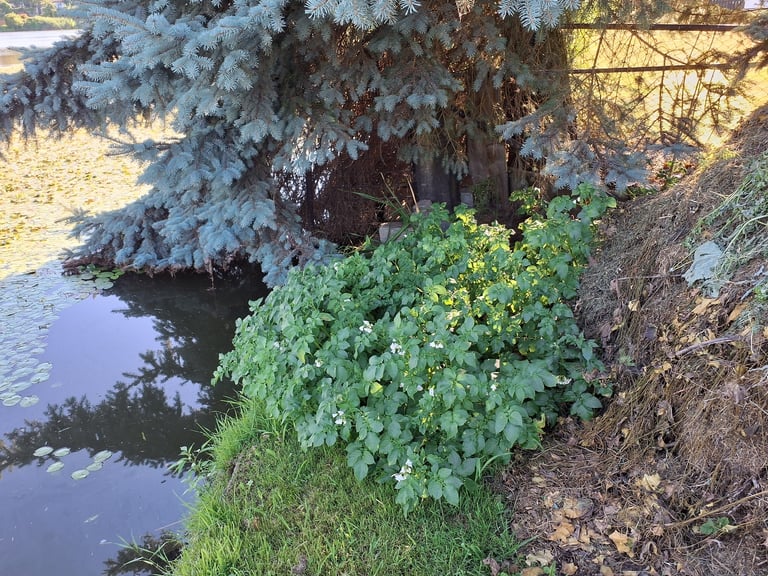
Flowers have five petals, usually white or purple with yellow centers, though a blue-flowered form resembling tomato blossoms also occurs. Flowering runs from April to October in the northern hemisphere. The fruit is a berry resembling a small tomato, dark green with light green stripes when immature, turning yellow and wrinkled at maturity, and each berry holds around 60 seeds.
Distribution and Habitat
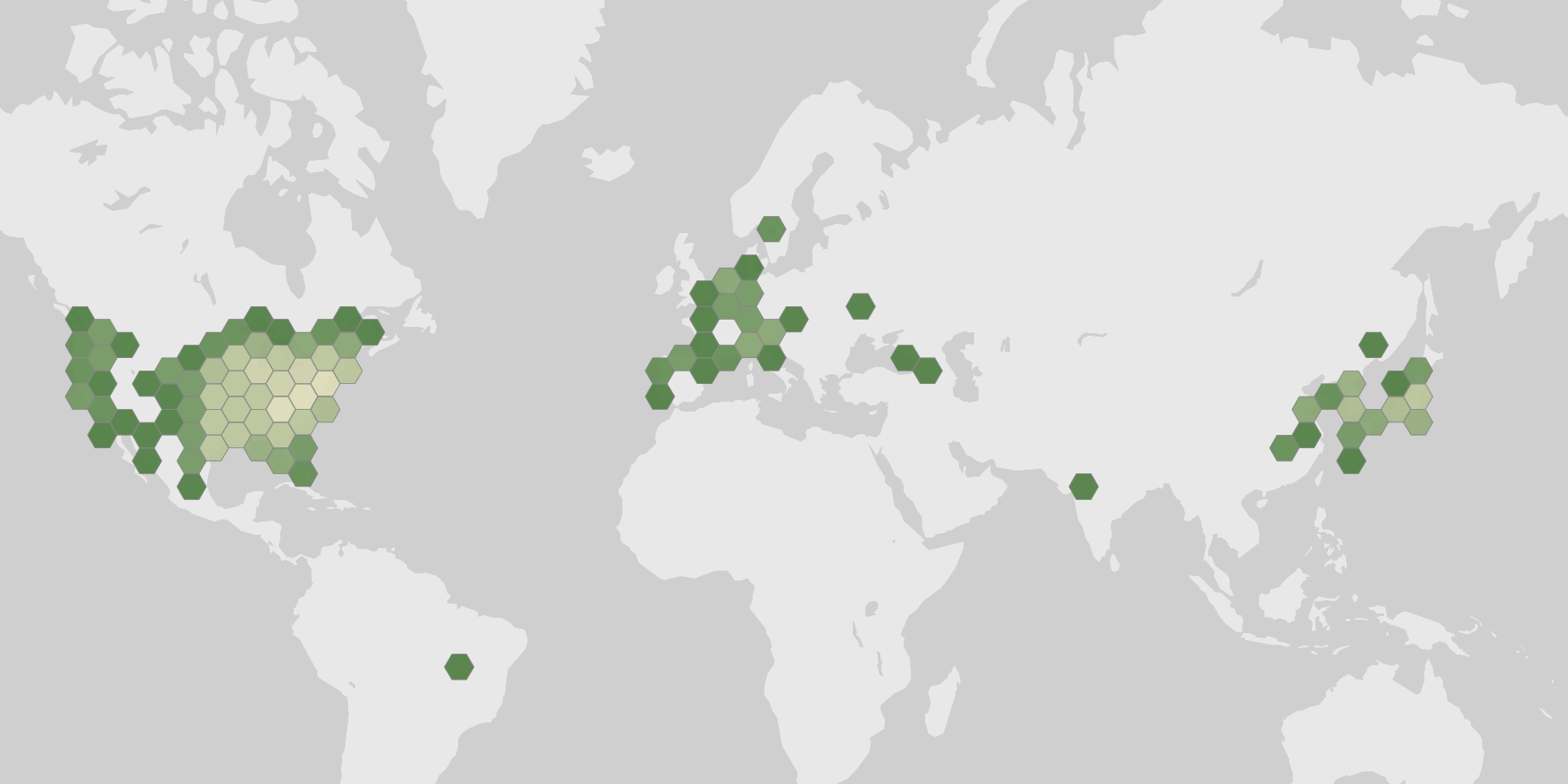
Solanum carolinense is native to the central and eastern United States and northeastern Mexico, with documented native populations stretching from Texas and Florida north to Maine, Michigan, and South Dakota. It has also been introduced well beyond this range, into western U.S. states such as Arizona, California, Colorado, and Washington, as well as into Germany, Great Britain, Italy, New Zealand, and the Transcaucasus region, among other areas.
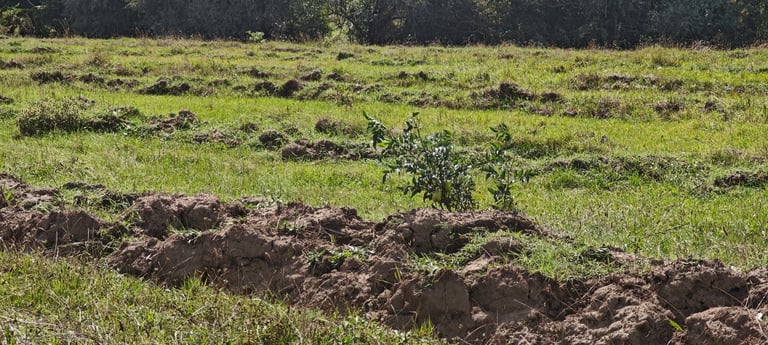
The species favors disturbed ground: pastures, roadsides, railroad margins, and waste places. It tolerates both wet and dry conditions, grows readily in sandy or loamy soils, and can adapt to a wide range of soil types given full sun. It becomes most vigorous and weed-like on disturbed sites, though it can also persist in less disturbed habitats.
Observation records through the year show a sharp rise through late spring into summer, peaking around June through August, consistent with its long flowering season, before tapering off toward winter.
Growth and Form
Solanum carolinense grows as a perennial herb or subshrub, reaching about 1 meter (3 ft 3 in) tall under favorable conditions, though it is typically shorter. Older plants develop woody stems, and the species spreads both by seed and by underground rhizomes, allowing it to form persistent colonies once established, particularly on disturbed ground.
Ecology and Relationships
Bumble bees pollinate the flowers of Solanum carolinense, though a flower visit alone does not confirm successful pollination. In Virginia alone, at least thirty-two insect species and the meadow vole have been recorded feeding on the plant.
Its two primary herbivores are the false potato beetle (Leptinotarsa juncta), which specializes on this species, and the eggplant flea beetle (Epitrix fuscula); together these two can cut fruit production by as much as 75 percent compared to plants protected from insects. Caterpillars of the tobacco hornworm moth (Manduca sexta) also feed on it, showing a preference for inbred over outbred plants, and the Colorado potato beetle feeds on it as well. Other specialists include the potato bud weevil, which feeds on flowers, and the potato stalk borer, which tunnels into stems.
Parasitic nematodes of the genus Pratylenchus cause minor root lesions, and the fungus Rhizoctonia solani can cause root rot in wet conditions, especially where plants have been trampled. Fruits are eaten by ring-necked pheasant, bobwhite, wild turkey, and striped skunk, but most mammals avoid the toxic, spiny stems and leaves.
Uses and Human Relationships
Historically, many parts of Solanum carolinense were used to prepare medicines for a range of conditions, and the plant was listed in the United States National Formulary from 1916 to 1936 for use by pharmacists. Nineteenth-century reports, including one attributed to Dr. J. L. Napier of South Carolina, documented its use in treating tetanus, and Porcher noted a local reputation in South Carolina as an aphrodisiac.
Fun Facts
- The plant's folk name "devil's potato" reflects its double reputation as both a traditional remedy and a hazardous species.
- It was formally listed in the United States National Formulary for two decades, from 1916 to 1936, for pharmacist use.
Photos
Photographs from via iNaturalist, licensed under CC0 1.0., by mami_t_t via iNaturalist, licensed under CC BY 4.0., by Engers via iNaturalist, licensed under CC BY 4.0., by Lydia Dexter via iNaturalist, licensed under CC BY 4.0., by Tanner Shepard via iNaturalist, licensed under CC BY 4.0., by Elliot Greiner via iNaturalist, licensed under CC BY 4.0., by Cheryl Stinchcomb via iNaturalist, licensed under CC BY 4.0., and by Jeff Clark via iNaturalist, licensed under CC BY 4.0., credited on each photo.
Ecology and classification
Habitat
Growth habit
- Subshrub
Classification
- Phylum
- Tracheophyta
- Class
- Magnoliopsida
- Order
- Solanales
- Family
- Solanaceae
- Genus
- Solanum
- Species
- Solanum carolinense
Sources
- GBIF Species names and classification
- iNaturalist Photos
- Wikidata Common names and conservation status
- Wikipedia Summary extract
- Plants of the World Online Native range, life form and climate (WCVP)
- GloBI What it eats, what eats it, parasites and pollinators
- trophiCH