Young fronds of Dryopteris erythrosora emerge a coppery red before slowly deepening to dark green, a color shift that gives the plant its common name, autumn fern.
It is a fern in the family Dryopteridaceae, also known as the Japanese shield fern, native across a wide swath of East Asia including south-central and southeastern China, Japan, Korea, the Nansei-shoto islands, and Taiwan.
Beyond its striking foliage, the plant's popularity as a garden ornamental, recognized with the Royal Horticultural Society's Award of Garden Merit, has carried it well beyond its native range and into gardens worldwide.
Identification and Appearance
The clearest field mark is the color of new growth: fresh fronds unfurl a coppery red before maturing to dark green, and because the plant produces several flushes of fronds each year, both colors can often be seen on the same clump at once.
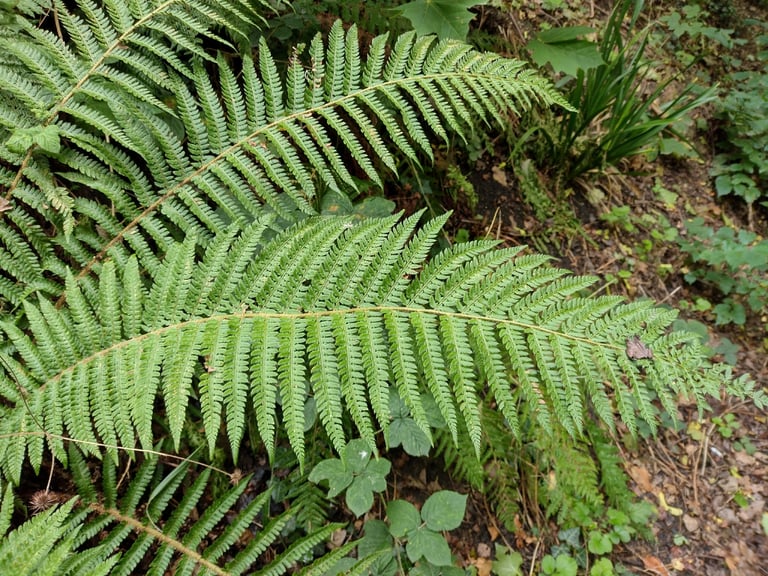
Fronds are bipinnate and semi-evergreen in cooler climates, standing 30 to 70 centimeters (12 to 28 inches) tall and 15 to 35 centimeters (6 to 14 inches) wide, with 8 to 20 pairs of pinnae and narrow, lanceolate leaflets whose margins are nearly entire.
The overall shape is funnel-like, with the upper leaves leathery and shiny, twice-divided, and triangular with pointed tips. Leaf stalks run about a third the length of the frond, are striated, colored yellow to red, and carry linear to lance-shaped brown scales.
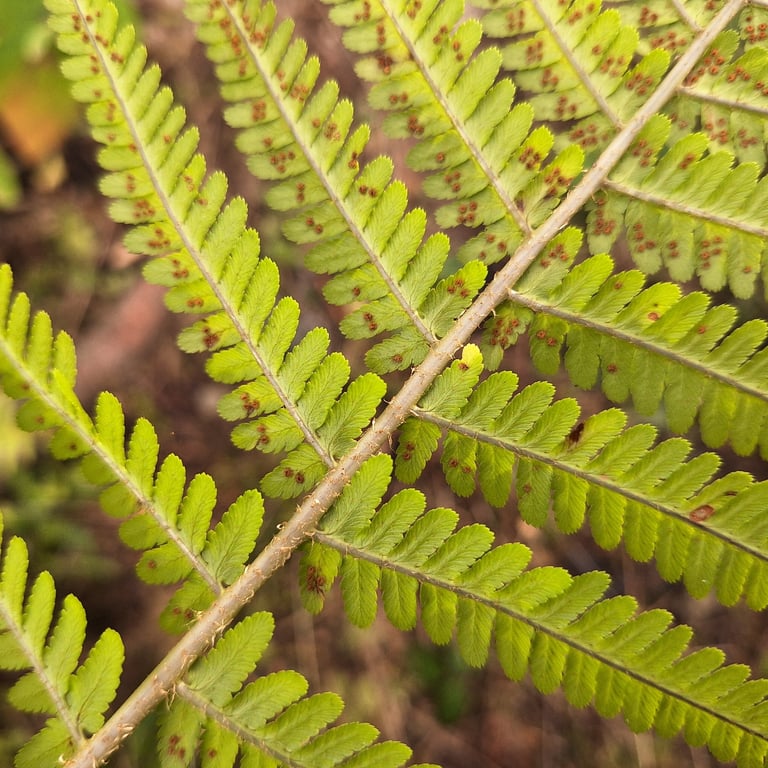
The rhizome is thick and branched, growing upright to reclining and producing several crowns at once. Kidney-shaped spores ripen between summer and autumn, appearing beneath the red indusia mentioned in the fern's name.
Distribution and Habitat
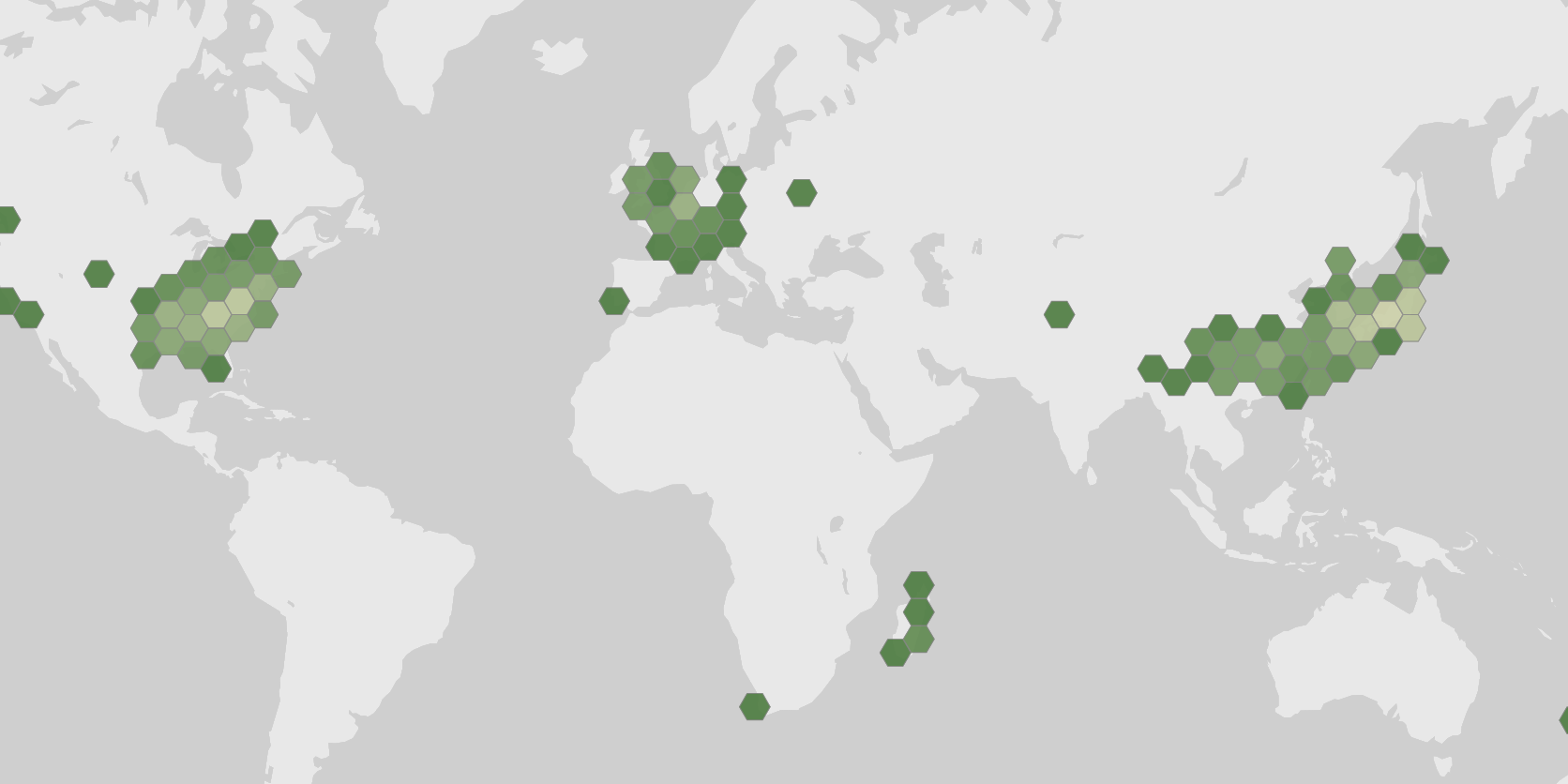
Dryopteris erythrosora is native to a broad stretch of East Asia, including south-central and southeastern China, Japan, Korea, the Nansei-shoto islands, and Taiwan.
Monthly observation counts recorded through GBIF show a clear seasonal pattern: totals climb from a low near 950 in February to more than 2,000 between June and October, peaking at 2,084 in October, before tapering back down to around 1,292 by December. Because these figures are presence observations rather than measures of abundance or population size, the pattern likely reflects when the fern is most visible and most often noticed and recorded, rather than any true seasonal shift in where the plant occurs.
Uses and Human Relationships
Dryopteris erythrosora is grown chiefly for the ornamental value of its foliage color change, from dark red new growth to dark green mature fronds, though this shift does not occur constantly. It thrives in moist, humus-rich soil with a pH between 6.1 and 7.5, and does best with morning or late afternoon sun rather than direct midday exposure. It tolerates drier soil better than many other ferns and is hardy across USDA zones 5 to 11.
Gardeners propagate it by dividing crowns in spring, separating smaller crowns from larger ones, or by growing new plants from spores.
Both the species and its cultivar 'Brilliance' have received the Royal Horticultural Society's Award of Garden Merit, a recognition of their reliability and appeal in cultivated garden settings.
Fun Facts
- The fern can produce several separate flushes of new fronds within a single year, each one emerging coppery red before maturing to green.
- It tolerates drier soil conditions better than many other ferns, though it grows best in consistently moist, humus-rich ground.
- Both Dryopteris erythrosora and its cultivar 'Brilliance' have earned the Royal Horticultural Society's Award of Garden Merit.
- In cooler climates the fern is semi-evergreen, holding onto some of its foliage through the colder months rather than dying back completely.
- Its thick, branched rhizome can form several separate crowns on a single plant, giving mature specimens a clustered, multi-stemmed appearance.
Ecology
Habitat
- Forest
- Woodland
Growth habit
- Fern