The stalks and midribs of Polystichum setiferum are coated in dense, cinnamon-brown scales, a feature so distinctive that its Latin epithet, setiferum, literally means "with bristles."
This evergreen to semi-evergreen fern belongs to the family Dryopteridaceae and is native to southern and western Europe. It grows in the class Polypodiopsida within the order Polypodiales, part of the vascular plant phylum Tracheophyta.
Beyond its scaly stalks, the plant's soft-textured, drooping fronds and long-lived foliage make it a fern worth a closer look, both in the wild and in cultivated gardens.
Identification and Appearance
The most useful field mark is the coat of cinnamon-brown scales covering the stalks and most of the midribs, a texture unusual enough among ferns to make identification straightforward at a glance.
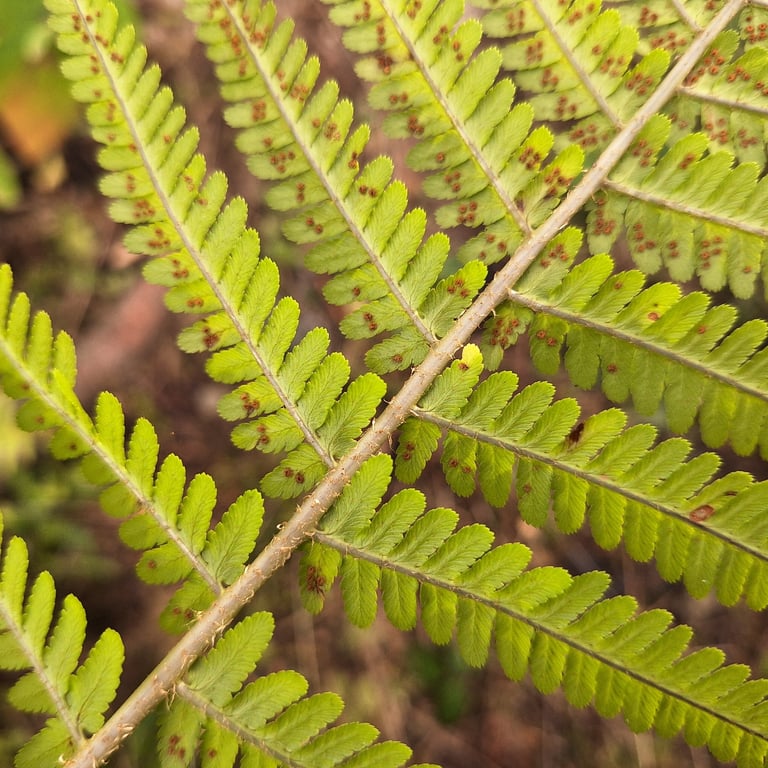
Mature plants carry four to ten fronds, each 30 to 120 centimeters long. The fronds are bright green, soft-textured, and bipinnate, though young plants show only single-pinnate growth. They typically droop downslope rather than standing erect. Each pinna measures 4 to 14 centimeters long, with a noticeably large, upward-pointing pinnule at its base; the remaining pinnules shrink progressively toward the pinna tip, and all of them end in softly bristly tips.
Individual fronds stay lush and fresh-looking for their entire lifespan of nine to fifteen months, and even after withering they remain attached to the rhizome rather than dropping away, so old and new fronds often persist together on the same plant.
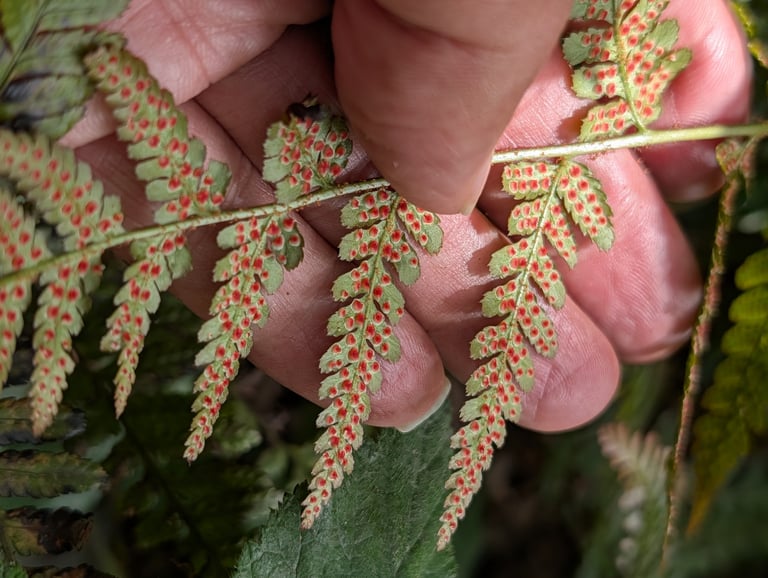
On the underside of each pinnule, round sori form two rows flanking the midrib. Each sorus is covered by a centrally attached, umbrella-shaped indusium with fringed edges, and the plant produces light yellow spores from these structures.
Distribution and Habitat
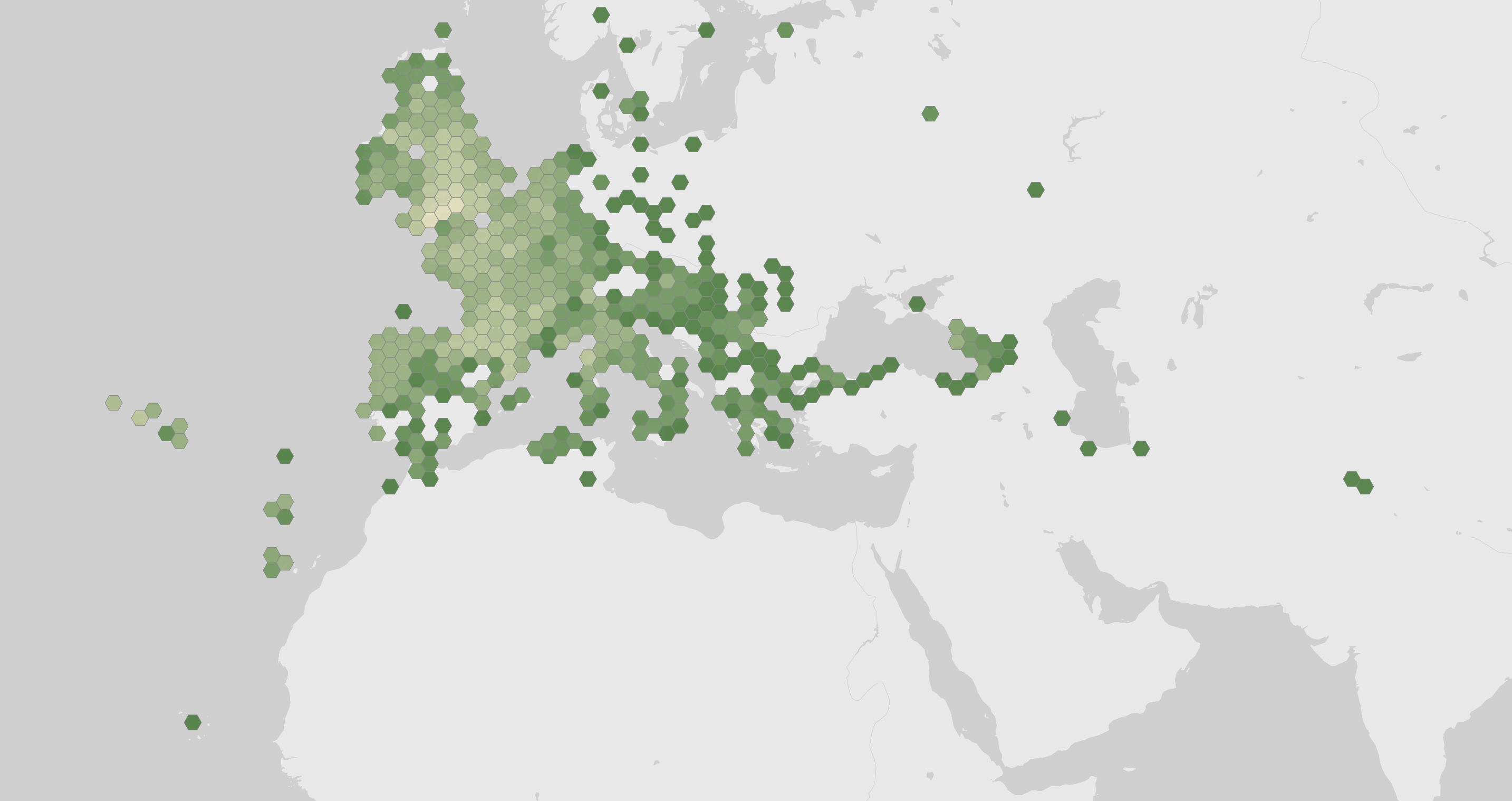
Polystichum setiferum is most abundant where winters stay mild and summers stay moist: Ireland, southwestern Great Britain, western France, and northwest Iberia. From that core range it also occurs more locally north to northern Scotland and east as far as the Crimea and Turkey. In the Mediterranean, where lowland summers are too dry, it retreats to high altitudes instead.
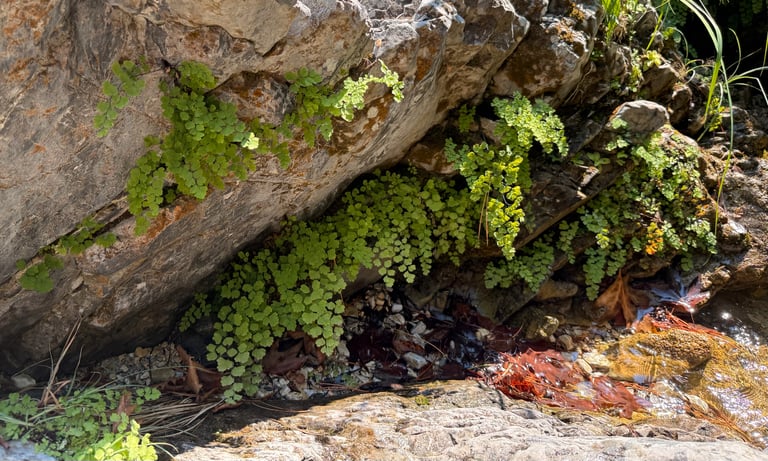
The fern grows in woodlands, often but not always on steep slopes, favoring the sheltered, humid conditions these settings provide.
Monthly observation records show a clear seasonal pattern, rising from around 8,000 sightings in January to a peak near 13,700 in May before declining steadily to under 3,000 by November and December. This pattern likely reflects when the fern's fresh growth is most visible and when botanists are most active in the field, rather than any change in the plant's actual population, since these figures are presence observations and not a measure of abundance.
Uses and Human Relationships
Gardeners cultivate Polystichum setiferum widely as an ornamental plant, valued for its soft, drooping, scaly-stalked fronds. Breeders and enthusiasts have described more than 300 distinct cultivars over the years, though most of these have since fallen out of cultivation or are no longer considered different enough from one another to warrant separate names.
A select few have earned the Royal Horticultural Society's Award of Garden Merit, including the Divisilobum Group along with the cultivars 'Divisilobum Densum' and 'Divisilobum Iveryanum,' recognition that reflects their reliable garden performance and ornamental appeal.
Fun Facts
- The species has a history of use in traditional herbal remedies, a role that extends its significance beyond its garden appeal.
- The structure of its spores has drawn interest from researchers studying fern genetics and reproduction.
- In its native woodland settings, the fern contributes to the ecosystem by helping retain moisture and providing habitat within the forest floor.
- Cultivated forms can reach up to about 3 feet (0.9 meters) tall, growing in a shuttlecock-like rosette of fronds.
Ecology
Habitat
- Woodland
- Mountain
Growth habit
- Fern