In the 14th-century tunnels beneath Znojmo in the Czech Republic, botanists were startled in 2020 to find this fern thriving in total darkness, sustained only by the damp air and artificial lighting left on for tourist tours. It has since spread through the passages, apparently unbothered by an environment nothing in its evolutionary history prepared it for.
Adiantum capillus-veneris, known as the southern maidenhair fern, belongs to the fern family Pteridaceae and has a subcosmopolitan distribution spanning warm-temperate and tropical regions on nearly every continent. The IUCN lists it as Least Concern globally, and its combination of delicate beauty and tolerance for shaded, damp niches has made it one of the most widely cultivated ferns in the world.
Identification and Appearance
The clearest field mark is the contrast between the fern's black, wiry rachis and its very delicate, light green fronds, a combination that gives the plant an almost lacework appearance. The fronds arise in clusters from creeping rhizomes.
Mature plants stand 15 to 30 centimeters (6 to 12 inches) tall, while the creeping rhizomes themselves can extend 20 to 70 centimeters (8 to 28 inches). This low, clumping habit distinguishes it from taller, more upright ferns.
Each frond is much subdivided into small pinnae, only 5 to 10 millimeters (about 0.2 to 0.4 inches) long and broad, giving the foliage a fine, feathery texture typical of the maidenhair ferns. The overall effect is airy and fan-like rather than solid or leathery.
Distribution and Habitat
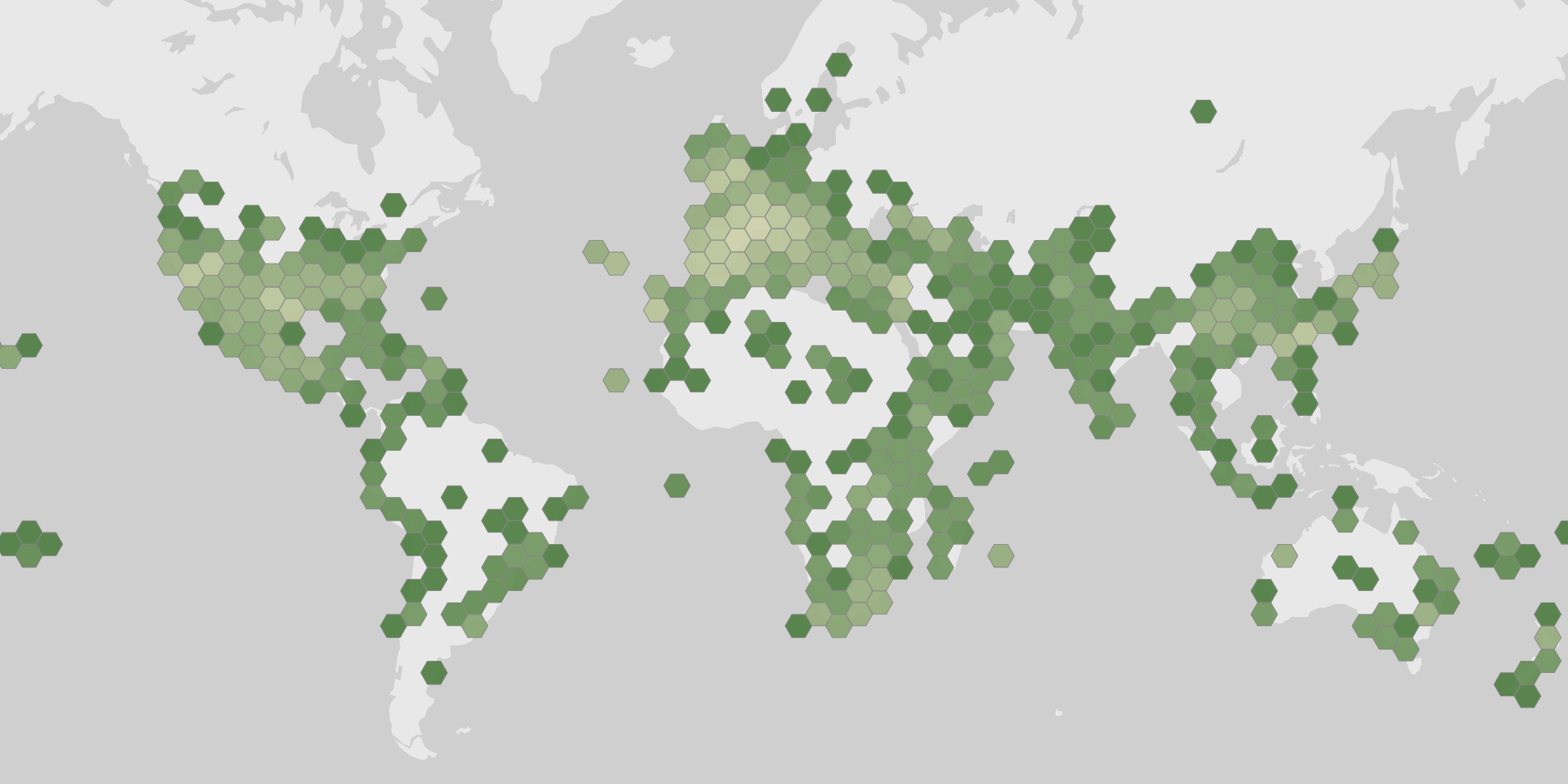
Adiantum capillus-veneris has one of the broadest natural ranges of any fern, occurring across western and southern Europe (reaching as far north as southern Scotland), much of Africa, the Levant, Asia to Japan, Australasia, and the Americas from the southern United States through Mexico and Central America into South America.
It favors damp, shaded sites: calcareous cliffs, banks and ledges along streams and rivers, wells, ponds, seepages, canyon walls, lime sink walls, and even the mortar of storm drains and building foundations, from sea level up to 2,500 meters. Sporulation occurs in spring and summer, and the species tends to grow on sheltered, shaded sandstone or limestone, typically on south-facing rock in the southern hemisphere and north-facing rock in the northern hemisphere.
Outside its main range, isolated colonies persist where geothermal warmth mimics its preferred climate, including Cascade Springs in South Dakota, Fairmont Hot Springs in British Columbia, and the Zvonce spa near Pirot, Serbia. Monthly observation records show counts rising through spring and peaking around April and May, then declining toward winter, a pattern consistent with greater visibility or activity during the growing season rather than a measure of true abundance.
The fern's unexpected spread through the centuries-old tunnels of Znojmo, first noticed in 2020, shows how readily it colonizes artificially humid, lit spaces; researchers do not expect it to spread beyond the tunnels or threaten local species there.
Uses and Human Relationships
This fern is grown worldwide as an ornamental, used in native plant landscaping, traditional shade gardens, outdoor containers, and very commonly as an indoor houseplant. As a houseplant it needs filtered light, consistently humid conditions, organically rich soil kept lightly moist, and temperatures that do not fall below 12°C (54°F); growers propagate it by dividing rhizome clumps. A winter-hardy hybrid, Adiantum × mairisii, has been bred from this species and another maidenhair fern.
Beyond ornamental use, several cultures have relied on it medicinally. The Mahuna people used the plant internally for rheumatism, while the Navajo of Kayenta, Arizona, applied an infusion as a lotion for bumblebee and centipede stings and also smoked or ingested it to treat mental illness. In traditional Iranian medicine, a frond infusion has been used to treat jaundice, coughs, colds, and to support kidney function.
The plant's Latin name reflects a cultural story rather than a practical use: capillus-veneris means "hair of Venus," referencing the Greek myth in which the goddess's hair dried after she emerged from the sea, a parallel early botanists drew with the fern's fine, water-shedding fronds.
Conservation and Threats
Globally, Adiantum capillus-veneris is assessed as Least Concern, reflecting its wide, subcosmopolitan distribution across five continents and its tolerance of many damp, rocky habitats.
Locally, however, the picture is more precarious. In the United States it is listed as an endangered species in North Carolina, where it is known as the southern maidenhair fern, and as a threatened species in Kentucky, where it goes by venus hair fern. In both states, the main threat is loss of the Appalachian habitat it depends on.
No broader population trend or dedicated conservation program is documented, and the species' overall security appears tied to the persistence of damp, shaded limestone and sandstone habitats rather than to any single coordinated effort.
Conservation status
- LC
- NT
- VU
- EN
- CR
Least Concern
Fun Facts
- The species name capillus-veneris translates to "hair of Venus," tying the fern's fine, water-shedding fronds to the Greek myth of the goddess drying her hair after rising from the sea.
- In Unani medicine the plant is known as "Parsiyavashan," and traditional Persian pharmacopoeias referenced it for soothing coughs and what was described as "melancholic imbalances."
- The fern also appears in regional Ayurvedic and Siddha medical literature, reflecting its use across several distinct traditional medicine systems spanning Asia and the Middle East.
Ecology
Habitat
- Wetland
- Forest
- Freshwater
- Cave
Growth habit
- Fern