Few ferns manage to thrive in bare rock crevices across nearly every continent, but the maidenhair spleenwort does exactly that. Asplenium trichomanes is a small fern in the spleenwort genus Asplenium, widespread and common in a variety of rocky habitats worldwide.
Despite its wide distribution, it is often locally rare, with populations scattered according to the availability of suitable rocky substrate. That combination of global reach and patchy occurrence, along with its delicate but tenacious growth in stone crevices, makes it a fern worth a closer look.
Identification and Appearance
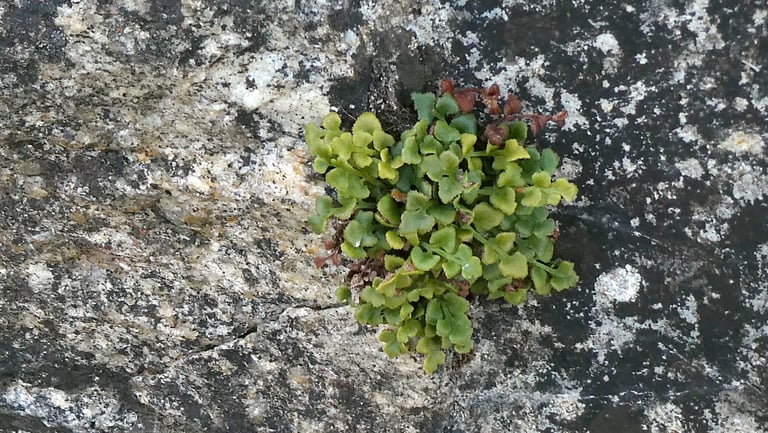
The clearest field mark is the fern's dark stipe and rachis running the full length of each frond, contrasting with rows of small, roundish, yellow-green to dark-green leaflets. Plants form tufts between 10 and 30 cm tall, arising from a short, scaly rhizome with dark scales.
The evergreen fronds are long and narrow, tapering gradually toward the tip, and are simply divided into pinnae. Fronds can reach up to 40 cm in length but are more commonly between 8 and 20 cm.
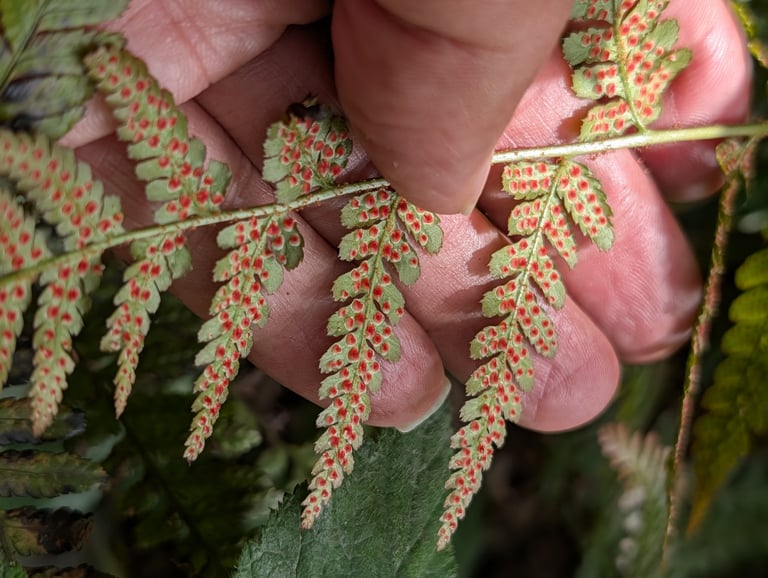
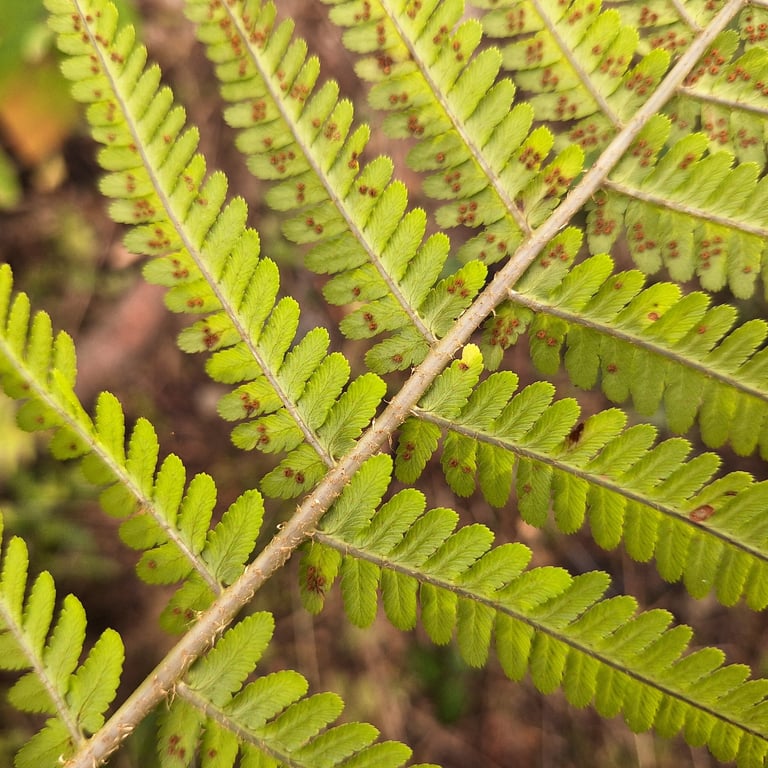
On the underside of fertile fronds, four to eight sori occur per pinna, each up to 3.5 mm long, with linear to oval, straight indusia attached along the upper side of the fertile vein. The diploid chromosome count is 72.
Distribution and Habitat
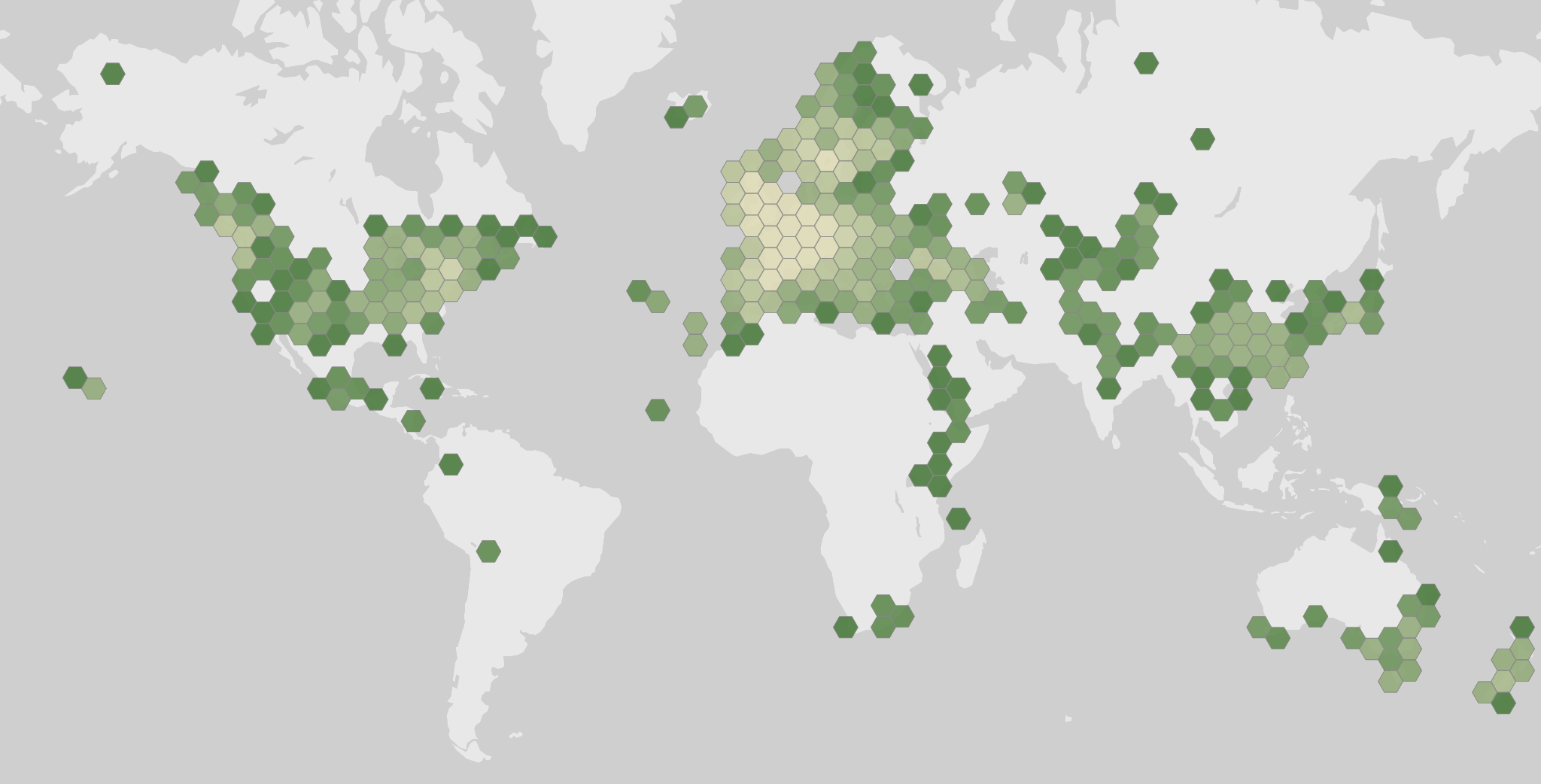
Asplenium trichomanes has one of the widest ranges of any spleenwort, spanning most of Europe, much of Asia south to Turkey, Iran and the Himalayas, a population in Yemen, parts of Africa, eastern Indonesia, south-eastern Australia, Tasmania, New Zealand, Hawaii, North and Central America, Cuba, and the northern and western parts of South America including Chile.
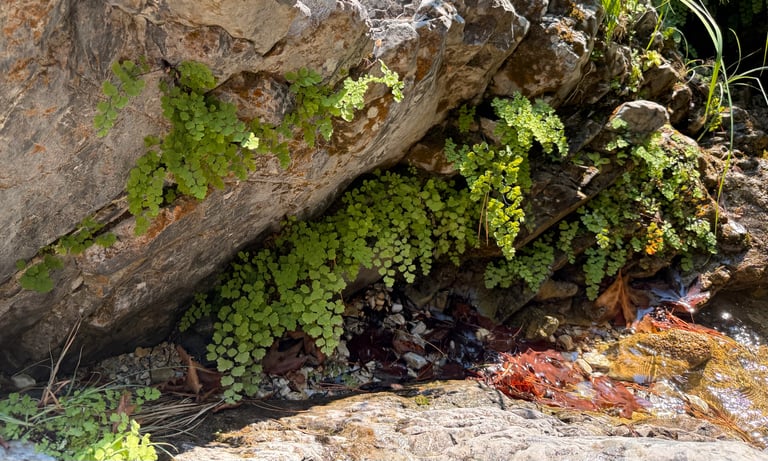
It grows on rocky habitats: cliffs, scree slopes, walls and mine waste, with the type of rock substrate used depending on the subspecies. Elevation ranges from sea level up to 3,000 meters in North America, while in the British Isles it reaches only 870 meters.
In Minnesota, where it is listed as threatened, the fern occurs on ledges and in crevices of moist, east-facing cliffs, and occasionally on talus with similar conditions; the populations there belong to subspecies trichomanes. Despite its broad range, the species is often rare locally, with populations widely spread out depending on habitat availability.
Monthly observation counts show higher numbers through the spring and summer months, peaking around June and July, consistent with easier detection of the evergreen fronds during the growing season rather than any change in the plant's presence.
Growth and Form
Asplenium trichomanes grows as a perennial lithophyte, rooting directly into rock crevices rather than soil. Its evergreen fronds persist through the year, forming compact tufts between 10 and 30 cm tall from a short, scaly rhizome.
Ecology and Relationships
The maidenhair spleenwort grows almost exclusively in rocky habitats, from cliffs and scree slopes to walls and even mine waste, rooting in crevices that hold enough moisture and minerals to support it. Its elevational range, from sea level to 3,000 meters in North America and up to 870 meters in the British Isles, reflects tolerance for a wide range of rock and climate conditions.
Several bird groups are recorded feeding on it, including finches such as the redpoll and greenfinch, along with the skylark, grey partridge, mallard, greylag goose and woodpigeon among others. These records suggest the fern forms a minor part of the diet for a range of seed- and plant-eating birds rather than being a specialized food source for any one group.
Uses and Human Relationships
Gardeners value Asplenium trichomanes for its hardiness, tolerating temperatures down to -20°C, its evergreen foliage, and its readiness to colonize crevices in stone walls. It prefers a fully or partially shaded position, qualities that have earned it the Royal Horticultural Society's Award of Garden Merit.
Fun Facts
- Despite sharing part of its common name with the unrelated maidenhair fern, Asplenium trichomanes is a very different plant, belonging to the spleenwort genus.
- The scientific name Asplenium derives from "asplenon," a term historically associated with the spleen, reflecting an old belief that ferns of this genus could treat spleen disorders.
Photos
Photographs from via iNaturalist, licensed under CC0 1.0., by Sean D Sipple via iNaturalist, licensed under CC BY 4.0., by James H. Thomas via iNaturalist, licensed under CC BY 4.0., by Mykola Borysenko via iNaturalist, licensed under CC BY 4.0., and by 曾昱承 Yu-Cheng Zeng via iNaturalist, licensed under CC BY 4.0., credited on each photo.
Ecology and classification
Classification
- Phylum
- Tracheophyta
- Class
- Polypodiopsida
- Order
- Polypodiales
- Family
- Aspleniaceae
- Genus
- Asplenium
- Species
- Asplenium trichomanes
Sources
- GBIF Species names and classification
- iNaturalist Photos
- Wikidata Common names and conservation status
- Wikipedia Summary extract
- Plants of the World Online Native range, life form and climate (WCVP)
- GloBI What it eats, what eats it, parasites and pollinators
- trophiCH