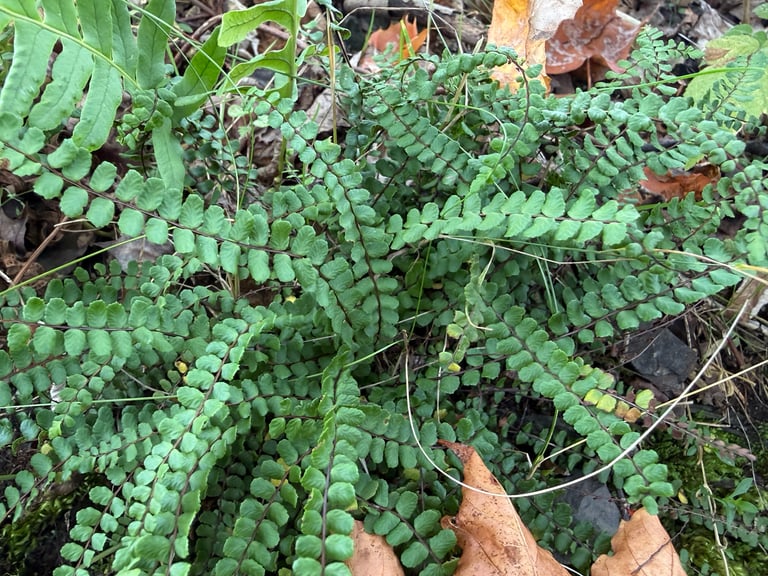
Wall-rue is a very small fern that grows almost exclusively on limestone and other calcareous rock, a striking specialization for a plant so easy to overlook.
Classified in the family Aspleniaceae within the order Polypodiales, it belongs to the fern class Polypodiopsida. Its bluish-green, heavily sub-divided fronds reach up to 12 cm (4.7 in) in length, giving it a delicate, lacy appearance despite its tough rocky habitat. Its tolerance of such an unforgiving substrate makes it a useful indicator of calcareous rock and old stone structures wherever it appears.
Identification and Appearance
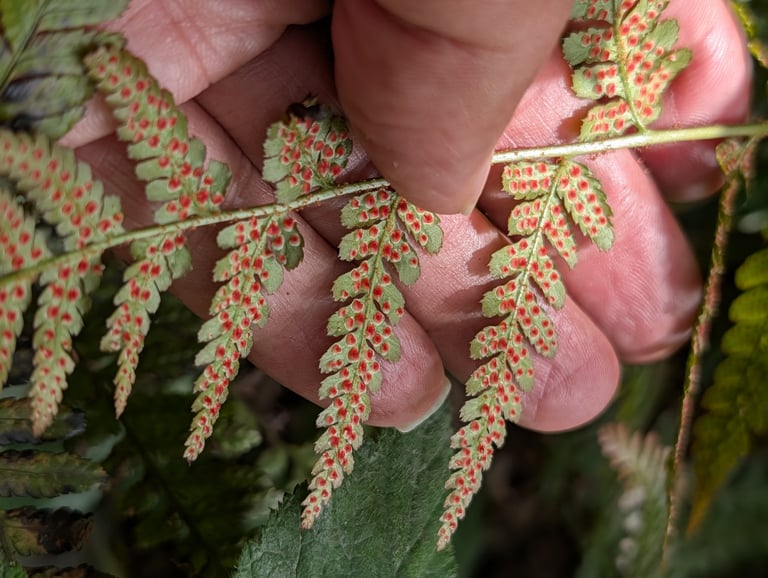
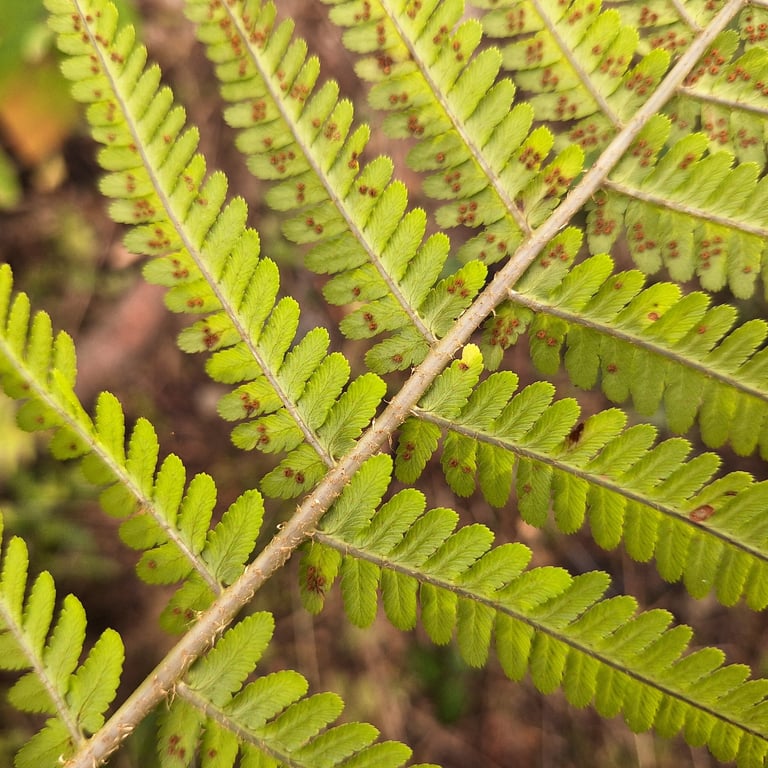
The most useful field mark is its bluish-green color combined with heavily sub-divided fronds, a combination that sets it apart from most other small rock ferns. Fronds reach up to 12 cm (4.7 in) in length, making this a genuinely diminutive species that can be easily overlooked among mosses and lichens on a rock face or wall.
Distribution and Habitat
Wall-rue occurs across a wide native range spanning Europe, East Asia, North Africa, and eastern North America, from Great Britain and Scandinavia through central Europe, the Caucasus, and into China, Japan, Korea, and the Himalaya. In North America it grows from western New England southwest along the Appalachian Mountains to Alabama and Tennessee, with additional populations in the Ozarks, southern Indiana and Ohio, and outlying occurrences in Michigan, Ontario, Quebec, and Clinton County, Iowa.
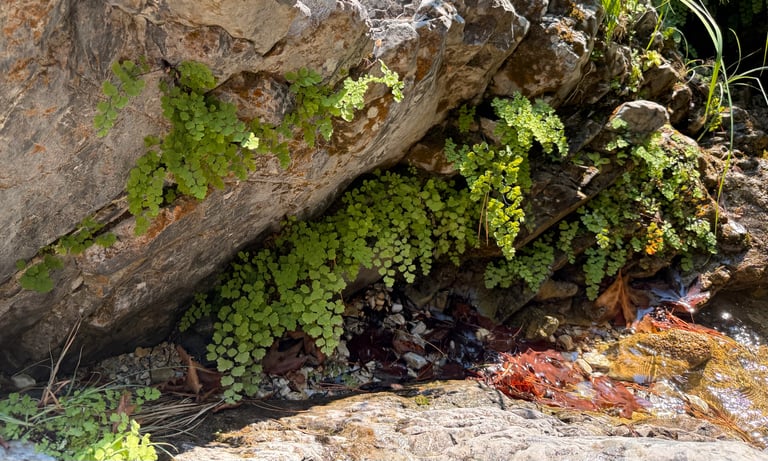
The species is tied closely to limestone or calcareous shale cliffs and boulders, occurring from sea level up to about 1,000 m. It rarely invades masonry in its native range outside Europe, but in Europe it is a common colonizer of old stone walls and buildings, making it a familiar sight on churches and other historic masonry. In the United States, by contrast, it is harder to find, generally restricted to well-weathered, rather dry limestone outcrops.
Monthly observation records show a clear seasonal pattern, with counts rising through spring and peaking around May through July before declining into autumn and winter, suggesting the species is most often observed and recorded during the warmer growing months.

Growth and Form
Wall-rue is a perennial, lithophytic fern, meaning it lives for multiple years and grows directly on rock rather than in soil. Its fronds are bluish-green and heavily sub-divided, reaching up to 12 cm (4.7 in) in length at maturity.
Ecology and Relationships
Wall-rue grows on limestone and calcareous shale cliffs and boulders, and occasionally on masonry, a narrow ecological niche defined by calcium-rich rock rather than soil. This specialization to bare rock surfaces, often in dry, well-weathered outcrops, shapes which other organisms it can share space with.
The species has been recorded as food for a range of birds, most notably finches and related songbirds such as redpolls, skylarks, greenfinches, and rosefinches, alongside gamebirds like rock partridge and woodland pigeons such as stock dove and wood pigeon. Waterfowl including mallard and greylag goose have also been recorded consuming it, suggesting the fern is taken opportunistically by a broad mix of bird groups rather than by any single specialized feeder.
Uses and Human Relationships
Wall-rue carries a long history of cultural symbolism rather than documented practical use. In ancient Rome it was associated with regret and was also reputed to serve as an antidote to poison, a belief rooted in folklore rather than verified medicine.
The plant later appears in English literature, notably in Jonathan Swift's "Gulliver's Travels," where it was used as a nosegay to mask unpleasant odors. This lingering cultural resonance suggests the fern has been noticed and referenced by people for centuries, even without a record of substantial practical or culinary use.
Fun Facts
- The species is subdivided into recognized subspecies, including A. ruta-muraria subsp. dolomiticum and subsp. ruta-muraria, along with several named varieties such as cryptolepis, lanceolum, and schriesheimense.
- In ancient Rome, wall-rue was regarded as a symbol of regret as well as a reputed antidote to poison, a belief with no basis in verified medicine.
Photos
Photographs from via iNaturalist, licensed under CC0 1.0., by Sabarni Sarker via iNaturalist, licensed under CC BY 4.0., by Ondřej Křivan via iNaturalist, licensed under CC BY 4.0., by Matthew Flood via iNaturalist, licensed under CC BY 4.0., by Owen and Carol Fawcett. via iNaturalist, licensed under CC BY 4.0., by Scott Shanks via iNaturalist, licensed under CC BY 4.0., and by Tim Aßmus via iNaturalist, licensed under CC BY 4.0., credited on each photo.
Ecology and classification
Classification
- Phylum
- Tracheophyta
- Class
- Polypodiopsida
- Order
- Polypodiales
- Family
- Aspleniaceae
- Genus
- Asplenium
- Species
- Asplenium ruta-muraria
Sources
- GBIF Species names and classification
- iNaturalist Photos
- Wikidata Common names and conservation status
- Wikipedia Summary extract
- Encyclopedia of Life Habitat, diet and behavior traits
- Plants of the World Online Native range, life form and climate (WCVP)
- GloBI What it eats, what eats it, parasites and pollinators
- trophiCH