Far from its native home in the Mediterranean region and southwestern Asia, Echium plantagineum is an invasive weed in Australia, South Africa and the United States.
Known as purple viper's-bugloss, Paterson's curse or Salvation Jane, this plant belongs to the borage family, Boraginaceae. It is native to western and southern Europe, northern Africa and southwestern Asia.
Its pyrrolizidine alkaloids make it poisonous to grazing livestock, especially animals with simple digestive systems, such as horses. That toxicity, along with its spread across several continents, makes it a plant worth understanding.
Identification and Appearance
The most useful field mark is the purple flower. Each bloom is 15 to 20 mm long, with all of its stamens protruding, and the blooms are borne along a branched spike.
The plant grows 20 to 60 cm tall. Its leaves are lance-shaped, rough and hairy, and reach up to 14 cm long.
Distribution and Habitat
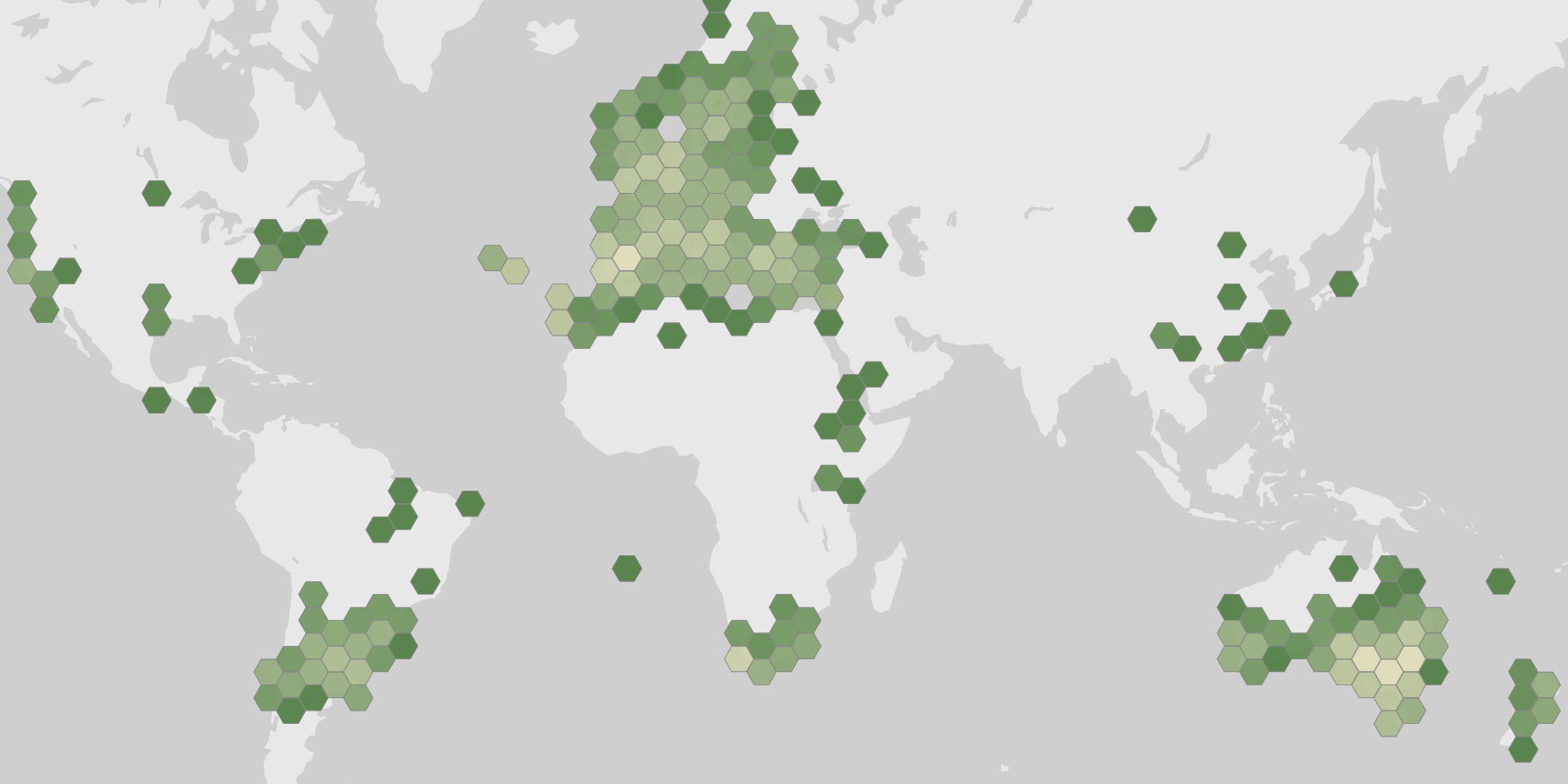
In its native range, Echium plantagineum extends from the Macaronesian islands, including the Canary Islands, Madeira and the Azores, to the Caucasus. It occurs in countries around the Mediterranean, including Spain, Portugal, Italy, Greece, Morocco, Tunisia and Egypt.
Outside its native range, the plant has spread widely. In Australia it occurs in New South Wales, Queensland, Victoria, Western Australia, South Australia, Tasmania and the Northern Territory. It has also established in several South African provinces, New Zealand, parts of South America, California and Oregon, and in Germany, Great Britain and Ireland.
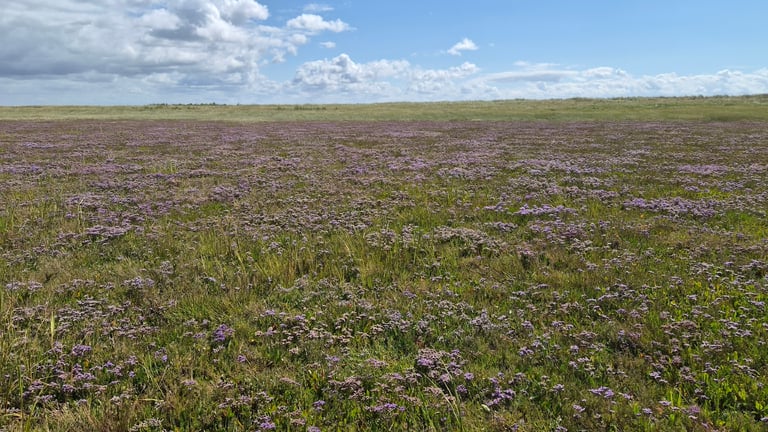
It grows in coastal sandy soils. Sightings are most frequent in November and during late spring.
Growth and Form
Echium plantagineum is a herb that grows as a winter annual, though it can also behave as a biennial. It develops into an upright plant of 20 to 60 cm tall.
Because it germinates and grows through the cooler months, the plant is most visible in the cool season and in spring.
Ecology and Relationships
Many insects feed on the plant's foliage and stems. Aphids, weevils, moth caterpillars and grasshoppers are the main groups, with bugs (Hemiptera), moths and butterflies (Lepidoptera), and beetles (Coleoptera) among the most common feeders. Locusts and other grasshoppers (Orthoptera) also feed on it. Aphids such as Aphis fabae and weevils such as Mogulones geographicus are among the named partners.
Its flowers attract insects, chiefly bees and wasps (Hymenoptera) and beetles (Coleoptera). Honey bees (Apis mellifera) and bumblebees (Bombus terrestris) are the most frequent visitors. These insects visit the flowers for nectar and pollen, but they are not established pollinators of the plant.
The plant thrives on coastal sandy soils and disturbed ground, where its fast life cycle lets it spread quickly.
Uses and Human Relationships
The plant's main significance for people lies in its toxicity to livestock. Grazing animals, especially nonruminants, can lose weight when they eat large amounts, and severe cases end in death from liver damage. Paterson's curse can kill horses, and it can irritate the udders of dairy cows and the skin of people.
After the 2003 Canberra bushfires, a large bloom covered the burned land. Many horses that grazed on it became ill and died.
Photos
Photographs from via iNaturalist, licensed under CC0 1.0., by Ezequiel Racker via iNaturalist, licensed under CC BY 4.0., by Emily Turteltaub Nelson via iNaturalist, licensed under CC BY 4.0., by Helium Luo via iNaturalist, licensed under CC BY 4.0., by Rosalie Lawrence via iNaturalist, licensed under CC BY 4.0., by Lucila Trussi via iNaturalist, licensed under CC BY 4.0., by Sid Miller via iNaturalist, licensed under CC BY 4.0., by Paul Coddington via iNaturalist, licensed under CC BY 4.0., and by Arnim Littek via iNaturalist, licensed under CC BY 4.0., credited on each photo.
Ecology and classification
Habitat
Growth habit
- Herb
Classification
- Phylum
- Tracheophyta
- Class
- Magnoliopsida
- Order
- Boraginales
- Family
- Boraginaceae
- Genus
- Echium
- Species
- Echium plantagineum
Sources
- GBIF Species names and classification
- iNaturalist Photos
- Wikidata Common names and conservation status
- Wikipedia Summary extract
- Encyclopedia of Life Habitat, diet and behavior traits
- Plants of the World Online Native range, life form and climate (WCVP)
- USDA Plants US plants: growth habit and growing conditions
- GloBI What it eats, what eats it, parasites and pollinators
- trophiCH
- DoPI
- EuPPollNet