Long before ephedrine became a household name in cough remedies and decongestants, Ephedra distachya was already growing on the sand dunes of Europe and Asia, quietly producing the same stimulant alkaloid that people would later isolate and use worldwide.
This low, woody shrub is a member of the family Ephedraceae, a group of gymnosperms distinct from true flowering plants. It grows across southern and central Europe and into western and central Asia, favoring open, sandy ground. The IUCN lists it as Least Concern, meaning it faces no major global threat at present. What makes the species worth a closer look is less its rarity than its history: it is one of the plants most often connected to the legendary drink soma of ancient Zoroastrian and Hindu texts, and it carries a chemical legacy that reaches into modern medicine.
Identification and Appearance
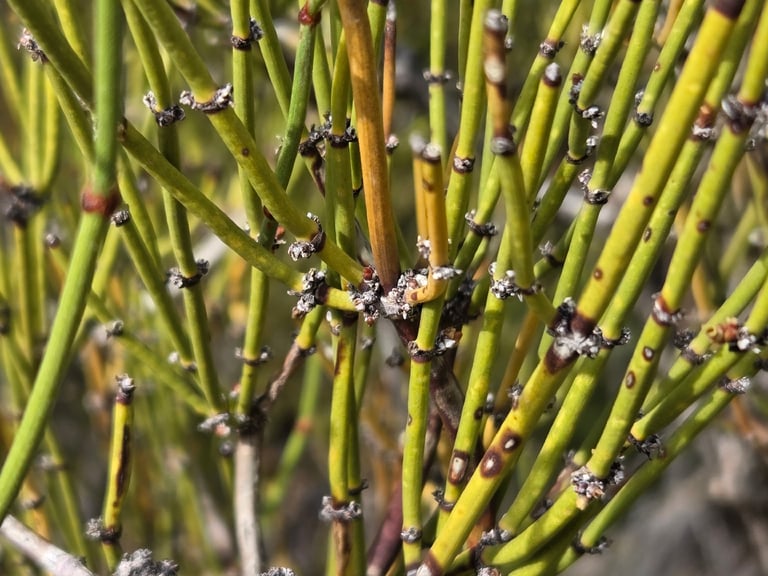
The clearest way to recognize Ephedra distachya is by its stems, not its leaves: the shrub produces slender, jointed, cane-like green stems that carry out photosynthesis, while the actual leaves are reduced to small, inconspicuous scales at the joints. This gives the plant a wiry, almost leafless appearance typical of many Ephedra species.
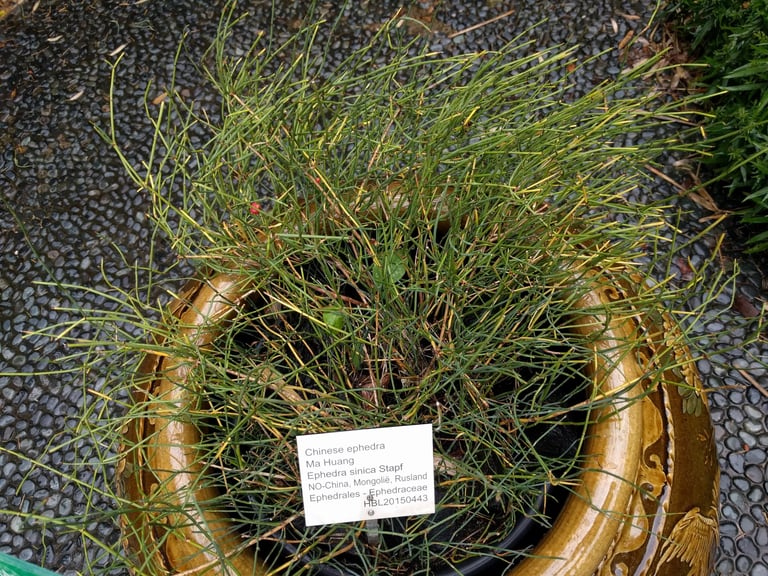
It is a small shrub, standing only about 25 to 50 centimeters tall, forming a low, spreading clump rather than an upright bush. Its modest stature and sprawling habit let it hug the ground in the exposed, windswept dune habitats where it typically grows.
Because the summary data available does not describe flower or cone details, sex differences, or seasonal color changes, these features cannot be confirmed here. What is documented is the plant's overall low, jointed-stem growth form, which remains its most reliable field mark across its range.
Distribution and Habitat
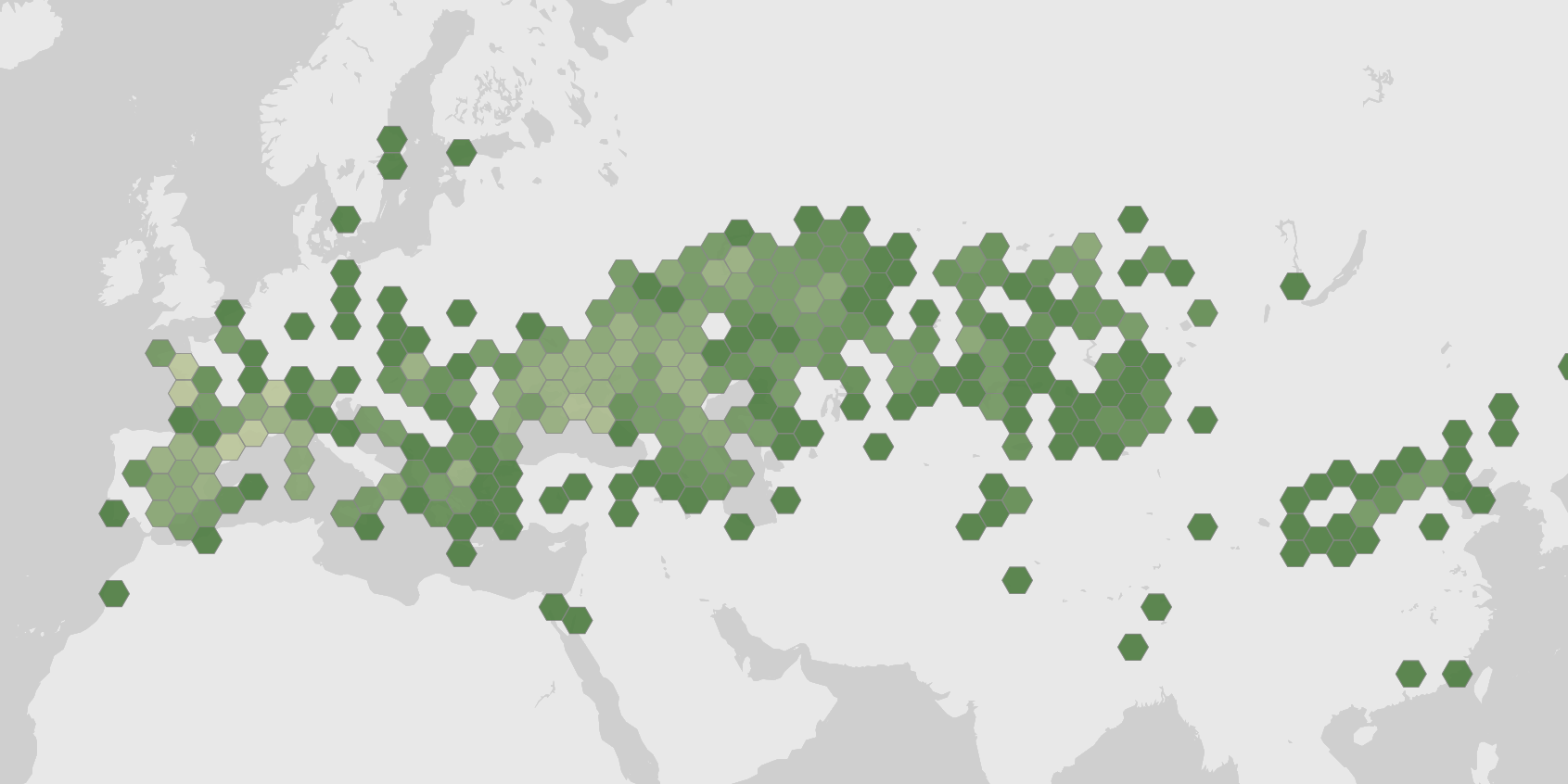
Ephedra distachya occurs across southern and central Europe and into western and central Asia, with a preference for open, sun-exposed ground. It is found on grasslands, sandy places such as grey dunes, and rocky mountain slopes, generally below 900 meters in elevation.
Grey dunes, its most characteristic habitat, are fixed and stable sand formations already covered in continuous vegetation, distinguishing them from shifting, bare coastal dunes. This suggests the species favors settled, semi-stable sandy substrates rather than active, wind-disturbed sand.
Monthly observation records show a strong seasonal pattern, with counts rising sharply from March into a peak around May through July before dropping off by late summer and remaining low through winter. This pattern most likely reflects when the plant is easiest to spot and record, rather than a change in how many plants exist, since these are presence observations and not a measure of abundance or population size.
Uses and Human Relationships
Ephedra distachya has a long history as a source of stimulant compounds, most notably ephedrine, an alkaloid present in all parts of the plant at concentrations of up to 3%. Ephedrine was first isolated from the plant by the chemist Nagayoshi Nagai in 1885 and has since been used medically as a stimulant, including to help control asthma.
Before its chemical isolation, dried branches of the plant were used under the name teamsters' tea to relieve acute muscular and rheumatic pain, and it holds a place in Ayurvedic tradition as an ingredient in cardio tonics. Some scholars identify the plant with soma, the legendary drug described in the Avesta and the Rig Veda, the sacred texts of the Zoroastrian and Hindu faiths respectively.
Archaeological evidence points to even older uses: alkaloid residues found in ceremonial artifacts from Mediterranean and Central Asian sites suggest ritualistic consumption of ephedra-containing mixtures dating back to the Bronze Age, around 2000 BCE.
Fun Facts
- Ephedra distachya belongs to a group of gnetophytes that has changed little in form since the Mesozoic era, with fossils of similar Ephedra-like plants found at sites across the Northern Hemisphere.
- These fossils link the species to arid-adapted plant communities that existed before many flowering plant groups had diversified.
- Alkaloid residues found in ceremonial artifacts from the Mediterranean and Central Asia suggest people were consuming ephedra-containing mixtures for their stimulant effects as far back as the Bronze Age, around 2000 BCE.
- One of its local names is somlatha, a name that echoes its long-suspected connection to soma, the stimulant drink described in ancient Zoroastrian and Hindu scripture.
Conservation status
- LC
- NT
- VU
- EN
- CR
Least Concern
Ecology
Habitat
- Coastal
- Shrubland
- Mountain
- Grassland
Growth habit
- Shrub