Ephedra sinica is not a flowering plant at all—it belongs to Gnetopsida, a lineage of gymnosperms that places it closer to conifers than to any blossoming shrub it might resemble at first glance.
The species grows across Mongolia, northern China, and Russia, favoring arid highland slopes, dry riverbeds, steppes, fields, and mountain sides. It belongs to the family Ephedraceae within the order Ephedrales, and the IUCN Red List currently classifies it as Least Concern.
Few plants carry as much weight in both botany and human history: Ephedra sinica is the source of ephedrine, a compound that has shaped medicine, sport, and law far beyond the arid steppes where the shrub itself quietly grows.
Identification and Appearance
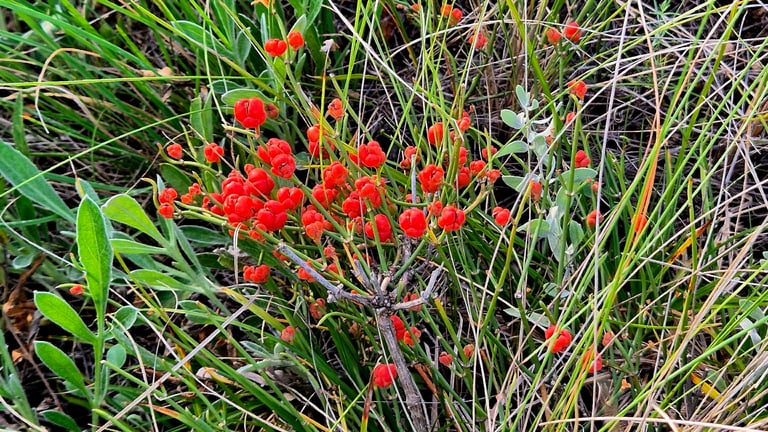
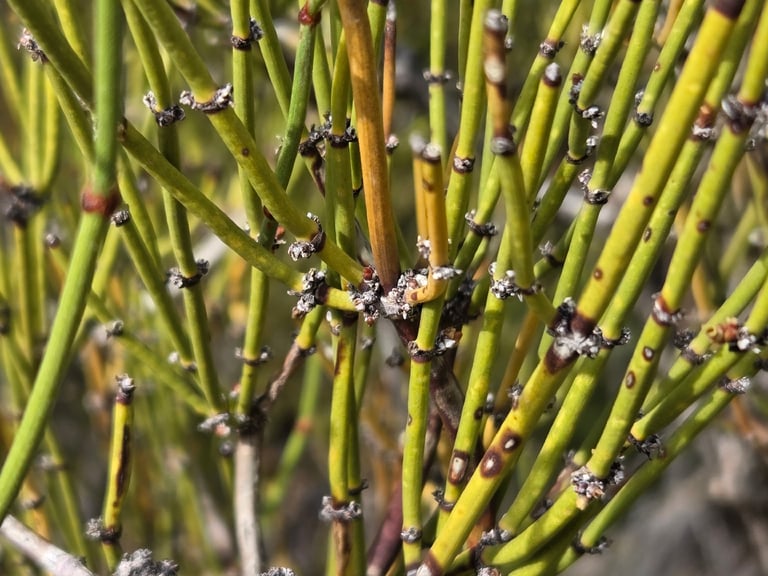
The clearest field mark is the plant's structure itself: thin, jointed, blue-green stems bearing only tiny, scale-like leaves rather than broad foliage. Crushed stems give off a strong pine-like odor and an astringent taste, the trait behind its Chinese name, ma huang, meaning "yellow astringent" or "yellow hemp."
Ephedra sinica is an evergreen shrub and a gymnosperm, placing it in the same broad group as conifers rather than among flowering plants. It is dioecious, meaning individual plants are either male or female, a trait that separates reproduction into distinct plants rather than combined flowers.
It grows on shrublands, in forests, and on mountainsides at elevations between 400 and 1,600 meters (1,300–5,200 feet), often rooting in dry, exposed ground rather than sheltered understory.
In traditional use, different parts of the plant are treated separately: the green stems and leaves are collected and dried for the drug known as ma huang, while the roots—called "ma huang gen"—are used for distinct purposes in Chinese medicine.
Distribution and Habitat
Ephedra sinica occupies waste and sandy ground, open plains, and mountain slopes, typically between 700 and 1,600 meters in elevation. These are harsh, exposed environments where few competing plants take hold.
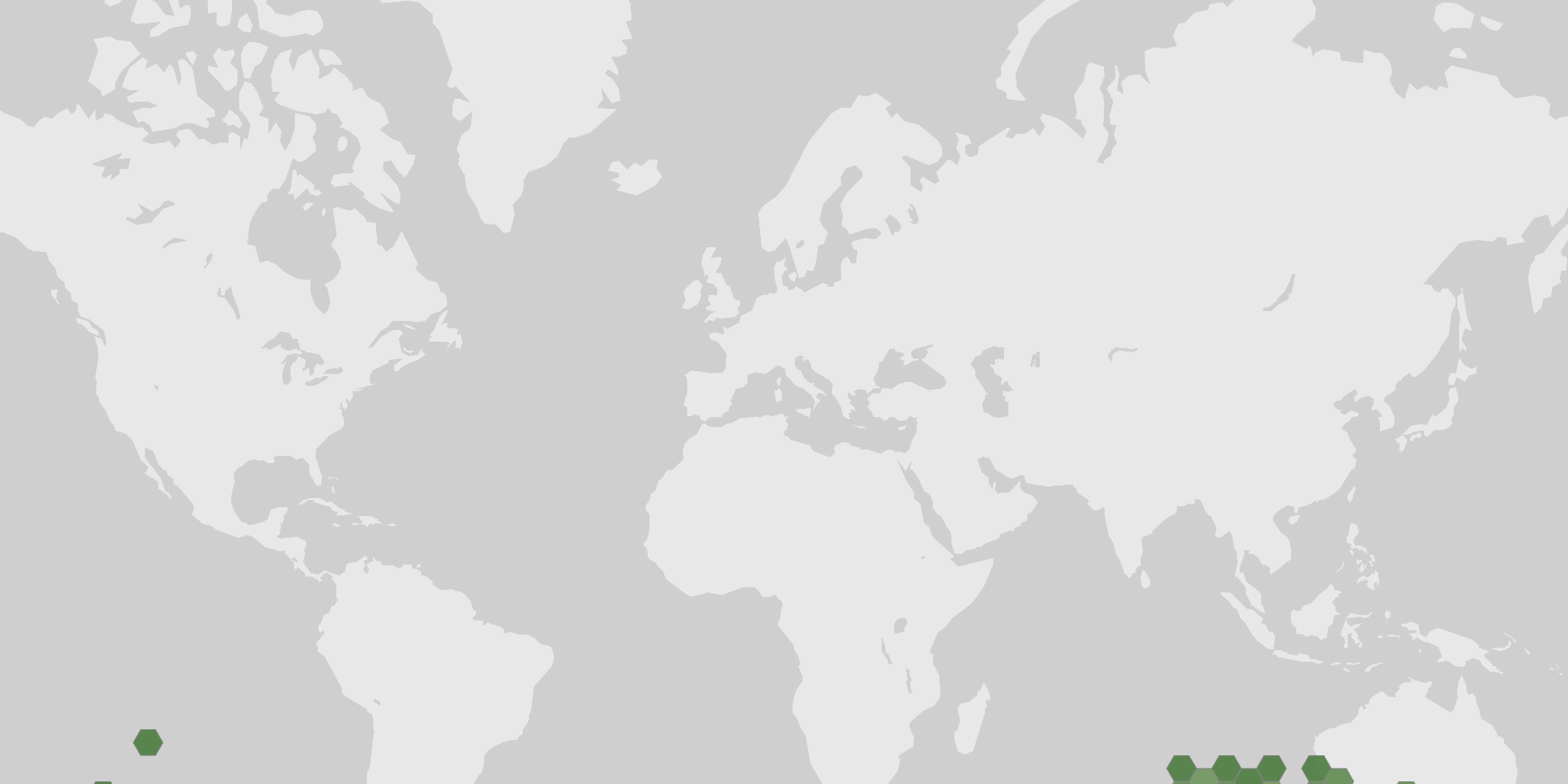
Observation records show a strong seasonal pattern, with sightings climbing sharply from May onward and peaking in June and July before tapering off by autumn. Since these figures reflect presence records rather than actual abundance or a full range map, they most likely track when observers are active in the field rather than when the plant itself is most common.
Uses and Human Relationships
Ephedra sinica has a documented history in traditional Chinese medicine stretching back roughly 5,000 years, prepared as the drug known as "Ma-huang" from its dried stems. Practitioners used it to treat allergies, nasal congestion, bronchial asthma, coughs, and flu, and it has also been proposed as a possible candidate for the soma plant described in Indo-Iranian religious tradition.
The plant's name traces to the Ancient Greek word for a shrub-like form, while "sinica" marks its Chinese origin. Its active alkaloid, ephedrine, was first isolated and characterized by the chemist Nagai in 1885, then largely forgotten until Chen and Schmidt rediscovered it in the early 1920s, launching its modern pharmaceutical use.
That same alkaloid carries real risk. Ephedrine is responsible both for the plant's traditional therapeutic effects and for its documented adverse effects, which can occur even at low doses over short periods.
Fun Facts
- Ephedra sinica has been proposed as a possible candidate for the soma plant described in ancient Indo-Iranian religious tradition, though this remains debated.
- Traditional Chinese medicine has used the plant for roughly 5,000 years under the name "Ma-huang."
- Its signature alkaloid, ephedrine, was first isolated in 1885 by the chemist Nagai, then forgotten for decades until Chen and Schmidt rediscovered it in the 1920s.
- Although listed as Least Concern with a stable population, the status of wild harvesting is unknown and could pose a significant, unmonitored threat.
- The plant contains a range of alkaloids beyond ephedrine, giving it a chemically complex profile for such a small shrub.
Conservation status
- LC
- NT
- VU
- EN
- CR
Least Concern
Ecology
Habitat
- Shrubland
- Mountain
- Grassland
- Desert
Growth habit
- Shrub