The rough horsetail earns its nickname, scouring rush, from stems so packed with silica that people have used them for centuries much like fine sandpaper.
It is an evergreen perennial herbaceous pteridophyte in the horsetail family Equisetaceae, native to Eurasia and Greenland, and it is assessed as Least Concern by the IUCN. Its jointed, reed-like stalks and ancient spore-based way of reproducing set it apart from almost every other plant a gardener or hiker is likely to encounter, making it a small living reminder of a much older branch of plant life.
Identification and Appearance
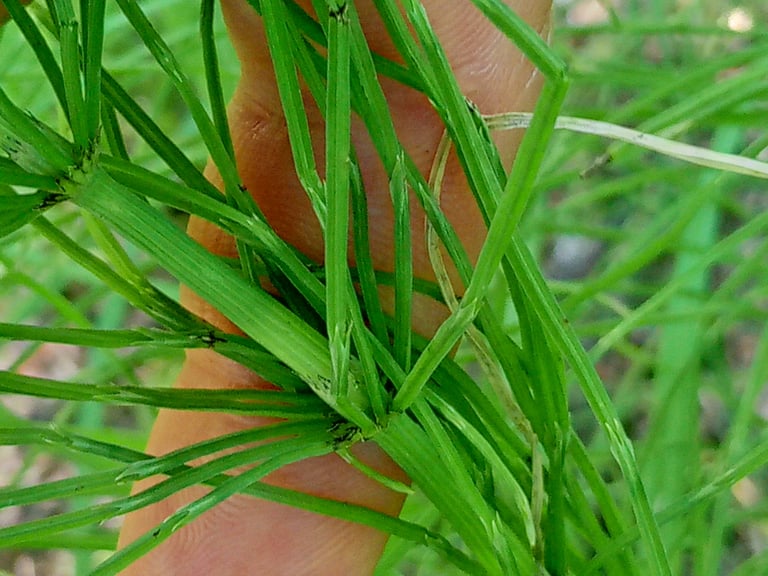
The single best way to recognize Equisetum hyemale is by its stiff, hollow, jointed stems, ridged lengthwise and rough enough to feel gritty against the skin. Each stem is medium to dark green and stands 30 to 100 centimeters tall across most of its native Eurasian range, though plants in Australia can reach 2 meters with stems up to 15 millimeters thick. The stems are 3 to 6 millimeters thick in typical form, rarely branched, and marked by 10 to 30 conspicuous ridges impregnated with silica.
At each joint, tiny leaves fuse into a narrow black-green sheath that wraps the stem like a band, one of the clearest identifying marks on close inspection. The plant produces no flowers or seeds; like other pteridophytes, it reproduces by spores, though in Australia it more often spreads from rhizome or tuber fragments than from spore germination.
Color and persistence shift with climate: stems stay green through winter in milder regions but die back and become deciduous where winters are cold. The plant typically grows in dense, spreading colonies under full to partial sun, a colonial habit that itself helps distinguish it from more scattered horsetail relatives.
Distribution and Habitat
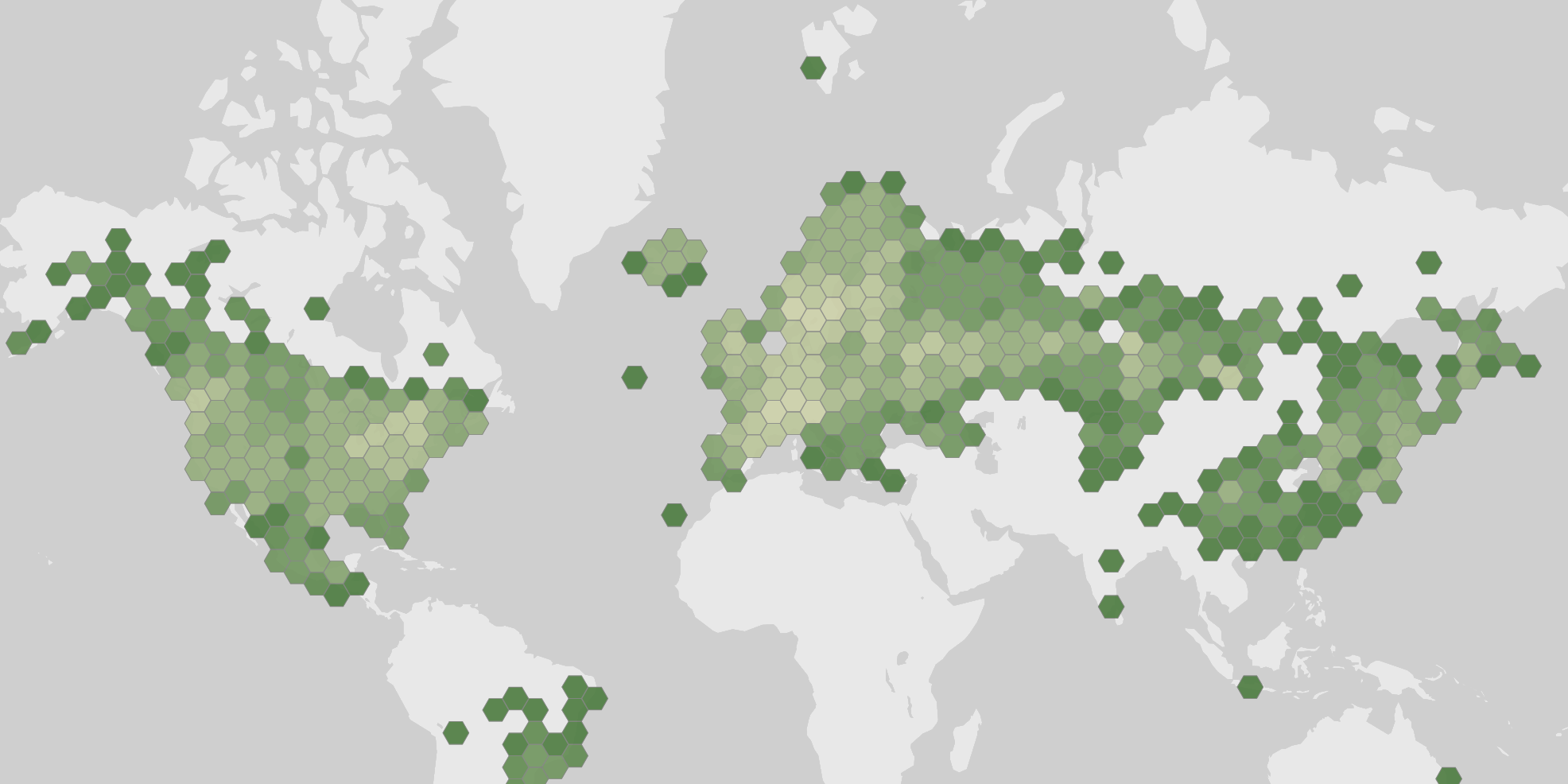
Equisetum hyemale is native to Iceland, Greenland, and central and northern Eurasia, including Kamchatka and Japan, and it has also been introduced to Tasmania. Within this range it forms clonal colonies in consistently moist, or mesic, ground, often rooted in heavy clay or sandy soils.
Riparian zones along rivers and streams are a core habitat, where the plant tolerates occasional flooding. It also grows in lime-rich upland flushes and seeps, where its presence can signal groundwater even when no flow is visible, as well as in moist forest and woodland openings, lake and pond shores, ditches, marshes, and swamps. Elevation ranges from sea level up to 2,000 meters.
Monthly GBIF observation counts rise sharply from a low near 1,700 to 1,900 in winter months to a peak above 28,000 to 29,000 in June, July, and August, before falling again by autumn. This pattern likely reflects when the plant is most visible and most often recorded, not a change in how much of it exists, so it should be read as a seasonal presence signal rather than a measure of abundance.
Uses and Human Relationships
In Japan, boiled and dried stems of Equisetum hyemale have long served as a traditional polishing material, working much like fine-grit sandpaper on wood and other surfaces. Musicians have put the same rough stems to a different craft use, shaping the reeds of instruments such as clarinets and saxophones.
The plant is also widely grown as an ornamental. Its tight, vertical stems make it a favored "icon plant" in contemporary Modernist and East Asian garden design, well suited to narrow spaces between walkways and walls or on small balconies. Gardeners also plant it in submerged pots as an accent in ponds and other water features.
In the nursery trade it is sometimes sold under the names "barred horsetail" or "Equisetum japonicum," labels that can mislead buyers since the plant differs in appearance from the true Japanese horsetail, Equisetum ramosissimum var. japonicum.
Fun Facts
- Historical accounts describe rough horsetail being cultivated in Holland for a role in coastal defense work.
- Ancient cultures, including the Romans and various Native American tribes, valued horsetail for treating ailments long before modern botanists studied the plant.
- Nurseries sometimes sell it under the name "Equisetum japonicum" or "barred horsetail," even though it looks different from the true Japanese horsetail, Equisetum ramosissimum var. japonicum.
- What was once treated as a North American subspecies of Equisetum hyemale is now recognized as its own species, Equisetum praealtum.
Conservation status
- LC
- NT
- VU
- EN
- CR
Least Concern
Ecology
Habitat
- Wetland
- Forest
- Woodland
- Freshwater
Growth habit
- Fern