Bifid hemp-nettle, Galeopsis bifida, is an annual plant of the mint family, Lamiaceae. It is native to Europe and Asia, but it now grows in Canada and in the northeastern and midwestern parts of the United States.
The plant goes by many common names, including bifid hemp-nettle, split-lip hemp-nettle, common hemp-nettle and large-flowered hemp-nettle. The genus name Galeopsis means weasel-like, a reference to the shape of the flower's corolla.
It is often confused with other members of the mint family, such as Mentha arvensis, Dracocephalum parviflorum and Stachys pilosa.
Identification and Appearance
The most useful field mark is the flower: a two-lipped, bell-shaped corolla in purple, white or pink, with the upper lip holding one lobe and the lower lip three lobes.
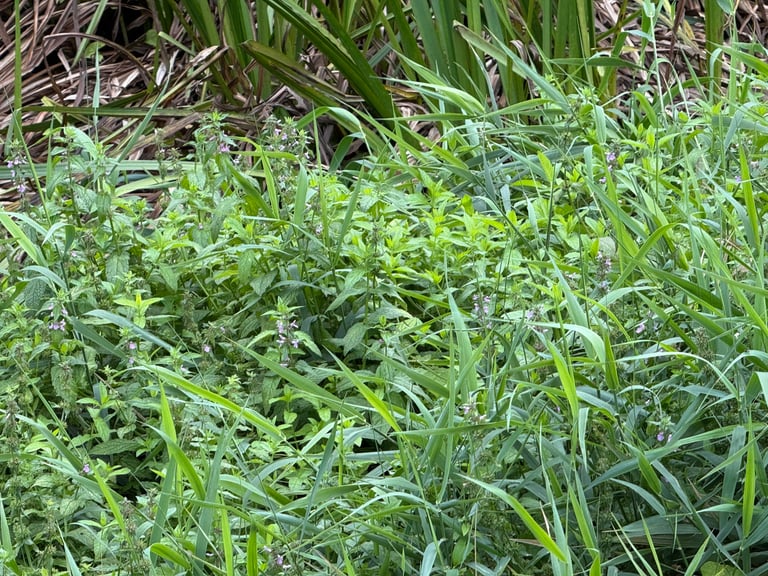
The plant can grow up to 1 meter high. Its stem is swollen just below the leaf nodes, and both stem and leaves are hairy. The leaves are simple, opposite and ovate, with serrate margins, and they measure 1 to 5 inches long. They are hairy on both sides.
The flowers are about one half to three fourths of an inch across and sit in terminal clusters in the leaf axils. Each flower has four stamens, two long and two short, and a single style with a two-lobed stigma.
The fruit is a brown schizocarp.
Distribution and Habitat
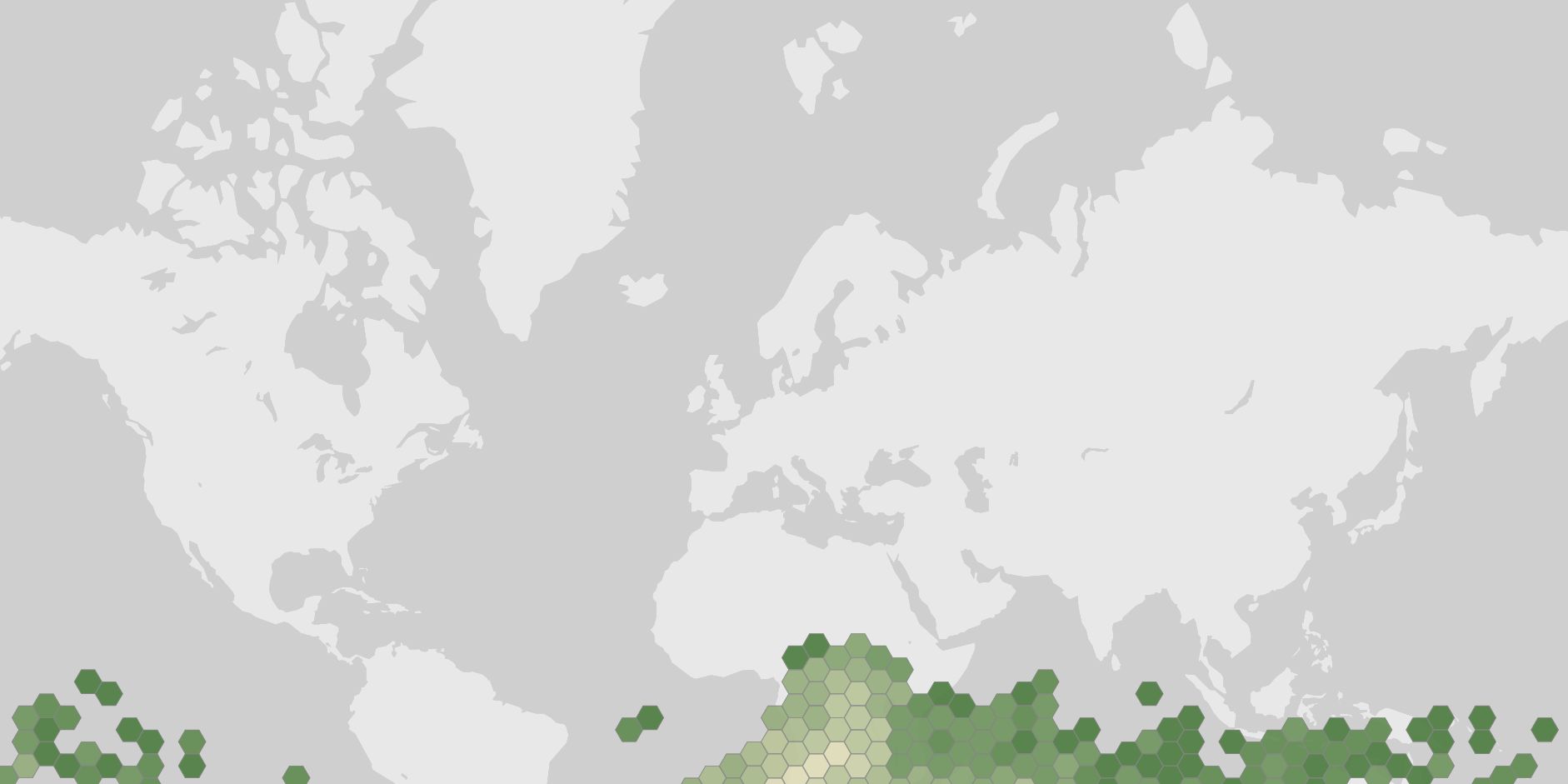
Bifid hemp-nettle is native to Europe and Asia. In the British Isles it is mainly found in Wales and Scotland. It occurs throughout Canada and the northeastern and midwestern United States, and it has been introduced to Alaska.
The plant was also introduced to parts of New Zealand and the Canary Islands.
It grows mostly on disturbed ground, including roadsides, gardens, agricultural land and waste areas. It also grows on forest margins, field margins, grasslands, open thickets and wet heaths, and sometimes in woods. It can be found from sea level up to 4,000 meters.
It needs moist soil and tolerates a range of acid and basic soils, and it uses limited nutrients. In dense stands it forms a mid-level layer that dominates the grasses and low herbs.
Growth and Form
Bifid hemp-nettle is an annual herb that can reach 1 meter in height. It completes its life cycle within a single year.
The stem is swollen below the leaf nodes, and the whole plant is covered in fine hairs.
Ecology and Relationships
Bifid hemp-nettle is self-pollinating, and bumblebees and hoverflies visit its flowers. Among the bumblebees, Bombus pascuorum, Bombus festivus and Bombus separandus are the most frequent visitors, and the hoverfly Episyrphus balteatus is also a regular visitor. Bees of the genus Anthophora and other bumblebees visit less often.
Birds are the main consumers of its seeds. Finches and buntings, including the common redpoll and the greenfinch, feed on them, along with larks, partridges and pigeons. Ducks and geese also eat the plant. Beetles and true bugs feed on it, and moth caterpillars eat it in smaller numbers.
Each plant can produce up to 2,800 seeds, which can stay dormant in the soil for several years. Seeds are carried away when mammal fur brushes against them.
Photos
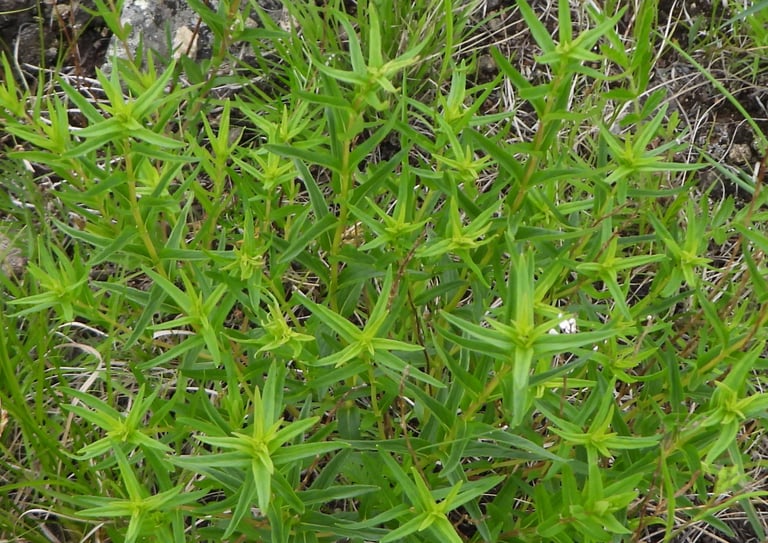
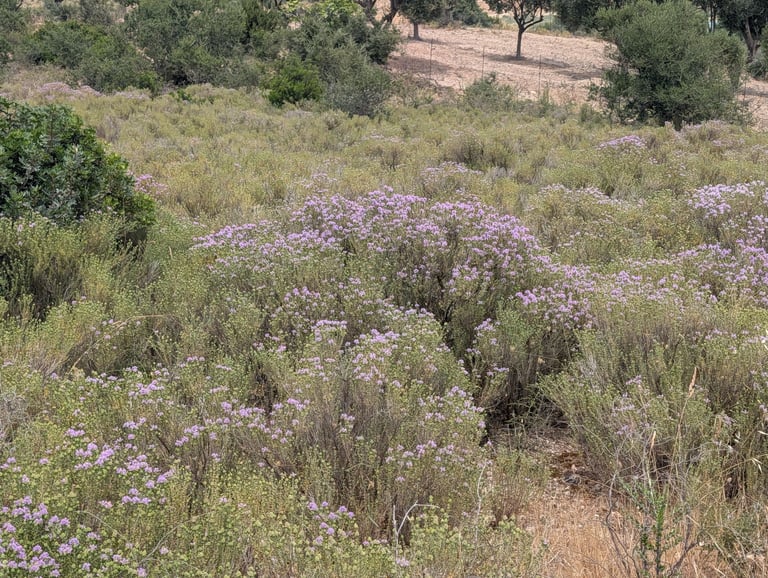
Photographs from via iNaturalist, licensed under CC0 1.0., by Mary E. Macaulay via iNaturalist, licensed under CC BY 4.0., by Carter Ertel via iNaturalist, licensed under CC BY 4.0., by Екатерина Гущина via iNaturalist, licensed under CC BY 4.0., by Eric Lamb via iNaturalist, licensed under CC BY 4.0., and by Наталья Пикалова via iNaturalist, licensed under CC BY 4.0., credited on each photo.
Ecology and classification
Growth habit
- Herb
Classification
- Phylum
- Tracheophyta
- Class
- Magnoliopsida
- Order
- Lamiales
- Family
- Lamiaceae
- Genus
- Galeopsis
- Species
- Galeopsis bifida
Sources
- GBIF Species names and classification
- iNaturalist Photos
- Wikidata Common names and conservation status
- Wikipedia Summary extract
- Encyclopedia of Life Habitat, diet and behavior traits
- Plants of the World Online Native range, life form and climate (WCVP)
- USDA Plants US plants: growth habit and growing conditions
- GloBI What it eats, what eats it, parasites and pollinators
- trophiCH
- DoPI
- Schwarz et al. 2021
- EuPPollNet