Long mistaken for four separate species, Galerina marginata turned out to be a single, widespread fungus once mycologists compared its DNA. Before 2001, G. autumnalis, G. oregonensis, G. unicolor, and G. venenata were classified as distinct species based on subtle differences in habitat and cap stickiness, but phylogenetic analysis proved they are all the same organism wearing different masks.
This is a mushroom-forming fungus in the family Hymenogastraceae, order Agaricales, within the class Agaricomycetes and phylum Basidiomycota. Known by several common names — funeral bell, deadly skullcap, autumn skullcap, and deadly galerina — it belongs to a genus notorious for producing some of the most dangerous toxins found in the fungal kingdom.
What makes Galerina marginata worth understanding is not its appearance, which is unremarkable, but the taxonomic detective work that unified its many aliases and the lethal chemistry hidden inside an otherwise ordinary-looking mushroom.
Fruiting Body and Identification
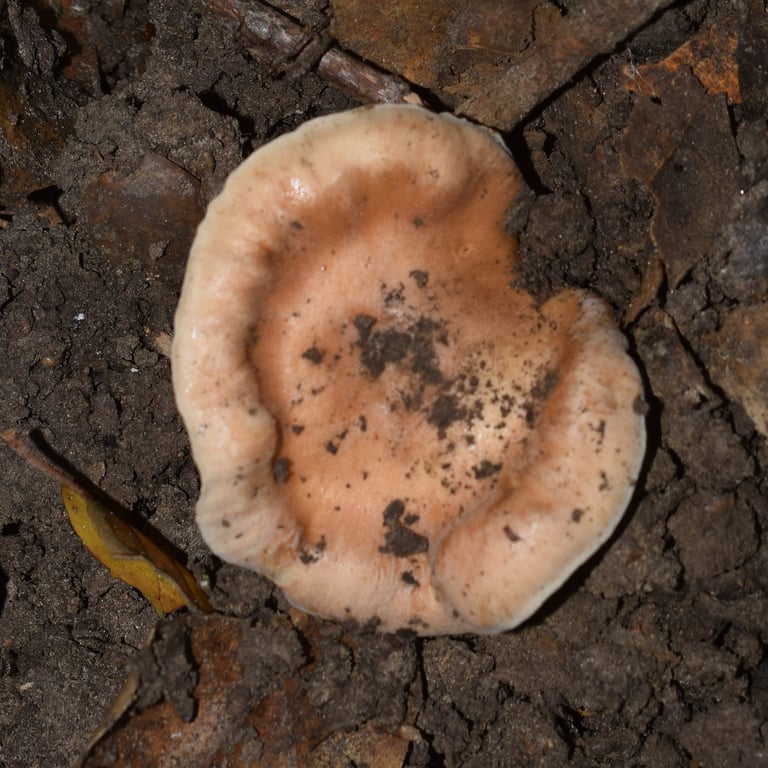
The most reliable clues to identifying Galerina marginata lie in its combination of a slender ringed stem, rusty-brown spore print, and a cap that shifts color with moisture. The cap measures 1 to 6 centimeters across, starting convex or broadly conical with edges curved inward against the gills, then flattening with age and sometimes developing a central bump, or umbo.
Cap surface texture varies from viscid to merely moist depending on the population, but it is always hygrophanous, shifting from pale to dark ochraceous-tawny at the center and yellow-ochraceous at the margin when young, fading to dull tan as it dries. When wet, the cap becomes translucent enough that the outlines of the gills show through as faint striations. The flesh is thin, pliant, pale brownish-ochraceous to nearly white, with an odor and taste that ranges from faintly to strongly farinaceous, reminiscent of fresh flour.
The gills are narrow, crowded, and broadly attached to nearly running down the stem (adnate to decurrent), colored pallid brown when young and turning tawny at maturity; shorter gills called lamellulae are scattered among the full-length ones. The stem runs 2 to 8 centimeters long and 3 to 9 millimeters thick, staying roughly the same width or thickening slightly toward the base; it starts solid and becomes hollow from the bottom up with age. A membranous ring sits on the upper stem, whitish or light brown at first but often staining rusty-brown once spores fall on it, though it can be lost entirely in older specimens. Below the ring the stem is brown, darkening to reddish-brown or blackish-brown at the base, with a thin coating of pale fibrils that eventually disappears without leaving scales.
Spores measure 8 to 10 by 5 to 6 micrometers, slightly asymmetrical in profile and egg-shaped from the front, with a warty, wrinkled surface and a distinctive plage — a smooth cap-like patch described as resembling wrinkled shrink-wrap over one end of the spore. The spore print is rusty-brown. Microscopic features such as four-spored basidia and thin-walled, wavy-necked cystidia along the gill edges and faces support identification under a microscope, but none of these features can be used to judge the mushroom safe to eat.
Distribution and Habitat
Galerina marginata is a saprobic fungus that breaks down wood, drawing nutrients from dead and decaying plant material rather than living hosts. It carries most of the major classes of enzymes needed to dissolve plant cell-wall polysaccharides, which has made it a model organism for studying wood decay, and its genome has been targeted for sequencing by the U.S. Department of Energy's Joint Genome Institute.
Fruiting bodies typically grow on or near the wood of conifers, though they are also found on hardwoods, and sometimes appear to be growing directly from soil when the wood beneath is buried. They occur alone but more often in groups or small clusters, fruiting from summer into autumn.
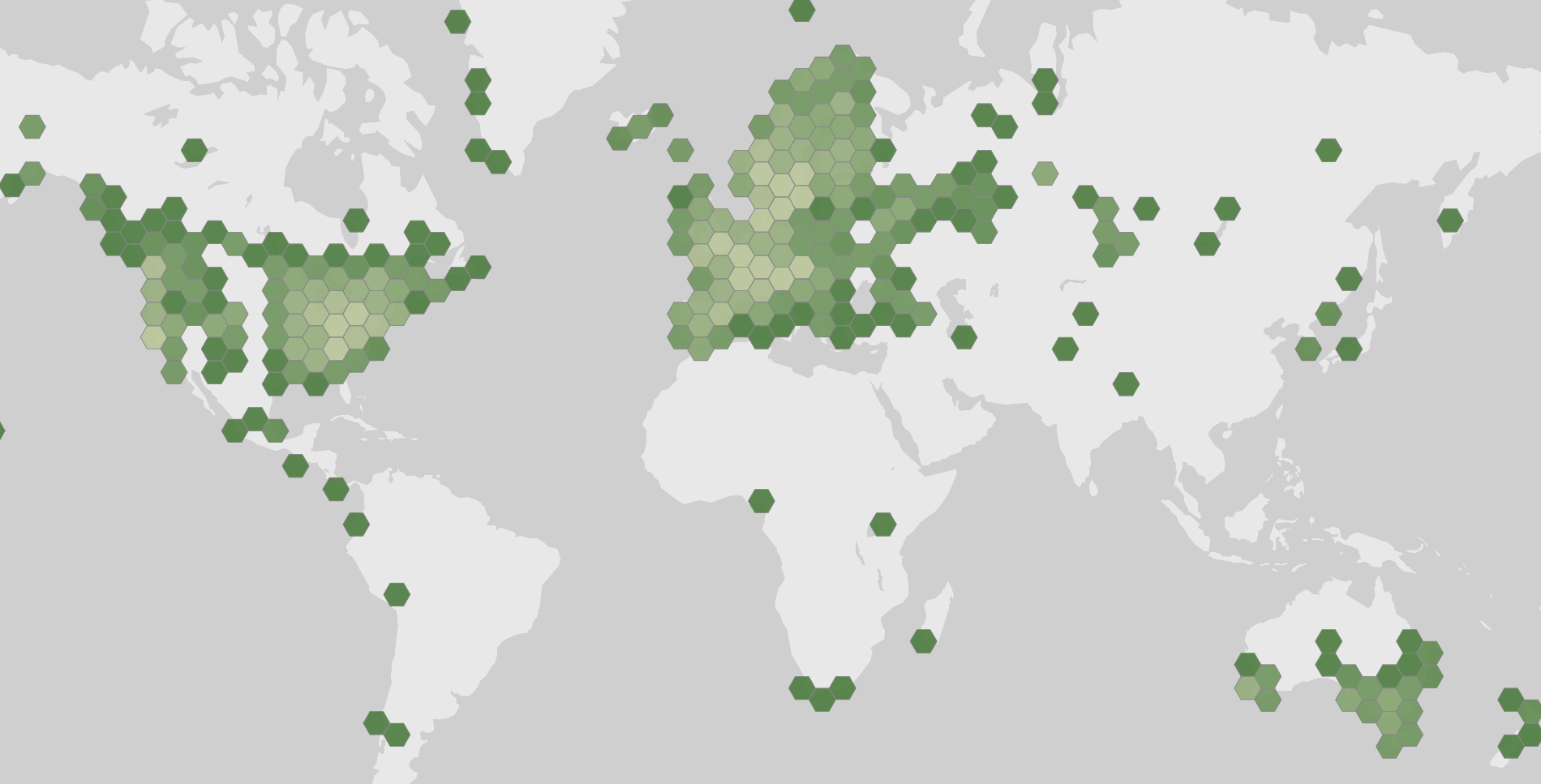
The species is widespread across the Northern Hemisphere, recorded in North America, Europe, Japan, Iran, continental Asia, and the Caucasus. In North America its range stretches from the boreal forests of Canada and subarctic Labrador south to Jalisco, Mexico. It has also been found in Australia and even in Antarctica. Observation records collected through citizen-science platforms show a strong seasonal skew, with the majority of reports concentrated between August and October — consistent with its known late-summer to autumn fruiting pattern — though these figures reflect where and when observers happened to record the fungus rather than any measure of its true abundance.
Uses and Cultural History
Galerina marginata is not eaten or used as food; what little human history it has is written mostly in poisoning reports. Its toxicity has been documented for over a century — Charles Horton Peck reported a human poisoning attributed to the fungus (then classified as G. autumnalis) in 1912, and a fatal case linked to G. venenata occurred in 1954. Between 1978 and 1995, ten more cases tied to amatoxin-containing Galerina species appeared in the scientific literature, including three in Europe (two from Finland, one from France) and seven in North America, two of which — both caused by G. venenata in Washington state — were fatal.
Chemically, Galerina marginata has been valuable to toxicology research rather than to cooks or herbalists. It is thought to be the only amatoxin-producing fungus that continues to manufacture its toxins, α-amanitin and γ-amanitin, when grown as mycelium in laboratory liquid culture, a trait that has let researchers study amatoxin biochemistry without needing wild-collected fruiting bodies.
Beyond toxicology, cultural references to this mushroom are sparse and often folded into broader European traditions surrounding fungi that emerge near oak trees, which in Celtic mythology were regarded as powerful forest entities whose mushrooms were sometimes seen as spiritual conduits — though such associations are symbolic rather than practical uses of the species itself.
Fun Facts
- Because it looks like an unremarkable "little brown mushroom," Galerina marginata is often cited as a cautionary symbol for foragers, illustrating how deadly species can hide among harmless-looking finds.
- Field guides covering the wood-inhabiting fungi of the Northeastern United States include it specifically to help collectors distinguish poisonous species growing on tree wood from edible ones.
- Genetic study proved that four previously named species (G. autumnalis, G. oregonensis, G. unicolor, G. venenata) are one and the same fungus, a rare case of taxonomic consolidation in the genus Galerina.
Ecology
Habitat
- Forest