Despite its cheerful nicknames "poison pie" and "fairy cakes," Hebeloma crustuliniforme is anything but a treat. This gilled mushroom is toxic, causing gastrointestinal illness in anyone who mistakes its unassuming, buff-colored cap for something edible.
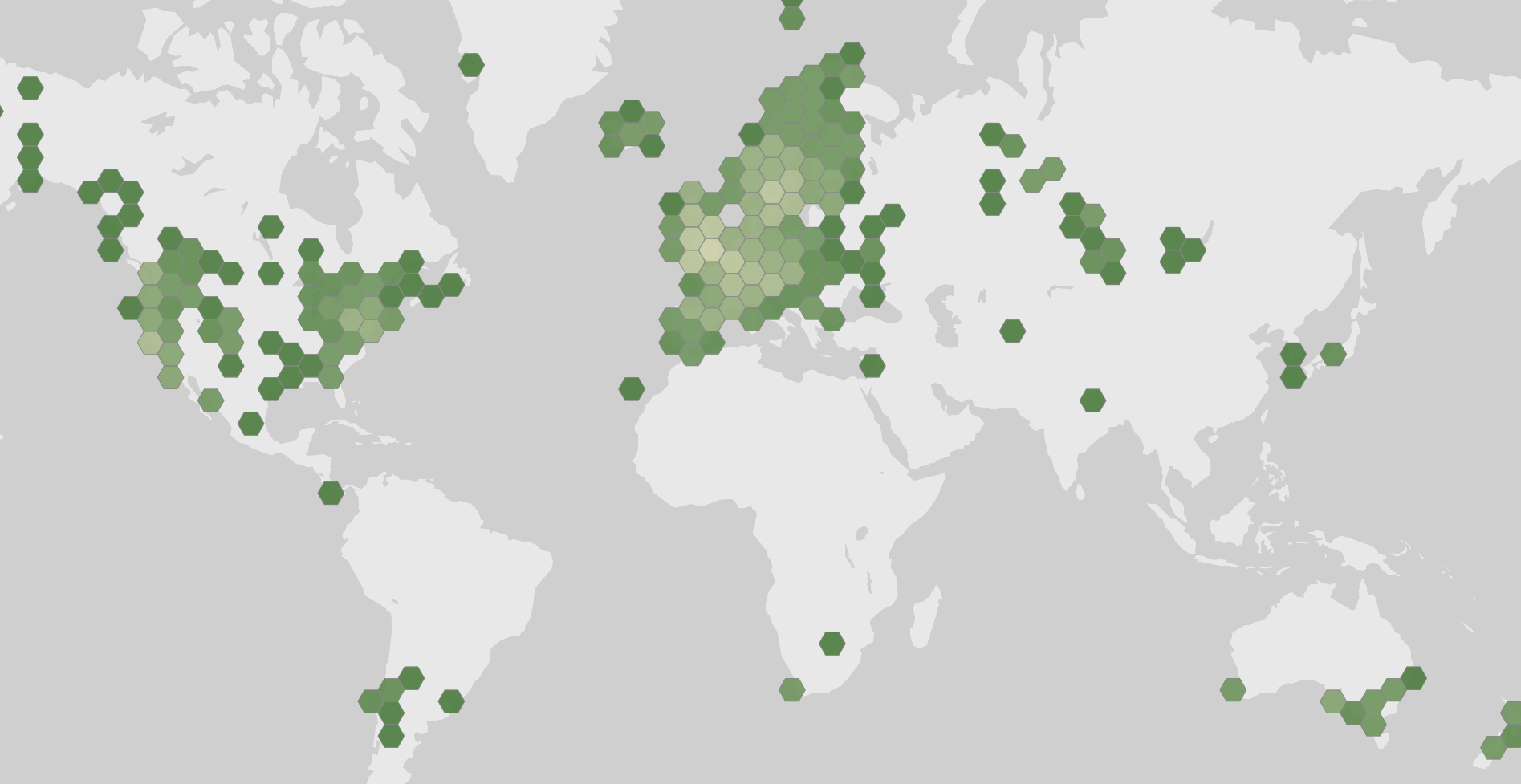
Belonging to the class Agaricomycetes, order Agaricales, and family Hymenogastraceae, H. crustuliniforme is a basidiomycete fungus that produces classic gilled mushrooms. It grows across both the Old and New World, appearing throughout most of Europe and on both coasts of North America, with rarer sightings in Victoria, Australia.
Its wide distribution and frequent fruiting in open woodland make it one of the more familiar members of its genus, even though familiarity here comes with a warning rather than an invitation to the table.
Fruiting Body and Identification
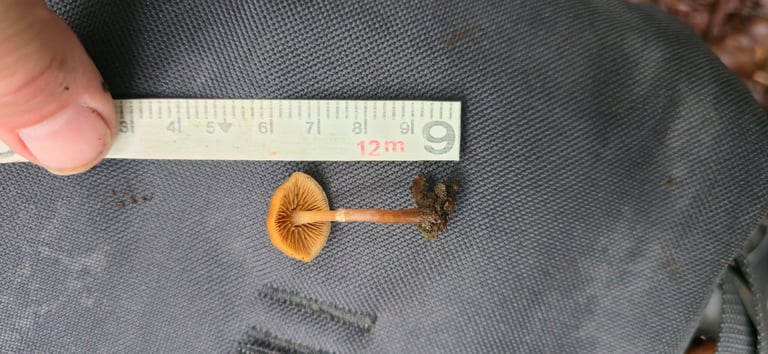
The most reliable identifying features of Hebeloma crustuliniforme are its buff-to-beige cap, radish-like smell, and bitter taste. The cap measures 3 to 11 centimeters across, starting convex and becoming umbonate with an uplifted margin as the mushroom matures.
The gills are crowded and either adnate or notched, pale at first but browning with age. In moist conditions they become beaded with droplets, a feature that helps distinguish fresh specimens. The stipe stands 4 to 13 centimeters tall and 0.5 to 1.5 centimeters thick, widening toward the base, and never develops a ring.
The flesh is thick and white, marked by a distinctive radish-like odor and bitter taste. Spores are brown, elliptical, and slightly rough in texture, a detail visible only under magnification.
Distribution and Habitat
Hebeloma crustuliniforme has been recorded in 18 countries, spanning most of Europe and both coasts of North America, with occasional sightings in Victoria, Australia. It favors open woodland and heathland, where it fruits mainly in summer and autumn.
In regions with milder climates, such as California, the species can also appear in winter. GBIF presence observations show a sharp seasonal pattern, with counts climbing from a few hundred in midsummer to over 7,000 in what appears to be early autumn before tapering off through winter. These figures reflect observation frequency rather than actual abundance or population size, but they do suggest that late summer into autumn is when this mushroom is most often encountered.
Uses and Cultural History
Hebeloma crustuliniforme has not played a significant role in historical cultural practices, mythology, or traditional medicine, a gap directly tied to its toxic and unpalatable nature. Unlike many fungi prized for food or folklore, this species offers little to recommend it beyond scientific interest.
Its primary interaction with humans is as a hazard rather than a resource. Consumption causes mild to severe gastrointestinal upset, including vomiting, diarrhea, and colicky abdominal pain that develops several hours after eating it.
Fun Facts
- Its common names, "poison pie" and "fairy cakes," sound harmless, but the mushroom itself is toxic.
- Unlike many fungi, it has no documented role in mythology, folklore, or traditional medicine, likely because of its bitter taste and toxicity.
- It has been recorded in 18 countries, spanning most of Europe, both coasts of North America, and occasionally Victoria, Australia.
- Naturalist David Arora described it as "by far" the most common species of Hebeloma in California.
Ecology
Habitat
- Woodland
- Shrubland