A single species stocks nearly every supermarket produce aisle in the world, sold under names as different as button, cremini, and portobello, yet all three are the same organism at different stages or color forms.
Agaricus bisporus is a basidiomycete fungus native to grasslands across Eurasia and North America. It now grows commercially in more than 70 countries, making it one of the most consumed mushrooms on the planet.
Its familiarity in kitchens can obscure an interesting history: the pale mushroom now standard in grocery stores began as a chance mutation found on a farm growing the ordinary brown form, a story explored further in this profile.
Fruiting Body and Identification
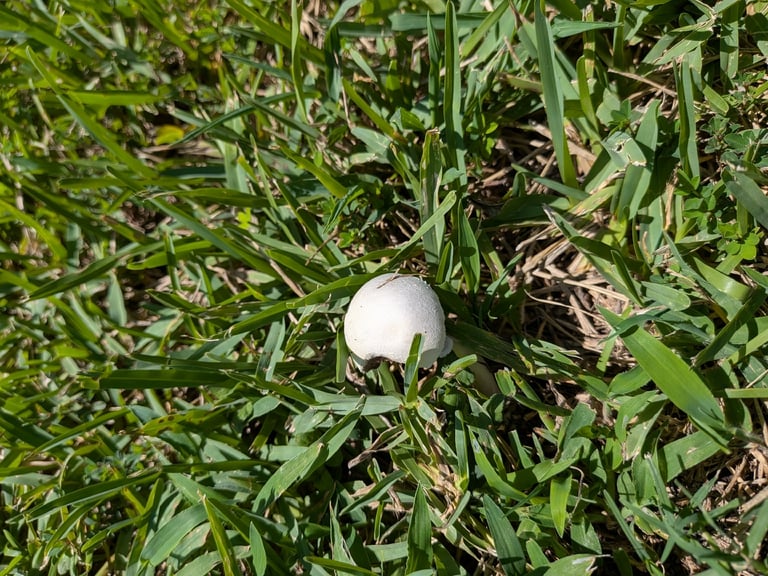
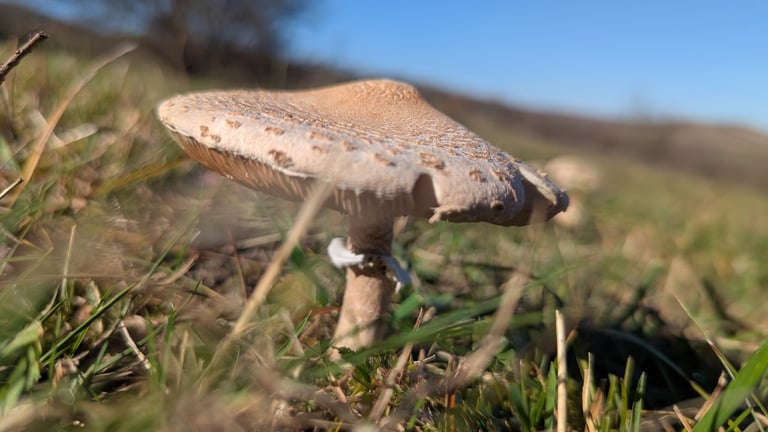
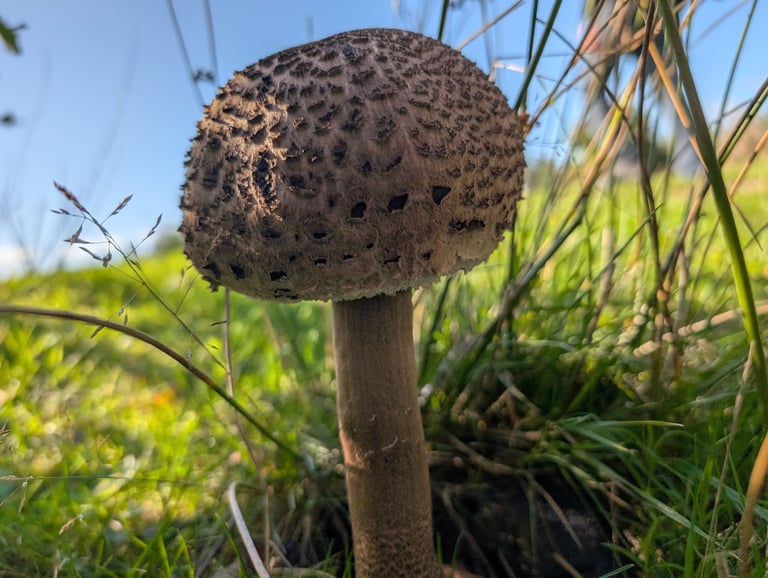
The most reliable identifying features are the cap color and gill progression rather than size alone, since cultivated forms vary from white to deep brown. In the wild form, the cap is pale grey-brown with broad, flat scales over a paler background, fading toward the margin. It starts hemispherical and flattens with age, typically reaching 5 to 10 centimeters across.
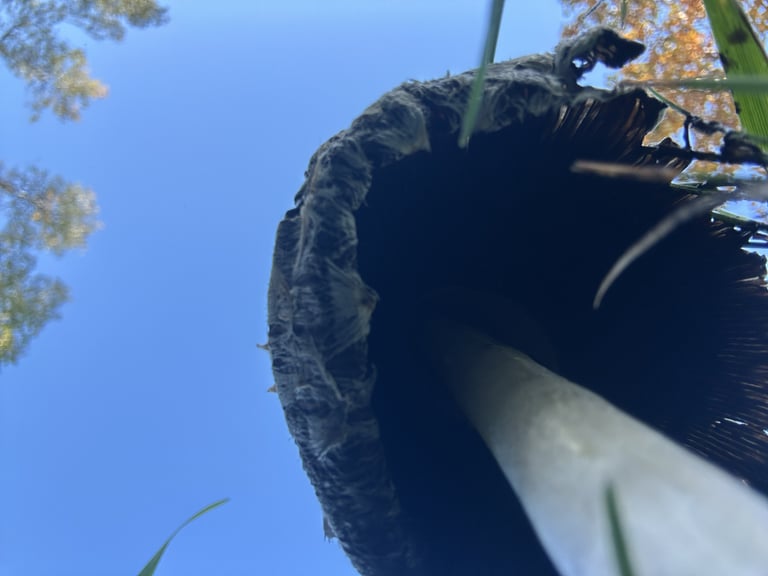
The gills are narrow, crowded, and free from the stem. They begin pink, shift to red-brown, and finally turn dark brown with a whitish edge produced by microscopic cheilocystidia. The cylindrical stipe grows up to 6 centimeters tall and 1 to 2 centimeters wide, carrying a thick, narrow ring that may show streaking on its upper surface. The firm white flesh bruises a pale pinkish-red when cut or damaged. The spore print is dark brown, with oval to round spores measuring roughly 4.5–5.5 by 5–7.5 micrometers; most basidia bear two spores each, though four-spored varieties have been documented in the Mojave Desert and the Mediterranean.
Distribution and Habitat
Agaricus bisporus occurs widely across grasslands, favoring rich soil, compost, and manure, and it is frequently found in association with cypress trees. Its natural range spans Eurasia and North America, though its cultivation across more than 70 countries has extended its presence far beyond that native range.
Observation records show fruiting from autumn into winter, and monthly counts follow that pattern: figures rise through spring and summer before peaking in September at 450 recorded sightings, with August and October also elevated. These numbers reflect presence observations rather than actual abundance or a complete range map, so the pattern should be read as a seasonal signal rather than a population count.

Uses and Cultural History
Commercial cultivation of Agaricus bisporus was first scientifically described by the French botanist Joseph Pitton de Tournefort in 1707, building on earlier observations by agriculturist Olivier de Serres that transplanting mushroom mycelium could propagate new growth. Early growers depended on unpredictable methods, digging up wild mycelium after good flushes and replanting it in composted manure beds or compressed "bricks" of litter and manure, a practice that often introduced pathogens and unreliable yields. That changed in 1893, when the Pasteur Institute in Paris produced sterilized, pure-culture spawn suitable for reliable cultivation on composted horse manure.
The pale mushroom now standard in stores has a specific origin: in 1925, a white mutant was discovered growing among a bed of brown mushrooms at the Keystone Mushroom Farm in Coatesville, Pennsylvania. Farm owner and trained mycologist Louis Ferdinand Lambert propagated the mutation, and its cleaner appearance made it commercially popular, much as white bread once was seen as more appealing. Most cream-colored mushrooms sold today descend from that single chance discovery.
Beyond the plate, Agaricus bisporus is noted for reducing contaminants in wastewater through its decomposition activity, and for antimicrobial and antioxidant properties associated with the edible fruiting body. Global production reached 48 million tonnes in 2022, with China responsible for about 94 percent of that total and Japan and the United States as secondary producers.
Fun Facts
- The white button mushroom sold in most stores today descends from a single mutant specimen found growing among brown mushrooms at a Pennsylvania farm in 1925.
- China produced roughly 94 percent of the world's 48 million tonnes of cultivated mushrooms in 2022, dwarfing secondary producers like Japan and the United States.
- Button, cremini, and portobello are not different species but the same Agaricus bisporus at different maturity stages or color forms.
- The species has been studied for its ability to reduce contaminants in wastewater through its natural decomposition process.
- Reliable, pathogen-free cultivation only became possible in 1893, when the Pasteur Institute in Paris developed sterilized spawn for growing on composted manure.
Ecology
Habitat
- Woodland
- Grassland
- Disturbed Ground