The field mushroom is one of the most widely eaten wild mushrooms in the world, and its close relative, the cultivated Agaricus bisporus, is the button mushroom found in nearly every grocery store. Agaricus campestris, known in North America as the meadow mushroom, is a gilled fungus in the family Agaricaceae.
It carries an IUCN status of Least Concern and turns up in pastures, lawns, and other grassy places across Europe, Asia, north Africa, Australia, New Zealand, and North America. Its familiarity and resemblance to both prized edibles and deadly toxic species make it a mushroom worth knowing well before ever considering it for the table.
Fruiting Body and Identification
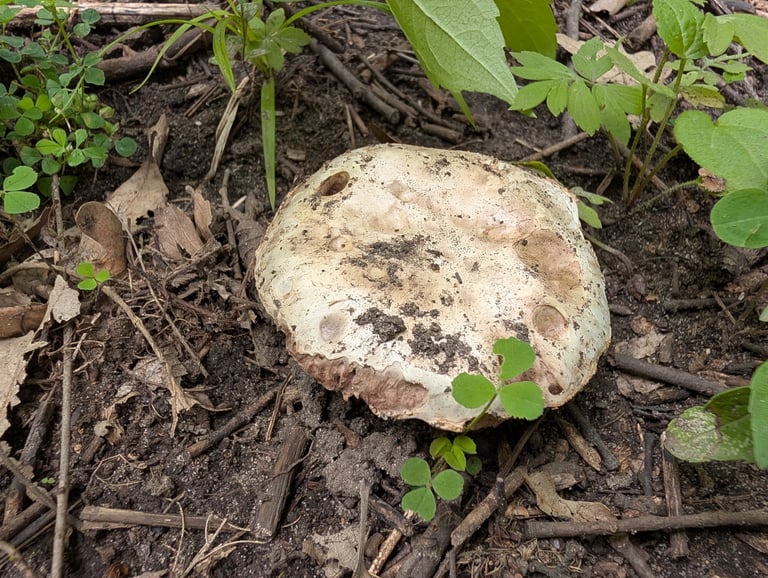
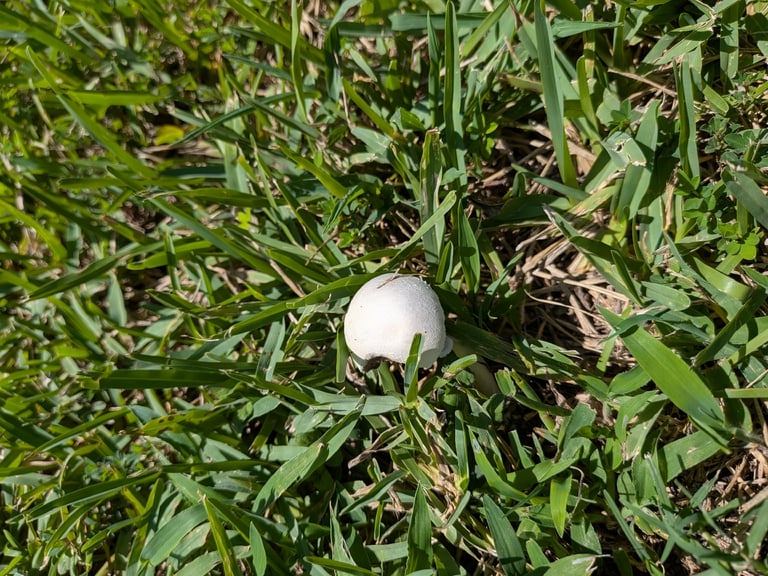
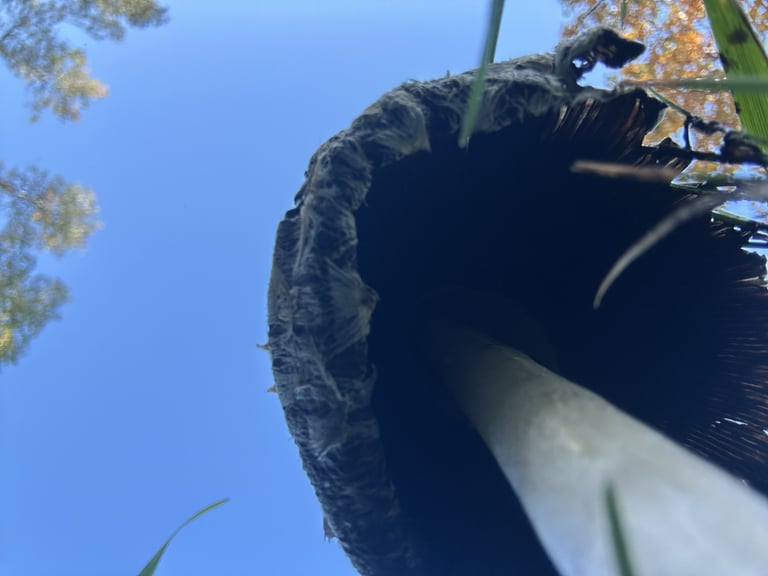
The most reliable identifying features of Agaricus campestris are its gill color progression and the way its flesh bruises. The cap is white, sometimes finely scaly, measuring 3 to 12 centimeters across; it starts hemispherical and flattens with age. The gills begin pink, turn red-brown, and finally darken to a chocolate brown that matches the spore print.
The stipe stands 3 to 10 centimeters tall and 1 to 2 centimeters wide, mostly white, with a single thin ring. The taste is mild, and the white flesh bruises a dingy reddish brown rather than yellow. Spores are thick-walled, dark brown, and elliptical, measuring 5.5 to 8 micrometers by 4 to 5 micrometers, and cheilocystidia are absent.
Other species causing confusion include the poisonous Agaricus californicus and A. hondensis in the United States, toxic white Clitocybe species in grassy places, and the nearly identical edible species Agaricus andrewii and A. solidipes, distinguishable mainly by microscopy. Agaricus arvensis, the horse mushroom, is similar and considered an excellent edible.
Distribution and Habitat
Field mushrooms occur in manured pastures, meadows, and other grassy places, including lawns in suburban areas, where they often appear in small groups, fairy rings, or singly. In Afghanistan the species has even been found growing in desert camel tracks after rain. It is rarely found in woodland.
The species has been reported across Europe, Asia, north Africa, Australia, New Zealand, and North America, including Mexico, fruiting in fields and grassy areas after rain from late summer onward. Observation records peak sharply from midsummer through early autumn, suggesting this is the main period of aboveground fruiting in much of its range.
The decline of horse-drawn transport, and the resulting drop in pastured horses, has made the large fruiting flushes once called "white outs" a rarer sight than in the past.

Uses and Cultural History
Agaricus campestris is edible and considered a choice mushroom, similar in flavor and texture to the grocery-store button mushroom, A. bisporus. Despite this, it has never been commercially cultivated, largely because it matures quickly and has a short shelf life.
Historically, slices of the mushroom were applied to scalds and burns in parts of Scotland. More recently, water extracts have been studied for their ability to enhance insulin secretion and produce insulin-like effects on glucose metabolism in vitro, and fungal mycelial filaments from related research are being explored for wound dressings, though the mechanisms involved remain unclear.
Fun Facts
- Its ease of colonizing manure-rich fields helped inform early experiments in growing mushrooms artificially, work that eventually led to the domestication of Agaricus bisporus.
- Mushrooms were regarded as a delicacy in the ancient world and were harvested from the wild long before cultivation began.
- Among foragers, herbalists, and gourmet chefs today, the field mushroom retains a cultural value as a sought-after wild edible.
Photos
Photographs from via iNaturalist, licensed under CC0 1.0., by emmar90 via iNaturalist, licensed under CC BY 4.0., by Jeff Clark via iNaturalist, licensed under CC BY 4.0., by Susan Marley via iNaturalist, licensed under CC BY 4.0., by Helen Bovill via iNaturalist, licensed under CC BY 4.0., by Cara Ennis via iNaturalist, licensed under CC BY 4.0., by Jana via iNaturalist, licensed under CC BY 4.0., by brettaugust via iNaturalist, licensed under CC BY 4.0., and by Snap via iNaturalist, licensed under CC BY 4.0., credited on each photo.
Ecology and classification
Habitat
Classification
- Phylum
- Basidiomycota
- Class
- Agaricomycetes
- Order
- Agaricales
- Family
- Agaricaceae
- Genus
- Agaricus
- Species
- Agaricus campestris
Sources
- GBIF Species names and classification
- iNaturalist Photos
- Wikidata Common names and conservation status
- Wikipedia Summary extract
- Encyclopedia of Life Habitat, diet and behavior traits