Few mushrooms carry a nickname as blunt as "the vomiter," and Chlorophyllum molybdites earns it. Also called the green-spored parasol, green-gill parasol, false parasol, or green-spored lepiota, this common fungus grows in temperate and subtropical meadows and lawns around the world.
It belongs to the family Agaricaceae within the order Agaricales, part of the larger group of gilled mushrooms in the class Agaricomycetes. Its familiarity in yards and parks, paired with its resemblance to prized edible mushrooms, makes it one of the more consequential fungi that ordinary people encounter without realizing it.
Fruiting Body and Identification
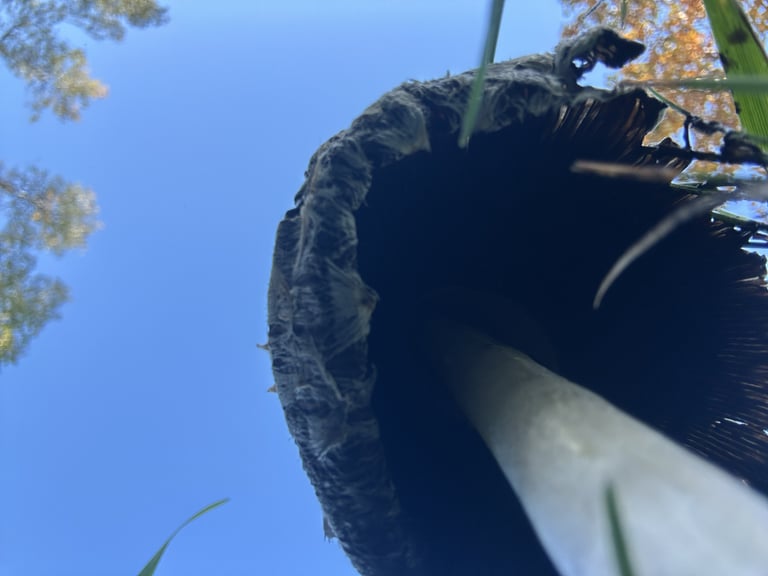
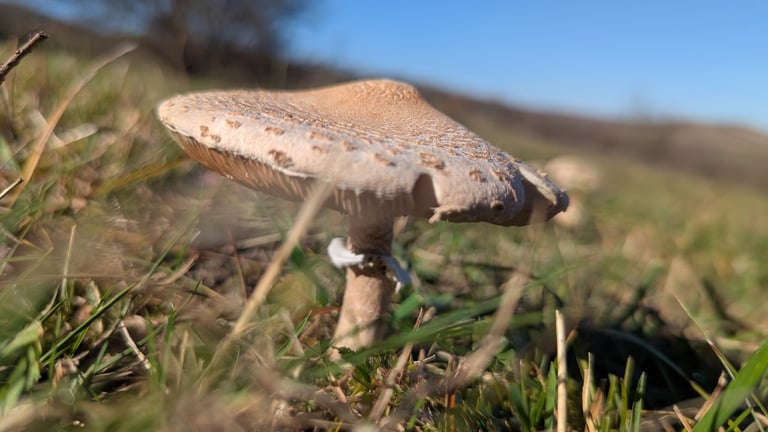
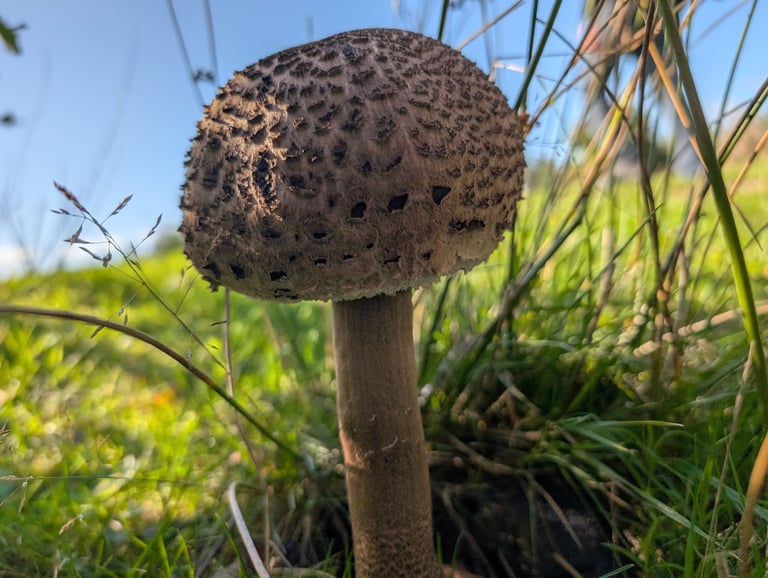
The single most reliable identifying feature of Chlorophyllum molybdites is its spore print: it is the only large mushroom known to produce a green spore print, and its gills shift from white to a dull olive-green as the fruiting body matures. The cap starts hemispherical and flattens with age, spanning 8 to 30 cm (3.1 to 12 in) across, whitish overall but roughened with coarse brownish scales.
The gills are free from the stem and pale white when young, darkening toward green as the spores develop. The stipe stands 5 to 30 cm (2.0 to 12 in) tall and carries a double-edged ring, but unlike the true parasol mushroom, it lacks the snakeskin-like mottled pattern on the stem.
The flesh is thick and firm at first, softening as the mushroom ages. It is white throughout, though the base of the stem can occasionally turn reddish-brown, pale pink, or almost orange where it is cut or crushed.
Distribution and Habitat
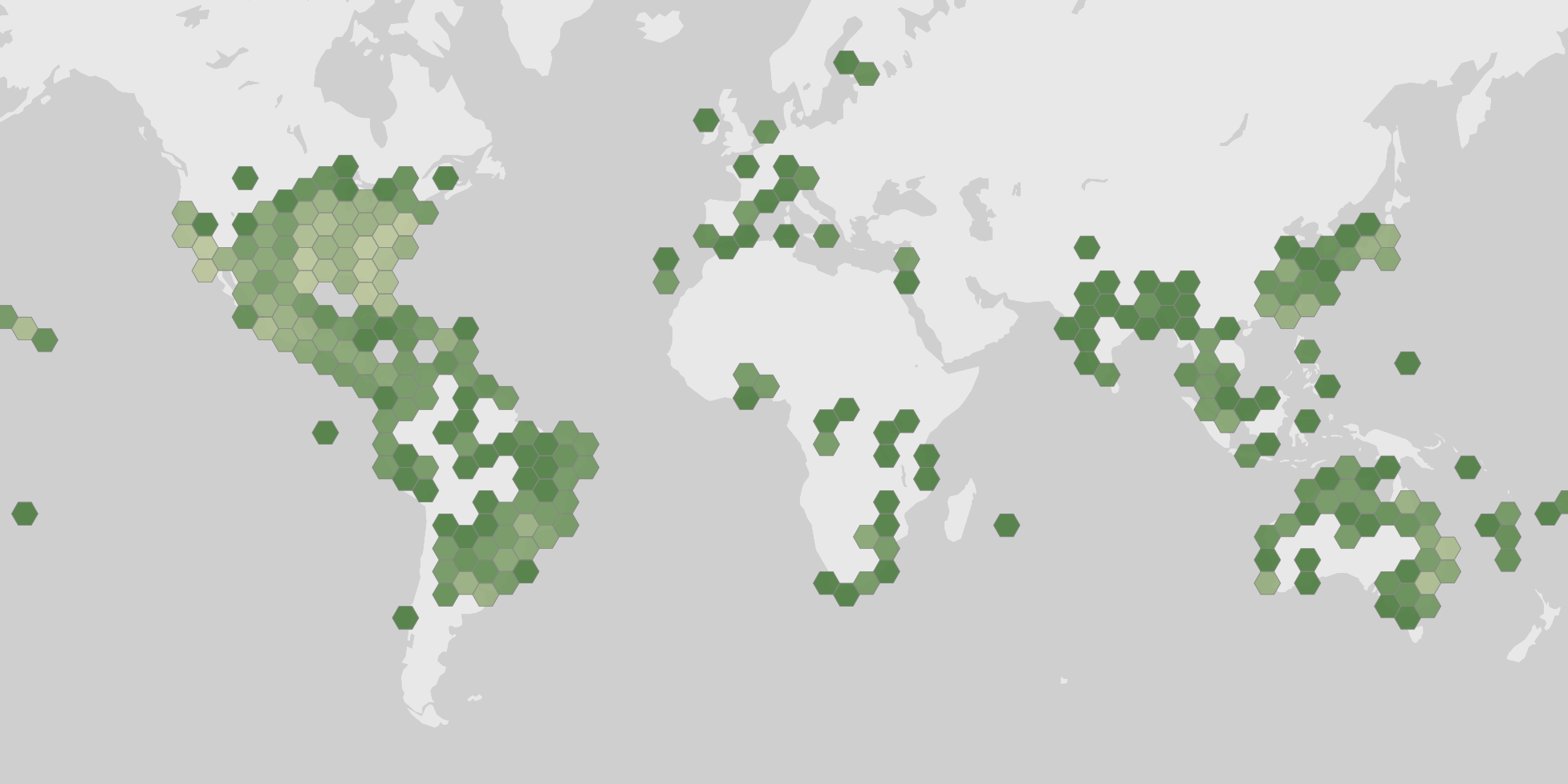
Chlorophyllum molybdites grows across eastern North America and in temperate and subtropical regions worldwide, favoring meadows, lawns, and parks. It has also been reported from Scotland, Australia, and Cyprus, suggesting it has spread well beyond its original range. It typically grows directly on soil, often near livestock enclosures, in pastures, in coastal-adjacent areas, and in maintained green spaces such as gardens.
Fruiting bodies tend to appear after the rains of summer and autumn, and the species often forms fairy rings, circular arrangements of mushrooms that gave it one of its folk names.
Monthly observation counts show a strong seasonal pattern, rising sharply through the warmer months and peaking around August before tapering off by late autumn. These figures reflect presence observations only, not abundance or a complete picture of its range, but the pattern points to a summer-into-early-autumn window as the peak season for encountering it above ground.
Uses and Cultural History
Chlorophyllum molybdites holds a contested place in human culture. In Tlaltenango, Zacatecas, Mexico, highland and lowland communities weave the mushroom into local narratives, treating the fairy rings it forms as sites of ritual and superstition, with supernatural attributes assigned to its sudden appearance. Elsewhere, some ethnomycological literature holds that the species carries no significant traditional or cultural symbolism, and that its modern reputation comes almost entirely from accidental poisonings rather than folklore.
That reputation is considerable: it is described as the most frequently eaten poisonous mushroom in North America, largely because it closely resembles choice edible species such as Lepiota procera and Lepiota rhacodes, and because it grows abundantly on lawns and pastures across most of the continent except the Pacific Northwest. Mycologist James Kimbrough noted that some people report eating it after cooking it well, or parboiling and discarding the liquid before cooking, though raw consumption causes severe symptoms, including bloody stools, within a couple of hours.
Fun Facts
- In Tlaltenango, Zacatecas, Mexico, local communities weave the mushroom's fairy rings into rituals and superstitions, treating their sudden appearance as a sign of supernatural activity.
- Not everyone agrees on that folklore's weight: some ethnomycological literature holds the species has no significant traditional symbolism, with its notoriety being a distinctly modern phenomenon tied to poisoning cases.
- One of its many common names, "the vomiter," is a blunt nod to the gastrointestinal symptoms it causes.
- It is sometimes called the fairy ring mushroom because it commonly grows in the circular patterns known as fairy rings.
Ecology
Habitat
- Coastal
- Grassland
- Urban
- Disturbed Ground