Few fungi carry as much cultural weight as Ganoderma lucidum, long celebrated in China as the "mushroom of immortality." Its shiny, lacquer-like cap and deep red color set it apart from most bracket fungi at a glance.
This species is a wood-decaying bracket fungus in the order Polyporales, growing on decaying hardwood trees across a limited range spanning parts of Europe and China. Beyond its striking appearance, its long entanglement with folklore, ritual, and modern herbal commerce makes it one of the more culturally loaded mushrooms in the world.
Fruiting Body and Identification
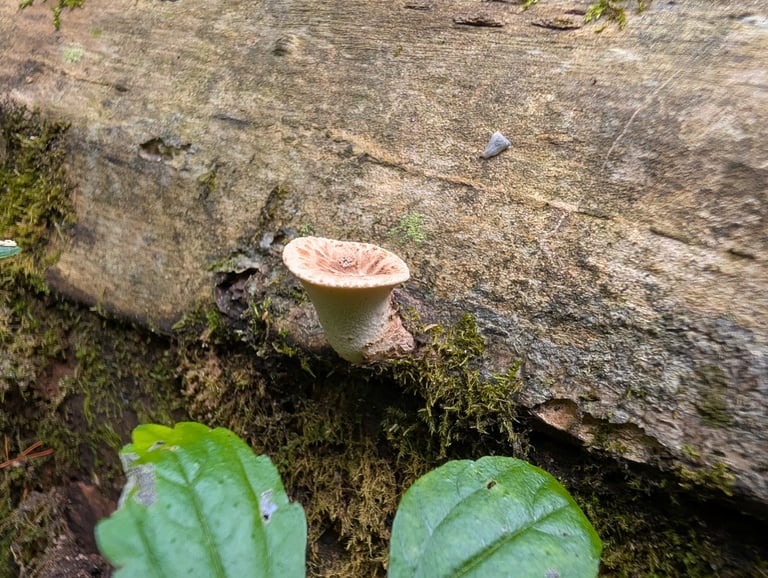
The fan-shaped, varnished cap is the clearest identifying feature of Ganoderma lucidum, growing up to 35 centimeters across with a glossy, lacquer-like surface. A stipe is almost always present, colored tawny to russet and roughly 1.5 times the diameter of the cap itself.
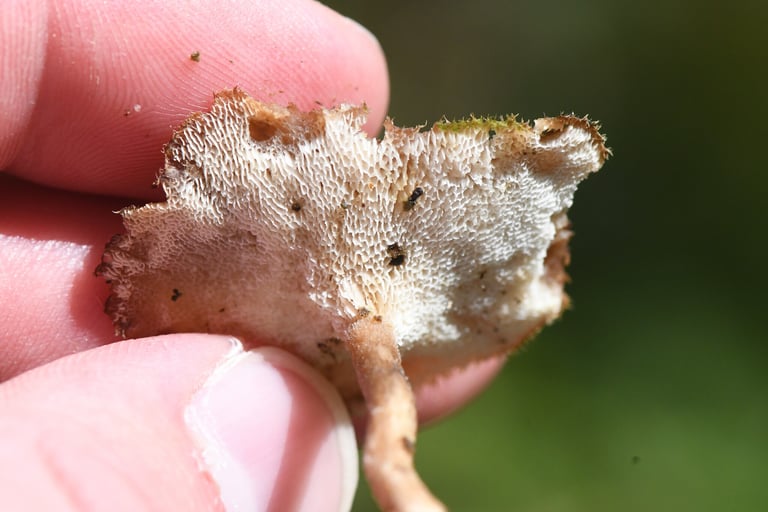
Inside, the context tissue between the cap surface and the tube layer is pink-buff to cinnamon-buff and corky in texture, showing concentric growth zones without any resinous or dark melanoid deposits. The hymenium bears fine pores, four to five per millimeter, and lacks chlamydospores entirely.
Spores are basidiospores measuring 8.2 to 12.1 micrometers long (averaging 10.7 μm) and 4.8 to 8.9 micrometers wide (averaging 7.1 μm), giving a spore shape index of about 66.2. Chemically, the fruiting body is rich in polysaccharides, triterpenes, ganoderic acid, alkaloids, flavonoids, and saponins, compounds that underlie much of the interest in this species beyond its appearance.
Distribution and Habitat
Ganoderma lucidum occurs in tropical and subtropical forest regions across Asia, Africa, and parts of the United States, typically growing on decaying hardwood. In southern Vietnam, it has been recorded growing on dầu lim trees on Phú Quốc, while in the U.S. states of California and Utah, wild populations are thought to be introduced and naturalized rather than native.
The species is also grown commercially, with intensive cultivation practiced in Japan, Korea, and China, and smaller-scale cultivation in some South American countries. Monthly observation data shows a clear seasonal pattern, with counts rising sharply from a low near 400–600 in the winter and early spring months to a peak above 2,000 in August and September before tapering off by November. As these figures reflect presence observations rather than true abundance, they should be read as a signal of seasonal fruiting activity rather than a measure of population size.
In its wood-based habitat, the species also supports other organisms: it is the preferred food of the North American pleasing fungus beetle, Megalodacne fasciata.

Uses and Cultural History
Ganoderma lucidum, known as lingzhi in China, has been prized for centuries as one of the most valued substances in traditional Chinese medicine, often depicted in art alongside powerful cultural symbols. A 16th-century silk painting by Qiu Yang shows lingzhi being offered as a gift to the Queen Mother of the West, one of the most revered figures in Chinese mythology. In Hindu tradition as well, it is recognized as a medicinal plant valued for its potential to support the immune system.
Despite this symbolic status, the fruiting body itself is described as inedible and rock-hard once dried; it is instead used to prepare a bitter-tasting tea. Clinical research into its medicinal use remains of poor quality, and there is no good evidence supporting its use in treating cardiovascular disease in people with type 2 diabetes or any other medical condition. The species also carries safety concerns, including moderate interactions with certain medications and dietary supplements.
Cultivation research has explored growing Ganoderma lucidum on various wood by-products and waste streams, though it fruits poorly on softwoods such as pine due to compounds toxic to many fungi. Even so, studies have shown it can still degrade Pinus sylvestris wood, breaking down lignin while preserving carbohydrate content, opening potential new avenues for softwood-based cultivation. Complicating the trade further, taxonomic confusion is widespread: DNA analysis found that 93% of "grow your own" kits and about half of dried products labeled G. lucidum actually contained Ganoderma sichuanense, with only a single kit confirmed to contain true G. lucidum.
Fun Facts
- The name lingzhi is tied to the idea of a "mushroom of immortality," a status that has made it a recurring subject in Chinese art and mythology for centuries.
- Scientific interest in Ganoderma lucidum remains genuinely contested, with academic literature describing its history as a mix of art, mythology, and controversial science.
- Outside East Asia, Hindu tradition separately recognizes lingzhi as a medicinal plant valued for its potential immune-supporting properties.
Ecology
Habitat
- Forest