Among the tough, woody bracket fungi of the genus Ganoderma, Ganoderma oregonense stands out for an unusual claim: mycologist Paul Stamets has described it as edible, a rarity for specimens usually too fibrous to eat.
This polypore is a wood-decay fungus native to the northwestern coastal regions of North America. It infects conifers, causing white rot of the root and butt of infected trees, functioning as a natural agent of forest decomposition.
Known as the western varnished conk or west-coast reishi, it rewards attention both for its glossy, striking appearance and for its place among the more unusual members of its genus.
Fruiting Body and Identification
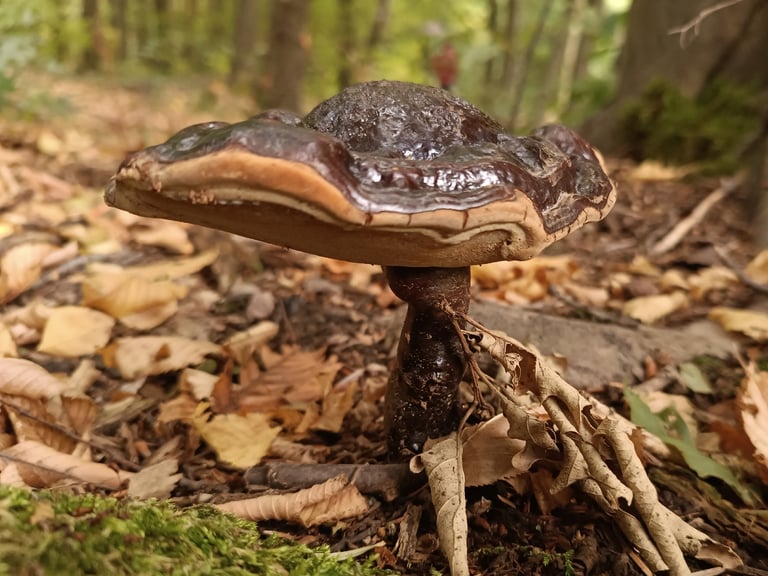
The most reliable identifying feature of Ganoderma oregonense is its shiny, varnished upper surface, colored in a gradient of brown, red-orange, and sometimes cream. This lacquered sheen gives rise to its common names, western varnished conk and lacquer fungus.
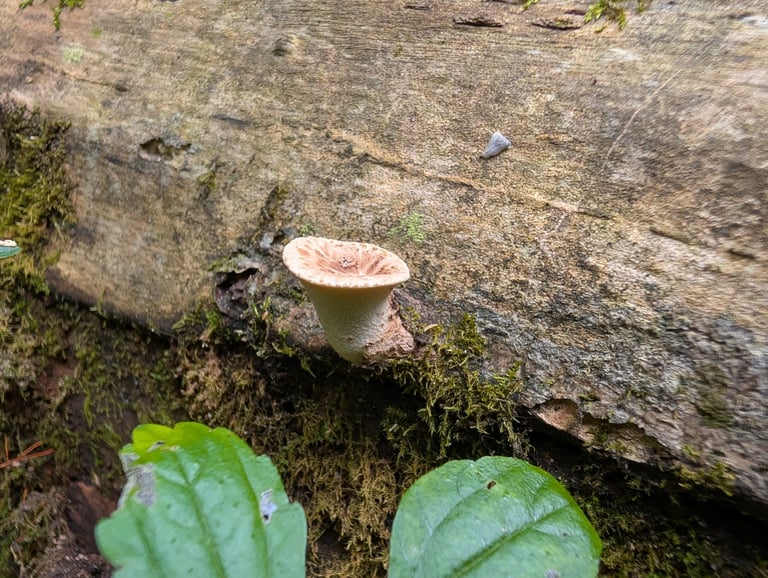
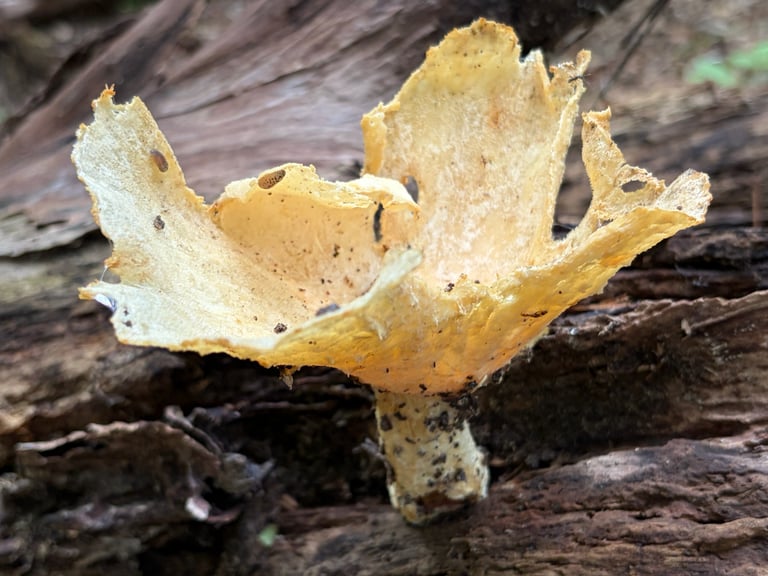
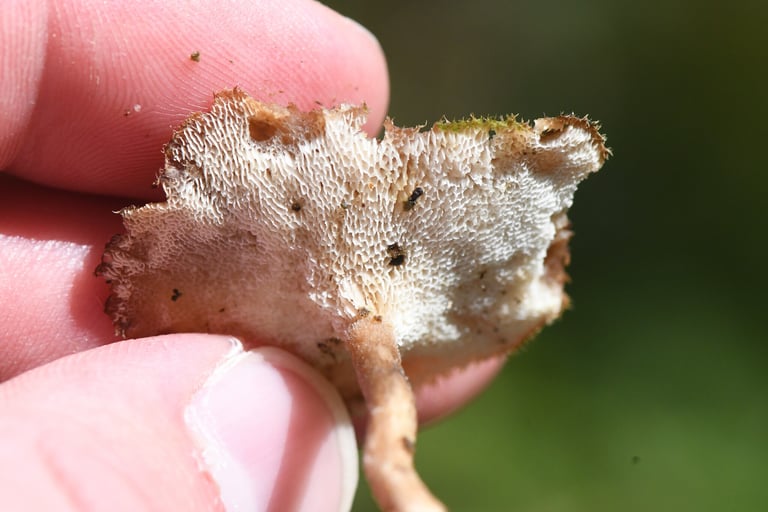
The fruiting body can take several forms: kidney-shaped, fan-shaped, hoof-shaped, or plate-like, sometimes appearing as a stack of plates wedged into the side of a log. It grows large, reaching 10 to 50 centimeters wide, and may bear a stem 2.5 to 10 centimeters long and 0.5 to 4 centimeters thick. The pore surface underneath is white or cream-colored. Unlike many polypores, it fruits annually rather than perennially, typically appearing in the fall.
Ganoderma oregonense closely resembles Ganoderma tsugae, so closely that the two have been speculated to represent a single species; G. tsugae, however, is associated with eastern hemlock rather than the western conifers this species favors. Ganoderma polychromum can be distinguished because it usually grows on the ground rather than on wood.
Distribution and Habitat
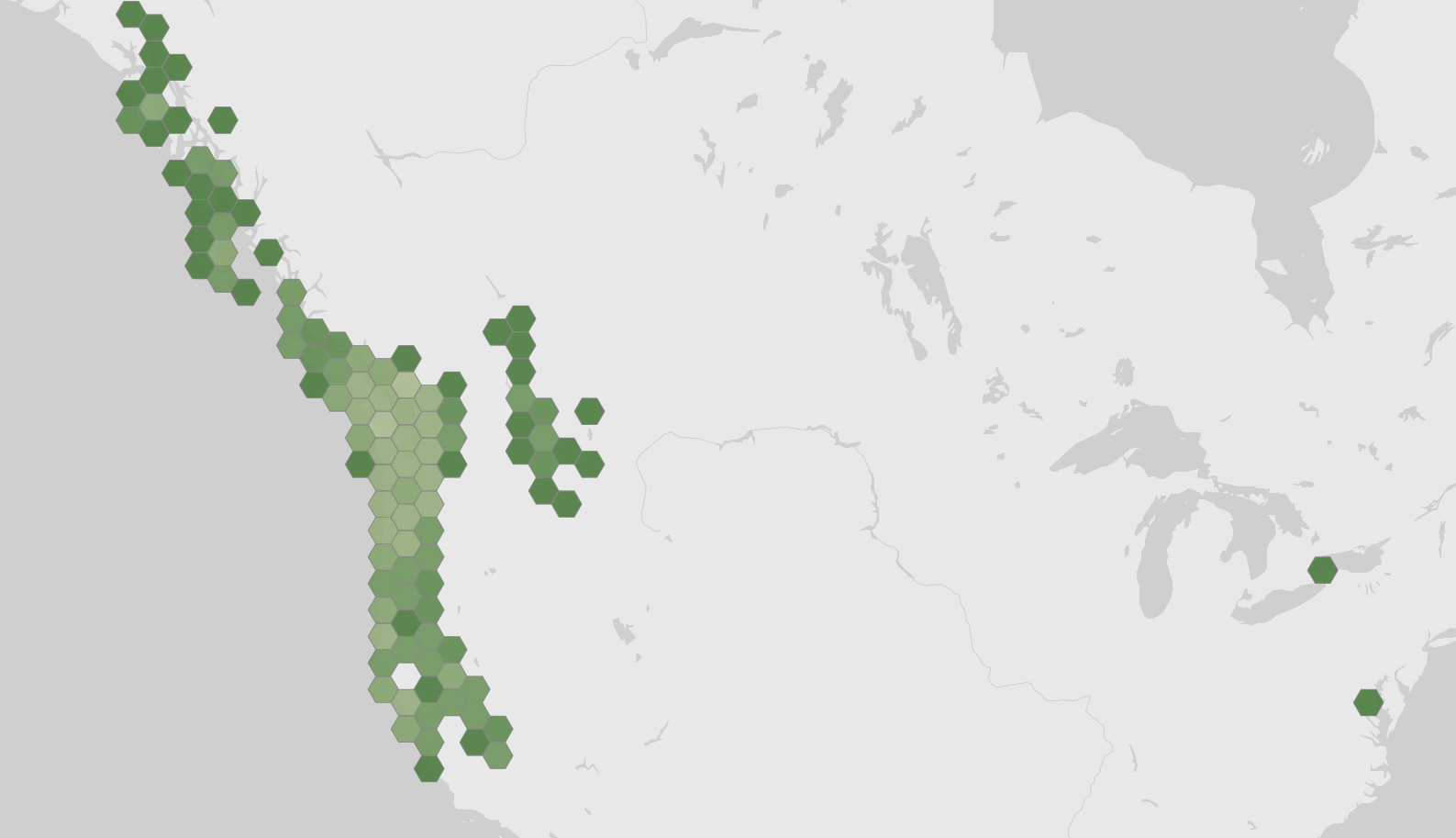
Ganoderma oregonense occurs along the northwestern coast of North America, in California, Oregon, Washington, British Columbia, Yukon, and Alaska. It can be found year-round but is freshest from July to November, and observation records show a pronounced rise through the summer into a peak around August, tapering off by winter, suggesting fall is when fruiting bodies are most visible.
It prefers dead red fir as a host but will also grow on dead or living Douglas fir, spruce, hemlock, and pine. Trees colonized by this fungus develop spongy, soft interior wood. On living trees, its presence is usually tied to wounds, such as those left by bears.
Uses and Cultural History
Oral traditions describe using Ganoderma oregonense in protection rituals and in burnishing ceremonial masks, and its woody texture and strong pigment release have made it useful for crafting paints and dyes. Its varnished surface also lent itself to engraving.
Unusually for a Ganoderma species, Paul Stamets has described this fungus as edible, a notable exception since most specimens in this genus are too tough to be consumed.
Fun Facts
- It is also known by several other names, including west-coast reishi, western varnished conk, lacquer fungus, and American ling-chi.
- Its cap flesh is notably thick and spongy, and the species is significantly larger and bulkier overall than the related Ganoderma lucidum.
- Despite its tough, woody texture, it holds cultural significance in some local traditions.
Photos
Photographs from via iNaturalist, licensed under CC0 1.0., by Rachel Stringham via iNaturalist, licensed under CC BY 4.0., by Morgan Chen via iNaturalist, licensed under CC BY 4.0., by Shaan Aroeste via iNaturalist, licensed under CC BY 4.0., by Noah How via iNaturalist, licensed under CC BY 4.0., by Moe Meikle via iNaturalist, licensed under CC BY 4.0., by Vitaliy Maslyanchuk via iNaturalist, licensed under CC BY 4.0., and by Adam Kamal via iNaturalist, licensed under CC BY 4.0., credited on each photo.
Ecology and classification
Habitat
Classification
- Phylum
- Basidiomycota
- Class
- Agaricomycetes
- Order
- Polyporales
- Family
- Polyporaceae
- Genus
- Ganoderma
- Species
- Ganoderma oregonense
Sources
- GBIF Species names and classification
- iNaturalist Photos
- Wikidata Common names and conservation status
- Wikipedia Summary extract