Gymnosporangium globosum is a fungal plant pathogen best known as the cause of cedar-hawthorn rust, a disease that links two very different host trees in a single life cycle. It belongs to the class Pucciniomycetes, order Pucciniales, and family Gymnosporangiaceae within the phylum Basidiomycota.
As a member of the rust fungi, it depends on living plant tissue to survive and spread, moving between coniferous and broadleaf hosts rather than completing its cycle on one species alone. This back-and-forth relationship between host trees is part of what makes the genus Gymnosporangium worth understanding for anyone who grows junipers, hawthorns, or related ornamental trees.
Fruiting Body and Identification
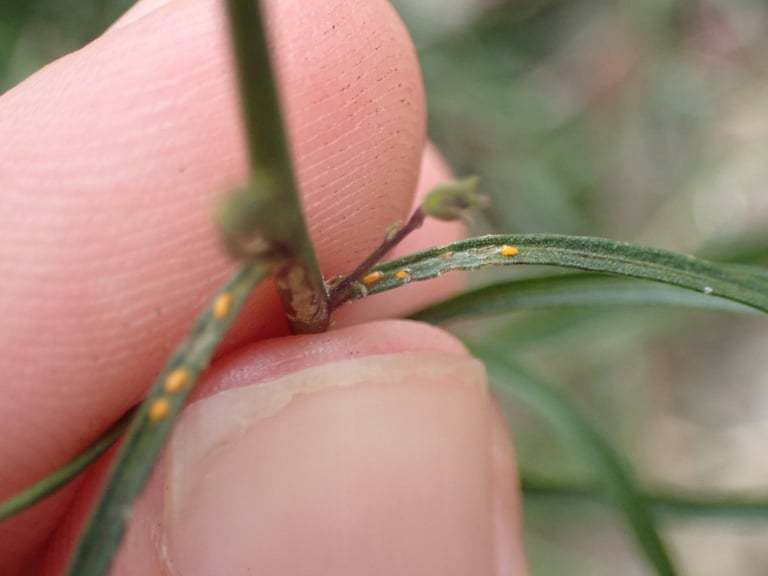
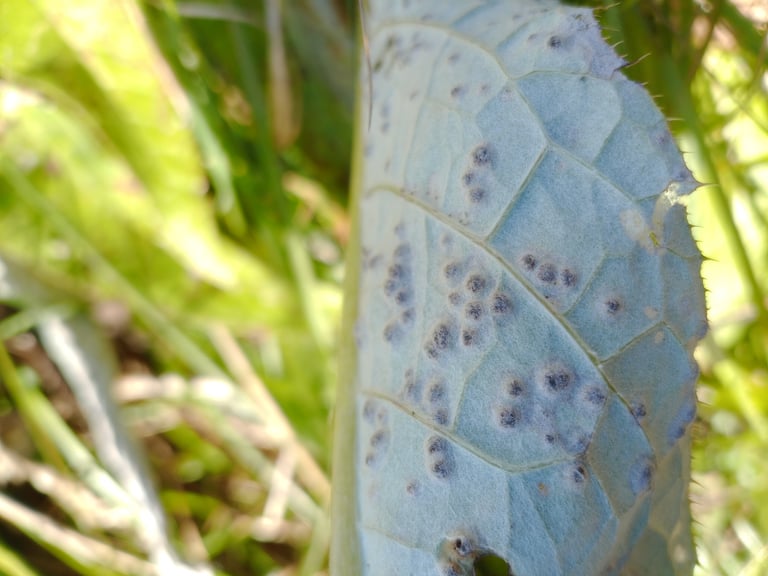
Gymnosporangium globosum is identified primarily by the distinctive galls it produces on its juniper hosts, from which gelatinous orange telial horns emerge under wet conditions.
These galls form woody, rounded swellings on juniper twigs. When moisture triggers spore release, the galls swell further and extrude soft, orange, horn-like telial structures made of gelatinous tissue, a feature that sets the genus apart at a glance.
As the horns dry out, they collapse and shrivel, leaving the gall looking dull and brown until the next wet period causes them to swell again. This cycle of swelling and collapsing can repeat over more than one season on the same gall.
Distribution and Habitat
Observations of Gymnosporangium globosum show a clear seasonal pattern, with numbers climbing sharply from spring into summer. Counts remain low through the winter months and into early spring, then rise steeply, reaching their highest levels in July and August before dropping off again by October.
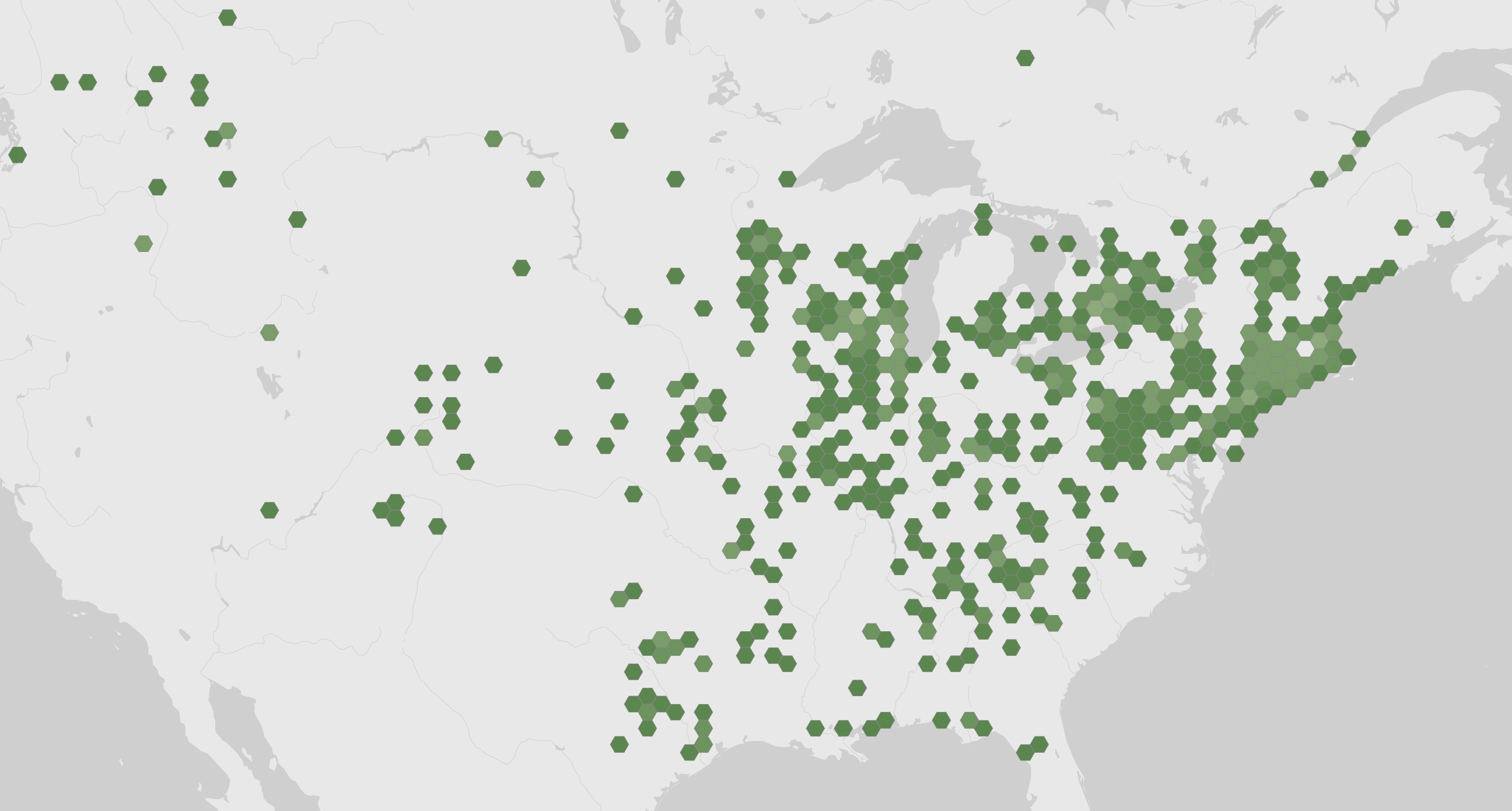
This pattern likely reflects when the fungus produces its most visible structures and is most readily noticed, rather than indicating where it is most abundant or defining the full extent of its range. The data available are presence observations only, so they cannot be read as a measure of population size or a complete picture of where the species occurs.
Fun Facts
- The species name globosum points to the rounded, globe-like shape associated with its telial structures.
- It was first described by the American botanist William Gilson Farlow, whose name follows the species in its full scientific citation, Gymnosporangium globosum (Farl.) Farl.
- It is classified within the Pucciniales, the order that contains all rust fungi, a group known for complex life cycles involving multiple host plants.
Photos
Photographs from via iNaturalist, licensed under CC0 1.0., by Andrew Sebastian via iNaturalist, licensed under CC BY 4.0., by Syd Cannings via iNaturalist, licensed under CC BY 4.0., by nuthatchnicole via iNaturalist, licensed under CC BY 4.0., by Will Kuhn via iNaturalist, licensed under CC BY 4.0., and by Eli Talhouk via iNaturalist, licensed under CC BY 4.0., credited on each photo.
Ecology and classification
Classification
- Phylum
- Basidiomycota
- Class
- Pucciniomycetes
- Order
- Pucciniales
- Family
- Gymnosporangiaceae
- Genus
- Gymnosporangium
- Species
- Gymnosporangium globosum
Sources
- GBIF Species names and classification
- iNaturalist Photos
- Wikidata Common names and conservation status
- Wikipedia Summary extract