Puccinia cnici-oleracei is a plant pathogen that causes rust disease on species within the Asteraceae family, the group that includes daisies, thistles, and their relatives.
Classified within the fungal kingdom, it belongs to the phylum Basidiomycota, class Pucciniomycetes, order Pucciniales, and family Pucciniaceae, placing it among the rust fungi, a group known for infecting living plant tissue rather than dead organic matter.
As a pathogen rather than a free-living organism, this species is best understood through its impact on its Asteraceae hosts, making it a notable example of the specialized relationships that exist between rust fungi and their plant partners.
Fruiting Body and Identification
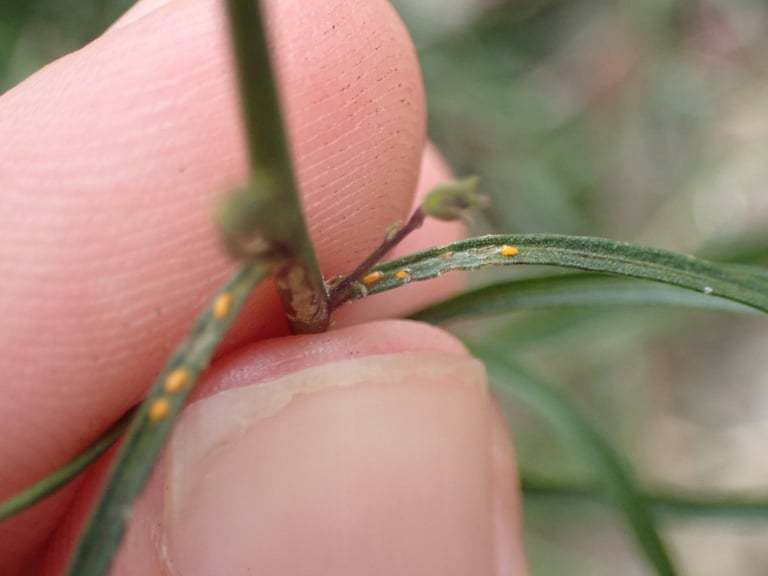
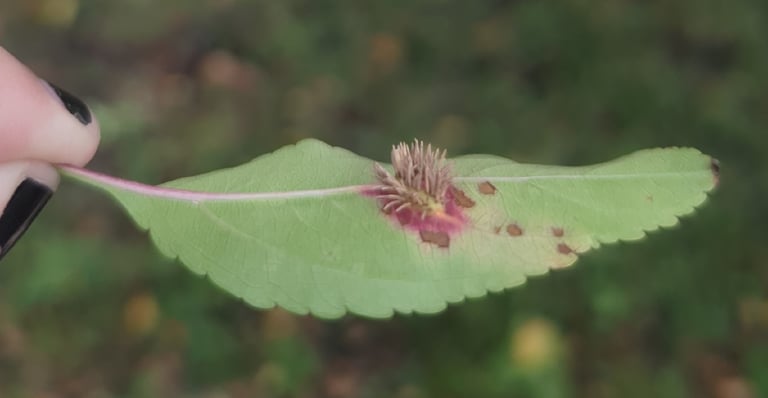
Puccinia cnici-oleracei is identified not by a cap-and-stem fruiting body but by the pustules it produces directly on the surface of its host plant. These rust pustules are the primary field character used to recognize the species, appearing as raised, powdery spots where spores break through the host tissue.
As is typical for rust fungi in the genus Puccinia, the coloration of these pustules shifts as the fungus matures, reflecting the progression from one spore stage to another over the course of an infection.
Distribution and Habitat
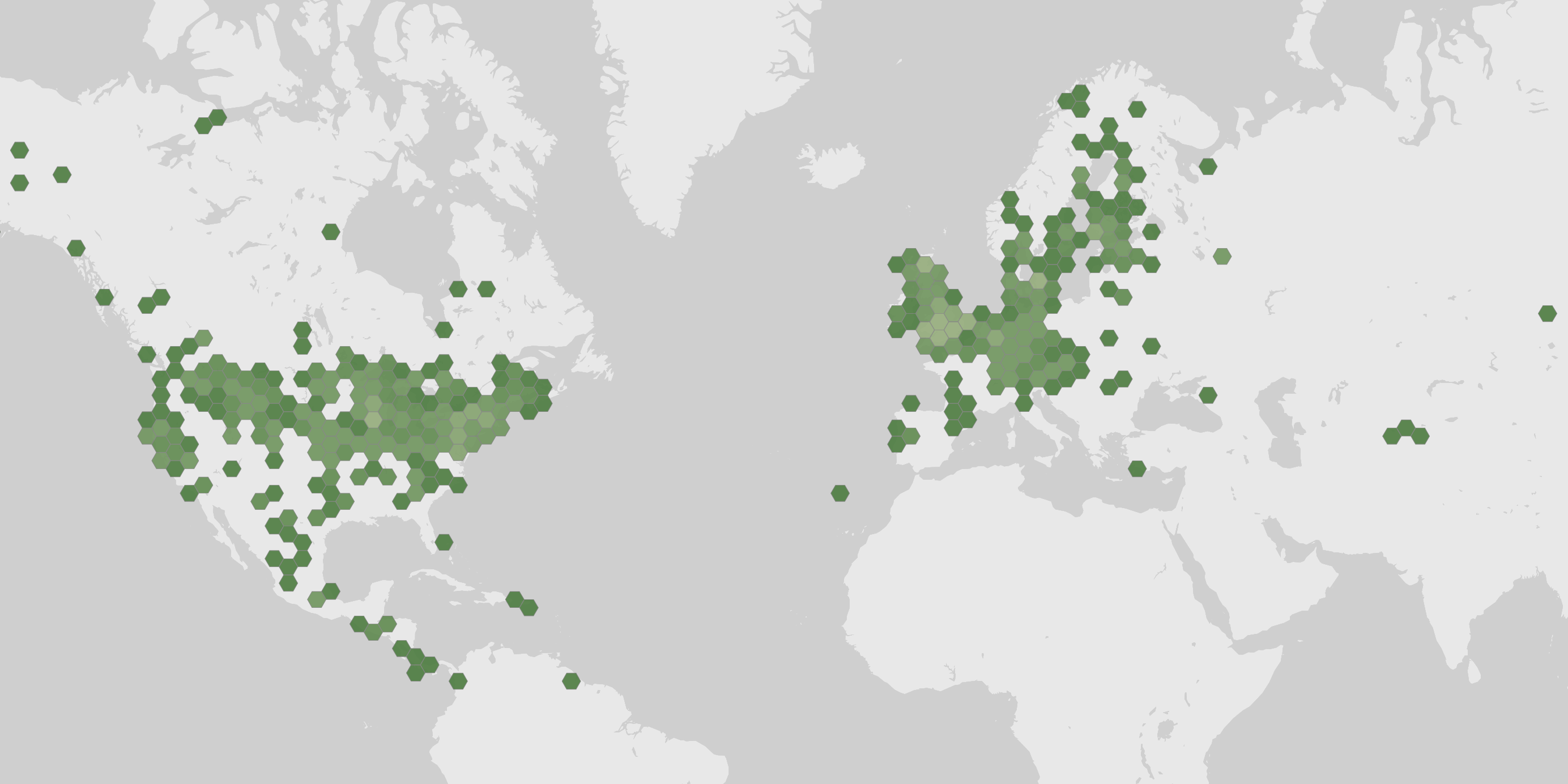
Puccinia cnici-oleracei has been recorded through presence observations on Asteraceae hosts, though these records reflect where the fungus has been noticed rather than a complete picture of its range or abundance.
Monthly observation counts show a pronounced rise from spring into summer, climbing sharply from April through a peak in July and August, before tapering off through the fall and into low counts over winter. This pattern suggests the rust is most commonly observed during the warmer growing season, when its hosts are actively growing and fungal structures are more visible on leaf surfaces, though the counts themselves should not be read as a measure of how abundant the fungus actually is at any given time.
Fun Facts
- Puccinia cnici-oleracei causes rust specifically on plants within the Asteraceae family, the large group that includes thistles, daisies, and related species.
- Observations of this rust fungus rise dramatically between spring and late summer, with the highest counts recorded in July and August, before dropping off sharply by late fall.
Photos
Photographs from by Zeke Marshall via iNaturalist, licensed under CC BY 4.0., via iNaturalist, licensed under CC0 1.0., by Pavel Kacl via iNaturalist, licensed under CC BY 4.0., by carnifex via iNaturalist, licensed under CC BY 4.0., by Alex Press via iNaturalist, licensed under CC BY 4.0., by Kauã Neves via iNaturalist, licensed under CC BY 4.0., by B. Phalan via iNaturalist, licensed under CC BY 4.0., by Matteo Marcandella via iNaturalist, licensed under CC BY 4.0., by Jon Mortin via iNaturalist, licensed under CC BY 4.0., by Oleksii Vasyliuk via iNaturalist, licensed under CC BY 4.0., and by Björn Sothmann via iNaturalist, licensed under CC BY-SA 4.0., credited on each photo.
Ecology and classification
Classification
- Phylum
- Basidiomycota
- Class
- Pucciniomycetes
- Order
- Pucciniales
- Family
- Pucciniaceae
- Genus
- Puccinia
- Species
- Puccinia cnici-oleracei
Sources
- GBIF Species names and classification
- iNaturalist Photos
- Wikidata Common names and conservation status
- Wikipedia Summary extract