Ashy-grey with a black head, throat, wings, tail, and thighs, the hooded crow cuts a distinctive figure wherever it forages across Eurasia. It is a Eurasian subspecies-turned-species of the carrion crow, in the genus Corvus, found across Northern, Eastern, and Southeastern Europe as well as parts of the Middle East.
Like other corvids, it is an omnivorous and opportunistic forager, a trait that runs through nearly every part of its life history, from how it feeds to how it survives alongside people.
Identification and Appearance
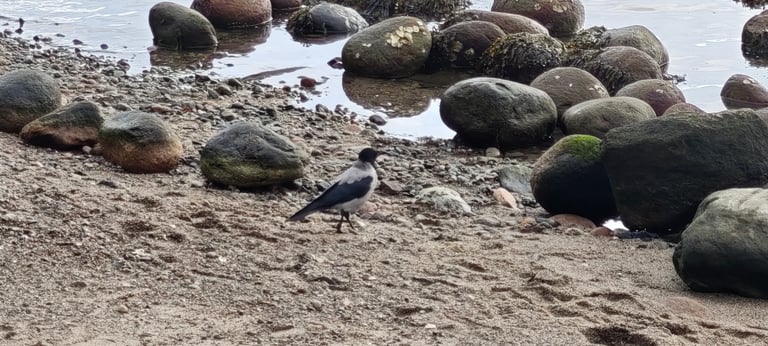
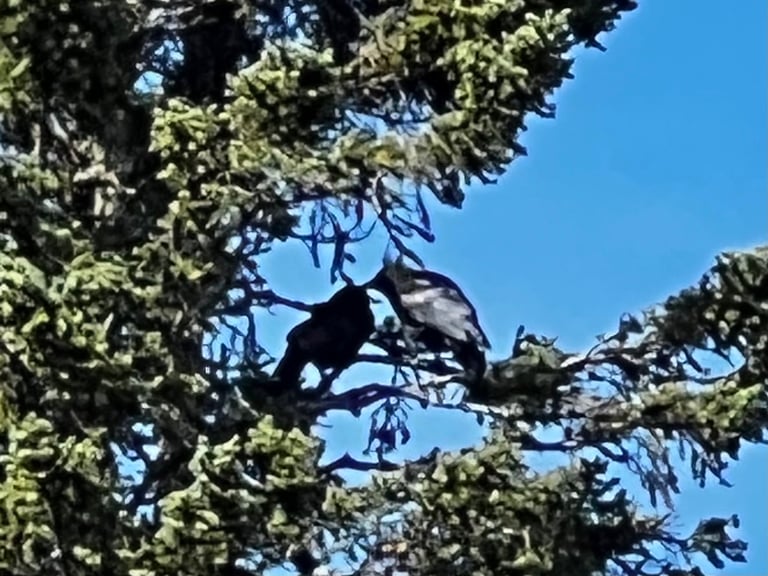
The clearest field mark is the sharp contrast between ash-grey body plumage and jet-black head, throat, wings, tail, and thighs, with dark feather shafts giving the grey areas a streaky look. Adults measure 48 to 52 cm in length, with a wingspan of about 105 cm and an average weight around 510 g (roughly 0.544 kg in typical measurements). The bill, legs, and eyes are black, and the bird molts once a year, in autumn.
Males tend to be larger than females, though the sexes otherwise look alike. Flight is slow, heavy, and usually straight rather than acrobatic. Newly hatched young are much blacker than adults, and juveniles show duller plumage with bluish or greyish eyes and a red mouth lining that fades with age.
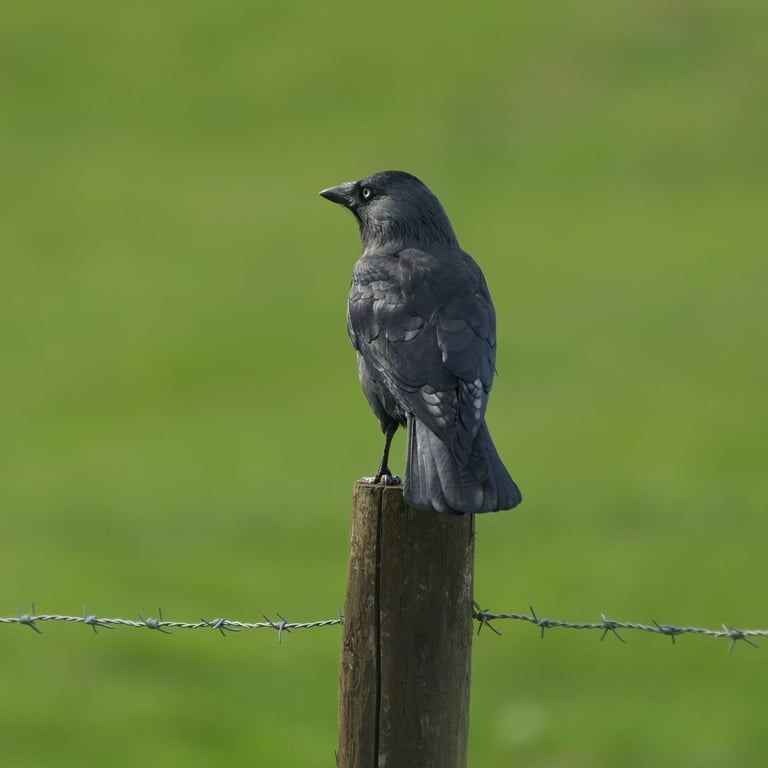
The hooded crow is visually distinct from both the all-black carrion crow and the rook thanks to its two-tone plumage, but its calls are almost indistinguishable from those of the carrion crow, so voice alone will not separate the two.
Distribution and Habitat
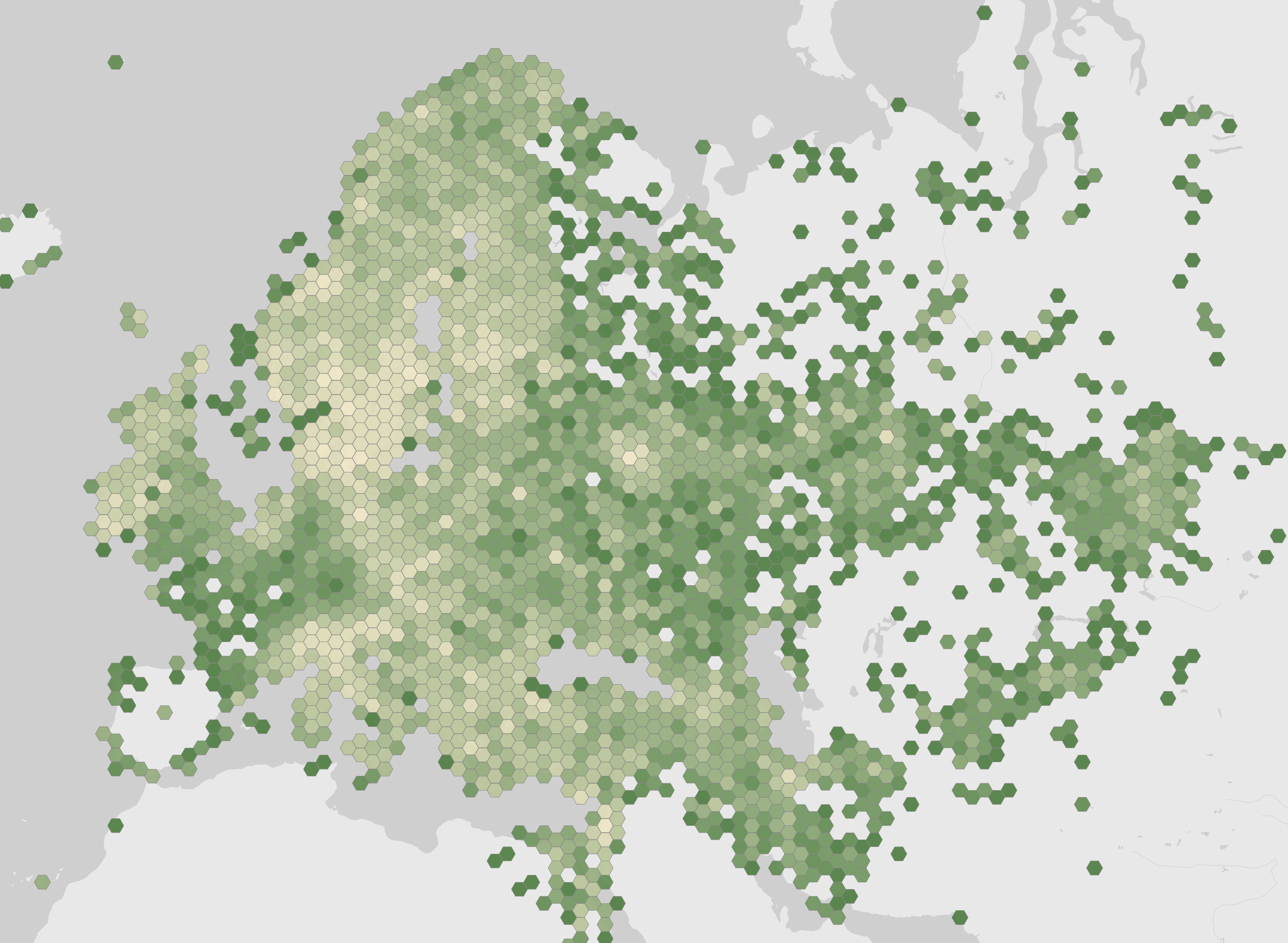
The hooded crow breeds across northern and eastern Europe, with closely related forms extending into southern Europe and western Asia. In the British Isles it breeds regularly in northern and western Scotland, the Isle of Man, the Scottish Islands, and throughout Ireland, while some migratory birds reach the east coast of England in autumn, a pattern that was once more pronounced than it is today.
It favors open woodland, moors, agricultural land with scattered trees, town parks, and shores backed by woodland. Where its range meets that of the carrion crow, in places such as northern Britain, Germany, Denmark, northern Italy, and Siberia, the two interbreed, but the resulting hybrids are less well-adapted and the hybrid zone stays narrow.
Monthly observation records show activity year-round with somewhat higher counts in the early months of the year, consistent with a largely resident population supplemented by some seasonal movement rather than a sharply migratory species.
Scavenging and Diet
The hooded crow finds much of its food by scavenging, and it is described as a constant scavenger with a diet much like that of the carrion crow. It drops mollusks and crabs onto hard surfaces to break them open, a habit once common enough that empty sea urchin shells were nicknamed "crow's cups" in Scotland.
On coastal cliffs it raids the unguarded eggs of gulls and cormorants, and it will even enter puffin burrows to steal eggs. Beyond scavenged carrion and stolen eggs, it takes small mammals, smaller birds, and scraps of all kinds.
It also caches food, especially meat, nuts, and insect-infested items, tucking them into rain gutters, flower pots, or soil beneath bushes to retrieve later. Other crows often watch a bird hide its food and return to raid the cache once the hider has left, a behavior that hints at the species' sharp memory and social awareness around food.
Nesting and Breeding
Nesting timing tracks climate, running from late February in the Persian Gulf region to mid-May through mid-June in northwest Russia, Shetland, and the Faroe Islands, with April layings in warmer parts of Europe. The bulky stick nest usually sits in a tall tree, though cliff ledges, old buildings, and pylons are also used, and coastal nests often weave in seaweed along with animal bones and wire.
Clutches of four to six brown-speckled blue eggs are laid, each about 4.3 by 3.0 cm and weighing around 19.8 g, of which shell makes up only 6%. The female alone incubates for 17 to 19 days while the male feeds her, and the altricial chicks fledge after 32 to 36 days.
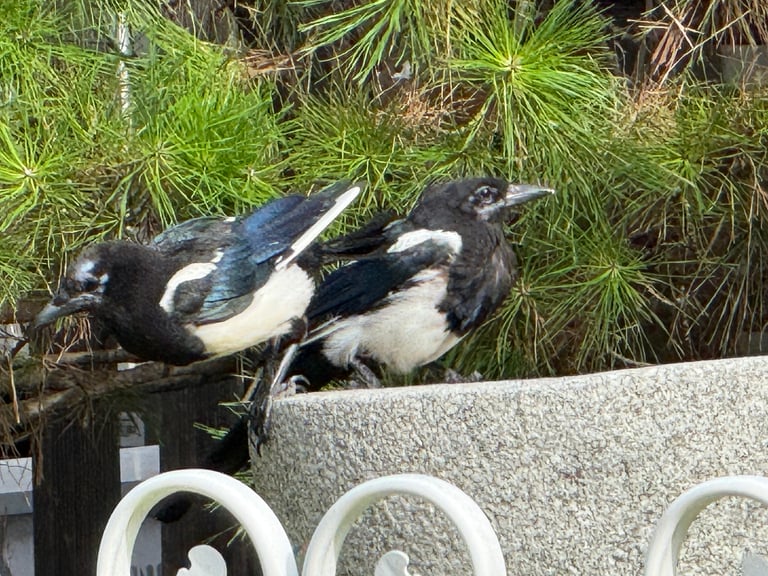
The species also serves as a secondary host for the parasitic great spotted cuckoo, taking on that role especially in places like Israel and Egypt where the preferred host, the European magpie, is absent.
Conservation and Threats
The IUCN Red List evaluates the hooded crow together with the carrion crow as Least Concern, reflecting an extensive combined range of about 10 million square kilometers and a large population estimated at 14 to 34 million individuals in Europe alone, including roughly three million territories across Europe excluding Russia. Neither species is believed to be approaching the population decline thresholds that would trigger a higher threat category.
Despite this broad security, the species faces direct persecution: farmers and grouse estate managers have long killed hooded crows, and gun clubs in County Cork, Ireland, shot over 23,000 of them in just two years in the early 1980s. Since 1981 the species has been protected in Britain under the Wildlife and Countryside Act, making it illegal to knowingly kill, injure, or capture them there.
The hybrid zone with the carrion crow is slowly shifting northwest, and in April 2020 Sweden redlisted the hooded crow separately, since its Species Information Centre distinguishes it from the carrion crow.
Cultural Significance
In Irish folklore the bird appears on the shoulder of the dying Cú Chulainn and could represent a manifestation of the Morrígan, wife of Tethra, or the Cailleach, an association that carried into Scottish highland and Irish beliefs linking hooded crows with fairies; 18th-century Scottish shepherds even made offerings to keep them from attacking sheep. Faroese folklore used the bird in a Candlemas divination ritual in which a maiden's future husband was foretold by how a hooded crow reacted to thrown stones, bones, and turf.
In England the old name "Royston crow" comes from its former status as a common winter visitor to the sheep fields around Royston, Hertfordshire, where it fed on carcasses; the town's newspaper, The Royston Crow, founded in 1855, and the town's coat of arms both carry the name. The hooded crow is also one of 37 Norwegian birds depicted in the Bird Room of the Royal Palace in Oslo.
Fun Facts
- In Faroese tradition, a maiden would throw a stone, a bone, and a clump of turf at a hooded crow on Candlemas morning to divine whether her future husband would be a foreigner, a local, or nonexistent, depending on where the bird flew or landed.
- The town newspaper The Royston Crow, founded in 1855 in Hertfordshire, England, takes its name directly from the hooded crow's old local nickname, "Royston crow."
- The hooded crow is one of 37 Norwegian bird species depicted in the Bird Room of the Royal Palace in Oslo.
Photos
Photographs from via iNaturalist, licensed under CC0 1.0., by Nicole Kearney via iNaturalist, licensed under CC BY 4.0., by katiebrammer22 via iNaturalist, licensed under CC BY 4.0., by Евгений Маринкин via iNaturalist, licensed under CC BY 4.0., by Георгий Виноградов (Georgy Vinogradov) via iNaturalist, licensed under CC BY 4.0., by Beribox via iNaturalist, licensed under CC BY 4.0., by Константин Селивёрстов via iNaturalist, licensed under CC BY 4.0., by Юля и Ваня «Чай» via iNaturalist, licensed under CC BY 4.0., by Ксения Волянская via iNaturalist, licensed under CC BY 4.0., by Erik via iNaturalist, licensed under CC BY 4.0., by Se Lena via iNaturalist, licensed under CC BY 4.0., and by Charlotte Kirchner via iNaturalist, licensed under CC BY 4.0., credited on each photo.
Ecology and classification
Classification
- Phylum
- Chordata
- Class
- Aves
- Order
- Passeriformes
- Family
- Corvidae
- Genus
- Corvus
- Species
- Corvus cornix
Sources
- GBIF Species names and classification
- iNaturalist Photos
- Wikidata Common names and conservation status
- Wikipedia Summary extract
- Encyclopedia of Life Habitat, diet and behavior traits
- AnAge Longevity
- GloBI What it eats, what eats it, parasites and pollinators
- Wardeh et al. 2015 (EID2)